Source Double Sided Boltless Shelving Rack for Warehouse, Supermarket, and Industrial Use
Find 30 Double Sided Boltless Shelving Rack options from verified suppliers in China. Compare adjustable heights, load capacities, and customization features for warehouse, supermarket, and industrial applications.
Key considerations
Products List


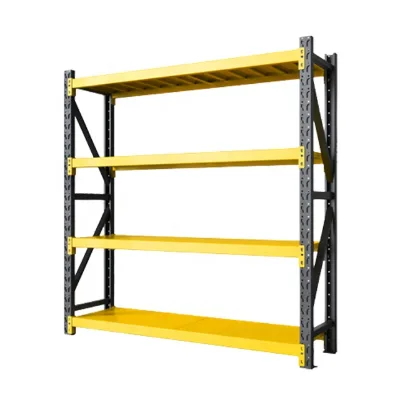
Boltless Galvanized Metal Shelving Rack Steel Storage Stacking Racks & Shelves
$8.50 - $15.50
MOQ: 50 Pieces


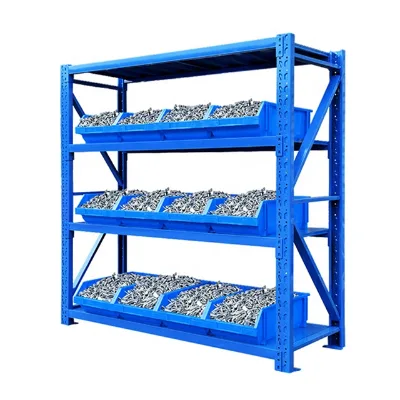
Heavy Duty Adjustable Boltless Steel Shelving Rack for Industrial Warehouse
$25.00 - $100.00
MOQ: 10 Square Meters




Comprehensive Sourcing Guide
Double Sided Boltless Shelving Rack Sourcing Guide
The double-sided boltless shelving rack represents a critical storage solution for modern warehousing, characterized by its adjustable structure and semi-closed design that maximizes floor space efficiency. These units typically feature a shelf depth ranging from 400mm to 600mm and a shelf height of 30mm, allowing for versatile storage configurations in industrial and warehouse environments. The boltless or rivet design facilitates rapid assembly and disassembly without specialized tools, making it ideal for facilities that require frequent layout reconfigurations or seasonal inventory adjustments.
Buyers must recognize that while the core structure is often made of steel with conventional development, specific attributes like the closed nature of the unit can vary between semi-closed and open configurations depending on the model. The product origin is frequently traced to manufacturing hubs in Jiangsu and Jiangxi, China, where suppliers offer customization options for back and side cladding to meet specific security or containment needs. Understanding these structural nuances is essential before initiating a procurement process, as the intended usage—ranging from general warehouse storage to specialized applications in food, beverage, or tool storage—dictates the necessary material thickness and load-bearing capabilities.
Product Scope and Observed Listing Signals
When evaluating market listings, buyers will observe a significant variance in pricing, with observed ranges spanning from $0.50 to $1,250 USD, reflecting differences in material quality, customization levels, and order volumes. The minimum order quantity (MOQ) is equally variable, ranging from a single unit to 1,000 units, with specific high-volume configurations like multi-level racking systems often requiring a minimum of 100 bays. This wide spectrum indicates that the product is available in both small-scale pilot configurations and large-scale industrial deployments, necessitating a clear definition of project scale before engaging with suppliers.
Listing signals also reveal distinct product models such as the LS 60, BS 50, YJG-Z12, and SH-1, each serving different structural needs from cantilever racks to multi-level systems. While some models are designed for standard warehouse use with fixed dimensions, others offer fully customizable sizes, such as the standard W2000D600H2000mm configuration, with layer counts adjustable between two and five. Buyers should scrutinize these model identifiers to ensure the listed product matches their specific spatial constraints and load requirements, as the "double-sided" attribute may be combined with single-sided arm options or specific upright sections ranging from 100mm to 300mm.
Technical Specifications to Verify
Verification of material thickness is paramount, as observed standards indicate uprights ranging from 1.5mm to 1.8mm and shelves from 0.7mm to 0.8mm for certain models, while other configurations may specify different tolerances. The load capacity is a critical technical parameter that can be customized, with observed ranges spanning from 150kg to 800kg per bay, and specific models like the YJG-Z04 supporting weights between 150kg and 500kg. Buyers must confirm that the specified steel grade and thickness align with the intended maximum load to prevent structural failure, especially in high-bay applications where heights can extend from 0 to 15 meters.
Structural dimensions and assembly features require precise validation, particularly regarding arm lengths which can vary from 800mm to 1200mm for cantilever variants, and shelf depths fixed between 400mm and 600mm for standard shelving. The type of racking, whether boltless, rivet, or pallet racking, dictates the assembly method and long-term stability, with some systems offering double-sided or single-sided arm configurations. Additionally, the height of the unit, which can range from 0 to 5 meters for standard shelves or up to 15 meters for specialized pallet systems, must be verified against the facility's ceiling clearance and fire safety regulations to ensure a safe fit.
Compliance and Safety Documentation
Safety and compliance documentation should include certifications such as ISO9001, ISO14001, and ISO18001, which indicate a supplier's adherence to quality management, environmental standards, and occupational health and safety protocols. While these certifications are observed in the supply chain, buyers must request current certificates for the specific production batch to ensure that the manufacturing process has not deviated from established standards. The presence of these certifications is particularly important for industrial applications involving food, beverage, or clothing storage, where hygiene and safety compliance are non-negotiable.
Beyond general certifications, buyers should verify that the supplier provides detailed design proposals and structural calculations, especially for custom models where the standard upright and arm dimensions may be altered. The inclusion of a proposal design is a positive indicator of a supplier's capability to tailor the racking system to specific site conditions, but this must be accompanied by engineering validation to ensure the custom design meets local building codes and seismic requirements. Documentation regarding the packing method, such as bundles on pallets wrapped in film or wooden pallets with steel straps, is also essential to confirm that the product will arrive without damage during transit.
Cost Drivers and Commercial Terms
The final cost of a double-sided boltless shelving rack is heavily influenced by the degree of customization, with standard models offering fixed dimensions and colors like blue or white, while custom options for size, layer count, and color incur additional charges. Lead times are a significant commercial factor, typically ranging from 7 to 15 days for standard orders, but this can extend for highly customized configurations or large volume orders exceeding the standard MOQ. Buyers must account for these timelines in their project planning, as delays in production or shipping can disrupt warehouse operations and inventory management schedules.
Pricing structures often vary based on the packaging requirements and the complexity of the assembly, with options ranging from simple film wrapping to robust wooden pallet packaging with corner protection. The observed MOQ of 100 bays for certain multi-level systems suggests that unit costs decrease significantly with volume, making it crucial for buyers to consolidate orders or negotiate tiered pricing for smaller projects. Additionally, the origin of the product, whether from Jiangsu or Jiangxi, may impact logistics costs and import duties, requiring a thorough analysis of the total landed cost rather than just the ex-factory price.
Supplier Qualification and Quality Control
Supplier qualification should extend beyond basic certifications to include an assessment of their production capacity and quality control processes, particularly for steel components where thickness and welding quality are critical. Buyers should verify that the supplier has a track record of delivering products that meet the specified standards, such as the 1.5mm to 1.8mm upright thickness, and that they have the capability to perform necessary tests on the finished racks. The ability to provide a proposal design and customize the product indicates a higher level of technical competence, but this must be backed by a robust quality assurance system to ensure consistency across large orders.
Quality control checks should also focus on the packaging and shipping process, as the product is often packed in bundles on pallets or wooden crates with steel straps to prevent damage. Buyers must ensure that the supplier uses appropriate corner protectors and plastic film to secure the components, especially for long-distance shipments where vibration and moisture can compromise the steel finish. A reliable supplier will provide clear instructions for assembly and maintenance, ensuring that the double-sided shelving rack remains stable and safe throughout its operational life, which is essential for maintaining high inventory turnover rates.
Long-Term Procurement Checks
Long-term procurement success depends on establishing a relationship with a supplier who can support future expansions and modifications, as the adjustable nature of the shelving allows for easy reconfiguration but requires compatible components. Buyers should verify that the supplier maintains a stock of spare parts or can produce additional bays that match the original specifications, ensuring that the racking system can grow with the business without requiring a complete replacement. The availability of customization options for color and dimensions also suggests that the supplier can adapt to changing storage needs, such as switching from general warehouse use to specialized food or beverage storage.
Regular audits of the installed racking system are necessary to monitor wear and tear, particularly in high-traffic areas where the boltless connections may experience stress over time. Buyers should establish a maintenance schedule that includes checking the integrity of the steel uprights and shelves, ensuring that the load capacity has not been exceeded, and verifying that the cladding and structural elements remain secure. By maintaining a proactive approach to equipment management, organizations can extend the lifespan of their double-sided boltless shelving racks and ensure a safe, efficient storage environment for years to come.
FAQs
What is the standard material for double sided boltless shelving racks?
The standard material is steel, providing durable support for warehouse storage. Uprights typically range from 1.5 to 1.8mm thickness, while shelves are 0.7 to 0.8mm thick. This construction ensures stability for common industrial use and allows for adjustable configurations in various warehouse environments.
Can double sided boltless shelving racks be customized for specific needs?
Yes, customization is available for dimensions, load capacity, and layer configurations. Standard sizes can be adjusted, and colors like blue or white are common defaults. Buyers can request specific shelf depths between 400mm and 600mm, with heights ranging from 0 to 5 meters for semi-closed structures.
What certifications are typically associated with these warehouse racks?
Manufacturers often hold ISO9001, ISO14001, and ISO18001 certifications. These standards indicate quality management, environmental responsibility, and occupational health and safety compliance. Buyers should verify these credentials to ensure the supplier meets international manufacturing standards for structural integrity and production processes.
How are double sided boltless shelving racks packaged for shipping?
Racks are typically packed in bundles on pallets and wrapped in film. Some suppliers offer wooden pallets with steel straps and corner protection. This packaging ensures safe transit and prevents damage during international shipping, with options available to meet specific logistical requests from the buyer.
What is the typical lead time for manufacturing these racks?
The lead time is generally 7 to 15 days after order confirmation. This duration allows for production and quality checks. Buyers should account for shipping time separately. Customized specifications may extend this period slightly, so early planning is recommended for timely warehouse setup and inventory management.
What is the minimum order quantity for these shelving units?
The MOQ ranges from 1 to 1000 units depending on the supplier and configuration. Some manufacturers require a minimum of 100 bays for certain models. Buyers can often negotiate lower quantities for standard items, making it accessible for small businesses or initial warehouse expansion projects.