Source Semi-closed Pallet Steel Storage Rack for Warehouse, Industrial, Supermarket
Compare 30 Semi-closed Pallet Steel Storage Rack options from verified suppliers in China. These racks feature adjustable heights, steel construction, and ISO certifications for warehouse, industrial, and supermarket applications; compare the available evidence and request quotations based on your requirements.
Key considerations
Products List


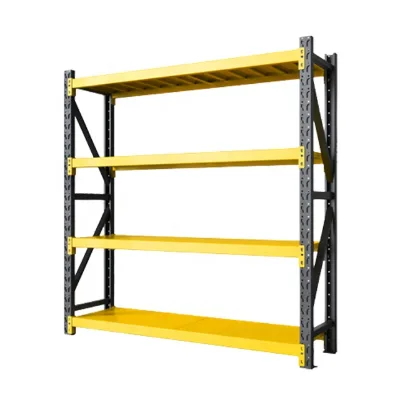
Warehouse Rack Use and Stainless Steel Material Warehouse Storage Rack
$35.50 - $110.50
MOQ: 20 Pieces




Comprehensive Sourcing Guide
Semi-closed Pallet Steel Storage Rack Sourcing Guide
Buyers evaluating semi-closed pallet steel storage racks must first distinguish between fixed and adjustable mobility configurations, as the supply data indicates both types are available in the market. The observed product attributes reveal that while some units are designed as fixed structures, others offer adjustable features to accommodate varying warehouse layouts. This distinction is critical because the mobility type directly influences the installation complexity and the long-term flexibility of the storage system. Procurement teams should verify the specific mobility requirement for their facility before requesting quotes, as mixing these configurations can lead to compatibility issues during assembly.
The structural design of these racks often incorporates a layer frame or rack structure, with some models explicitly described as semi-closed to enhance safety and organization. The material composition is predominantly steel, though specific listings also mention combinations involving reinforced concrete or wood, which may indicate specialized applications or hybrid designs. Buyers should carefully review the material specifications provided by suppliers to ensure the chosen rack meets the load-bearing requirements of their specific inventory. Understanding the exact material mix is essential for determining the durability and suitability of the rack for heavy industrial or light-duty warehouse environments.
Product Scope and Observed Listing Signals
The market for semi-closed pallet steel storage racks displays a wide range of product models, including identifiers such as NH, TPR201701, and PR1009, which suggests a diverse catalog of available solutions. These models vary significantly in height, with observed ranges spanning from 0-5 meters for light-duty applications up to 15 meters for high-bay industrial storage. Procurement professionals must align their height requirements with the specific model capabilities, as selecting a unit that exceeds the structural limits of the facility can result in safety hazards or installation failures. The variation in height also impacts the overall storage density and the type of forklift equipment required for operation.
Listing signals indicate that these racks are designed for a broad spectrum of usage scenarios, including warehouse storage, industrial facilities, food processing, supermarkets, and tool organization. The observed usage categories highlight the versatility of the semi-closed design, which can be adapted for clothing, beverage, and general tool storage needs. However, buyers should not assume that every listed product satisfies all these applications; instead, they must verify the specific usage rating for each model. Confirming that the rack is suitable for the intended industry, such as food-grade environments, is a necessary step to ensure compliance with sector-specific hygiene and safety standards.
Technical Specifications to Verify
When assessing technical specifications, the lane depth and storage density are critical parameters that define the efficiency of the semi-closed pallet rack system. Data indicates that certain configurations offer a lane depth of 2-8 slots, which allows for increased storage density by up to 60% compared to traditional layouts. Buyers must calculate their specific inventory turnover rates to determine the optimal lane depth, as deeper lanes may reduce accessibility for older stock. Verifying the forklift type compatibility, such as counterbalance requirements, is equally important to ensure that the chosen rack system can be operated safely and efficiently by existing material handling equipment.
Load capacity and physical dimensions are other vital technical factors that require rigorous verification before finalizing a purchase. The observed load capacity ranges from 500 to 4000kg per layer, a significant variance that dictates the suitability of the rack for different product weights. Additionally, standard dimensions like L2000 X W700 X H2000mm or OEM sizes are available, meaning buyers must provide precise floor plans to ensure a custom fit. It is essential to confirm that the rack height, which can range from 5 to 15 meters, aligns with the ceiling height and fire suppression systems of the warehouse to avoid costly retrofits or safety violations.
Compliance and Safety Documentation
Compliance with international standards is a non-negotiable aspect of sourcing semi-closed pallet steel storage racks, particularly given the high-load industrial applications. The supply data confirms that many manufacturers hold ISO9001, ISO14001, and ISO10012 certifications, which indicate a commitment to quality management, environmental responsibility, and measurement system analysis. Buyers should request proof of these certifications to ensure that the supplier adheres to recognized global standards for production and safety. While EN 15512 is a relevant industry standard, its specific application should be verified against the supplier's documentation rather than assumed.
Safety documentation must also address the structural integrity and operational safety of the semi-closed design, which often includes features like rail materials made from manganese steel. The presence of CE certification on some products suggests compliance with European safety directives, but buyers should verify if this applies to the specific model being purchased. It is crucial to obtain detailed load charts and safety manuals that outline the maximum permissible loads and the correct assembly procedures. Without these documents, the risk of structural failure increases, potentially leading to severe accidents and liability issues in the workplace.
Cost Drivers and Commercial Terms
The cost of semi-closed pallet steel storage racks is influenced by several key drivers, including the material composition, customization level, and packaging requirements. While the observed price range spans from 0.75 to 800 USD, this wide variance likely reflects differences in unit size, load capacity, and the extent of customization. Buyers should be aware that specialized packaging, such as the "Special Package for Export" or "Standard Export Pack," adds to the overall cost but is necessary to prevent damage during international shipping. Understanding the breakdown of these costs helps in negotiating better terms and avoiding hidden fees that can inflate the final purchase price.
Commercial terms regarding minimum order quantities (MOQ) and lead times are equally important for budgeting and project planning. The observed MOQ range of 1 to 10,000 units indicates that suppliers cater to both small-scale pilots and large-scale industrial deployments. Buyers must clarify the lead time associated with their specific order size and customization needs, as custom sizes or new-type developments may require longer production cycles. Additionally, the origin of the product, primarily from Nanjing or Suzhou in China, can impact shipping costs and delivery schedules. Establishing clear terms for payment, delivery, and potential delays is essential for a smooth procurement process.
Supplier Qualification and Quality Control
Supplier qualification should focus on verifying the manufacturer's ability to deliver consistent quality across different product models and customization requests. The availability of customization services suggests that suppliers can adapt standard designs to meet specific client needs, but this requires a robust quality control process to ensure that modifications do not compromise structural integrity. Buyers should inquire about the supplier's internal testing procedures and their track record with similar projects in the industrial or warehouse sectors. A supplier with a history of successful deliveries and positive client feedback is more likely to meet the rigorous demands of a semi-closed pallet rack project.
Quality control measures must extend beyond the initial manufacturing phase to include inspection and testing before shipment. The use of specialized materials like manganese steel for rails and the combination of steel with wood or concrete require precise manufacturing techniques to ensure durability. Buyers should request third-party inspection reports or witness factory audits to validate the quality of the materials and the assembly process. Ensuring that the supplier adheres to the stated certifications and standards is a critical step in mitigating the risk of receiving substandard products that could fail under operational loads.
Long-Term Procurement Checks
Long-term procurement success depends on establishing a reliable supply chain that can support future expansion and maintenance needs. Buyers should assess the supplier's capacity to provide spare parts and technical support over the lifespan of the storage system, as semi-closed racks may require periodic adjustments or component replacements. The availability of different models, such as the TU-R03 or TU-P16, suggests a modular approach that could facilitate future upgrades or expansions. A supplier with a flexible product line is better positioned to adapt to changing storage requirements without necessitating a complete system overhaul.
Maintenance and serviceability are also key factors in the long-term viability of the procurement decision. The observed attribute of "Common Use" serviceability indicates that these racks are designed for regular industrial applications, but buyers must confirm the ease of maintenance and the availability of service protocols. Regular inspections and adherence to safety guidelines are necessary to maintain the structural integrity of the rack over time. Establishing a clear maintenance schedule and ensuring that the supplier provides guidance on best practices will help extend the operational life of the storage system and protect the investment.
FAQs
What is the typical height range for semi closed pallet steel storage racks?
The typical height range for these racks is 5 to 15 meters. This vertical capacity allows for efficient use of warehouse space. Some lighter duty configurations may operate between 0 and 5 meters. The structural design supports significant vertical stacking while maintaining stability for industrial storage applications.
Can these racks be customized for specific warehouse dimensions?
Yes, customization is available for specific warehouse dimensions. Manufacturers offer OEM sizes and selective configurations to fit unique layouts. The standard export packaging ensures safe transport of these custom-built units. Buyers can specify layer frames or mezzanine structures to match their operational needs.
Which certifications are commonly associated with these steel storage racks?
Common certifications include ISO9001, ISO14001, ISO10012, and CE. These credentials verify quality management and environmental standards. The steel construction meets rigorous industrial safety requirements. Buyers should verify specific certificate validity with suppliers to ensure compliance with local regulations and project specifications.
How does the load capacity vary across different rack layers?
Load capacity typically ranges from 500 to 4000kg per layer. This variation depends on the specific model and structural design. Heavier duty racks utilize reinforced steel or concrete combinations. Lighter duty options are suitable for smaller items. Proper load distribution is essential for maintaining structural integrity during operation.
What packaging methods are used for exporting these storage racks?
Export packaging includes special packages and standard pallet racking cargo packs. Some units are shipped in cartons or by sea. The packaging is designed to protect steel components during transit. Buyers should confirm specific packing details with suppliers to ensure safe delivery and easy on-site assembly.
Where are these semi closed pallet racks typically manufactured?
These racks are typically manufactured in Nanjing and Suzhou, China. These regions are known for steel fabrication expertise. Buyers can source directly from factories in these locations. The proximity to major ports facilitates efficient export logistics. Origin verification is recommended to ensure quality control standards are met.