Source Dual-Mode GPS and Beidou GNSS Timing Receiver for Surveying, Navigation, and Timing
Compare 20 Dual-Mode GPS and Beidou GNSS Timing Receiver options featuring multichannel capabilities and high timing accuracy. Buyers can evaluate models with single or dual-frequency support, varying channel counts, and specialized applications like topographic surveying and engineering projects.
Key considerations
Products List


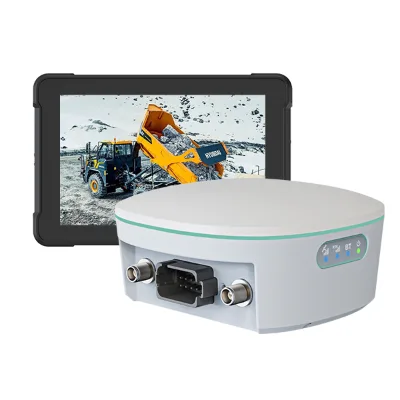
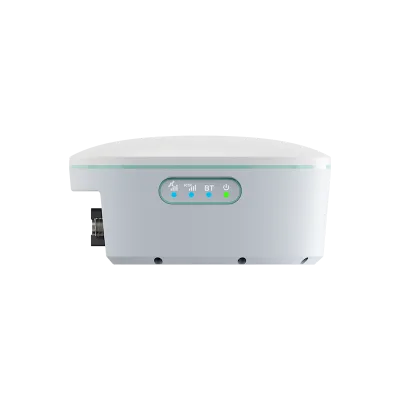

China Factory Dual Frequency Gnss Receiver GPS Glonass Beidou L1l2 M68p
$1000.00 - $1200.00
MOQ: 1 Sets


Comprehensive Sourcing Guide
Dual-Mode GPS and Beidou GNSS Timing Receiver Sourcing Guide
Procuring a dual-mode GPS and Beidou GNSS timing receiver requires a rigorous evaluation of signal integrity and timing precision, as these devices serve as the backbone for synchronization in telecommunications, power grids, and financial networks. The core functionality relies on the receiver's ability to simultaneously process signals from the Global Positioning System and the BeiDou Navigation Satellite System, ensuring redundancy and enhanced availability in challenging environments. Buyers must prioritize models that explicitly support the specific frequency bands and signal structures required for their infrastructure, as the integration of these constellations directly impacts the reliability of the timing output.
The market offers a diverse range of hardware configurations, from compact integration modules to robust geodesic-grade receivers, each tailored to specific operational demands. While some units are designed for high-precision surveying with sub-nanosecond accuracy, others focus on general timing distribution with slightly relaxed tolerances. Understanding the distinction between these product types is essential, as the selection dictates the necessary supporting infrastructure, such as antenna placement and cabling, and ultimately determines the system's resilience against signal interference or environmental disruptions.
Product Scope and Observed Listing Signals
The observed product landscape includes a wide spectrum of timing receivers, ranging from specialized modules like the CL-1072 and CL-105X to comprehensive survey-grade units such as the Cm3 and Bd5 GNSS RTK receivers. Listings indicate that these devices vary significantly in their operating principles, with some utilizing code-related types for general timing while others employ interferometric or square types for high-precision applications. The presence of models supporting both single and dual-frequency operations suggests that buyers must carefully match the frequency capability to their specific signal environment, as dual-frequency receivers generally offer superior ionospheric correction and accuracy in complex urban or obstructed settings.
Signal support is a critical differentiator among the available units, with many products explicitly listing compatibility with GPS L1/L5, Galileo E1/E5, Glonass L1, and Beidou B1/B2 signals. This multi-constellation support is vital for maintaining timing stability, particularly in regions where satellite visibility might be limited by terrain or atmospheric conditions. The observed data also highlights the existence of specialized anti-interference modules and receivers with high channel counts, such as those boasting 1008 or 1408 channels, which are designed to track a maximum number of satellites simultaneously to ensure continuous and reliable timing solutions.
Technical Specifications to Verify
Timing accuracy is the primary performance metric for these receivers, with observed specifications ranging from sub-30 nanosecond precision for general integration types to sub-5 nanosecond performance for high-end geodesic models. Buyers must verify the specific timing accuracy claims against their operational requirements, as the difference between a <30ns and <5ns specification can determine the viability of the device for critical infrastructure applications like 5G base station synchronization or power grid phase measurement. The distinction between static accuracy, often cited in millimeters plus parts per million, and real-time kinematic (RTK) accuracy is also crucial, as the latter is essential for dynamic surveying applications while the former applies to fixed installation scenarios.
Beyond raw timing precision, the physical and operational characteristics of the receiver must align with the deployment environment. Specifications such as the 85mm(W)X30mm(H)X70mm(D) form factor for certain models indicate compact integration capabilities, while others feature specialized attributes like tilt sensors, LED screens, and dual-battery systems for field operations. The internal memory capacity, observed at 4GB in some listings, and the channel count, which can reach up to 1408, are key indicators of the device's ability to handle complex signal processing and data logging tasks without performance degradation.
Compliance and Safety Documentation
Regulatory compliance is a non-negotiable aspect of sourcing GNSS timing receivers, with observed certifications including RoHS, CE, and ISO/TS standards ensuring that the devices meet international safety and environmental requirements. These certifications are particularly important for equipment deployed in telecommunications and industrial sectors, where adherence to electromagnetic compatibility and hazardous substance restrictions is mandated by law. Buyers should request current certification documents for every batch of equipment, as the presence of these marks on the product page serves as a baseline indicator of the manufacturer's commitment to quality and regulatory adherence.
In addition to general safety certifications, the adherence to specific industry standards such as ITU-T and ETSI is critical for ensuring interoperability and performance in global networks. These standards govern the technical interfaces and performance benchmarks that timing receivers must meet to function correctly within existing communication infrastructures. Procurement teams must verify that the supplier can provide test reports or compliance statements confirming that the specific model number, such as the G990II or VRTK2, has been validated against these rigorous standards to prevent integration failures or regulatory penalties.
Cost Drivers and Commercial Terms
The pricing for dual-mode GNSS timing receivers varies widely, with observed ranges extending from approximately $2.85 for basic modules to over $5,000 for high-end, multi-constellation survey-grade units. This disparity is driven by the complexity of the internal hardware, the number of supported channels, the precision of the timing output, and the inclusion of specialized features like anti-interference capabilities or ruggedized enclosures. Buyers should anticipate that higher costs are associated with devices offering superior accuracy, such as those with PPS accuracy under 5ns, and those designed for demanding applications like marine surveying or topographic mapping.
Commercial terms, including Minimum Order Quantity (MOQ) and warranty provisions, play a significant role in the total cost of ownership and procurement strategy. The observed MOQ range of 1 to 500 units allows for flexibility, enabling small-scale pilots or large-scale deployments depending on the supplier's policy. Warranty periods, which have been observed as either 1 year or 3 years, should be carefully evaluated in conjunction with the device's intended lifespan and the criticality of the application, as a longer warranty often reflects the manufacturer's confidence in the product's durability and reliability.
Supplier Qualification and Quality Control
Supplier qualification extends beyond the basic product listing to include an assessment of the manufacturer's ability to provide consistent quality and technical support. The presence of customization options and the variety of product models, such as the Cm5 and Bd5 series, suggest that capable suppliers can tailor solutions to specific client needs, but this requires a robust quality control process to ensure that custom configurations meet the same rigorous standards as standard models. Buyers should verify the supplier's track record in delivering products that maintain their specified performance characteristics over time, particularly regarding the stability of the timing signal and the durability of the hardware.
Quality control also encompasses the packaging and logistics aspects of the supply chain, as observed in the use of hard plastic cases, boxes, and multi-carton packing for different product lines. Proper packaging is essential for protecting sensitive electronic components during transit, especially for devices that may be deployed in harsh environments. Procurement teams should ensure that the supplier has established protocols for handling and shipping these units to prevent damage, and that the packaging includes all necessary documentation, such as user manuals and calibration certificates, to facilitate immediate deployment upon arrival.
Long-Term Procurement Checks
Sustaining the performance of GNSS timing receivers over the long term requires a proactive approach to maintenance and firmware updates. Buyers should establish a relationship with the supplier that includes access to firmware upgrades, which can enhance signal processing algorithms and correct for any identified vulnerabilities in the timing output. The availability of spare parts and the supplier's ability to support the product lifecycle are critical, as the obsolescence of specific models like the CL-1045 or VRTK2 could disrupt operations if replacement units are not readily available.
Regular performance verification is another essential component of long-term procurement, involving periodic testing of the receiver's timing accuracy and signal reception capabilities. Given the observed specifications for timing accuracy and channel counts, buyers should implement a schedule for validating that the devices continue to meet their original performance claims, particularly in the face of changing satellite constellations or increasing levels of radio frequency interference. This ongoing diligence ensures that the timing infrastructure remains reliable and that any deviations from expected performance are identified and addressed before they impact critical operations.
FAQs
What signals does the Dual-Mode GPS and Beidou GNSS Timing Receiver support?
The receiver supports GPS and Beidou signals. Specific models like the Cm3 Gnss Rtk also handle GPS L1/L5, Galileo E1/E5, Glonass L1, and Beidou B1/B2 frequencies. This multi-constellation capability ensures robust timing accuracy for diverse surveying and engineering applications.
What certifications are available for these gnss timing receivers?
Available certifications include RoHS, CE, and ISO/TS ISO ISOO FCC. These standards ensure compliance with international safety and electromagnetic compatibility requirements. Buyers can verify specific certification documents for each model to meet regulatory needs in different global markets.
Can the Dual-Mode GPS and Beidou GNSS Timing Receiver be customized?
Yes, customization is available for these receivers. Buyers can request specific configurations to suit unique project requirements. This flexibility allows for tailored solutions in topographic surveying, engineering survey, and marine survey applications, ensuring the equipment meets precise operational needs.
What is the timing accuracy of the gnss timing receiver?
The timing accuracy is less than 30ns for standard models. High-precision variants offer PPS accuracy of less than 5ns. This level of precision is critical for applications requiring exact synchronization, such as telecommunications and power grid monitoring systems.
What is the warranty period for the gnss timing receiver?
Warranty periods vary by model, typically offering 1 year or 3 years of coverage. Buyers should check the specific warranty terms for the selected model, such as the Cm3 or Bd5 Gnss Rtk. This ensures long-term support and reliability for professional surveying operations.
What is the packaging type for the gnss timing receiver?
Packaging options include Box, Hard Plastic Case, and Carton. Some models are packed as 1 Set in 2 Cartons. This ensures safe transport and protection of sensitive electronic components during shipping, maintaining product integrity upon arrival at the destination.