Source Clock Distribution Amplifiers for KTV, AV, and Professional Systems
Find reliable Clock Distribution Amplifier options for professional audio, AV, and KTV systems. Compare 30 listings featuring transistor-based designs, 4-channel outputs, and Class D circuits. Evaluate power ratings, dimensions, and packaging details to select the right component for your integration needs.
Key considerations
Products List


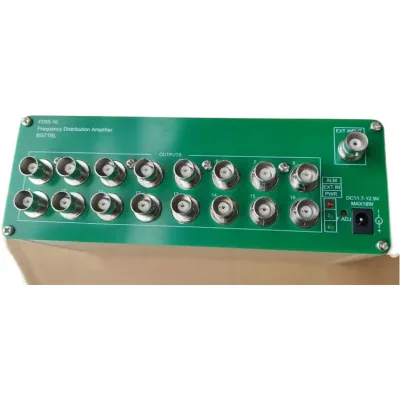
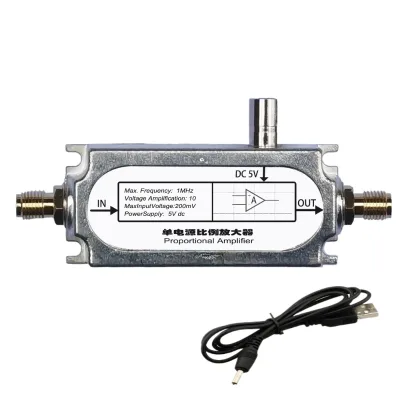


Comprehensive Sourcing Guide
Clock Distribution Amplifier Sourcing Guide
Procurement professionals must first distinguish between general power amplifiers and specialized clock distribution units, as the supplied data reveals a mix of professional audio and signal processing equipment. While many listed items are labeled as professional amplifiers for KTV or AV systems, true clock distribution requires specific timing integrity features often absent in standard audio power stages. Buyers should verify if the "Pre-amplifier" or "Post Amplifier" functions listed actually support low-jitter clock signal regeneration rather than just audio voltage boosting.
The observed product range includes models with varying channel counts and output powers, such as 4CH configurations delivering up to 2500W per channel, which are typically unsuitable for pure clock distribution tasks. Sourcing strategies must filter these high-power audio units from the broader catalog to identify components with the specific low-noise, high-bandwidth characteristics required for digital timing applications. Misidentifying a high-power audio amplifier as a clock distributor can lead to system instability in precision timing networks.
Product Scope and Observed Listing Signals
The market data indicates a diverse inventory where "Professional Amplifier" and "Transistor Amplifier" are the dominant classifications, often paired with usage scenarios like KTV systems or general AV applications. Buyers must carefully parse these listings to find units that explicitly support digital signal distribution, as the majority of the observed products focus on audio power delivery rather than clock synchronization. The presence of "DSP: No" in several entries further suggests a lack of advanced signal processing capabilities needed for high-fidelity clock distribution.
Listing signals such as "Push-Pull Amplifier" and specific output power ratings in ohms (8ohm, 4ohm, 2ohm) are strong indicators of audio power amplification rather than timing signal management. While some entries mention "Tension Power Amplifier" or specific input ranges like 0-10V, these attributes often relate to control voltage applications rather than the high-speed digital clock signals required for synchronization. Procurement teams should treat these power ratings as observations of audio capability, not as proxies for clock distribution performance.
Technical Specifications to Verify
When evaluating potential suppliers, the primary technical verification must focus on the amplifier's ability to maintain signal integrity at high frequencies, a requirement not explicitly detailed in the provided power ratings. Buyers should request detailed frequency response curves and jitter specifications, as the observed "Conductive Mode: D" and "Class D amplifier circuit" descriptions refer to power efficiency classes that may introduce noise unsuitable for sensitive clock signals. The absence of specific DSP features in many listings necessitates a deeper inquiry into the analog circuit design for timing applications.
Dimensional and weight constraints, such as the observed 483mm width and 12.5KG net weight, are critical for rack integration but do not guarantee functional suitability for clock distribution. The "4CH" channel count and "0-24V" output ranges observed in the data suggest these units are designed for multi-channel audio or control voltage distribution rather than single-ended or differential clock signaling. Verification of input impedance and output drive capability for digital logic levels is essential before considering any of these power amplifiers for timing network deployment.
Compliance and Safety Documentation
Safety compliance is a non-negotiable aspect of sourcing, with the observed data confirming the presence of CE certification across multiple product entries. Buyers must ensure that the specific model selected for clock distribution carries valid CE, ISO, and RoHS certifications, as these are explicitly listed for some units but may not apply to all variants in the catalog. The "Net Weight: 12.5KG" and specific packaging standards like "Inner Carton Packaging" indicate robust physical construction, which often correlates with better electromagnetic shielding for sensitive signal applications.
Beyond basic safety marks, procurement teams should verify that the "Class D amplifier circuit" design meets relevant electromagnetic compatibility (EMC) standards for digital environments. The observed "Place of Origin: Guangdong, China" and "Foshan, China" locations suggest a manufacturing hub with established export compliance, yet buyers must confirm that the specific batch adheres to the latest regional safety directives. Documentation should explicitly state compliance with noise emission limits, as Class D amplifiers can generate significant high-frequency interference that disrupts clock signals.
Cost Drivers and Commercial Terms
The observed price range of 0.68 to 10,000 USD reflects a vast disparity between low-cost components and high-power professional units, making cost analysis complex for specialized applications. Buyers should anticipate that true clock distribution amplifiers, which require precision components and rigorous testing, will likely fall toward the higher end of this spectrum, distinct from the lower-priced audio power amplifiers. The "Selling Units: Single item" and "MOQ: 1-200" ranges indicate flexibility, but volume discounts may be limited for highly specialized timing equipment.
Commercial terms such as the "2-3 Days After Receiving The Deposit" lead time suggest a responsive supply chain, yet this speed may vary for custom configurations or specific certification requirements. The "Customization: Available" attribute offers a pathway to tailor units for specific clock distribution needs, but buyers must clarify if customization impacts the lead time or certification status. Understanding the relationship between the "48339889mm" form factor and the internal component quality is vital for justifying the final procurement cost.
Supplier Qualification and Quality Control
Supplier qualification should prioritize manufacturers with a proven track record in professional audio and signal processing, as evidenced by the "Professional" usage classification in the data. The presence of multiple model numbers like "FP10000Q" and "Pau-4b" indicates a diverse product line, but buyers must verify that the specific supplier has the engineering capability to support clock distribution applications. Quality control processes should include rigorous testing of signal integrity, as the "New" condition of the products does not guarantee performance in high-frequency timing scenarios.
Inspection protocols must account for the "Box" and "Carton Packaging" variations observed, ensuring that shipping conditions do not compromise the internal circuitry of sensitive amplifiers. The "Condition: New" status is a baseline requirement, but buyers should request factory test reports that specifically address signal fidelity and thermal performance under load. Given the "China" origin, establishing a clear communication channel for technical support and warranty claims is essential for maintaining long-term operational reliability.
Long-Term Procurement Checks
Sustaining a reliable supply chain for clock distribution amplifiers requires regular audits of the supplier's ability to maintain consistent quality and certification status over time. The "Lead Time: 2-3 Days" is an attractive short-term metric, but buyers must verify if this duration remains stable during peak demand periods or supply chain disruptions. Long-term contracts should include clauses for periodic re-certification of products to ensure ongoing compliance with evolving international safety and EMC standards.
Performance monitoring should extend beyond initial acceptance testing to include field reliability data, as the "Class D" topology may exhibit different aging characteristics compared to traditional linear amplifiers. Buyers should establish a feedback loop with the supplier to track any changes in the "prod_model" or "prod_standard" that could affect compatibility with existing timing networks. Regular reviews of the "Inner Carton Packaging" and "Outer Carton Packaging" integrity are also necessary to prevent physical damage during extended storage and deployment cycles.
FAQs
How does a Clock Distribution Amplifier improve signal timing?
A Clock Distribution Amplifier takes a single reference clock input and drives multiple outputs with matched amplitude and phase, so each receiving device sees a consistent signal. This reduces skew and jitter accumulation compared with passive splitting. Performance depends on input signal type, output port format, and the load impedance each channel must drive.
What output specifications are typically offered for a Clock Distribution Amplifier?
Listings commonly describe sine wave outputs around 10m and 100m through BNC or SMA ports at approximately +13dbm, plus square wave outputs around -3.3vpp or -5vpp. Buyers should match the output format to the receiving instrument's input requirements, since BNC and SMA interfaces and voltage swings are not interchangeable in all setups.
Which input range applies to Clock Distribution Amplifier modules used in control systems?
Some tension power amplifier style modules accept a 0-10V control input and deliver a 0-24V output with a 4A maximum. This configuration suits industrial drive applications rather than RF clock distribution, so buyers must confirm the intended function, since clock distribution, pre-amplifier, and post-amplifier roles appear across different product families.
Can clock distribution amplifiers be customized for specific output configurations?
Yes, customization is available for many amplifier products, including professional series models. Buyers can typically specify connector types, port configurations, and performance parameters to match their systems. When requesting customization, provide the required signal waveform, voltage swing, and connector format, then confirm lead time, since some listings indicate dispatch about 2-3 days after receiving a deposit for standard configurations.
What certifications should buyers expect from Clock Distribution Amplifier products?
Certification varies by product family. Some listings show CE certification, while others list CE, ISO, and RoHS together. Certification confirms compliance with safety and environmental requirements for your destination market, but it does not describe electrical performance. Always request the specific certificate documents for the exact model number you intend to purchase before committing.
How is a Clock Distribution Amplifier packed and shipped?
Packaging varies by model. Common arrangements include inner carton packaging with an outer carton, a single box, or carton-only packing. Smaller modules are listed at approximately 15cm x 10cm x 10cm and 1kg per piece, while professional amplifiers are much larger and heavier. Selling units are typically single items, so confirm per-unit dimensions and weight before arranging freight.
Which channel counts are available for professional amplifier products?
Professional series models such as the FP10000Q are listed as 4-channel units, with per-channel output power stated at 8ohm, 4ohm, and 2ohm loads. Channel number matters when one reference must feed several devices. For clock distribution use, verify that the product's conductive mode and function type, whether pre-amplifier, post amplifier, or combined, match your application.
How do buyers compare amplifier suppliers effectively?
Compare suppliers on confirmed attributes rather than listing photos: model numbers, electrical specifications, certification documents, packaging, origin, and stated lead times. Products originate from locations such as Foshan, Guangdong, China. Request datasheets for the exact model, verify which certification applies, and confirm minimum order quantity, since listed MOQs range from single units to larger wholesale quantities.