Source Durable Canvas Fire Hose for Firefighting, Industrial, and Emergency Use
Compare 16 listings of Durable Canvas Fire Hose with PVC lining, working pressure up to 1.0MPa, and various coupling types. Buyers can review specifications like diameter, length, and material options from suppliers in China.
Key considerations
Products List


Comprehensive Sourcing Guide
Sourcing Guide for Durable Canvas Fire Hose Procurement
Understanding Technical Specifications and Material Composition
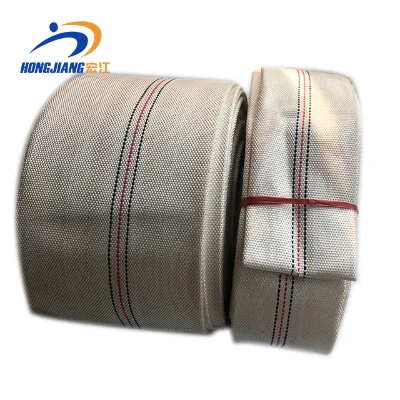
When sourcing Durable Canvas Fire Hose, buyers must first establish a clear understanding of the fundamental technical specifications that define product performance. The core material composition is a critical differentiator, with Polyvinyl Chloride (PVC) and canvas blends being prominent options in the current market. The jacket material, which provides structural integrity and abrasion resistance, is frequently identified as a combination of Polyester, Cotton, or Canvas. This specific weave type, often described as Twill Weaving, contributes significantly to the hose's flexibility and durability under high-pressure conditions.
The physical dimensions of the hose are equally vital for ensuring compatibility with existing fire suppression systems. The product model range observed in the market spans from 1 inch to 16 inches, with specific size configurations including 1", 1 1/2", 2", 2 1/2", 3", 4", 6", 8", 10", 12", 14", and 16". Buyers should verify that the selected hose matches the required diameter for their specific application. Furthermore, the thickness of the hose wall is often customizable, allowing procurement teams to tailor the product to specific pressure requirements. Standard length specifications for fire hoses are commonly observed at 20 meters, though this can vary based on custom orders. The working pressure is a critical safety metric, with standard configurations often rated at 1.0 MPa. It is essential to confirm that the working pressure rating aligns with the operational demands of the intended facility to prevent catastrophic failure during use.
Compliance, Certification, and Standard Verification
Navigating the regulatory landscape is a non-negotiable aspect of sourcing fire safety equipment. Buyers must prioritize suppliers who can provide verifiable documentation regarding product certifications. The market data indicates that reputable manufacturers often hold certifications such as CCCF (China Compulsory Fire Product Certification) and ISO9001. These certifications serve as evidence that the manufacturing process adheres to international quality management standards and specific fire safety regulations.
In addition to general quality certifications, the product standards themselves must be scrutinized. The industry utilizes various standardization codes to define hose dimensions and performance capabilities. Observed standards in the supply chain include metric and imperial measurements such as 1"/1.5"/2"/2.5"/3"/4"/6", as well as broader ranges like 1"-10" or 1"-16". Some specifications reference specific dimensional standards like 1000*1500, which may relate to packaging or testing dimensions rather than the hose itself. Buyers should request the specific standard code applicable to the product being purchased, as this ensures the hose meets the legal and safety requirements of the destination country. Relying on a supplier who can demonstrate compliance with these established standards is the primary method for mitigating the risk of procuring substandard equipment.
Cost Drivers and Pricing Dynamics
The pricing structure for canvas fire hoses is influenced by a complex interplay of factors, including material costs, manufacturing complexity, and order volume. The observed price range in the market spans from 0.2 USD to 30 USD per unit, reflecting the vast difference between basic configurations and specialized, high-performance units. Several key variables drive these costs. The choice of jacket material, such as premium canvas versus standard polyester, directly impacts the base price. Similarly, the inclusion of a lining within the hose structure adds to the manufacturing cost but enhances durability and flow efficiency.
Order volume plays a decisive role in the final unit price. The Minimum Order Quantity (MOQ) varies significantly across suppliers, ranging from as low as 1 unit to as high as 3000 units. Buyers with smaller procurement needs may face higher per-unit costs, while those capable of meeting higher MOQ thresholds can negotiate more favorable pricing tiers. Additionally, the complexity of the hose coupling type and structure affects the cost. Options such as Screw couplings, Plug-in couplings, or specialized types like Storz, GOST, John Morris, and Machino couplings require different manufacturing processes and tooling, which are reflected in the final price. Customization requests, such as specific lengths, colors (e.g., White), or custom thicknesses, will also introduce additional costs beyond the standard catalog pricing.
Typical Applications and Manifold Configurations
Durable canvas fire hoses are designed for a variety of critical applications, ranging from municipal fire fighting to industrial plant protection. The versatility of these hoses is often enhanced by the inclusion of manifold types, which allow for the distribution of water to multiple outlets. The market features specific configurations such as the "2 Water Segregator" and "3 Water Segregator" manifold types. These components are essential for scenarios requiring simultaneous water delivery to different zones or for connecting multiple hoses to a single water source efficiently.
The intended application dictates the required hose specifications. For instance, hoses with a working pressure of 1.0 MPa are suitable for standard fire suppression tasks where high-pressure water streams are not the primary requirement. The hose length of 20 meters is a common specification for portable fire fighting units, allowing for mobility while maintaining reach. The choice of hose coupling is also application-dependent; the availability of various coupling types, including Fire Hose Couplings and Fire Hose Nozzles, ensures compatibility with existing infrastructure. Buyers should match the hose specifications to the specific operational environment, ensuring that the manifold type and coupling structure align with the layout of the fire suppression system they intend to install or upgrade.
Supplier Evaluation and Origin Verification
Evaluating potential suppliers requires a rigorous assessment of their operational capabilities and geographic origins. The supply chain for fire hoses is heavily concentrated in specific regions, with China and Fujian identified as key production hubs. Understanding the origin of the product is crucial for assessing logistics, lead times, and potential trade barriers. Suppliers located in these regions often have established infrastructure for mass production, but buyers must verify the specific factory location to ensure it matches the claimed origin.
Logistics and transportation methods are also critical factors in supplier evaluation. The standard transportation method for these products is by sea from major ports such as Ningbo Port. Buyers should confirm the shipping terms and ensure that the supplier has the capability to handle sea freight efficiently. Packaging is another indicator of supplier professionalism. Options range from General packing to more specific methods like Pack in PP Bag, Woven Bag, Carton, or Pallet. The presence of "Sea-Worthy Packing" is a strong indicator that the supplier understands the requirements for international shipping and wants to ensure the product arrives in pristine condition. When evaluating a supplier, buyers should request detailed information about their production capacity, quality control processes, and their ability to meet specific customization requests.
Quality Control and Long-Term Procurement Considerations
Ensuring long-term reliability requires a robust quality control strategy. Buyers should not rely solely on the supplier's claims but must implement their own verification processes. This includes requesting test results for working pressure, burst pressure, and abrasion resistance. The presence of a lining within the hose is a key quality indicator, as it prevents water absorption and maintains the structural integrity of the jacket over time. The weaving type, specifically Twill Weaving, should be inspected to ensure it provides the necessary flexibility and strength.
For long-term procurement, consistency in supply is paramount. Buyers should assess the supplier's ability to maintain consistent quality across different production batches. The availability of customization options, such as specific diameters from 1" to 16" or custom thicknesses, allows for future-proofing the procurement strategy. Additionally, the packaging standards, whether General, Carton, or Woven Bag, should be evaluated to ensure they protect the product during storage and transit. Buyers should also consider the availability of spare parts, such as adaptors and couplings, to ensure that the fire hose system remains operational for years. Establishing a long-term relationship with a supplier who can provide consistent quality, timely delivery, and responsive customer support is essential for maintaining the safety and reliability of fire suppression systems.
Summary of Key Procurement Parameters
To facilitate a streamlined decision-making process, the following table summarizes the critical parameters identified in the market analysis. This overview serves as a checklist for buyers to verify against supplier data sheets and product catalogs.
| Parameter Category | Key Attributes & Observations | Verification Requirement |
|---|---|---|
| Material & Construction | PVC, Canvas, Polyester, Cotton; Twill Weaving; With Lining | Confirm material composition and weave type. |
| Dimensions & Specs | Diameter: 90mm; Length: 20m; Sizes: 1"-16"; Thickness: Customized | Match size and length to system requirements. |
| Pressure & Performance | Working Pressure: 1.0 MPa | Verify pressure rating against operational needs. |
| Couplings & Manifolds | Screw, Plug-in, Storz, GOST, John Morris; 2/3 Water Segregator | Ensure compatibility with existing infrastructure. |
| Certifications | CCCF, ISO9001 | Request valid certification documents. |
| Origin & Logistics | China, Fujian; Sea Freight from Ningbo Port | Confirm origin and shipping terms. |
| Packaging | PP Bag, Woven Bag, Carton, Pallet, Sea-Worthy | Ensure packaging meets storage and transport needs. |
By adhering to these guidelines and rigorously verifying the provided facts, buyers can confidently source durable canvas fire hoses that meet the highest standards of safety and performance. The focus on technical specifications, certification, and supplier reliability ensures that the procurement process yields products that are not only compliant but also capable of performing effectively in critical emergency situations.
FAQs
What materials are used for durable canvas fire hoses?
Durable canvas fire hoses typically use PVC, polyester, cotton, or canvas jackets with a lining. The construction often features twill weaving to ensure flexibility and strength under high-pressure conditions while maintaining structural integrity.
Which certifications should I verify for fire hose safety?
You should verify that products hold CCCF and ISO9001 certifications. These documents confirm the manufacturing process adheres to international quality management standards and specific fire safety regulations required for reliable emergency equipment.
Can I customize the hose thickness and dimensions?
Yes, customization is available for thickness and various diameters ranging from 1 inch to 16 inches. Buyers can also request specific lengths, such as the standard 20 meters, to match their unique fire suppression system requirements.
What coupling types are available for these fire hoses?
Available coupling structures include screw and plug-in types with various standards like Storz, GOST, and John Morris. These options ensure compatibility with existing fire suppression infrastructure and allow for versatile water distribution configurations.
How is the working pressure rated for these hoses?
Standard configurations are often rated at a working pressure of 1.0 MPa. It is essential to confirm this rating aligns with your facility's operational demands to prevent failure during high-pressure fire suppression tasks.
Where are these fire hoses typically manufactured and shipped from?
Products are commonly manufactured in China, specifically in regions like Fujian, and shipped by sea from Ningbo Port. Buyers should verify the specific factory location to ensure it matches the claimed origin for accurate logistics planning.