Source Lithium Battery Fire Extinguisher for Vehicles, Warehouses, and Data Centers
Find reliable Lithium Battery Fire Extinguisher options for industrial and commercial safety needs. Compare 30 available models featuring carbon steel and stainless steel bodies, with capacities from 6L to 9L and CE EN3 certifications. Evaluate specs like 14bar working pressure and 3.5m range to select the right portable solution for Class A or C fire risks.
Key considerations
Products List


High Quality Hanging Automatic Fire Extinguisher
$8.50 - $13.50
MOQ: 100 Pieces
Shaoxing Safety Plus Fire Fighting Equipment Manufacturing Co., Ltd.


6kg CO2 Fire Extinguisher for Electrical Fire Safety
$12.60 - $14.00
MOQ: 100 Pieces
Jiangsu Huiyuan Fire-Fightiing Science &Technology Co., Ltd.



Comprehensive Sourcing Guide
Lithium Battery Fire Extinguisher Sourcing Guide
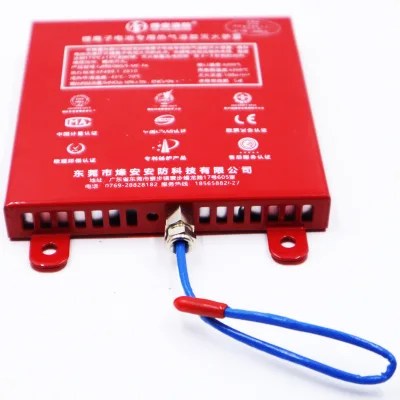
Procuring fire suppression equipment for lithium-ion battery incidents requires distinguishing between general-purpose extinguishers and specialized agents designed for thermal runaway. The observed market data indicates a specific product category labeled explicitly as Lithium-Ion Battery Fire Extinguishers, which often integrates with automatic hanging systems for continuous protection in storage environments. Buyers must verify that the selected unit is not merely a standard dry powder or foam device but possesses the specific chemical composition necessary to cool and suppress the intense heat generated by failing battery cells.
The product listings reveal a diverse range of capacities and materials, including carbon steel and stainless steel constructions with volumes ranging from 6 liters to 9 liters. This variation suggests that procurement strategies must align the physical size and weight of the unit with the specific spatial constraints of the facility. A 6-liter unit weighing 8.7 kilograms offers a different deployment profile compared to a 2.7-kilogram model, necessitating a careful assessment of mounting requirements and the physical capabilities of the staff responsible for manual operation during an emergency.
Product Scope and Observed Listing Signals
The current market inventory demonstrates a clear segmentation between portable manual units and automatic hanging systems, each serving distinct operational needs. Listings explicitly identify "Portable Foam Fire Extinguishers" and "Hanging Fire Extinguisher Automatic" variants, indicating that buyers should evaluate whether their primary requirement is for immediate manual intervention or for passive, automated detection and suppression in high-risk zones. The presence of both carbon steel and stainless steel materials further implies that environmental factors, such as humidity or corrosive chemicals, should dictate the material selection for the cylinder body.
Observed specifications highlight significant variations in effective range and discharge duration, with some units offering a 3.5-meter effective range while others are defined by specific dimensions like 436mm in length. These physical attributes directly influence the tactical deployment of the equipment; a longer cylinder may be harder to maneuver in tight spaces, whereas a compact unit might offer limited discharge volume. Buyers must cross-reference the listed volume, such as 7.4 liters or 7.3 liters, against the potential fire load of the lithium battery storage area to ensure the agent quantity is sufficient to fully suppress a thermal runaway event.
Technical Specifications to Verify
When evaluating technical performance, the working pressure and test pressure ratings are critical indicators of the cylinder's structural integrity under stress. The data shows working pressures of 14 bar and 25 bar, with corresponding test pressures of 27 bar and 25 bar, which buyers must verify against the specific pressure requirements of the agent being used. A mismatch between the cylinder rating and the agent pressure could lead to catastrophic failure during discharge, making it essential to confirm that the listed pressure ratings align with the manufacturer's safety data sheets for the specific fire agent, whether it is dry powder, foam, or water.
The physical dimensions and weight of the extinguisher are equally vital for ensuring accessibility and proper mounting. Listings provide precise measurements such as a diameter of 162mm or 298mm and lengths of 208mm or 436mm, alongside weights ranging from 2.7kg to 8.7kg. Procurement teams must ensure that the selected model fits within the designated wall brackets or ceiling mounts without obstructing emergency egress paths. Additionally, the retirement life of 5 to 8 years must be factored into the lifecycle cost analysis, as a shorter service life may necessitate more frequent replacement cycles and increased long-term operational expenses.
Compliance and Safety Documentation
Certification status is a non-negotiable element of the procurement process, with CE and EN3 standards appearing as key compliance markers in the available product data. Buyers must demand valid certification documents that explicitly confirm the product meets the EN3 standard for portable fire extinguishers, ensuring that the device has undergone rigorous testing for pressure, leakage, and discharge performance. Relying on a product labeled with CE without verifying the specific test reports can expose the organization to liability, as the certification must cover the specific model and agent combination intended for lithium battery fires.
Safety documentation must also include clear instructions on the agent's effectiveness against specific fire classes, such as Class A or Class C fires, which are mentioned in the product attributes. The presence of agents like Ammonium Phosphate and Sodium Bicarbonate Powder suggests a focus on chemical suppression, but buyers must verify that the specific formulation is approved for lithium-ion battery applications. Without explicit documentation confirming the agent's ability to penetrate and cool battery cells, the extinguisher may fail to stop thermal runaway, rendering the safety investment ineffective despite meeting general fire safety standards.
Cost Drivers and Commercial Terms
The price range observed in the market spans from 1 USD to 772.4 USD, reflecting a wide disparity in product quality, capacity, and certification levels. This broad spectrum indicates that cost should not be the primary selection criterion; instead, buyers must correlate the price with the specific technical specifications, such as the 6-liter versus 9-liter capacity or the inclusion of automatic hanging mechanisms. Lower-priced units may lack the necessary pressure ratings or specialized agents required for lithium battery fires, while higher-priced models likely offer enhanced durability, longer retirement lives, and comprehensive compliance documentation.
Commercial terms regarding minimum order quantities and packaging logistics also significantly impact the total cost of ownership. The observed MOQ range of 1 to 1000 units allows for flexibility, but bulk purchasing may be necessary to achieve favorable pricing for large-scale facility retrofits. Packaging details, such as export cartons or palletized shipments with dimensions like 180x180x530mm, must be evaluated to ensure compatibility with the buyer's storage and distribution infrastructure. Understanding these logistical constraints helps prevent unexpected shipping costs and ensures that the equipment arrives in a condition ready for immediate installation.
Supplier Qualification and Quality Control
Supplier qualification requires a thorough vetting of the manufacturing origin and production standards, with China identified as the primary origin for the observed product listings. Buyers should request evidence of the supplier's adherence to the stated production standards, such as CE EN3, and verify that the manufacturing facility maintains consistent quality control processes for pressure testing and agent filling. The variation in materials, including carbon steel and stainless steel, suggests that different suppliers may specialize in different construction methods, necessitating a review of their quality assurance protocols to ensure the cylinder material is suitable for the intended environment.
Quality control checks must extend beyond the initial purchase to include regular inspections of the product's shelf life and retirement life. With listed shelf lives of 2 years and retirement lives ranging from 5 to 8 years, suppliers must provide clear labeling and documentation regarding the expiration dates of the fire agent. Buyers should establish a protocol for verifying the integrity of the pressure gauges and seals upon receipt, ensuring that the product has not been compromised during transit. This proactive approach to quality control minimizes the risk of deploying a defective unit during a critical emergency situation.
Long-Term Procurement Checks
Sustaining a safe environment for lithium battery storage requires a commitment to regular maintenance and periodic re-certification of the fire extinguishers. The observed retirement life of 5 to 8 years dictates a replacement schedule that must be integrated into the facility's long-term safety planning. Procurement teams should establish a tracking system to monitor the age of each unit, ensuring that replacements are ordered well before the retirement date to avoid any gaps in fire protection coverage. This proactive management prevents the deployment of expired equipment that may fail to discharge effectively due to degraded seals or settled agents.
Future procurement decisions should be informed by the evolving nature of lithium battery technology and the corresponding fire risks. As battery chemistries and storage densities change, the effectiveness of current agents like dry powder or foam may need to be re-evaluated against new fire scenarios. Buyers should maintain a relationship with suppliers who can provide updates on new models or improved formulations that offer better suppression capabilities for advanced battery systems. This forward-looking strategy ensures that the organization remains compliant with the latest safety standards and is prepared to handle the unique challenges posed by next-generation energy storage technologies.
FAQs
What is the effective range of a portable Lithium Battery Fire Extinguisher?
The effective range is typically 3.5 meters for portable units. This distance allows operators to maintain a safe buffer while suppressing Class A fires. Ensure the nozzle is aimed at the base of the flames for optimal coverage and rapid suppression of the initial fire spread.
Which certification standards apply to these fire extinguishers?
These extinguishers comply with CE and EN3 standards. This certification ensures the product meets European safety and performance requirements. Buyers should verify specific model documentation to confirm compliance with local regulations before deployment in commercial or industrial environments requiring certified safety equipment.
Can these extinguishers be customized for specific industrial needs?
Customization is available for various industrial applications. Manufacturers can adjust specifications to meet unique operational requirements. This flexibility allows businesses to tailor safety equipment to specific facility layouts or hazard profiles, ensuring that the extinguishers integrate seamlessly into existing safety protocols and emergency response plans.
What is the expected retirement life of a carbon steel extinguisher?
The retirement life is eight years for carbon steel models. This duration reflects the material's durability under standard operating conditions. Regular inspections are recommended to ensure integrity, as corrosion or physical damage may necessitate earlier replacement to maintain reliable performance during emergency situations.
How much does a 6L Lithium Battery Fire Extinguisher weigh?
A 6L unit typically weighs 8.7 kilograms. This weight includes the carbon steel cylinder and internal agent. The portable design facilitates easy handling by trained personnel, though the mass requires proper lifting techniques to prevent strain during rapid deployment in emergency scenarios.
What is the working pressure of a standard lithium battery extinguisher?
The working pressure is 14 bar for standard models. This pressure ensures consistent agent discharge during operation. The test pressure reaches 27 bar, providing a safety margin. Operators must never exceed these limits to prevent cylinder failure and ensure safe handling during storage and transport.
Which fire classes are these extinguishers designed to combat?
They are primarily designed for Class A fires involving solid materials. Some models also address Class C fires. The specific agent, such as dry powder or foam, determines the exact classification coverage. Users must select the correct model based on the specific fuel types present in their facility.