Source Dust-Free Horizontal Panel Saw for Woodworking
Compare 30 Dust-Free Horizontal Panel Saw models from verified suppliers. These machines feature high precision cutting, hydraulic semi-automatic control, and customizable options for various woodworking applications including cabinet making, furniture production, and interior design projects; compare the available evidence and request quotations based on your requirements.
Key considerations
Products List
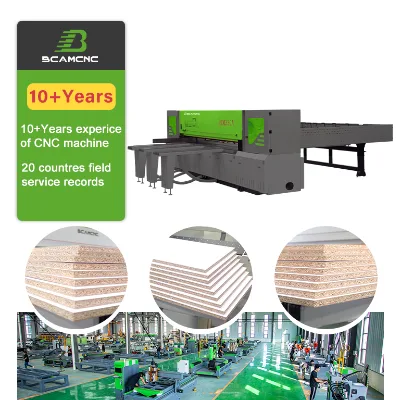
Panel Saw China Horizontal Saw Panels 1300mm Panel Saw Computer Panel Saw
$18988.00 - $22685.00
MOQ: 1


High Accuracy Woodworking Panel Saw With Sliding Table And Scoring Blade
$2699.00 - $4099.00
MOQ: 1 Pieces


Thick and Solid High Precision Horizontal Beam Panel Saw with Factory Price
$9500.00 - $9650.00
MOQ: 1 Pieces


High-Precision CNC Panel Saw for Professional Woodworking Projects
$25000.00 - $28000.00
MOQ: 1 Pieces


Vertical Plywood Panel Saw Woodworking Vertical Panel Saw Cutting Vertical Panel Saw
$3200.00 - $4400.00
MOQ: 1 Pieces


Comprehensive Sourcing Guide
Dust-Free Horizontal Panel Saw Sourcing Guide
Procuring a dust-free horizontal panel saw requires balancing high-precision cutting capabilities with effective material handling systems. Buyers must prioritize machines that integrate robust dust extraction ports directly into the saw head and sliding table mechanisms to maintain a clean workshop environment. The observed market data indicates that these units often feature substantial motor power, such as 15kw main saw motors, which drive the cutting process efficiently while generating significant particulate matter that requires immediate management.
When evaluating listings, procurement teams should verify that the machine's physical dimensions align with available factory floor space, as observed models can exceed 6 meters in length and 1.8 meters in height. The horizontal style design typically offers a sliding table size around 3200mm, allowing for the processing of large panels up to 3300mm in length. Ensuring the equipment fits the operational workflow is critical before committing to a purchase, as the sheer size of these industrial units impacts logistics and installation planning significantly.
Product Scope and Observed Listing Signals
The current market for horizontal panel saws presents a wide range of specifications, with observed prices varying from 1080 to 70,000 USD depending on the level of automation and brand reputation. Buyers should note that while some listings advertise a single item selling unit, the actual machinery often requires complex assembly and specific voltage configurations, such as 380V, which must match the local power infrastructure. The presence of a 3-year warranty on many units suggests a standard expectation for durability, yet the wide price spread necessitates a careful review of included components and after-sales support.
Listing signals often highlight key selling points like ease of operation and high precision, which are essential for modern woodworking shops aiming to minimize material waste. The observed data confirms that these machines are designed for wood processing and often feature a vice saw with a 200mm diameter alongside a main saw blade of 450mm. Buyers must distinguish between basic models and those offering advanced features like hydraulic semi-automatic controlling modes, as the latter significantly enhances throughput and operator safety during repetitive cutting tasks.
Technical Specifications to Verify
Technical due diligence must focus on the cutting capacity and motor specifications to ensure the machine meets production volume requirements. Buyers should verify the maximum cutting length, which can range from 3150mm to 3300mm, and confirm the maximum cutting width of 1250mm to accommodate standard sheet goods. The return speed of 120m/min and forward speed range of 0-120m/min are critical metrics for cycle time estimation, ensuring the equipment can keep pace with high-volume manufacturing demands without creating bottlenecks.
It is equally important to validate the physical footprint and weight of the unit, as observed single package sizes can reach 660x640x180 cm with a gross weight of 5700 kg. The main saw shaft diameter of 75mm and vice saw motor power of 2.2kw indicate the structural rigidity and cutting force available for different material densities. Procurement teams must ensure that the minimum cutting board size of 50x50mm is supported for small component production, while also confirming that the saw blade angle is fixed at 90 degrees unless adjustable features are explicitly required for specific joinery applications.
Compliance and Safety Documentation
Safety compliance is a non-negotiable aspect of sourcing industrial woodworking machinery, particularly when dealing with high-power motors and large moving parts. Buyers should demand a machinery test report and verify that the equipment holds recognized certifications such as CE and ISO, which indicate adherence to international safety and quality standards. The presence of FDA certification in some listings is unusual for woodworking machinery and warrants specific clarification regarding its scope, as it may refer to material safety rather than the machine's operational safety protocols.
Documentation regarding the electrical system and control mechanisms must be thorough to ensure safe integration into the facility. The observed controlling modes range from artificial to hydraulic semi-automatic, each requiring specific safety interlocks and emergency stop procedures. Procurement teams must confirm that the lifting method, often manual lift in these configurations, includes clear safety guidelines to prevent operator injury. Ensuring that all safety documentation is provided in the buyer's language and includes detailed wiring diagrams is essential for local regulatory compliance and insurance purposes.
Cost Drivers and Commercial Terms
The total cost of ownership for a horizontal panel saw is driven by several factors beyond the initial purchase price, including shipping, installation, and customization requirements. The observed MOQ of 1 allows for single-unit procurement, but the substantial weight and dimensions of the machine mean that freight costs can be significant. Buyers should anticipate that the departure port is typically Qingdao Port, and the shipping method will likely involve export-standard wooden cases to protect the machinery during transit.
Customization options, such as OEM branding or specific voltage adjustments, can add to the base cost but are often available to meet unique facility needs. The power type is electric, and the machine operates on 380V, which may require additional electrical infrastructure upgrades at the destination site. Buyers must clarify whether the listed price includes the motor and core components or if these are separate line items, as the 15kw main saw motor represents a significant portion of the machine's value and potential replacement cost.
Supplier Qualification and Quality Control
Supplier qualification should extend beyond the brand name, such as BCAMCNC, to include an assessment of their manufacturing capabilities and quality control processes. The observation that the product origin is Shandong, China, provides a geographical context for the supply chain, but buyers must verify the specific factory's track record for producing semiautomatic or automatic grade machinery. Requesting references from previous international clients and reviewing the machinery test report provided by the supplier can offer insights into the consistency of their production quality.
Quality control checks should focus on the precision of the sliding table and the alignment of the saw blades, as these directly impact the cut quality and material waste. The listed precision is described as high, but this claim must be validated through sample cuts or third-party inspection reports before finalizing the order. Buyers should also verify the condition of the machine, ensuring it is new and not refurbished, and confirm that the automatic grade matches the operational requirements of the intended production line.
Long-Term Procurement Checks
Long-term procurement success depends on the availability of spare parts and the reliability of the warranty support provided by the supplier. The observed 3-year warranty covers the machine, but buyers must clarify the specific terms regarding the motor and other core components to understand the extent of coverage. Ensuring that the supplier maintains a stock of critical parts, such as saw blades and motor components, is vital for minimizing downtime during the machine's operational life.
Maintenance protocols should be established early, focusing on the lubrication of the sliding table and the inspection of the hydraulic systems if applicable. The manual lift mechanism and the 90-degree saw blade angle require regular calibration to maintain high precision over time. Buyers should negotiate a service agreement that includes periodic maintenance visits or remote troubleshooting support to ensure the machine continues to operate at peak efficiency throughout its lifespan.
FAQs
What are the main cutting dimensions for this horizontal panel saw?
The machine supports a maximum cutting length of 3300mm and a maximum cutting width of 1250mm. It handles materials as small as 50*50mm. The sliding table measures 3200*320mm for stable support. These dimensions ensure efficient processing of large panels while maintaining precision for smaller cuts in woodworking operations.
How much power does the main saw motor consume?
The main saw motor consumes 15kw of power. The vice saw motor uses 2.2kw. The total power rating is 15kw. It operates on 380V electric power. This configuration provides robust cutting performance for heavy-duty woodworking tasks while maintaining energy efficiency during continuous horizontal panel saw operations.
Can this panel saw be customized for specific needs?
Yes, customization is available for this horizontal panel saw. The product supports OEM requests and allows for tailored specifications. Buyers can request adjustments to meet unique production requirements. This flexibility ensures the machine integrates smoothly into existing workflows while maintaining high precision and operational ease for specialized woodworking applications.
What certifications does this woodworking machine hold?
The machine holds CE, ISO, and FDA certifications. These credentials verify compliance with international safety and quality standards. The certifications ensure the horizontal panel saw meets regulatory requirements for global trade. Buyers can rely on these documented standards for safe operation and consistent performance in professional woodworking environments.
What is the warranty period for this equipment?
The equipment comes with a 3-year warranty. This coverage protects buyers against manufacturing defects and ensures long-term reliability. The warranty applies to the horizontal panel saw's core components, including the motor. Buyers receive support for maintenance and repairs, ensuring continuous operation and minimal downtime in professional woodworking settings.
How fast can the saw blade cut materials?
The forward speed ranges from 0 to 120m/min. The return speed is fixed at 120m/min. This allows for precise control during cutting operations. The horizontal panel saw delivers efficient material processing while maintaining high precision. Operators can adjust speeds to match material thickness and desired cut quality for optimal woodworking results.