Source Eco-Friendly Metal Diary Notebook with Pen for Office, School, and Promotion
Compare 30 listings for Eco-Friendly Metal Diary Notebook with Pen featuring options like PU covers, leather, and paper materials. Buyers can evaluate customization, sizes, and certifications to find suitable office, school, or promotional gifts.
Key considerations
Products List


Eco Friendly Recycled Paper Wooden Notebook Custom Bamboo Journal Diary with Pen
$0.90 - $2.99
MOQ: 100 Pieces


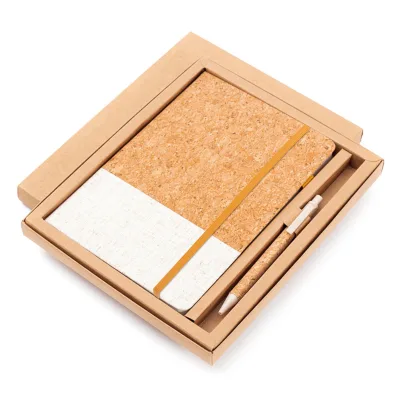


A5 Notebook Diary with Pen Custom Promotional Executive Corporate Business for Man
$6.89 - $7.58
MOQ: 100 pieces


PU Soft or Hard Cover Notebook Planner Diary with Elastic Band Book Mark
$1.18 - $1.68
MOQ: 1000 Pieces


Comprehensive Sourcing Guide
Strategic Sourcing Guide for Eco-Friendly Metal Diary Notebooks with Pen
The global procurement landscape for promotional and educational stationery has shifted significantly toward sustainable materials and durable designs. Buyers seeking an "eco-friendly metal diary notebook with pen" must navigate a complex supply chain where the term "metal" often refers to specific structural components, coatings, or entirely metallic casings, while "eco-friendly" implies adherence to specific environmental standards and material sourcing practices. This guide provides a disciplined approach to sourcing these items, grounded in verified product attributes and industry standards, ensuring that procurement decisions are based on factual data rather than marketing assertions.
Technical Specifications and Material Composition
When evaluating metal diary notebooks, the primary technical distinction lies in the construction of the cover and the binding mechanism. While the core keyword suggests a fully metallic product, the observed product data indicates a diverse range of materials, including PU (Polyurethane) covers, leather, and paper. A true metal diary typically features a metal cover or metal-reinforced spine to ensure longevity and a premium feel. The binding method is critical for functionality; observed data highlights "Glue Bound" and "Loose Leaf" structures, with specific mentions of "Ring Binder" mechanisms. For a metal diary, a ring binder or a robust glue-bound system is essential to prevent pages from detaching under frequent use.
The internal page specifications vary widely depending on the intended use. Data points indicate page counts ranging from 40-60 sheets to 80-120 sheets. The paper quality is often defined by the printing style, such as "Horizontal Line" or "Blank" pages. For eco-friendly claims, the paper should ideally be sourced from sustainable forests, though buyers must verify this independently as standard FSC certification is listed as low-confidence background data in current market observations. The dimensions also play a role; observed standards include specific sizes like 76*76mm, 24K, and AStyle (Mini or Hardcover). A metal diary intended for office or school use should balance portability with sufficient page capacity.
The inclusion of a pen is a common customization feature. While the supplied facts do not explicitly detail pen specifications, the "Custom Logo" and "Silk Print" attributes suggest that pens are often integrated or bundled as part of the promotional package. Buyers should verify the pen's material, as an eco-friendly approach would favor recycled plastic or metal barrels over virgin plastic. The "Process" attributes listed, such as "Die-Casting" and "Stamping," are highly relevant for metal components, indicating that the metal parts are likely formed through these high-precision manufacturing techniques rather than simple stamping.
Compliance and Certification Verification
Certification is a cornerstone of verifying eco-friendly claims. The supplied product data explicitly lists "ISO9001" as a high-confidence certification, which validates the supplier's quality management systems. This is a crucial baseline for any procurement, ensuring that the manufacturing process is consistent and controlled. Additionally, a "Fama Certificate" is noted, which may refer to specific industry or regional compliance standards, though its exact scope requires direct inquiry with the supplier.
Buyers must be cautious regarding environmental certifications. While "FSC" (Forest Stewardship Council) is mentioned in the background data, it is flagged as low-confidence for concrete claims. Therefore, procurement teams should not assume FSC compliance based on general product listings. Instead, buyers must request specific documentation proving that the paper used in the diary meets FSC or equivalent standards (such as PEFC or SFI). For the metal components, buyers should inquire about the source of the metal, looking for recycled content percentages and compliance with RoHS (Restriction of Hazardous Substances) directives, which limit the use of hazardous materials in electronics and metal goods.
The "SGS" standard is also referenced in the product data, indicating that third-party testing for safety and quality is available. SGS testing often covers material composition, durability, and chemical safety. When sourcing metal diaries, buyers should verify that the metal coating does not contain lead or other heavy metals, ensuring the product is safe for use in schools and offices. The "QC Control" attribute of "100% Inspection Before Shipment" is a strong indicator of a supplier's commitment to quality, but it should be complemented by independent third-party audits for a comprehensive compliance strategy.
Cost Drivers and Pricing Dynamics
The pricing of eco-friendly metal diary notebooks is influenced by several variable factors. The observed price range in the market spans from $0.05 to $8.15 USD, a significant variance that reflects differences in material quality, customization levels, and order volume. The lower end of this spectrum likely corresponds to basic paper or PU-covered notebooks with minimal metal accents, while the higher end represents fully metal-cased diaries with complex binding and premium packaging.
Material costs are a primary driver. Metal, particularly when sourced as recycled aluminum or steel, commands a higher price than standard paper or plastic. The manufacturing process, including "Die-Casting" and "Stamping," adds to the production cost due to the energy and tooling requirements. Customization is another major cost factor. The data confirms that "Customized Design," "Custom Logo" (Embossed/Silk Printed), and "Inner Sheets" printing are acceptable. Each of these adds a layer of complexity and cost to the unit price.
Order volume, represented by the Minimum Order Quantity (MOQ), significantly impacts the unit cost. The observed MOQ range is 100 to 3000 units, with specific models like the BJB290 listing an MOQ of 200 PCS. Larger orders generally reduce the per-unit cost due to economies of scale in material purchasing and production setup. However, buyers must balance the cost savings of bulk ordering with inventory holding costs. The "Lead Time" of 20 working days is a standard benchmark for customized metal goods, but this can fluctuate based on the complexity of the design and the current capacity of the manufacturing facility.
Typical Applications and Target Markets
The versatility of metal diary notebooks makes them suitable for a wide array of applications. The product data identifies several key usage categories: "Office Supplies," "Souvenir," "Promotion Gifts," and "School Supplies." For corporate clients, these items serve as high-value promotional gifts that reinforce brand identity through embossed or silk-printed logos. The "Office" style and "Mini" or "Hardcover" formats align well with professional environments where durability and aesthetics are paramount.
In the educational sector, the "Middle School" target demographic is explicitly mentioned. Metal diaries are ideal for students due to their durability and resistance to wear and tear compared to standard paper notebooks. The "Green" and "Orange" color options, along with "Light, Deep & Neo Colors," allow for customization to match school branding or student preferences. The "Pocket" and "Gift" usage categories suggest that these notebooks are also popular as travel accessories or holiday gifts.
The "For Boy" and "For Girl" gender specifications indicate that manufacturers produce designs tailored to different aesthetic preferences. This segmentation is crucial for buyers targeting specific demographics. For instance, a "Mini" style with a "Ring Binder" might appeal to students who need a compact, portable solution, while a "Hardcover" metal diary might be preferred by professionals for formal note-taking. The "Usage" attributes also highlight the dual nature of these products as both functional stationery and promotional tools, making them a versatile choice for marketing campaigns and corporate events.
Supplier Evaluation and Selection Criteria
Selecting the right supplier requires a rigorous evaluation process based on the available data points. The first step is verifying the supplier's certifications. A high-confidence "ISO9001" certification is a non-negotiable baseline, indicating a commitment to quality management. Buyers should also check for the "Fama Certificate" and inquire about the specific scope of the "SGS" testing performed on their products.
Production capability is another critical factor. The mention of "Die-Casting" and "Stamping" processes suggests that the supplier has the necessary machinery for metal fabrication. Buyers should request evidence of these capabilities, such as photos of the production line or videos of the manufacturing process. The "Customized Design" and "Custom Logo" attributes indicate that the supplier offers flexibility, but buyers must assess the supplier's design team's ability to execute complex requests within the specified lead times.
Quality control is paramount. The "100% Inspection Before Shipment" attribute is a strong positive signal, but buyers should also ask about the supplier's internal QC protocols. Do they perform random sampling, or is every single unit inspected? The "Inner Package" details, such as "Shrink & OPP Polybags" and "Packed with Cartons," provide insight into how the product is protected during transit. For metal goods, proper packaging is essential to prevent scratches and dents.
Finally, the supplier's location and logistics capabilities should be considered. The "prod_origin" is listed as "China," which is a major hub for stationery manufacturing. Buyers should evaluate the supplier's experience with international shipping, their ability to handle customs documentation, and their track record for meeting lead times. The "Lead Time" of 20 working days is a standard benchmark, but buyers should confirm if this can be expedited for urgent orders and what the cost implications would be.
Quality Control and Long-Term Procurement Strategy
Implementing a robust quality control strategy is essential for maintaining the integrity of the product. The "QC Control" attribute of "100% Inspection Before Shipment" suggests a high standard, but buyers should not rely solely on this. Instead, they should implement a third-party inspection protocol, particularly for the first few orders. This inspection should cover the metal finish, the binding strength, the page quality, and the accuracy of the custom logo printing.
Long-term procurement considerations involve building a sustainable supply chain. Buyers should prioritize suppliers who demonstrate a commitment to environmental responsibility, such as using recycled metals and sustainable paper sources. The "eco-friendly" aspect of the product should be backed by verifiable data, not just marketing claims. Regular audits of the supplier's environmental practices can help ensure that the supply chain remains aligned with corporate sustainability goals.
Additionally, buyers should consider the lifecycle of the product. Metal diaries are designed for longevity, but the pen and paper components may need replacement. A supplier that offers refillable options or compatible accessories can add value to the procurement strategy. The "Customized Design" capability allows for future iterations of the product, enabling buyers to update the design or branding without changing the core product structure.
In conclusion, sourcing an eco-friendly metal diary notebook with pen requires a careful balance of technical specifications, compliance verification, and supplier evaluation. By focusing on verified data points such as ISO9001 certification, specific material processes, and quality control measures, buyers can make informed decisions that meet their functional and sustainability requirements. The wide range of applications and customization options available in the market provides ample opportunity for buyers to find products that align with their specific needs, whether for office use, educational purposes, or promotional campaigns.
FAQs
What certifications do eco friendly metal diary notebooks with pen have?
High-confidence facts indicate ISO9001 certification for quality management. Some listings also mention Fama Certificate and SGS standards for safety testing. Buyers should verify specific environmental claims like FSC independently as it is low-confidence in current data.
How are the notebooks customized with logos and designs?
Customization is available for logos using embossed, silk printed, or laser methods. Inner sheets accept customized printing, and designs can be tailored to specific needs. The process includes die-casting and stamping for metal components to ensure precision.
What are the typical lead times for custom orders?
The standard lead time for these products is 20 working days. This duration may vary based on the complexity of the design and the volume of the order. Buyers should confirm specific timelines with suppliers before placing bulk orders.
Which minimum order quantities are required for these notebooks?
The observed MOQ range spans from 100 to 3000 units. Specific models like BJB290 list an MOQ of 200 pieces. Lower MOQs generally result in higher per-unit costs, while larger orders benefit from economies of scale.
Can I find metal diary notebooks with pen for school use?
Yes, these products are explicitly listed for school supplies and middle school crowds. They are also suitable for office supplies, souvenirs, and promotion gifts. Durable designs like ring binders and hardcovers are available for student and professional use.
What materials are used for the covers and pages?
Cover materials include PU, leather, and paper, with some metal components formed via die-casting. Inside pages range from 40 to 120 sheets and can be blank or horizontally lined. The standard size is 76x76mm or 24K.