Source eco-friendly reusable western sauce plate for hotels, restaurants, and catering
Compare 30 listings for the eco-friendly reusable western sauce plate from suppliers in China. Buyers can evaluate ceramic and bagasse options for hotel, restaurant, and catering applications with varying sizes and styles.
Key considerations
Products List
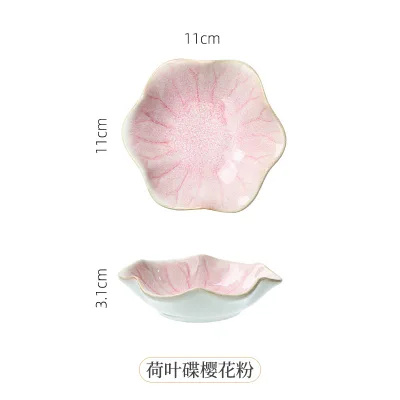
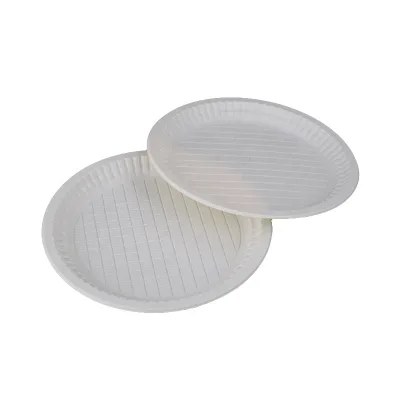
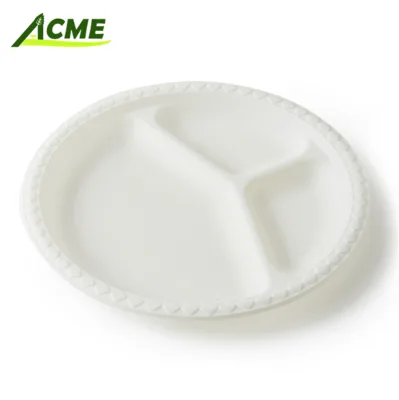


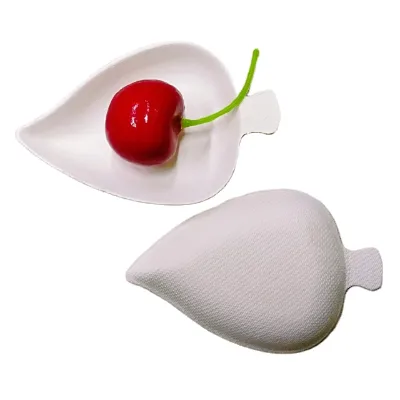
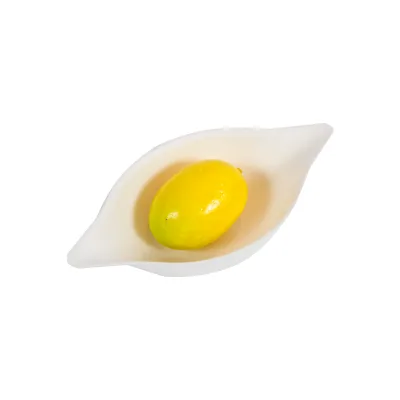

Seasoning Dish Tomato Sauce Dish Western Salad Bowl
$0.37 - $0.46
MOQ: 700 Pieces
Jinhua Hengyang Cross-Border Trade Limited Liability Company





Disposable Premium Plate 8.75inch Tableware Dish Carry-out Eco-Friendly
$0.04 - $0.04
MOQ: 1000 Pieces


Comprehensive Sourcing Guide
Strategic Sourcing Guide for Eco-Friendly Reusable Western Sauce Plates
The global shift toward sustainable dining solutions has elevated the demand for eco-friendly reusable western sauce plates. For procurement professionals, identifying the right supplier requires a disciplined approach that distinguishes between marketing claims and verifiable product attributes. This guide synthesizes available market data and technical specifications to provide a framework for sourcing these specific tableware items. The focus remains on material integrity, functional design, and supply chain reliability, ensuring that buyers can make informed decisions without relying on unverified assertions.
Material Composition and Technical Specifications
The foundation of any sustainable sourcing strategy lies in the material composition. In the current market, "eco-friendly" often points to biodegradable or compostable materials, yet for "reusable" items, the durability of the material is paramount. Based on observed product attributes, the market presents a dichotomy between ceramic and plant-based materials.
Ceramic options are frequently cited with specific technical dimensions. For instance, a typical ceramic sauce plate may feature a size of 11113.3 cm with a single package size of 11X11X4 cm. The weight for such an item is often recorded around 261 grams, with a single gross weight of 0.142 kg. These items are categorized under "Retro dipping sauce plate ceramic small plate" and are designed for use in hotels and restaurants. The material is explicitly listed as ceramic, offering a classic or retro style.
Conversely, the market also features plant-based alternatives. Products labeled as "corn starch box" or "sugarcane bagasse" containers appear in the data, though their classification as "reusable" requires careful scrutiny. One observed specification lists "corn starch" as the material with a single gross weight of only 0.001 kg, suggesting a disposable nature rather than a reusable one. However, other entries mention "Sugarcane Bagasse" with a model number like RSPT243, which is a robust material often used for durable, compostable tableware. The shape for these alternatives is often square or rectangular, with sizes ranging from 6 inches to 9 inches.
When evaluating technical specifications, buyers must verify the dimensional tolerance. Some product data indicates a tolerance of less than ±1mm, which is critical for stacking and storage efficiency. The color options vary significantly, ranging from standard white to a spectrum of eight distinct colors, or even custom branding. The "Feature" attribute in the data includes both "Disposable" and "Eco-Friendly," highlighting the need for buyers to explicitly confirm the intended lifecycle of the product. A plate marketed as "Eco-Friendly" but labeled "Disposable" does not meet the criteria for a reusable procurement strategy.
| Attribute Category | Ceramic Option | Plant-Based Option |
|---|---|---|
| Primary Material | Ceramic | Corn Starch / Sugarcane Bagasse |
| Typical Size | 11113.3 cm | 6 inch, 8 inch, 9 inch |
| Weight | ~261 g | ~0.001 kg (observed) |
| Style | Retro, Classic | Healthy, Foldable |
| Usage Context | Hotel, Restaurant | Food Package, Food |
| Shape | Square/Rectangular | Square or Rectangle |
Compliance and Certification Verification
In the realm of eco-friendly products, compliance is not merely a regulatory hurdle but a core component of brand integrity. Buyers must navigate a landscape where terms like "EN 13432" and "FSC" are frequently mentioned in background contexts. However, it is crucial to treat these as verification targets rather than guaranteed attributes of every listed product.
The standard EN 13432 is a European specification for compostability. While this standard is relevant for biodegradable materials like corn starch or bagasse, it does not apply to ceramic items. Therefore, when sourcing ceramic sauce plates, the focus should shift to food safety standards and durability testing rather than compostability certifications. For plant-based alternatives, verifying that the product meets EN 13432 or equivalent local standards is essential to validate the "eco-friendly" claim.
The Forest Stewardship Council (FSC) certification is another critical checkpoint, particularly for paper-based or wood-derived components, though less relevant for pure ceramic or sugarcane products. Buyers should request proof of certification from suppliers rather than accepting it as a default attribute. The data provided lists these standards in a low-confidence background section, indicating that they are industry references rather than confirmed facts for specific SKUs. Consequently, procurement teams must demand documentation proving that a specific batch of sauce plates has undergone the necessary testing to meet these standards.
Furthermore, the "Feature" attribute in the product data includes "Eco-Friendly" and "Healthy." These are subjective claims that require objective backing. A buyer should verify if the material is free from harmful chemicals, such as BPA or heavy metals, especially for items intended for food contact. The "technics" attribute mentions "Printing," which introduces the need to verify the safety of inks used for the colorful designs observed in the market. Ensuring that the printing process adheres to food safety regulations is a non-negotiable step in the compliance checklist.
Cost Drivers and Pricing Dynamics
Understanding the cost structure of eco-friendly reusable sauce plates is vital for budgeting and margin analysis. The observed price range in the market spans from $0.01 to $68 USD, a vast disparity that reflects differences in material quality, manufacturing complexity, and order volume.
The primary cost driver is the material. Ceramic plates, with their higher weight (261 g) and firing process, generally command a higher unit price compared to lightweight plant-based alternatives. However, the "Disposable" feature noted in some ceramic listings suggests a potential mismatch in product definition, which could indicate a lower-cost, thinner ceramic or a mislabeled item. In contrast, sugarcane bagasse products, while potentially more expensive per unit due to the processing of agricultural waste, offer a sustainable lifecycle that may justify the cost for eco-conscious brands.
Order volume is the second significant cost driver. The Minimum Order Quantity (MOQ) ranges from 10 pieces to 120,000 pieces. For small businesses or startups, an MOQ of 10 pieces allows for market testing with minimal capital risk. However, as the order volume increases, the unit price typically decreases due to economies of scale. The data indicates that "Small Orders" are accepted by some suppliers, which is a positive signal for flexibility. Buyers should negotiate based on their projected annual volume to secure better pricing tiers.
Logistics and packaging also influence the final cost. The single package size for ceramic items is 11X11X4 cm, while plant-based options vary. The weight of the packaging, such as the 0.142 kg gross weight for ceramic, affects shipping costs, especially for air freight. Buyers should calculate the landed cost, including freight, duties, and insurance, rather than focusing solely on the FOB price. The "Selling Units" attribute indicates that items are often sold as single items, which simplifies inventory management but may increase per-unit shipping costs compared to bulk packaging.
Typical Applications and Functional Design
The application of eco-friendly reusable western sauce plates extends beyond simple dining. The "Usage" attribute explicitly lists "Hotel, restaurant," indicating that these items are designed for high-volume, commercial environments. The durability required for such settings means that the plates must withstand repeated washing cycles without degrading.
For ceramic plates, the "Retro style" and "Classic" design appeal to establishments aiming for a specific aesthetic. The colorful options (1 through 8) allow for branding or thematic alignment with restaurant decor. The functional design of these plates often includes a specific depth to hold sauces without spilling, as suggested by the "dipping sauce" designation. The dimensions of 11113.3 cm provide a compact footprint suitable for side dishes or condiment service.
Plant-based alternatives, such as those made from corn starch or sugarcane bagasse, are often marketed with a "Healthy" style. These are particularly suitable for catering events, outdoor dining, or establishments that prioritize a zero-waste narrative. The "Foldable" functional design noted in some product attributes suggests versatility, though this is more common in packaging than in rigid sauce plates. Buyers should verify if the "Foldable" claim applies to the plate itself or the packaging, as a foldable rigid plate is a unique engineering challenge.
The "Model Number" and "Size" attributes (Small, Medium, Large, custom) indicate that suppliers offer a range of options to fit different menu requirements. For example, a 6-inch plate might be ideal for individual sauce servings, while a 9-inch plate could serve as a small appetizer dish. The ability to customize colors and shapes is a significant advantage for brands looking to create a cohesive visual identity. However, customization often comes with higher MOQs and longer lead times, which must be factored into the procurement timeline.
Supplier Evaluation and Quality Control
Selecting the right supplier is a critical step that goes beyond price comparison. The "Place of Origin" data points to several manufacturing hubs in China, including Guangdong, Anhui, and Shandong. Each region may have different specializations; for instance, Guangdong is known for ceramics, while Anhui might focus on paper and starch-based products. Buyers should verify the specific location of the factory to ensure it aligns with their logistical needs and quality expectations.
Quality control is paramount, especially for reusable items. The "Weight tolerance" of less than ±1% and "Dimensional tolerance" of less than ±1mm are specific metrics that indicate a high level of manufacturing precision. Buyers should request quality control reports that verify these tolerances for each batch. The "Single gross weight" and "Single package size" data provide benchmarks for checking consistency. If the actual weight of a received batch deviates significantly from the listed 261 g for ceramic or 0.001 kg for plant-based items, it may indicate a quality issue.
Supplier reliability is another key factor. The "Port" attribute, such as Shanghai Port, indicates the shipping logistics. Buyers should assess the supplier's ability to meet lead times and handle customs documentation. The "Model Number" (e.g., 019, cornstarch box-11, J024) serves as a unique identifier for the product, ensuring that the correct specifications are ordered. It is essential to maintain a clear record of these model numbers to avoid confusion between different product lines.
Long-Term Procurement Considerations
Sourcing eco-friendly reusable sauce plates is a long-term strategy that requires ongoing management. The "Brand Name" attribute shows a variety of names, including "Pick different," "CR," and "Risun." Buyers should evaluate the brand's reputation and stability to ensure a consistent supply chain. A supplier with a strong brand presence is more likely to invest in quality improvements and customer service.
Sustainability is not a one-time purchase but a continuous commitment. Buyers should consider the end-of-life options for the products. While ceramic plates are infinitely reusable, plant-based options may require specific composting facilities. The "Feature" attribute of "Eco-Friendly" should be backed by a clear lifecycle assessment. Buyers should also monitor market trends for new materials or technologies that could offer better performance or lower costs.
Finally, the "Color" and "Style" attributes suggest that fashion and trends play a role in procurement. A "Retro style" or "Classic" design may have a longer shelf life than a trendy, fleeting design. Buyers should balance the desire for aesthetic appeal with the need for timeless functionality. The "Custom" color options allow for brand differentiation, but they also require careful planning to avoid inventory obsolescence. By focusing on these long-term considerations, buyers can build a resilient and sustainable supply chain for their eco-friendly tableware needs.
FAQs
What materials are used for eco-friendly reusable western sauce plates?
The primary materials observed are ceramic and plant-based options like corn starch or sugarcane bagasse. Ceramic plates typically weigh around 261 grams, while plant-based alternatives may be lighter, requiring verification of durability for reuse.
Which sizes are available for these sauce plates?
Available sizes include specific dimensions like 11*11*3.3 cm for ceramic plates and inch-based options ranging from 6 to 9 inches for plant-based containers. Buyers should confirm exact dimensions to ensure they meet their specific serving requirements.
Can I find suppliers with a low minimum order quantity?
Yes, some suppliers accept small orders with a minimum order quantity as low as 10 pieces. This allows buyers to test the market with minimal capital risk before committing to larger bulk purchases of the sauce plates.
How do I verify the eco-friendly certification of these products?
Buyers must request documentation for standards like EN 13432 for compostable materials, as these are not guaranteed for all listed items. Ceramic plates focus on food safety rather than compostability, so verification of specific batch testing is essential.
Where are these sauce plates typically manufactured?
Manufacturing locations include Guangdong, Anhui, and Shandong in China, with each region specializing in different materials like ceramics or starch-based products. Buyers should verify the specific factory location to align with their logistical and quality expectations.
What is the price range for these reusable sauce plates?
The observed price range spans from 0.01 to 68 USD, reflecting differences in material quality and order volume. Unit costs generally decrease with higher order volumes due to economies of scale, making bulk purchasing more cost-effective.