Source eco-friendly waterproof saffiano leather for bags, shoes, and upholstery
Find 30 listings for eco-friendly waterproof saffiano leather suitable for handbags, footwear, and decorative applications. Compare options featuring knitted or woven backings, varying thicknesses, and printed or embossed surfaces to identify the best fit for your manufacturing needs.
Key considerations
Products List
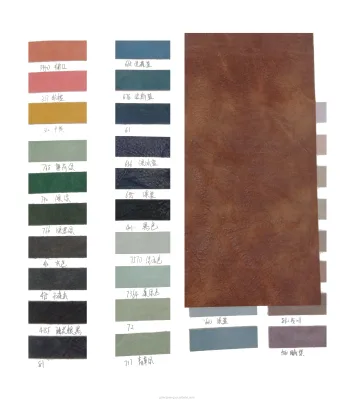
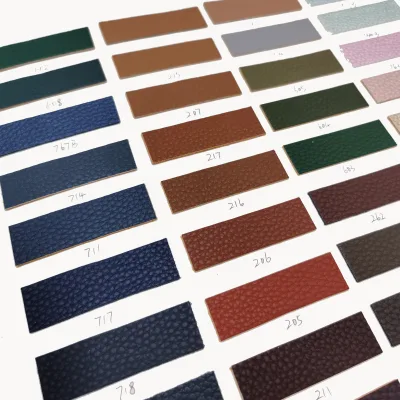


1.7mm Eco-Friendly Backing Waterproof Synthetic Leather for Sofa Chair Leather
$3.60 - $3.70
MOQ: 1000 Meters


Waterproof PU Durable Breathable Premium-Grade Eco-Friendly Microfiber Leather
$7.98 - $8.66
MOQ: 500 Meters


Eco Artificial Synthetic Faux Leather for Sofa/ Car/ Hospital Easy Clean Waterproof
$2.61 - $2.68
MOQ: 1000 Meters


Comprehensive Sourcing Guide
Eco-Friendly Waterproof Saffiano Leather Sourcing Guide
Sourcing eco-friendly waterproof saffiano leather requires a strategic approach to navigating the distinction between genuine leather alternatives and synthetic materials that mimic the signature cross-hatch texture. While the term "saffiano" traditionally refers to a specific finishing process on leather, in the current B2B market, it frequently denotes a textured polyurethane (PU) or polyvinyl chloride (PVC) material designed to replicate the durability and aesthetic of genuine leather. Buyers must verify the specific polymer base, as the supply chain for eco-friendly claims often hinges on the absence of phthalates and the use of water-based coatings rather than solvent-based treatments. The observed market data indicates a prevalence of PU and PVC variants with knitted or woven backings, which provide the structural integrity necessary for applications ranging from handbags and shoes to automotive upholstery.
The procurement strategy must prioritize materials that balance the "waterproof" and "abrasion-resistant" attributes observed in listings with genuine sustainability metrics. Many suppliers offer products with features such as anti-mildew properties and wind resistance, which are critical for outdoor accessories and luggage. However, the "eco-friendly" designation is not automatically guaranteed by the presence of these functional traits. Buyers should scrutinize the surface treatment processes, looking for water-based printing and embossing techniques that reduce volatile organic compound (VOC) emissions. The observed product range includes thicknesses from 0.6mm to 1.2mm, suggesting that the material's environmental footprint is also influenced by the efficiency of the coating application and the recyclability of the backing fabric.
Product Scope and Observed Listing Signals
The product scope for this category is defined by a diverse range of applications, including belts, shoes, upholstery, luggage, and decorative home textiles. The observed listings reveal that these materials are frequently marketed with specific usage tags such as "handbag shoes decoration pillow" or "car seat," indicating their versatility across fashion and automotive sectors. The texture is a primary differentiator, with listings explicitly noting "Printed" and "Embossed" patterns, which are essential for achieving the classic saffiano look. Buyers should expect to find materials with a soft hand feeling, which is a critical quality attribute for consumer-facing goods like accessories and garment linings, ensuring that the synthetic nature of the material does not compromise the tactile experience.
Commercial signals in the market suggest a high degree of customization availability, with suppliers offering options for specific colors, thicknesses, and backing types. The observed data highlights a mix of knitted and woven backings, with some products featuring a brushed fabric layer to enhance comfort and flexibility. Packaging standards vary, with common configurations including 40-meter rolls or custom requests, and single package sizes ranging from compact 150x5x5 cm units to larger 150x20x20 cm bundles. These logistical details are vital for procurement planning, as the single gross weight can fluctuate significantly from 1.0 kg to 30.0 kg depending on the roll dimensions and material density, directly impacting shipping costs and inventory management strategies.
Technical Specifications to Verify
Technical verification must begin with the material composition, as the market contains both PU and PVC variants that serve different performance needs. Buyers should confirm the specific thickness range, which in observed listings spans from 0.6mm to 1.2mm, with specific models noting dimensions like 0.85mm or 1.2mm. The width is another critical specification, with standard offerings appearing in the 54-55 inch range (approximately 137-142 cm), though some products may deviate. It is essential to validate the backing technics, as the choice between knitted, woven, or brushed fabric backings will dictate the material's drape, stretch, and suitability for specific end-uses like automotive seats versus rigid luggage.
Performance claims regarding waterproofing and durability require rigorous validation against the specific product model numbers and surface treatments. While many listings advertise features such as "Waterproof," "Water Resistant," "Elastic," and "Abrasion-Resistant," these attributes are often tied to the specific surface treatment process, such as printing or embossing. Buyers must verify the exact standard for width and thickness, as some products are defined by a specific width of 1420mm or a thickness of 0.85mm, while others offer a range. The "eco-friendly" aspect should be cross-referenced with the surface treatment method to ensure that the waterproofing is achieved through environmentally benign processes rather than heavy chemical coatings that might compromise the material's sustainability profile.
Compliance and Safety Documentation
Compliance and safety documentation are paramount when sourcing materials labeled as eco-friendly, particularly for applications involving direct skin contact or interior vehicle use. While specific certification statuses like REACH, OEKO-TEX, or ISO 9001 are mentioned in background contexts, buyers must request current, verifiable test reports from the supplier rather than relying on general claims. The absence of a specific certification in a listing does not preclude compliance, but it necessitates a proactive request for chemical safety data sheets (SDS) and restricted substance lists (RSL) to ensure the material meets the regulatory requirements of the target market.
Safety verification should extend to the physical properties of the material, ensuring that the "Anti-Mildew" and "Wind Proof" features do not rely on hazardous chemical treatments. Buyers should demand evidence that the waterproofing and abrasion resistance are achieved through physical layering or non-toxic polymer formulations. For products intended for children's accessories or automotive interiors, the verification of flame retardancy and heavy metal content is essential. The procurement process must include a review of the supplier's quality control records to confirm that the "Printed" and "Embossed" finishes do not introduce lead, cadmium, or other restricted substances that would violate international safety standards.
Cost Drivers and Commercial Terms
Cost drivers in this market are heavily influenced by the material composition, specifically the choice between PU and PVC, and the complexity of the surface treatment. The observed price range of $1.1 to $29 per unit suggests a significant variance based on thickness, backing type, and the sophistication of the saffiano texture. Thicker materials with specialized woven or knitted backings and advanced waterproofing treatments will command higher prices, while standard printed variants with simpler backings may fall at the lower end of the spectrum. Buyers must also account for the "Single package size" and "Single gross weight," as these factors directly impact freight costs, especially for heavy rolls or large volume orders.
Commercial terms regarding Minimum Order Quantity (MOQ) and lead times are critical variables that affect the total cost of ownership. The observed MOQ ranges from 2 to 1000 units, with specific product lines requiring 300 or 500 meters per color, which can create barriers for small-batch buyers. Lead times vary significantly, with sample times ranging from 3 to 7 workdays and delivery times for bulk orders spanning from 7 to 15 days after order confirmation. Buyers should negotiate terms that align with their production schedules, considering that the "Delivery Time" may be extended by the need for custom packaging or specific color matching, which are often listed as "Available" customization options.
Supplier Qualification and Quality Control
Supplier qualification should focus on the consistency of the "soft hand feeling" and the uniformity of the "Printed" or "Embossed" patterns across large rolls. Given the observed product origins in Guangdong and Zhejiang Province, buyers should verify the supplier's capacity to maintain consistent quality across different batches, as the "Backing Technics" and "Surface Treatment" processes can vary between facilities. The presence of specific model numbers like TXP80026A or MFL indicates a structured production line, but buyers must ensure that the supplier has the technical expertise to replicate these specifications accurately for custom orders.
Quality control protocols must include a rigorous inspection of the material's physical properties, such as the "Elastic" nature and "Waterproof" integrity. Buyers should implement a sampling strategy that tests the material for abrasion resistance and mildew resistance under conditions that mimic the intended end-use. The "Sample time" of 3-7 workdays allows for a preliminary assessment, but a full-scale trial run is necessary to validate the "Packaging" integrity and the "Rolling Packing" method to prevent damage during transit. Suppliers should be required to provide a quality assurance certificate that confirms the material meets the specified thickness and width tolerances, ensuring that the final product performs as expected in the field.
Long-Term Procurement Checks
Long-term procurement checks should prioritize the stability of the supply chain and the supplier's ability to maintain the "eco-friendly" standards over time. As regulations regarding chemical usage and sustainability evolve, buyers must establish a mechanism for regular re-verification of the material's compliance with updated environmental standards. This includes monitoring the supplier's sourcing of raw materials to ensure that the "PU" or "PVC" base remains free from restricted substances and that the production processes continue to minimize environmental impact.
Performance monitoring should also track the material's durability in real-world applications to ensure that the "Abrasion-Resistant" and "Water Resistant" claims hold up over the product's lifecycle. Buyers should maintain a feedback loop with their end-users to identify any issues related to the "Soft hand feeling" or the "Embossed" pattern's longevity. By establishing a long-term partnership with a qualified supplier, buyers can secure consistent access to materials that meet their specific technical and sustainability requirements, reducing the risk of supply disruptions and ensuring that the final products maintain their quality and value proposition in the market.
FAQs
What are the key features of this PU leather material?
This material offers waterproof, elastic, and abrasion-resistant properties suitable for various applications. It features a soft hand feeling and is available in black with printed or embossed patterns. The backing can be knitted or woven fabric depending on the specific model selected for your project needs.
Which products can be made using this leather?
You can use this material for belts, shoes, upholstery, luggage, accessories, and crafts. It is also suitable for handbags, pillows, car seats, and decorative items. The versatility allows for use in garment and furniture manufacturing across different industries requiring durable synthetic leather.
What is the minimum order quantity for this product?
The minimum order quantity varies by supplier but typically ranges from 300 to 500 meters. Some listings specify 500 meters per color while others require 300 meters. Buyers should confirm the specific MOQ with the manufacturer before placing an order to ensure compliance with their requirements.
How long does it take to receive samples?
Sample delivery usually takes 3 to 7 workdays after the request is confirmed. Some suppliers may offer free A4 samples for evaluation purposes. This timeframe allows buyers to verify the soft hand feeling and waterproof features before committing to a larger bulk purchase order.
Where is this leather material manufactured?
The products originate from Guangdong Province and Zhejiang Province in China. Specific factories are located in Ningbo and other regions within these provinces. Buyers can expect the goods to be shipped from Guangzhou Port after the production and packaging processes are completed.
What are the available thickness options for this material?
Thickness options range from 0.6mm to 1.2mm depending on the specific model number. Common specifications include 1.2mm for general use and 0.85mm for decorative or shoe applications. The width is typically 54 to 55 inches or 137 to 142 cm for standard rolls.
Can the product be customized for specific needs?
Customization is available for this material to meet specific buyer requirements. Suppliers offer options for different patterns, colors, and backing types like knitted or woven fabric. Buyers should discuss their specific design needs with the manufacturer to ensure the final product matches their intended application.