Source Electric Intelligent Building Blocks for Education, Play, and Promotion
Compare 30 listings of Electric Intelligent Building Blocks from verified suppliers in China. These customizable electronic building blocks support children education, indoor and outdoor recreation, and promotional activities with battery power and safety certifications; compare the available evidence and request quotations based on your requirements.
Key considerations
Products List




Comprehensive Sourcing Guide
Electric Intelligent Building Blocks Sourcing Guide
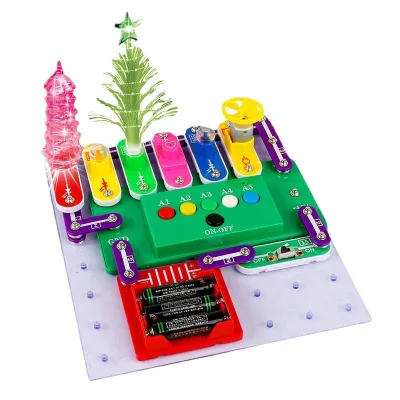
Sourcing Electric Intelligent Building Blocks requires a nuanced understanding of both traditional construction play and modern electronic integration. These products serve as educational tools that bridge the gap between manual assembly and digital interaction, appealing to children aged three to eight years. Buyers must recognize that this category encompasses a wide variety of configurations, from simple battery-operated modules to complex systems designed for intellectual development and recreational use. The primary value proposition lies in the ability to create interactive models that respond to user input, thereby enhancing engagement and learning outcomes.
Procurement decisions should be guided by the specific educational goals and safety standards relevant to the target market. Manufacturers often offer customization options, allowing buyers to tailor the product’s functionality, packaging, and branding to their specific distribution channels. Whether intended for indoor or outdoor use, these blocks must maintain structural integrity while housing electronic components. Understanding the balance between plastic durability and electronic reliability is essential for selecting suppliers who can deliver consistent quality across large production runs.
Product Scope and Observed Listing Signals
The current market landscape for Electric Intelligent Building Blocks reveals a diverse range of product models and specifications. Listings frequently highlight specific model numbers, such as RFD311584 or HX8101O, which often correspond to distinct feature sets or assembly sizes. Buyers will observe variations in packaging, ranging from individual color boxes to bulk cartons, which directly impacts logistics and retail presentation. The material composition is predominantly plastic, with ABS being a noted type due to its durability and safety profile for children’s toys.
Observed listing signals also indicate a strong emphasis on customization and OEM/ODM capabilities. Suppliers often advertise the availability of custom designs, allowing brands to differentiate their offerings in a competitive market. The power source is typically battery-operated, which simplifies usage for end consumers but introduces considerations regarding battery safety and longevity. Additionally, the condition of new products and warranty terms, such as one-year coverage, provide buyers with assurance regarding product reliability and after-sales support expectations.
Technical Specifications to Verify
Verifying technical specifications is critical to ensuring that the building blocks meet functional and dimensional requirements. Buyers should confirm the exact dimensions of both individual pieces and packaging, as these affect storage efficiency and shipping costs. For instance, carton sizes vary significantly, with some measuring around 83x30x76cm while others are closer to 50.5x71x67cm. Understanding these logistical parameters helps in planning warehouse space and optimizing freight charges, especially when importing from regions like Shantou or Wenzhou in China.
The electronic functionality of these blocks must be rigorously tested for consistency and safety. Specifications often include details about the number of pieces per set, which can range from small kits of 10 pieces to larger sets containing over 300 pieces. Buyers need to verify that the electronic components, such as motors or sensors, are securely integrated within the plastic housing to prevent choking hazards or malfunction. Additionally, the guide system provided with the blocks should be comprehensive, ensuring that users can assemble complex structures without frustration, thereby enhancing the overall user experience.
Compliance and Safety Documentation
Compliance with international safety standards is non-negotiable for Electric Intelligent Building Blocks, given their target demographic of young children. Buyers must ensure that suppliers provide valid certifications, such as EN71, ASTM F963-96a, and CE marks, which attest to the product’s adherence to rigorous safety protocols. These certifications cover aspects like chemical composition, mechanical safety, and electrical safety, ensuring that the toys are safe for prolonged use. The presence of additional testing reports from agencies like SGS, TUV, or BV further validates the product’s compliance with global regulatory requirements.
Beyond standard certifications, buyers should verify that the products are labeled as 100% safe for children and are designed for both indoor and outdoor use where applicable. The packaging should clearly indicate the recommended age range, typically three to eight years, to prevent misuse by younger children. Documentation should also include clear instructions for battery installation and disposal, ensuring that end consumers handle the electronic components responsibly. Maintaining a complete audit trail of these safety documents is essential for passing customs inspections and maintaining brand reputation.
Cost Drivers and Commercial Terms
Several factors influence the cost structure of Electric Intelligent Building Blocks, with material quality and electronic complexity being primary drivers. The use of high-grade ABS plastic and reliable electronic components increases production costs but enhances product durability and performance. Buyers should also consider the impact of customization on pricing, as tailored designs, custom packaging, and private labeling often incur additional setup fees. Understanding these cost drivers allows for more accurate budgeting and negotiation with suppliers.
Commercial terms, including minimum order quantities (MOQ) and payment conditions, vary widely across suppliers. Observed MOQs can range from as low as one unit for sampling to 2000 units for bulk production, catering to different business scales. Buyers should negotiate clear terms regarding lead times, shipping methods, and warranty claims to mitigate supply chain risks. It is advisable to request detailed quotations that break down costs by component, packaging, and logistics, enabling a transparent comparison between potential suppliers and ensuring that the final price aligns with market expectations.
Supplier Qualification and Quality Control
Selecting a qualified supplier involves assessing their manufacturing capabilities, quality control processes, and track record in the toy industry. Buyers should prioritize suppliers who demonstrate a commitment to safety and compliance, as evidenced by their certification portfolio and testing procedures. Factories located in established manufacturing hubs like Shantou and Wenzhou often have mature supply chains and experienced workforces, which can contribute to consistent product quality. However, buyers must conduct thorough due diligence to verify these claims and ensure that the supplier adheres to ethical labor practices.
Quality control measures should be integrated into the procurement process, starting from raw material inspection to final product testing. Buyers should request samples to evaluate the build quality, electronic functionality, and packaging integrity before placing large orders. Implementing third-party inspections during production and before shipment can help identify and rectify defects early, reducing the risk of receiving substandard goods. Establishing a clear communication channel with the supplier for addressing quality issues and requesting corrective actions is essential for maintaining long-term partnership success.
Long-Term Procurement Checks
Long-term procurement success depends on continuous monitoring of supplier performance and market trends. Buyers should regularly review supplier compliance with safety standards and update their requirements as regulations evolve. Maintaining open communication with suppliers regarding new product developments and technological advancements can help keep the product line competitive and relevant. Additionally, tracking customer feedback and return rates can provide valuable insights into product performance and areas for improvement.
Building a resilient supply chain involves diversifying suppliers and establishing backup options to mitigate risks associated with production delays or quality issues. Buyers should also stay informed about changes in shipping costs, tariffs, and trade policies that may impact the cost of goods. By fostering strong relationships with reliable suppliers and maintaining rigorous quality control standards, buyers can ensure a steady supply of high-quality Electric Intelligent Building Blocks that meet the needs of their customers and uphold their brand reputation.
FAQs
What materials are used for these electronic building blocks?
The products are primarily constructed from durable ABS plastic, ensuring safety and longevity for children. This material choice supports the educational and recreational usage patterns while meeting strict safety standards like EN71 and ASTM F963 for global compliance.
Can these blocks be customized for specific branding needs?
Yes, customization is available for these electronic building blocks to meet unique branding requirements. Buyers can request OEM and ODM services, allowing for tailored designs that align with specific promotional or educational goals while maintaining the core electronic functionality.
Which certifications ensure the safety of these toys for children?
These toys hold multiple safety certifications including EN71, CE, ASTM F963-96a, and SGS. These standards verify that the products are 100% safe for children aged 3 to 8 years, covering both physical safety and chemical composition requirements for international markets.
How are these electronic blocks packaged for shipping and storage?
Packaging options include colour boxes, individual bags, or standard cartons depending on the specific model. Carton sizes vary significantly, ranging from approximately 31.7 by 26 cm up to 89 by 43 by 82 cm, accommodating different set quantities and bulk shipping needs.
What is the warranty period for these electronic building block sets?
A standard one-year warranty is provided for these new condition products to ensure buyer confidence. This coverage applies to the electronic components and structural integrity, offering protection against manufacturing defects during the initial year of use for educational or recreational purposes.
Where are these electronic building blocks manufactured and sourced from?
Manufacturing originates from key industrial hubs in China, specifically Shantou and Wenzhou. These locations provide access to established supply chains for plastic components and electronic assembly, ensuring consistent quality and efficient logistics for international buyers seeking reliable sources.
What power source is required for these electronic building blocks?
These electronic building blocks operate using battery power, making them portable and easy to use. The battery requirement allows for flexible placement in indoor or outdoor settings without the need for fixed electrical outlets, enhancing their utility for various educational and play scenarios.