Source Electric Paper Stick Making Machine for Lollipop, Cotton Swab, Diffuser Stick
Compare 30 electric paper stick making machines from verified Chinese suppliers. Buyers can evaluate specifications like productivity, power supply, and paper thickness compatibility for lollipop, cotton swab, and diffuser stick production.
Key considerations
Products List


Automatic Paper Stick Making Machine Solid Paper Stick Forming Machine
$10000.00 - $30000.00
MOQ: 1 Sets

Eco Friendly Rolling Paper Stick Making Machine Adjustable Length Stick Making Machine
$10000.00 - $30000.00
MOQ: 1 Sets

Full Automatic Paper Rolling Stick Forming Machine 2-10mm Paper Stick Making Machine
$10000.00 - $30000.00
MOQ: 1 Sets

Eco Friendly Paper Stick Machine Plastic Free Cotton Swab Paper Stick Making Machine
$10000.00 - $30000.00
MOQ: 1 Sets

Automatic Paper Stick Making Machine for Cotton Swab Stick Cotton Bud Stick
$10000.00 - $30000.00
MOQ: 1 Sets

Paper Stick for Food/Medical/Lollipop/Bake Automatic Stick Making Machine
$12000.00 - $20000.00
MOQ: 1 Pieces


Paper Stick Making Machine Lollipop Plastic Paper Stick Making Machines
$20800.00 - $45900.00
MOQ: 1 Pieces


Paper Stick Making Machine for Cake and Chocolate Decoration and Cutting Machines Paper Half Stick
$22800.00 - $24800.00
MOQ: 1 Pieces

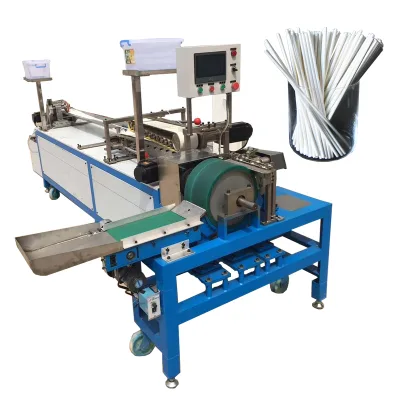
Paper and Pvc Sticking Lollipop Paper Stick Making Machine Manufacturers
$26599.00 - $26799.00
MOQ: 1 sets


High Speed Paper Straw Machine Paper Stick Making Machine Paper Rod Forming Machine
$31000.00 - $35000.00
MOQ: 1 Sets


$20000.00 - $50000.00
MOQ: 1 Sets

Comprehensive Sourcing Guide
Strategic Sourcing Guide for Electric Paper Stick Making Machines
The global demand for eco-friendly packaging and disposable consumer goods has driven a significant shift toward paper-based alternatives to plastic. At the heart of this transition lies the Electric Paper Stick Making Machine, a specialized piece of industrial equipment designed to convert raw paper rolls into rigid, cylindrical sticks used in lollipops, cotton swabs, diffusers, and various industrial applications. For procurement professionals, navigating the market for these machines requires a disciplined approach that balances technical specifications with compliance verification and cost analysis. This guide provides a comprehensive framework for sourcing electric paper stick making machines, ensuring that buyers can make informed decisions based on verified data and industry best practices.
Technical Specifications and Operational Capabilities
When evaluating electric paper stick making machines, the primary focus must be on the machine's ability to meet specific production requirements regarding speed, material compatibility, and dimensional accuracy. The market offers a variety of configurations, ranging from mechanical-driven systems to fully automatic high-speed folder gluer units. A critical observation in the current product landscape is the variance in power consumption and output capacity. Some units operate with a total power rating of 4.5kw, while others in the same category may require up to 7kw or 5.5kw, depending on the motor configuration and servo integration.
Buyers must scrutinize the specifications regarding the dimensions of the final product. The suitable stick diameter typically ranges from 2.0mm to 6.0mm, with some models supporting specific rod diameters such as 2.5mm, 5mm, 6mm, or 7mm. The length of the paper stick is equally variable, with observed ranges spanning from 50mm to 300mm, and specific models capable of handling lengths between 60mm and 260mm. These dimensions directly impact the machine's mechanical design and the precision of its feeding and cutting mechanisms.
Production speed is another vital metric. High-performance units claim a productivity of 400 to 1000 pieces per minute, while other models list a capacity of 800 to 1000 PCS/Min. The speed of the paper roll, often referred to as the reel pipe speed, is observed to operate between 12 and 18 meters per minute. Furthermore, the machine's physical footprint is substantial, with dimensions observed around 3800mm x 850mm x 2100mm, though other configurations may be as compact as 1500mm x 700mm x 1200mm or 3200mm x 900mm x 2200mm. The weight of these machines also varies significantly, with observations ranging from approximately 1500kg to 2000kg, which influences the structural requirements of the installation site.
Material Compatibility and Process Parameters
The versatility of an Electric Paper Stick Making Machine is largely defined by its ability to process different types of raw materials. The primary raw material specified for these machines is single glossy paper, which must meet specific thickness requirements to ensure the structural integrity of the final stick. The paper thickness is typically required to be between 60 and 100 GSM, with some models accepting a range of 80 to 100 GSM. The wall thickness of the resulting paper tube is a critical quality indicator, with specifications indicating a range of 10 to 15mm for certain applications, although this may vary based on the number of layers used.
The number of layers in the roll paper is another parameter that affects the final product's strength. Some configurations utilize 9 layers of roll paper, which is essential for applications requiring higher durability, such as industrial packaging or instrument cases. The machine's gumming type is predominantly single-side, which simplifies the adhesive application process while ensuring a strong bond between the paper layers. The driven type is generally mechanical, though the integration of servo motors is becoming more common to enhance precision. The total servo motor power is observed to be around 1.55kw in specific models, contributing to the overall efficiency of the folding and gluing process.
Compliance, Certification, and Safety Standards
In the B2B procurement of industrial machinery, compliance with international safety and quality standards is non-negotiable. Buyers should verify that the Electric Paper Stick Making Machine carries recognized certifications, with CE marking being a prominent standard observed in the current market. This certification indicates that the machine meets the essential health, safety, and environmental protection requirements for products sold within the European Economic Area. However, buyers must treat certification claims as observations that require verification rather than automatic guarantees for every listed product.
The warranty period is another critical aspect of compliance and supplier reliability. A standard warranty of 1 year is commonly offered, which serves as a baseline for after-sales support and machine durability. The power supply requirements must also be strictly adhered to, with most machines operating on 380V/50Hz or AC 220V single-phase systems. Mismatching the power supply can lead to operational failures or safety hazards. Additionally, the machine's standard configuration should align with the buyer's specific production needs, as the "as required" standard allows for customization but necessitates clear communication between the buyer and the manufacturer to avoid ambiguity.
Cost Drivers and Pricing Structures
Understanding the cost structure of electric paper stick making machines is essential for budgeting and ROI analysis. The observed price range for these machines in the current market spans from $2,600 to $50,000 USD. This wide variance is driven by several factors, including the level of automation, the total power rating, the complexity of the mechanical design, and the inclusion of advanced features like servo motor control. Higher-priced units typically offer greater productivity, better precision, and more robust construction, which can justify the investment for high-volume production environments.
The minimum order quantity (MOQ) for these machines is typically 1 unit, allowing for flexibility in procurement. However, the total cost of ownership extends beyond the initial purchase price. Buyers should consider the cost of installation, which may require reinforced flooring due to the machine's weight of up to 2000kg. Maintenance costs, energy consumption, and the cost of raw materials, such as single glossy paper, also play a significant role in the overall financial picture. The packaging of the machine, often in sea-worthy wooden cases or wooden pallets, adds to the shipping costs and must be factored into the logistics budget.
Typical Applications and Market Segments
Electric paper stick making machines serve a diverse range of industries, each with unique requirements for the final product. The primary applications include the manufacturing of sticks for lollipops, cotton swabs, and diffusers. These consumer goods require sticks that are smooth, consistent in diameter, and free from defects. The machine's ability to handle paper thicknesses of 60-100 GSM ensures that the sticks are sturdy enough for these applications without being overly brittle.
Beyond consumer goods, these machines are also utilized in industrial packaging and instrument packages. In these sectors, the paper stick serves as a structural component or a protective element, requiring higher durability and specific layer configurations. The application of the machine is not limited to a single industry; rather, it is a versatile tool that can be adapted to various needs through customization. The ability to produce sticks with lengths ranging from 50mm to 300mm allows manufacturers to cater to different product designs and market demands.
Supplier Evaluation and Quality Assurance
Selecting the right supplier is a critical step in the procurement process. Buyers should evaluate suppliers based on their production capabilities, customization options, and after-sales support. The availability of customization is a key indicator of a supplier's flexibility and ability to meet specific buyer requirements. The origin of the machine, often China or specifically Wenzhou, China, is a common observation, but buyers should verify the specific manufacturing location and the supplier's track record.
Quality control measures should be implemented at every stage of the procurement process. This includes verifying the machine's dimensions, weight, and power specifications against the provided data. Buyers should also inspect the machine's packaging to ensure it is sea-worthy and capable of protecting the equipment during transit. The warranty terms and the availability of spare parts are also important factors to consider. A supplier that offers a 1-year warranty and has a robust support network is more likely to provide a reliable long-term partnership.
Long-Term Procurement and Operational Considerations
For buyers looking to establish a long-term supply chain, the focus should extend beyond the initial purchase to the machine's operational longevity and adaptability. The machine's productivity, ranging from 400 to 1000 pieces per minute, suggests that it is suitable for high-volume production, but buyers must ensure that the machine can maintain this output over time. Regular maintenance, adherence to power supply standards, and the use of compatible raw materials are essential for sustaining performance.
The customization options available, such as the ability to adjust stick length and diameter, provide a strategic advantage for buyers who need to pivot their product lines in response to market trends. The machine's mechanical driven type and the integration of servo motors offer a balance between cost-effectiveness and precision. By carefully evaluating these factors, buyers can make informed decisions that align with their production goals and ensure a sustainable return on investment. The procurement of an Electric Paper Stick Making Machine is not just a transaction; it is a strategic decision that impacts the efficiency and competitiveness of the entire manufacturing operation.
FAQs
What is the production capacity of these machines?
The production capacity ranges from 400 to 1000 pieces per minute depending on the specific model. Some units achieve up to 1000 pieces per minute while others operate at the lower end of this range based on their configuration.
Can the machine handle different stick lengths?
Yes, the machine supports stick lengths ranging from 50mm to 300mm. Specific models can handle lengths between 60mm and 260mm, allowing flexibility for various product requirements like lollipops or cotton swabs.
What power supply does the machine require?
Most machines operate on a 380V/50Hz power supply, though some models accept AC 220V single-phase. Buyers must ensure their facility matches these voltage requirements to prevent operational failures.
Which certifications are available for these machines?
CE certification is a prominent standard observed for these machines in the current market. This indicates compliance with essential health and safety requirements, though verification is recommended for each specific unit.
How much does the machine weigh?
The machine weight varies significantly, with observations ranging from approximately 1500kg to 2000kg. This substantial weight influences the structural requirements and installation site preparation needed for the equipment.
What is the minimum order quantity for purchase?
The minimum order quantity is typically 1 unit, allowing for flexible procurement strategies. This low threshold enables buyers to acquire a single machine without committing to large bulk orders immediately.
What raw materials can the machine process?
The primary raw material is single glossy paper with a thickness between 60 and 100 GSM. Some models also accept paper thickness up to 100 GSM, ensuring structural integrity for the final sticks.
Is customization available for the machine specifications?
Customization is available to meet specific buyer requirements regarding production needs. This allows manufacturers to adapt the machine for different applications such as industrial packaging or instrument packages.