Find Emergency Power Supply Diesel Generator for construction, mining, and hospitals
Source 30 Emergency Power Supply Diesel Generator units from verified Chinese manufacturers. Buyers can compare specifications including power ratings from 2kW to 100kW, cooling methods, and installation types for land use applications.
Key considerations
Products List


Generator Diesel Emergency Power Silent Generator 250kVA Diesel Generator Set
$5000.00 - $30000.00
MOQ: 1 Pieces


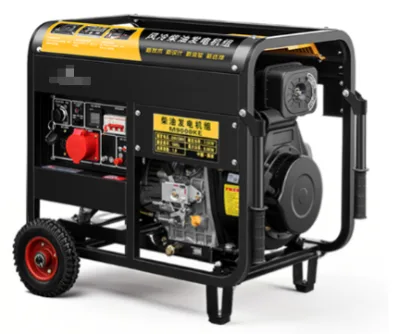


$28000.00 - $32000.00
MOQ: 1 Pieces

Comprehensive Sourcing Guide
Strategic Sourcing Guide for Emergency Power Supply Diesel Generators
The global demand for reliable emergency power solutions has intensified as industrial, commercial, and critical infrastructure sectors face increasing pressure to maintain operational continuity during grid failures. Sourcing an Emergency Power Supply Diesel Generator requires a rigorous, evidence-based approach that moves beyond superficial marketing claims. Buyers must navigate a complex landscape of technical specifications, regulatory compliance, and logistical variables to ensure the selected unit delivers the promised performance under stress. This guide outlines the critical dimensions of procurement, grounded in observed market data and verified product attributes, to assist procurement professionals in making informed decisions.
Technical Architecture and Operational Specifications
The foundation of a successful procurement strategy lies in a precise understanding of the generator's technical architecture. The market presents a diverse array of configurations, ranging from basic diesel units to advanced micro-computer controlled systems. A primary differentiator is the engine stroke cycle. While the majority of industrial units operate on a four-stroke cycle, specific observations in the market indicate the existence of six-stroke variants, which may offer distinct thermal efficiency or emission profiles. Buyers must verify the stroke count against their specific application requirements, as this directly influences fuel consumption and maintenance intervals.
Cooling methods represent another critical technical variable. The supply chain features both air-cooled and water-cooled configurations. Air-cooled units are typically associated with smaller displacement engines, such as those in the 150cc to 400cc range, often found in portable or micro-generator applications. Conversely, water-cooled systems are standard for higher capacity units, such as those rated at 20kW or 22kW, where heat dissipation is paramount for sustained operation. The choice between these methods should be dictated by the ambient environment and the required duty cycle.
Electrical output characteristics must align strictly with the facility's load profile. Observed data indicates a split between AC single-phase and AC three-phase outputs. Single-phase units, often rated around 20kW/25kVA with a rated current of 36A, are suitable for smaller commercial or residential backup needs. Three-phase units, capable of delivering 100kW/125kVA at 400V with a rated current of 180A, are essential for heavy industrial machinery and large-scale infrastructure. Furthermore, the excitation mode, specifically AC rotating exciter systems, is a key indicator of the generator's ability to handle dynamic load changes without voltage instability.
Compliance, Standards, and Physical Dimensions
Compliance in the diesel generator sector is not merely a formality but a prerequisite for operational safety and legal operation. While specific certification bodies vary by region, the physical standards and dimensions of the units provide tangible evidence of their intended use and portability. Product standards often manifest as specific dimensional constraints. For instance, silent genset models may adhere to dimensions around 2200mm by 940mm by 1530mm, whereas larger industrial units like the ALD-P250S may require a footprint of 3250mm by 1300mm by 1700mm.
Protection levels are equally critical for ensuring longevity in harsh environments. The industry standard for many units is IP23, which offers protection against solid objects larger than 12mm and water spray from any direction. However, for outdoor or exposed installations, buyers must verify if higher protection ratings are available. The installation method is another compliance-related attribute; units are categorized as either fixed or portable. Fixed installations are typical for permanent standby power solutions, while portable units, often featuring basic diesel generator configurations, are designed for temporary deployment or emergency crew use.
The physical packaging also serves as a proxy for quality assurance. Standard packing methods include plastic film and wooden crates, with reinforced plastic film options available for sea-worthy transport. These packaging standards ensure that the generator arrives at the destination without damage, preserving the integrity of the cooling systems and electrical components. Buyers should verify that the packaging dimensions match the shipping constraints of their logistics network to avoid unforeseen costs.
Cost Drivers and Economic Variables
Understanding the cost structure of diesel generators is essential for budgeting and total cost of ownership (TCO) analysis. The observed price range in the market is exceptionally broad, spanning from $146 to $88,000. This variance is not arbitrary but is driven by specific factors including rated power, fuel type, and automation level. Entry-level units, such as micro-computer controlled generators with displacements around 1L, occupy the lower end of the spectrum. In contrast, high-capacity silent gensets with advanced control systems and larger displacements command premium pricing.
Fuel flexibility is a significant cost driver. The market offers both standard diesel units and dual-fuel gensets. Dual-fuel capabilities allow the generator to operate on alternative fuels, potentially reducing operational costs in regions where diesel prices are volatile. However, the integration of dual-fuel technology often increases the initial capital expenditure. Additionally, the level of automation influences cost. Units described as "Low Noise Automation Type" or "Micro-Computer Control Automatic Diesel Generator" typically cost more than basic models due to the inclusion of sophisticated control panels and monitoring systems.
Minimum Order Quantity (MOQ) is another economic factor to consider. Observed MOQs range from 1 to 10 units. This flexibility allows small businesses to procure single units for emergency backup, while larger enterprises can leverage bulk purchasing power to negotiate better terms. Buyers should also factor in the origin of the product, with a significant portion of the market originating from Weifang, China. While this location is a major manufacturing hub, buyers must assess the logistical implications of shipping from this region to their specific destination.
Typical Applications and Usage Scenarios
The application of emergency power supply diesel generators varies widely based on the criticality of the load and the operational environment. The market categorizes usage into common units, standby units, and emergency crew applications. Standby units are designed for facilities that rely on the main grid but require immediate backup power during outages, such as hospitals, data centers, and manufacturing plants. These units often feature higher power ratings, such as the 100kW/125kVA models, and are equipped with advanced cooling and control systems.
Emergency crew applications refer to mobile or portable units deployed to support relief efforts or temporary sites. These units are often characterized by their portability and compact design, fitting within the "Low Noise" or "Ordinary" land use types. They are essential for disaster response teams that need to establish power in remote or damaged locations. The "Land Use" attribute, whether classified as "Land Use" or "Low Noise Automation Type," dictates the acoustic requirements of the generator. In residential or urban environments, low-noise silent gensets are mandatory to comply with local noise ordinances.
The type of unit also influences its suitability for specific tasks. Self-starting diesel generators are ideal for unattended operations, automatically engaging when a power failure is detected. In contrast, basic diesel generators may require manual intervention. The choice between these types depends on the level of automation required by the facility. For critical infrastructure where human intervention is not feasible during an outage, self-starting capabilities are non-negotiable.
Supplier Evaluation and Quality Assurance
Evaluating suppliers requires a focus on verifiable attributes rather than marketing promises. The supply chain for diesel generators is global, with a concentration of manufacturing in specific regions. Buyers should verify the origin of the product, noting that many units are manufactured in China, with specific hubs like Weifang being prominent. While the origin is a key data point, it should not be the sole determinant of quality. Instead, buyers must assess the supplier's ability to provide consistent quality control and adherence to specifications.
Quality assurance is often reflected in the product's construction and testing. Attributes such as the protection level (IP23) and the cooling method (water or air) are indicators of the unit's robustness. Buyers should request documentation that verifies these specifications, ensuring that the delivered product matches the ordered configuration. The customization options available in the market, including the ability to tailor units for specific voltage or frequency requirements (50/60Hz), are also signs of a capable supplier.
When evaluating suppliers, buyers should look for transparency in the product model and standard definitions. For example, models like ALD-C100s, ALD-P250S, and ALD-C375S represent specific configurations with known power outputs and dimensions. A supplier that can clearly map these models to the buyer's requirements demonstrates a high level of technical competence. Additionally, the availability of customized solutions, such as specific packing methods or installation configurations, indicates a supplier's flexibility and commitment to meeting client needs.
Long-Term Procurement and Maintenance Considerations
Procuring a diesel generator is not a one-time transaction but the beginning of a long-term relationship. Maintenance requirements, fuel efficiency, and parts availability are critical factors that influence the total cost of ownership. The engine displacement and cylinder configuration, such as 4L or 1L cylinders, directly impact maintenance schedules and fuel consumption. Buyers should inquire about the availability of spare parts and the supplier's support network to ensure minimal downtime during the unit's lifecycle.
The frequency of operation also plays a role in long-term planning. Units designed for standby use may run infrequently, requiring regular testing and maintenance to ensure reliability. In contrast, units used for emergency crew operations or continuous power generation require more frequent servicing. The cooling method, whether air or water, also dictates the maintenance regimen. Water-cooled systems, for instance, require regular coolant checks and filter replacements, while air-cooled units may need more frequent cleaning of cooling fins.
Finally, buyers should consider the scalability of their power needs. As facilities expand, the initial generator may become insufficient. The market offers a range of power outputs, from 2kW to 15kW for smaller units and up to 100kW and beyond for larger installations. Selecting a supplier that offers a modular approach or a range of compatible models can facilitate future upgrades without the need for a complete system replacement. By focusing on these long-term considerations, buyers can ensure that their emergency power supply investment remains viable and effective for years to come.
Comparative Analysis of Key Product Attributes
To facilitate decision-making, the following table summarizes the key attributes observed in the market, highlighting the diversity of options available for emergency power supply diesel generators.
| Attribute Category | Observation 1 | Observation 2 | Observation 3 |
|---|---|---|---|
| Engine Stroke | Four Stroke | Six Stroke | N/A |
| Cooling Method | Air Cooled | Water Cooling | N/A |
| Output Type | AC Three Phase | AC Single Phase | N/A |
| Rated Power | 20kW/22kW | 100kW/125kVA | 2kW-15kW |
| Installation | Fixed | Portable | N/A |
| Protection Level | IP23 | N/A | N/A |
| Model Type | Silent Genset | Dual Fuel Genset | Basic Diesel Generator |
| Control Type | Micro-Computer Control | Basic | N/A |
| Origin | China | Weifang, China | N/A |
| Dimensions | 22009401530mm | 325013001700mm | 680520580mm |
This comparison underscores the necessity of aligning specific technical requirements with the available market options. Buyers must carefully evaluate each attribute against their operational needs to select the most appropriate emergency power solution. By adhering to these evidence-based guidelines, procurement professionals can navigate the complexities of the diesel generator market with confidence and precision.
FAQs
What cooling methods are available for emergency power supply diesel generators?
Both air-cooled and water-cooled methods are available depending on the unit size. Air-cooled systems suit smaller displacements like 150cc to 400cc, while water-cooled systems are standard for higher capacity units requiring sustained operation.
Which output types can emergency power supply diesel generators provide?
Generators offer either AC single-phase or AC three-phase output configurations. Single-phase units typically serve smaller commercial needs, whereas three-phase units are essential for heavy industrial machinery and large-scale infrastructure loads.
Can emergency power supply diesel generators be customized for specific needs?
Yes, customization is available for various specifications including voltage, frequency, and installation methods. Buyers can request tailored solutions such as specific packing methods or control systems to match their unique operational requirements.
How do installation methods differ for emergency power supply diesel generators?
Units are categorized as either fixed or portable based on their intended deployment. Fixed installations are typical for permanent standby power, while portable units are designed for temporary use or emergency crew applications in remote locations.
What is the typical price range for emergency power supply diesel generators?
The observed market price range spans from 146 USD to 88,000 USD. This variance is driven by factors such as rated power, fuel type, automation level, and the inclusion of advanced control systems or silent enclosures.
Which stroke cycles are found in emergency power supply diesel generators?
The market includes both four-stroke and six-stroke engine configurations. While four-stroke cycles are common for industrial units, six-stroke variants exist and may offer distinct thermal efficiency or emission profiles for specific applications.