Source Ergonomic Modern Office Chair with Armrest for Home, School, and Work
Source 30 Ergonomic Modern Office Chair with Armrest options featuring adjustable lumbar support, nylon bases, and fixed armrests. Buyers can compare models like MS8101-B-BK and M6257 with varying specifications and lead times.
Key considerations
Products List


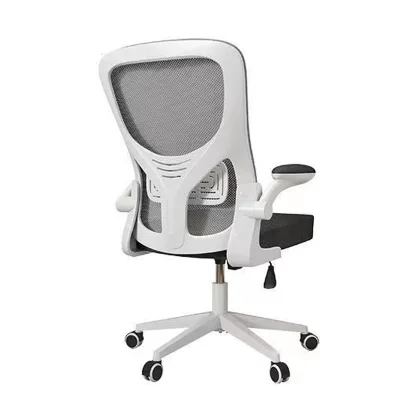
Ergonomic Black Office Chair with Adjustable Armrests for Ultimate Comfort
$3.22 - $3.78
MOQ: 30 Pairs


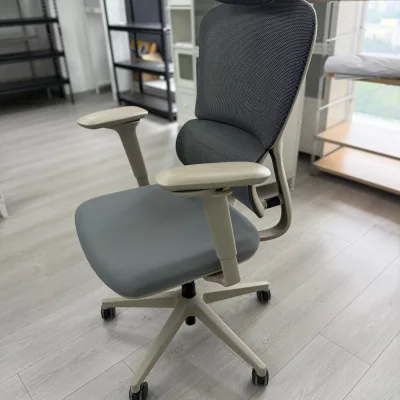
Modern Ergonomic Office Chair with Adjustable Lumbar Support and Headrest
$47.62 - $48.84
MOQ: 2 Pieces

Sleek Stylish Ergonomic Office Chair with Customizable Back and Armrests
$72.00 - $76.00
MOQ: 1 Pieces




Comprehensive Sourcing Guide
Strategic Sourcing Guide for Ergonomic Modern Office Chairs with Armrests
Procuring ergonomic modern office chairs with armrests requires a disciplined approach that balances technical specifications, supply chain reliability, and compliance verification. The global market for office furniture is vast, but the specific segment of modern, armrest-equipped ergonomic seating demands rigorous due diligence. Buyers must navigate a landscape where product attributes vary significantly between models, and where "ergonomic" is often a marketing term rather than a standardized technical definition. This guide outlines the essential factors for sourcing these products effectively, drawing on observed market data and standard industry practices to ensure a procurement strategy that minimizes risk and maximizes value.
Technical Specifications and Structural Integrity
The foundation of any successful procurement for office chairs lies in a detailed understanding of technical specifications. When evaluating a modern office chair with armrests, the buyer must scrutinize the base material, castor type, and adjustment mechanisms. Observed market data indicates a prevalence of nylon bases paired with nylon or PU castors, which are standard for indoor environments requiring smooth mobility on hard floors. For instance, specific models in the current supply pool feature a "Nylon Base" and "Nylon Castors," while others utilize a "Five Star Base" with "PU" castors. The choice between these materials impacts durability and floor protection.
Armrest configuration is another critical technical differentiator. The market offers both fixed and adjustable options. Some listings specify "With Fixed Armrests," which provide structural rigidity but limit user customization. In contrast, other models advertise "Nylon 4D Armrests," suggesting multi-directional adjustability that aligns with advanced ergonomic principles. The presence of a "Tilting Lockable Mechanism" is also a key specification to verify, as it allows the user to lock the chair in a specific recline position or allow for dynamic movement. Furthermore, the backrest material composition, such as "PP+ Glass Fiber," offers insights into the chair's structural strength and weight capacity. Buyers should request detailed dimension sheets, as observed standards range from compact footprints like 843858.5 cm to larger configurations such as 7007001150-1250 mm, depending on the intended use case.
Compliance, Certification, and Safety Standards
In the B2B sector, compliance is not merely a formality but a prerequisite for liability protection and market access. When sourcing ergonomic chairs, buyers must verify that products meet recognized international safety and quality standards. The most prominent standard observed in the current market data is BIFMA (Business and Institutional Furniture Manufacturers Association), which sets rigorous testing protocols for durability, stability, and safety. Some suppliers explicitly list "BIFMA/SGS" certifications, indicating that the product has undergone third-party testing for structural integrity and material safety.
Additionally, the European standard EN 1335 is often referenced in the industry context, though it should be treated as a background reference rather than a guaranteed attribute unless explicitly confirmed by the supplier. Buyers should not assume that a product labeled "ergonomic" automatically complies with these standards. Instead, the procurement process must include a request for valid test reports. The presence of a "5 Years" guarantee in some listings suggests a manufacturer's confidence in their product's longevity, but this guarantee is only as valuable as the underlying certification. Verification of these documents is essential to ensure that the chairs can withstand the daily wear and tear of an office environment without compromising user safety.
Cost Drivers and Pricing Variables
Understanding the cost structure of ergonomic office chairs is vital for budget planning and negotiation. The observed price range in the market spans from $1.68 to $235, a variance that reflects differences in material quality, feature sets, and manufacturing complexity. Several key factors drive these costs. First, the material composition plays a significant role; chairs utilizing "Aluminium Alloy" for frames or high-grade "PP+ Glass Fiber" for backrests will inherently cost more than those using standard plastics. Second, the complexity of the adjustment mechanisms, such as "Self-Adaptive Lumbar Support" or "4D Armrests," adds to the manufacturing expense.
Packaging and logistics also influence the final landed cost. The "Cbm" (cubic meter) value is a critical metric for freight calculation. Observed data shows a specific packing density of 0.19 PCS per cubic meter for certain models, while others are packed in standard cartons or boxes with varying quantities per carton, such as "2PCS/CTN." These packing standards directly affect shipping efficiency and container utilization. Furthermore, the "Lead Time" of 15 days observed in some listings indicates the production capacity and current demand levels. Buyers must account for these variables when calculating the total cost of ownership, including freight, duties, and inventory holding costs.
Supplier Evaluation and Production Capabilities
Selecting the right supplier requires a multi-faceted evaluation beyond just price and product images. The supply chain for office furniture is complex, involving raw material sourcing, assembly, quality control, and logistics. A reliable supplier should demonstrate transparency in their production process. For example, the observation of a "30% Deposit Before Production, 70% Balance Before" payment term is a common industry practice that balances risk between the buyer and the manufacturer. However, buyers should also assess the supplier's capacity to handle customization. While some listings indicate "Non-Customized" options, others explicitly offer "Customization" services, allowing for branding or specific feature modifications.
The origin of the product is another critical factor. Most observed listings indicate "China" as the production origin, which is a major hub for office furniture manufacturing. However, the specific location within the country can impact logistics and communication. Buyers should verify the supplier's ability to meet the "MOQ" (Minimum Order Quantity) requirements, which range from 1 to 180 units in the current market. A supplier with a low MOQ might be suitable for small-scale procurement or testing, while those with higher MOQs may offer better economies of scale. It is also essential to evaluate the supplier's response time and their ability to provide samples for quality verification before committing to a large order.
Quality Control and Inspection Protocols
Implementing a robust quality control (QC) protocol is essential to mitigate the risks associated with offshore manufacturing. Given the wide range of observed specifications, from "Unfolded" states to specific packing requirements like "Cartons" or "Carton, Box," consistency in production is paramount. Buyers should establish clear acceptance criteria based on the technical specifications provided. For instance, verifying that the "Rotary" mechanism functions smoothly and that the "Lumbar Support" is indeed "Adjustable" as claimed is a basic QC step.
Third-party inspection services are highly recommended for orders exceeding a certain value or volume. These inspections should cover structural integrity, finish quality, and functionality. The presence of a "5 Years" guarantee implies that the manufacturer expects the product to last, but this expectation must be validated through pre-shipment inspections. Buyers should also check for packaging integrity to ensure that chairs arrive without damage, as the "Mail Packing" status of "N" (No) in some listings suggests that standard packaging is sufficient, but specific handling instructions may be required for fragile components. Establishing a clear communication channel for reporting defects and resolving issues is also a key component of a successful QC strategy.
Long-Term Procurement and Maintenance Considerations
Sourcing ergonomic chairs is not a one-time transaction but part of a long-term procurement strategy. The longevity of the furniture depends on the quality of materials and the availability of spare parts. Buyers should inquire about the warranty terms and the supplier's policy on after-sales support. The "5 Years" guarantee observed in some listings is a strong indicator of product durability, but it is crucial to understand the scope of this coverage. Does it cover the mechanism, the fabric, or the base?
Maintenance is another consideration. Chairs with "Nylon Castors" and "Nylon Base" may require different maintenance than those with metal components. The "Modern" and "Simple" styles observed in the market suggest a focus on aesthetics that should remain relevant over time, but buyers should also consider the availability of replacement parts like armrests or castors. Furthermore, the "Self-Adaptive Lumbar Support" feature, if present, adds a layer of complexity that may require specialized knowledge for repair. A supplier that offers comprehensive technical support and spare parts inventory will add significant value to the procurement relationship, ensuring that the office environment remains productive and comfortable for years to come.
Typical Applications and Usage Scenarios
The versatility of ergonomic modern office chairs with armrests makes them suitable for a wide range of applications. From corporate offices to co-working spaces, these chairs are designed to support prolonged periods of sitting. The "Adjustable Lumbar Support" and "Tilting Lockable Mechanism" are particularly beneficial in environments where employees spend long hours at their desks. The "Modern" style and "Simple" design aesthetics allow these chairs to blend seamlessly into various interior design schemes, from high-tech startups to traditional corporate settings.
In addition to general office use, these chairs are also suitable for home offices and remote work setups. The "With Armrests" feature provides essential support for users who may not have access to a dedicated ergonomic workstation. The "Nylon 4D Armrests" and "PP+ Glass Fiber" backrests offer the necessary durability and comfort for extended use. Buyers should consider the specific needs of their target users when selecting models. For example, a high-traffic conference room might benefit from chairs with "Fixed Armrests" and a robust "Five Star Base," while a private office might require the adjustability of "Self-Adaptive Lumbar Support" and "Nylon Castors" for quiet movement.
Conclusion
Sourcing ergonomic modern office chairs with armrests is a complex process that requires a deep understanding of technical specifications, compliance standards, and supply chain dynamics. By focusing on the key factors outlined in this guide, buyers can make informed decisions that align with their organizational needs and budget constraints. The observed market data provides a solid foundation for evaluating potential suppliers, but it is the rigorous application of quality control and compliance checks that will ultimately determine the success of the procurement. As the market continues to evolve, staying informed about the latest standards and technological advancements will be essential for maintaining a competitive edge in office furniture procurement.
FAQs
Can Ergonomic Modern Office Chair with Armrest be customized?
Yes, customization is available for this product category. While some models are listed as non-customized, the supply pool explicitly offers customization options for buyers requiring specific modifications or branding.
What certifications do these chairs meet?
Some models carry BIFMA and SGS certifications, indicating compliance with international safety and durability standards. Buyers should verify specific test reports to ensure the product meets required regulatory frameworks for their market.
How long is the lead time for production?
The observed lead time for production is 15 days for certain models. This duration reflects the current manufacturing capacity and should be factored into your procurement timeline alongside shipping and customs clearance.
Which armrest types are available for these chairs?
Available configurations include fixed armrests and adjustable nylon 4D armrests. The choice depends on the specific model, with some offering structural rigidity while others provide multi-directional adjustability for enhanced ergonomics.
What is the minimum order quantity for these chairs?
The minimum order quantity ranges from 1 to 180 units depending on the supplier and model. Buyers can source small quantities for testing or larger volumes to benefit from economies of scale.
Can I find chairs with adjustable lumbar support?
Yes, adjustable lumbar support is a feature found in specific models within this category. Some units also offer self-adaptive lumbar support to enhance user comfort during extended periods of sitting.
What is the warranty period for these products?
Some listings indicate a 5-year guarantee for the product. This warranty suggests manufacturer confidence in durability, though the specific coverage scope should be confirmed with the supplier before purchase.