Source Ergonomic Waiting Chair for Office Hotel Airport
Find 30 Ergonomic Waiting Chair options suitable for office, hotel, and airport environments. Buyers can compare specifications, materials, and prices to select the right commercial furniture for their needs.
Key considerations
Products List


Airport Public Waiting Row Chair Office Hospital Bench Reception Waiting Bench Chair
$30.00 - $199.00
MOQ: 10 Pieces


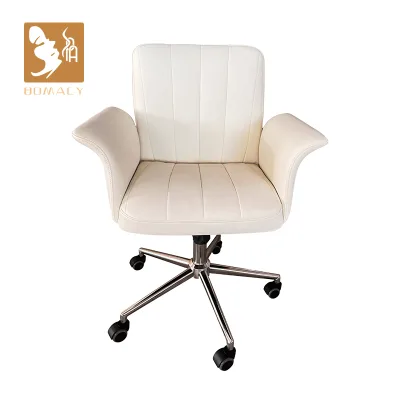


Hospital Chair Accompanying Chair Hospital Furniture Medical Equipment
$63.00 - $100.00
MOQ: 10 Pieces


Comprehensive Sourcing Guide
Strategic Sourcing Guide for Ergonomic Waiting Chairs
Understanding the Product Category and Core Attributes
When sourcing ergonomic waiting chairs, buyers must first distinguish between the broad category of general seating and the specific functional requirements of high-traffic waiting environments. The term "ergonomic" in this context often implies a design that supports prolonged sitting while maintaining user comfort, though the specific implementation varies significantly by manufacturer. Based on observed market data, the product landscape includes distinct variations such as "Executive Office Chairs" and general "Office Chairs," alongside specialized units designed for "Station, Airport, Park, Hospital, Supermarket, and Cinema" applications.
A critical observation in the current supply chain is the divergence in material composition. While some listings highlight "Genuine Leather" as a primary material, others specify "Fabric" or "Metal" as the dominant construction element. For a waiting chair intended for public use, the material choice dictates durability and maintenance requirements. Metal frames, often constructed from "Aluminium Alloy" or "Stainless Steel," provide the structural integrity necessary for commercial settings. The presence of armrests is another variable; some models are specified as "With Armrest," while others are "Without Armrest," a decision that impacts seating density and accessibility.
The design style also plays a pivotal role in procurement decisions. The market currently features "Modern" styles, often characterized by clean lines and functional aesthetics. However, specific models may also be categorized under "Dining Room Furniture" or "Home Furniture," which may not meet the rigorous durability standards required for airport or hospital waiting areas. Buyers must carefully verify the "Specific Use" and "General Use" attributes to ensure the selected product aligns with the intended environment. For instance, a chair marked for "Restaurant" or "Home" application may lack the reinforced base or specific fabric treatments required for high-traffic commercial zones.
Technical Specifications and Dimensional Standards
Technical specifications form the backbone of any successful procurement strategy for waiting chairs. Dimensions are not merely aesthetic choices but functional necessities that determine space utilization and user comfort. Observed data indicates a wide range of standard dimensions, with some models measuring approximately 5660106cm, while others are more compact at 4752100cm or 485596cm. A specific model, identified by the code DS01-17, presents a unique size profile of 435045/80cm, suggesting adjustable or variable height capabilities.
Weight is another critical technical parameter. The gross weight of these units can vary, with observed values around 10.5kg. This figure is essential for logistics planning, particularly when calculating shipping costs and handling requirements. The tube thickness is another specific technical detail that buyers should scrutinize; a value of 1.2mm is noted in certain listings, which serves as a baseline for structural strength. However, buyers should not assume this thickness applies to all products without verification, as heavier-duty models may require thicker gauges to withstand constant use.
The "Shape" of the chair, whether "Square" or otherwise, influences both the visual appeal and the stacking capability. Some models are explicitly labeled as "Stackable," a feature that is highly valuable for facilities that need to reconfigure seating arrangements quickly. Conversely, chairs designed for fixed installation, such as those with a "Fixed" rotary mechanism, may offer superior stability but lack the flexibility of stackable units. The "Folded" status of a product is also relevant; while most waiting chairs are designed in an "Unfolded" state for immediate use, understanding the assembly requirements is vital for on-site deployment.
Compliance, Certification, and Safety Verification
In the realm of commercial furniture, compliance and safety are non-negotiable. While specific certification names are not universally listed in all product data, buyers must verify that the chairs meet the safety standards of the destination market. For products originating from "China" or specifically "Guangdong, China," it is imperative to confirm adherence to international safety regulations regarding stability, flammability, and material toxicity.
The "Standard" attribute in product listings often refers to dimensional specifications rather than safety certifications. For example, a listing might state a standard of "Metal+leather," which describes the material composition rather than a safety rating. Buyers should not rely on these descriptive standards as proof of compliance. Instead, they must request independent test reports from suppliers to verify that the chairs can withstand the load and usage patterns typical of their specific application, such as a hospital or airport.
Safety checks should also extend to the "Metal Type" used in construction. Whether the frame is made of "Aluminium Alloy" or "Stainless Steel," the material must be resistant to corrosion, especially in environments with high humidity or frequent cleaning. The "Feature" attribute, which sometimes lists "Other" or "Stackable," should be cross-referenced with safety data to ensure that stacking mechanisms do not compromise the structural integrity of the chair when loaded.
Cost Drivers and Pricing Dynamics
The pricing of ergonomic waiting chairs is influenced by a complex interplay of factors, including material quality, customization options, and order volume. The observed price range in the market spans from $11.9 to $364 USD, a significant variance that reflects differences in quality, brand positioning, and feature sets. The lower end of the spectrum typically corresponds to basic metal or fabric chairs with minimal customization, while the higher end often includes premium materials like "Genuine Leather" or advanced ergonomic adjustments.
Customization is a primary cost driver. The availability of "Customized" options allows buyers to tailor the chair to their specific branding or functional needs, but this service invariably adds to the unit cost. Conversely, "Non-Customized" models are generally more cost-effective and suitable for standard procurement needs. The "MOQ" (Minimum Order Quantity) also plays a crucial role in pricing. While some suppliers may accept orders as low as 1 piece, others enforce a minimum of 20 pieces or even up to 300 pieces. Higher order volumes often unlock better unit pricing, making it essential for buyers to forecast their needs accurately before engaging with suppliers.
Packing methods, such as "Mail Packing" or "Carton" packaging, can also impact the final cost. Products that require specialized packing to prevent damage during transit may carry a higher price tag. Additionally, the "Condition" of the product, typically listed as "New," is a baseline expectation, but buyers should verify the warranty terms and after-sales support, as these factors can influence the total cost of ownership.
Typical Applications and Usage Scenarios
The versatility of waiting chairs is evident in the diverse range of applications listed in the market data. These products are designed for use in "Office, Hotel, School," as well as "Restaurant, Living Room, Bedroom, Dining." However, the specific "Specific Use" attribute often narrows down the ideal application. For instance, chairs designated for "Station, Airport, Park, Hospital, Supermarket, and Cinema" are engineered to handle high foot traffic and require robust construction.
The "Application" field provides further clarity on where these chairs perform best. A chair marked for "Office, Dining Room" may be suitable for a corporate break room but might not be ideal for a busy hospital waiting area. Buyers must align the product's intended use with their specific environment. For example, a "Dining Chair" designed for "Home Furniture" use may lack the durability required for a commercial "Restaurant Chair" application. Understanding these distinctions is crucial to avoid purchasing furniture that fails prematurely under heavy use.
The "Seater" attribute, which lists usage locations like "Station" or "Park," indicates the chair's suitability for public spaces. These environments demand furniture that is easy to clean, resistant to vandalism, and capable of supporting users for extended periods. In contrast, chairs intended for "Home" or "Living Room" use may prioritize comfort and aesthetics over ruggedness. Buyers should carefully evaluate the "General Use" classification to ensure the product matches the demands of their specific facility.
Supplier Evaluation and Quality Control Protocols
Selecting the right supplier is as important as selecting the right product. When evaluating potential partners, buyers should look for transparency in the supply chain, including clear information about the "prod_origin." Many products originate from "China," with specific manufacturing hubs in "Guangdong, China." While this region is known for its manufacturing capabilities, buyers must verify the supplier's reputation and track record in delivering quality products.
Quality control should be a priority throughout the procurement process. Buyers should request samples to verify the "Material" quality, checking for the presence of "Genuine Leather" or the durability of "Fabric" and "Metal" components. The "Tube Thickness" and "Metal Type" should be measured to ensure they meet the specified standards. Additionally, the "Feature" set, such as "Stackable" capabilities, should be tested to confirm that the chairs can be safely stacked and unstacked without damage.
The "Product Name" and "prod_model" are key identifiers for tracking quality. Models like "DS03-04," "RWASJ055D," and "DS0181" represent specific designs with unique attributes. Buyers should maintain a record of these model numbers to ensure consistency in future orders. The "Packing" method, whether "Carton" or "Mail Packing," should also be inspected to ensure that the products arrive in good condition.
Long-Term Procurement and Maintenance Considerations
Long-term procurement success depends on more than just the initial purchase; it requires a focus on maintenance, durability, and lifecycle management. The "Condition" of the chair, typically "New," is the starting point, but the longevity of the product depends on the quality of materials and construction. Chairs made from "Stainless Steel" or "Aluminium Alloy" generally offer better resistance to wear and tear compared to those with less robust metal types.
Maintenance requirements vary based on the material. "Genuine Leather" chairs may require regular conditioning to prevent cracking, while "Fabric" chairs might need more frequent cleaning to remove stains and dirt. The "Color" option, whether "Black" or "White," also influences maintenance, as lighter colors may show dirt more easily. Buyers should consider the cleaning protocols of their facility when selecting a color.
The "Folded" and "Unfolded" states of the chair can also impact maintenance. Chairs that are designed to be folded may have moving parts that require lubrication or inspection over time. Conversely, "Fixed" chairs with no moving parts may require less maintenance but offer less flexibility. Finally, the "Customization" aspect should be considered in the context of long-term availability. Customized features may be difficult to replicate if the supplier discontinues a model, so buyers should plan for potential replacements or standardization of their fleet.
FAQs
What materials are used for ergonomic waiting chairs?
Materials include genuine leather, fabric, and metal frames. Some models feature aluminium alloy or stainless steel construction, while others use a combination of metal and leather for durability in commercial settings.
Which dimensions are standard for these office chairs?
Standard dimensions vary by model, with common sizes like 56*60*106cm, 47*52*100cm, and 48*55*96cm. Specific models may offer unique profiles such as 43*50*45/80cm to suit different space requirements.
Can these chairs be customized for specific branding needs?
Customization is available for some models, allowing for tailored designs. However, other listings specify non-customized options, so buyers must verify the specific product attributes before ordering to ensure branding requirements are met.
What is the minimum order quantity for these products?
Minimum order quantities range from 1 to 300 pieces depending on the supplier. Many listings indicate a standard MOQ of 20 pieces, though some suppliers may accept smaller orders for trial purposes.
Where are these ergonomic chairs typically manufactured?
Most products originate from China, with specific manufacturing hubs located in Guangdong. Buyers should verify the origin to ensure compliance with local safety standards and shipping logistics for their specific destination.
How do armrest configurations affect chair selection?
Chairs are available with or without armrests to suit different usage scenarios. Models with armrests offer more comfort, while those without are often designed for higher density seating in public waiting areas like airports.
What is the typical gross weight of these units?
The observed gross weight for these units is approximately 10.5kg. This weight is a critical factor for logistics planning and shipping cost calculations, especially when ordering large quantities for commercial deployment.