Source Expandable Walnut Cutlery Tray with Cork Bottom for Kitchen Storage
Find 30 Expandable Walnut Cutlery Tray with Cork Bottom options from verified suppliers. Compare MOQs, delivery times, and customization features for kitchen storage and display needs.
Key considerations
Products List





Comprehensive Sourcing Guide
Strategic Sourcing Guide for Expandable Walnut Cutlery Trays with Cork Bottom
Understanding Product Architecture and Core Specifications
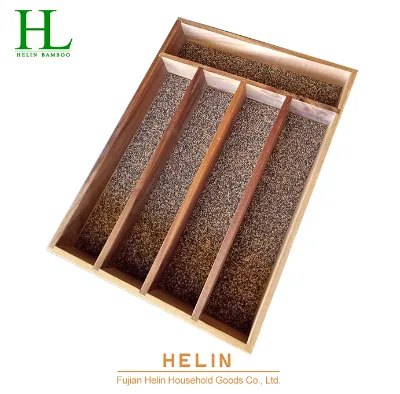
The expandable walnut cutlery tray with a cork bottom represents a specialized category of kitchen organization hardware designed for high-end residential and commercial environments. Sourcing this item requires a precise understanding of its dual-material construction and mechanical functionality. The primary structural component is walnut wood, selected for its durability, aesthetic grain, and resistance to wear. This is complemented by a cork bottom, which serves a critical functional role in preventing surface scratching and providing acoustic dampening when utensils are placed inside.
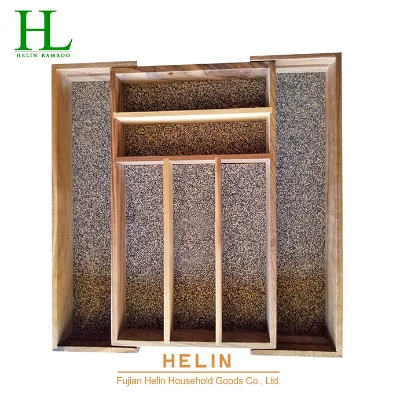
Based on observed market data, the physical dimensions of these units vary significantly between fixed and expandable models. Fixed units typically adhere to a standard footprint of approximately 3625.55 cm, with a single package size of 37X26X6 cm. In contrast, expandable variants offer dynamic sizing, with specifications ranging from 24.5-39 cm in length, 40 cm in width, and 6 cm in height. This expandability is a key differentiator, allowing the tray to accommodate varying drawer depths or to be reconfigured for different utensil sets. The dimensional tolerance for these wooden components is observed to be within ±1mm, ensuring a snug fit within cabinetry. The shape is consistently rectangular, and the finish is typically achieved through lacquer techniques to enhance the natural walnut color while providing a protective barrier against moisture and stains.
Material Integrity and Functional Design Analysis
The material composition is the most critical factor in evaluating the longevity and safety of the cutlery tray. The primary material is identified as walnut, a hardwood known for its strength. Some product listings also categorize the material broadly as wood, but the specific grain and density of walnut are implied by the product name and finish. The inclusion of a cork bottom is a standard feature for this specific keyword, providing a non-slip surface and protecting the cabinetry finish. The functional design is described as multifunctional, capable of serving as both a storage solution and a display unit for high-quality cutlery.
The load-bearing capacity is a vital specification for procurement. The observed maximum load for these units is ≤5kg. Buyers must verify that the internal joinery and the thickness of the walnut slats can support this weight without warping, especially given the expandable nature of some models which may introduce mechanical stress points. The weight tolerance is observed to be within ±5% to ±10%, indicating that the manufacturing process allows for minor variances in material density. The color is generally natural walnut, though customization options for logos and specific finishes are available. The product is often finished with a lacquer technique, which enhances the visual appeal and provides a barrier against the moisture inherent in kitchen environments.
Compliance, Certification, and Regulatory Verification
When sourcing wooden kitchenware, compliance with international safety and environmental standards is paramount. While specific certification documents are not universally listed for every unit, buyers must actively verify that the walnut wood is sourced from sustainable forests. The "Eco-Friendly" attribute observed in product listings suggests a commitment to sustainable practices, but this should be validated through third-party certification such as FSC (Forest Stewardship Council) or PEFC (Programme for the Endorsement of Forest Certification) before placing large orders.
Furthermore, the use of cork and lacquer requires scrutiny regarding chemical safety. The lacquer finish must be free from harmful volatile organic compounds (VOCs) to ensure it is safe for food contact environments. Buyers should request Material Safety Data Sheets (MSDS) for the finishing agents used. The "Stocked" status of some items implies immediate availability, but this does not guarantee compliance with the specific regulatory standards of the destination market. For instance, if the product is destined for the European Union, it must comply with REACH regulations regarding chemical substances. In the United States, compliance with FDA guidelines for food contact surfaces is essential. The "OEM" branding indicates that the product is manufactured for private label, which means the buyer is responsible for ensuring the final product meets their specific market's regulatory requirements, including labeling and origin disclosure.
Cost Drivers and Economic Factors in Procurement
The pricing for expandable walnut cutlery trays is influenced by several variables, with the observed market range spanning from $0.04 to $30.44 per unit. This wide disparity is primarily driven by the scale of the order, the complexity of the expandable mechanism, and the quality of the raw materials. The Minimum Order Quantity (MOQ) is a significant cost driver, with observed ranges from 100 to 200,000 pieces. Smaller orders, such as those with an MOQ of 100 or 500 pieces, often carry a higher unit cost due to the setup costs for custom tooling and production lines. Conversely, bulk orders can leverage economies of scale to reduce the per-unit price significantly.
Lead time is another critical economic factor. The observed delivery times range from 50 to 55 days, which includes production and logistics. This extended lead time is typical for custom wooden products that require drying, machining, and finishing. Buyers must factor this into their inventory planning to avoid stockouts. The "Sample time" of 10-15 days is also a consideration; if a buyer requires a prototype for quality verification, this adds to the overall timeline before mass production can begin. Additionally, the "Customized Logo" option adds a layer of complexity and cost, as it requires additional setup for printing or engraving processes. The "Single gross weight" of approximately 0.6 kg per unit affects shipping costs, particularly for air freight, making sea freight the preferred method for large volume orders to optimize the cost-to-weight ratio.
Supplier Evaluation and Operational Reliability
Selecting a reliable supplier for walnut cutlery trays requires a rigorous evaluation of their operational capabilities. The "place of origin" is consistently identified as Fujian, China, a region known for its woodworking industry. Buyers should verify the supplier's capacity to handle the specific "Morden Luxury" or "Modern" style requirements, as these terms imply a high standard of craftsmanship. The "Quality: High Qualty" attribute found in listings is a self-reported claim and must be substantiated through factory audits and sample testing.
Key evaluation criteria include the supplier's ability to maintain the observed dimensional tolerances of ±1mm and weight tolerances of ±5% to ±10%. Inconsistent tolerances can lead to fitment issues in customer drawers. The "Packing" method, which varies between "Shrink wrapped + color label" and "Polybag," is also a critical factor. Proper packaging is essential to prevent damage during transit, especially given the fragile nature of the cork bottom and the potential for scratches on the lacquered wood. Suppliers should demonstrate a robust quality control process that includes pre-shipment inspections. The "Delivery time" of 50-55 days must be adhered to strictly; delays can disrupt the buyer's supply chain and lead to contractual penalties. Buyers should also assess the supplier's responsiveness to "Customized Logo" requests and their ability to manage the "Sample time" efficiently.
Quality Control Protocols and Long-Term Procurement Strategy
Implementing a robust quality control (QC) protocol is essential for mitigating risks associated with wooden kitchenware. The QC process should begin with the raw material inspection, verifying that the walnut is free from knots, cracks, and insect damage. The cork bottom must be checked for uniform thickness and adhesion to the wood base. During production, in-process inspections should verify the lacquer application for even coverage and the absence of bubbles or runs. The final inspection should focus on the dimensional accuracy, ensuring the expandable mechanism operates smoothly and the tray fits within the specified size range of 24.5-39406cm or 3625.55cm.
For long-term procurement, buyers should establish a partnership with suppliers who demonstrate consistency in their "High Qualty" output. This involves regular audits and the establishment of clear communication channels for addressing defects. The "Usage" of the product as both storage and display means that the aesthetic finish is as important as the structural integrity. Buyers should consider the "weight tolerance" and "dimensional tolerance" as key performance indicators (KPIs) in their supplier scorecards. Additionally, the "Eco-Friendly" attribute should be monitored to ensure that the supplier continues to adhere to sustainable sourcing practices, which is increasingly important for brand reputation. By maintaining a strategic approach to supplier evaluation and quality control, buyers can ensure a steady supply of high-quality expandable walnut cutlery trays that meet the demands of the modern luxury market.
Comparative Analysis of Product Variants
To assist in decision-making, the following table summarizes the key differences between the observed product variants based on the provided specifications. This comparison highlights the trade-offs between fixed and expandable models, as well as differences in packaging and lead times.
| Feature | Fixed Model Variant | Expandable Model Variant |
|---|---|---|
| Primary Specification | 3625.55 cm | 24.5-39406 cm |
| Single Package Size | 37X26X6 cm | 27X8X43 cm |
| MOQ Range | 1000 pcs | 1000 pcs |
| Delivery Time | 55 days | 50 days |
| Weight Tolerance | <±5% | <±10% |
| Usage Focus | Display | Storage |
| Model Number | H-0173 | H-0174 |
| Packing Method | Shrink wrapped + color label | Polybag |
| Style | Morden Luxury | Modern |
This comparison underscores that while both variants share the core material of walnut and cork, their functional applications and logistical requirements differ. The fixed model is optimized for display purposes with a specific, non-adjustable footprint, whereas the expandable model offers versatility for storage but requires careful handling of its mechanical components. Buyers must align their procurement strategy with their specific end-user needs, whether prioritizing the aesthetic consistency of the fixed model or the adaptability of the expandable version.
FAQs
What is the load capacity of the walnut cutlery tray?
The maximum load capacity is 5kg. This limit ensures the walnut structure and cork bottom remain stable without warping under typical kitchen utensil weight.
Can the product size be customized for specific drawers?
Yes, customized sizes are available for the expandable model. Fixed models adhere to standard dimensions like 36*25.5*5cm, while expandable units range from 24.5 to 39cm in length.
How long does it take to receive a sample?
Sample time is typically 10 to 15 days. This period allows for the creation of a prototype to verify quality before mass production begins.
Which finish technique is used on the walnut wood?
The product uses a lacquer technique for its finish. This method enhances the natural walnut color and provides a protective barrier against moisture and stains.
What is the minimum order quantity for this product?
The minimum order quantity varies between 100 and 1000 pieces depending on the specific listing. Bulk orders often benefit from lower per-unit costs due to economies of scale.
Where is the place of origin for these trays?
The place of origin is Fujian, China. This region is known for its woodworking industry and supplies the raw materials and manufacturing capacity for these items.
How is the product packaged for shipping?
Packaging options include shrink wrap with a color label or a simple polybag. Proper packaging protects the lacquered wood and cork bottom during transit.