Source Expansion Screw Foundation Bolt Extensions for Building, Machinery, Chemical
Compare 30 Expansion Screw Foundation Bolt Extensions from suppliers in China with materials like carbon steel and stainless steel. Buyers can review specifications, grades, and customization options for building, machinery, and chemical industry applications.
Key considerations
Products List


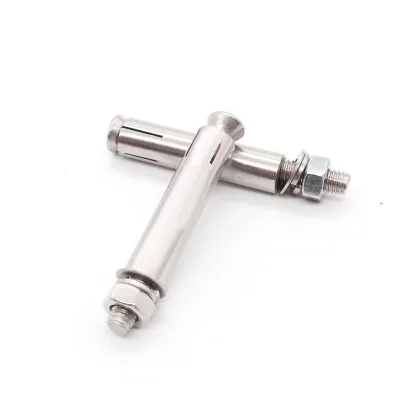
Comprehensive Sourcing Guide
Strategic Sourcing Guide for Expansion Screw Foundation Bolt Extensions
Understanding Product Categories and Material Variants
When sourcing Expansion Screw Foundation Bolt Extensions, buyers must first distinguish between the specific material grades and structural compositions available in the current market. The product landscape is not monolithic; it is defined by distinct material choices that dictate performance in various environments. Based on observed market data, the primary material categories include Carbon Steel and Stainless Steel. Carbon Steel variants are frequently associated with Grade 6 classifications, offering high tensile strength for general construction applications where corrosion resistance is not the primary concern. Conversely, Stainless Steel options, often cited in Grades 8 or specific alloy designations like AISI 304/A2 and 316L/A4, are critical for applications in the chemical industry, environmental sectors, and machinery where exposure to moisture or corrosive agents is inevitable.
The distinction between these materials is not merely a matter of cost but of functional longevity. Carbon steel products typically require additional surface treatments to prevent rust, whereas stainless steel variants, such as the wedge anchor types, provide inherent resistance. Buyers should verify the specific grade and material composition of the extension bolts before proceeding, as the "Grade" attribute can vary significantly between suppliers. Some listings indicate material grades as "Due to You," suggesting a high degree of customization where the buyer's specific project requirements dictate the final steel composition. This flexibility allows for tailored solutions but requires rigorous verification of the supplier's ability to source and process the exact alloy requested.
Furthermore, the product naming conventions often reflect the application. Terms like "Concrete Anchor Bolt" or "Wedge Anchor" appear alongside generic descriptions like "Expansion Anchor Bolts." These terms are not interchangeable; they refer to specific mechanical engagement methods within the substrate. Understanding these nuances is essential for selecting the correct extension for the foundation type. Whether the application involves standard concrete pouring or specialized machinery anchoring, the material choice directly influences the load-bearing capacity and durability of the installation.
Technical Specifications and Dimensional Standards
Precision in technical specifications is paramount when ordering Expansion Screw Foundation Bolt Extensions. The market exhibits a wide range of dimensional standards, with products adhering to major international systems including DIN, GB, ANSI, JIS, GOST, and BSW. The availability of these standards indicates that suppliers are capable of producing bolts that meet the regulatory and engineering requirements of diverse global markets. For instance, a project in Europe may strictly require DIN compliance, while a North American project might mandate ANSI standards. The presence of multiple standard references in product listings suggests that suppliers can accommodate these varying regulatory frameworks, but buyers must explicitly confirm the specific standard applicable to their region and project.
Dimensional specifications also vary significantly. Product models range from specific designations like "001" to comprehensive size ranges such as M6-M72. This wide spectrum allows for the anchoring of everything from light-duty fixtures to heavy industrial machinery. The thread type is another critical specification, with "Unc" (Unified Coarse) threads being a common observation, though the market also supports "All Kinds" of connections. Tolerance levels are equally important for ensuring a secure fit; observed data indicates tolerance ranges of +/-0.01 to 0.005mm for certain high-precision applications. However, for general construction, broader tolerances may be acceptable. Buyers should verify the exact tolerance requirements for their specific use case, as tighter tolerances often correlate with higher manufacturing costs and longer lead times.
The measurement system used is another key technical factor. Listings indicate that products are available in both Inch and Metric systems. This duality is crucial for international procurement, as mixing systems can lead to compatibility issues during installation. The "Size" attribute is frequently listed as "Customizable," which implies that standard catalog sizes may not always meet the unique requirements of a specific foundation extension project. In such cases, the ability to order custom dimensions becomes a decisive factor in supplier selection. Additionally, the head style, such as "Round," and the finish, including "Polishing," contribute to the final product's usability and aesthetic integration into the construction site.
Compliance, Certification, and Quality Assurance Protocols
Ensuring compliance with industry standards and quality assurance protocols is a non-negotiable aspect of sourcing foundation bolt extensions. While specific certification names are not always explicitly listed in general product descriptions, the adherence to standards like GB, DIN, and ANSI serves as a proxy for quality. The "Quality" attribute often cites "100% After Inspection," indicating that suppliers implement a final quality control check before shipment. This is a critical step to ensure that every bolt meets the specified mechanical properties and dimensional tolerances. Buyers should request detailed inspection reports or certificates of conformity that align with the specific standards required for their project, such as DIN 440 or ISO 7094, even if these are not universally listed in every product entry.
The manufacturing process also plays a role in compliance. The "Finish" attribute, such as polishing, suggests a level of surface treatment that can affect both the aesthetic and functional performance of the bolt. For applications requiring specific flame resistance, such as in chemical or environmental facilities, the "Flame Class" of 94-V2 is a relevant specification that buyers must verify. This classification ensures that the material, particularly if it includes plastic components or coatings, meets safety standards for fire resistance. Additionally, the "Color" attribute, which can be customized to "Black/Natural" or "as Your Requests," may be relevant for corrosion identification or aesthetic requirements in visible installations.
Quality control extends beyond the final product to the raw materials and production environment. The "Place of Origin" for these products is primarily China, with specific hubs in Hebei, Shanghai, and Qingdao. While these regions are known for manufacturing, buyers should verify the specific factory's quality management systems. The "Brand" attribute, such as "Marink," indicates that some suppliers operate under established brand names, which can be a proxy for reliability. However, the presence of a brand name does not guarantee compliance with all project-specific standards. Buyers must ensure that the brand's reputation aligns with the rigorous demands of their specific application, particularly in high-stakes environments like chemical plants or heavy machinery foundations.
Cost Drivers and Pricing Structures
The cost of Expansion Screw Foundation Bolt Extensions is influenced by a complex interplay of factors, including material grade, standard compliance, customization requirements, and order volume. The observed price range in the market spans from $0.03 to $7.00 USD per unit. This wide variance is primarily driven by the material composition; stainless steel variants, particularly those in grades like 316L/A4, command a higher price point compared to carbon steel options. The standard to which the bolt is manufactured also impacts cost, with bolts adhering to stricter international standards like DIN or ANSI often costing more than those produced to general GB standards.
Customization is a significant cost driver. Products listed with "Customization: Available" or "Customized: Yes" typically incur higher unit costs due to the setup and tooling required for non-standard dimensions or finishes. The "Size" attribute being "Customizable" means that buyers may need to pay a premium for specific lengths or thread configurations that deviate from standard catalog items. Additionally, the "Finish" and "Color" options add layers of processing that increase the final price. For instance, polishing or specific color requests require additional manufacturing steps that are not present in standard, off-the-shelf products.
Order volume, represented by the Minimum Order Quantity (MOQ), also plays a crucial role in pricing. The observed MOQ range is extensive, spanning from 1 to 10,000 units. Buyers purchasing small quantities, such as single units or small batches, will likely face a higher per-unit cost. Conversely, bulk orders can leverage economies of scale to reduce the unit price significantly. The "Delivery Time" is often "Base on The Quantity," meaning that larger orders may require longer lead times but can be negotiated for better pricing. Buyers should balance their immediate needs with the potential cost savings of larger orders, keeping in mind that the "Sample" availability can help validate quality before committing to a large purchase.
Typical Applications and Industry Use Cases
Expansion Screw Foundation Bolt Extensions serve a critical role across a diverse array of industries, with applications ranging from general construction to specialized industrial environments. The "Application" attribute explicitly lists Machinery, Chemical Industry, Environmental, and Building sectors. In the building sector, these bolts are essential for anchoring structural elements, facades, and heavy equipment to concrete foundations. The ability to customize the size and material allows them to be used in both residential and commercial high-rise constructions where load-bearing capacity is paramount.
In the machinery industry, expansion bolts are used to secure heavy equipment to the floor, preventing vibration and ensuring operational stability. The high tensile strength of Grade 6 carbon steel and the corrosion resistance of Grade 8 stainless steel make them suitable for this demanding environment. The chemical industry presents a unique challenge due to the presence of corrosive substances, making stainless steel variants like AISI 316L/A4 the preferred choice. These bolts must withstand harsh chemical environments while maintaining structural integrity, a requirement that is met by the specific material grades available in the market.
The environmental sector also relies on these extensions for infrastructure projects, such as anchoring solar panels, wind turbines, or water treatment facilities. The "Flame Class" of 94-V2 is particularly relevant in these applications, ensuring that the bolts meet safety standards for fire resistance. The "Connection" type, described as "Common Bolt" or "All Kinds," allows for versatile installation methods across different substrate types. Whether anchoring a simple fixture or a complex industrial assembly, the expansion screw foundation bolt extension provides a reliable and secure connection that is adaptable to the specific needs of the project.
Supplier Evaluation and Procurement Strategy
Evaluating suppliers for Expansion Screw Foundation Bolt Extensions requires a systematic approach that goes beyond price comparison. Buyers should prioritize suppliers who demonstrate flexibility in customization, as indicated by the "Customization: Available" and "OEM: Accept" attributes. This flexibility is crucial for projects with unique requirements that cannot be met by standard catalog items. The "Sample: Available" or "Sample: Sample Available" attribute is another key indicator of a supplier's willingness to engage with buyers and provide proof of quality before a large order is placed. Buyers should utilize this opportunity to verify the material grade, finish, and dimensional accuracy of the product.
The "Place of Origin" and "Location" attributes provide insight into the supplier's logistical capabilities. With primary manufacturing hubs in Hebei, Shanghai, and Qingdao, buyers can expect a robust supply chain, but they should also verify the specific logistics and shipping capabilities of the supplier. The "prod_packing" options, including Carton, Pallet, Wooden Case, and 25kg packaging, indicate that suppliers offer various packaging solutions to protect the product during transit. Buyers should select packaging that aligns with their shipping requirements and the fragility of the product.
Quality assurance is a critical component of supplier evaluation. The "Quality: 100% After Inspection" attribute suggests that suppliers have internal quality control processes, but buyers should request detailed documentation to confirm this. The "Brand" attribute, such as "Marink," can be a useful reference point, but buyers should not rely solely on brand recognition. Instead, they should verify the supplier's track record, customer reviews, and compliance with relevant standards. The "Measurement System" (Inch, Metric) and "Standard" (DIN, GB, ANSI, etc.) attributes should be cross-referenced with the buyer's project requirements to ensure compatibility.
Long-Term Procurement and Maintenance Considerations
Long-term procurement of Expansion Screw Foundation Bolt Extensions involves considerations beyond the initial purchase, including maintenance, replacement, and supply chain stability. The "Lead Time" and "Delivery Time" attributes, which are often "Base on The Quantity," highlight the importance of planning ahead to avoid project delays. Buyers should establish a relationship with suppliers who can provide consistent lead times and reliable delivery schedules, especially for large-scale projects that require continuous supply.
The "Tolerance" and "Size" attributes suggest that buyers may need to order replacement parts or extensions over time. Ensuring that the supplier can maintain consistency in these specifications is crucial for long-term maintenance. The "Material" and "Grade" attributes also play a role in the lifespan of the product. Stainless steel variants, for example, offer longer service life in corrosive environments, reducing the frequency of replacements. Buyers should consider the total cost of ownership, including maintenance and replacement costs, when selecting the material grade.
Furthermore, the "Customization" and "OEM" attributes indicate that suppliers can support long-term partnerships by providing tailored solutions. This flexibility is valuable for projects that may evolve over time or require modifications to the original design. Buyers should negotiate terms that allow for future customization and support, ensuring that the supplier remains a viable partner for the duration of the project. The "Packing" and "Shipping" options also contribute to long-term logistics, with suppliers offering various packaging solutions to protect the product during storage and transport. By considering these factors, buyers can ensure a sustainable and efficient procurement strategy for Expansion Screw Foundation Bolt Extensions.
FAQs
What materials are available for Expansion Screw Foundation Bolt Extensions?
Available materials include Carbon Steel and Stainless Steel grades. Carbon Steel is often Grade 6, while Stainless Steel includes Grade 8 and specific alloys like AISI 304 or 316L for corrosion resistance.
Which international standards do these bolts comply with?
Products comply with major standards including GB, DIN, ANSI, JIS, GOST, and BSW. Buyers should verify the specific standard required for their project region before ordering.
Can I request custom sizes and finishes for these bolts?
Yes, customization is available for size, color, and finish. Buyers can specify dimensions ranging from M6 to M72 and request finishes like polishing or specific colors like black.
What is the typical minimum order quantity for these products?
The minimum order quantity ranges from 1 to 10,000 units depending on the supplier. Bulk orders often benefit from lower unit prices compared to small sample purchases.
Where are these expansion bolts typically manufactured?
Products originate from manufacturing hubs in Hebei, Shanghai, and Qingdao, China. Buyers should confirm the specific place of origin to ensure logistics compatibility with their location.
Are samples available for quality verification before bulk orders?
Samples are available and can be free when in stock. This allows buyers to verify material quality and dimensions before committing to larger production runs.