Source Extendable Solid Wood Dining Table and Chair Set for Home, Office, and Restaurant
Explore 30 listings for the Extendable Solid Wood Dining Table and Chair Set, featuring modern designs with modular and foldable options. Buyers can compare specifications, materials, and customization availability across various commercial and home applications.
Key considerations
Products List


Modern Solid Wood Dining Room Furniture Dining Table and Chair Set Extendable
$320.00 - $350.00
MOQ: 1 Pieces
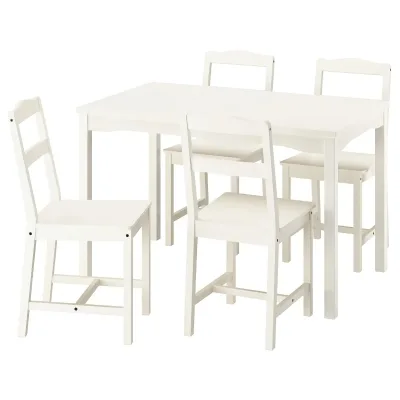


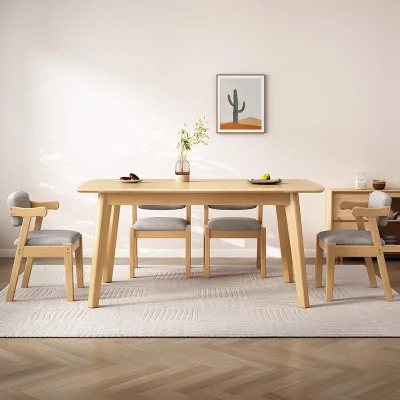


Leisure Solid Wood Frame Dining Table Set 6 Chairs Table and Chairs for Dining Room
$180.00 - $299.00
MOQ: 1 Pieces


Comprehensive Sourcing Guide
Strategic Sourcing Guide for Extendable Solid Wood Dining Table and Chair Sets
The global market for dining furniture has seen a sustained shift toward versatile, high-durability solutions that accommodate both daily family use and larger social gatherings. For procurement professionals and business buyers, the specific niche of extendable solid wood dining table and chair sets presents a unique opportunity to balance aesthetic appeal with functional adaptability. This guide provides a comprehensive, evidence-based framework for sourcing these products, focusing on the technical realities, material integrity, and supply chain considerations derived from current market data. The objective is to equip buyers with the knowledge to navigate supplier claims, verify product specifications, and ensure long-term value in their procurement contracts.
Material Composition and Structural Integrity
The foundation of any high-quality dining set lies in the material composition, particularly the distinction between solid wood and engineered alternatives. In the current marketplace, buyers often encounter conflicting terminology regarding "wood" and "manmade board." While the core keyword specifies "solid wood," market observations indicate a complex mix of materials. Some listings explicitly identify the leg material as "Manmade Board," while others specify "Wood" or "Synthetic Leather" for seating components. This discrepancy necessitates rigorous verification.
For a product to truly qualify as a solid wood dining set, the primary structural elements—table tops, legs, and chair frames—should be composed of natural timber. However, the presence of "Manmade Board" in leg specifications suggests that some suppliers may use engineered wood for structural support while marketing the product under a broader "wood style" category. Buyers must scrutinize the specific application of these materials. A table with a solid wood top but manmade board legs may offer cost advantages but could compromise long-term stability, especially in commercial settings where load-bearing capacity is critical.
Furthermore, the "Wood Style" attribute is frequently observed as "Solid Wood," yet this is often a stylistic classification rather than a material guarantee. Procurement teams should request detailed Bill of Materials (BOM) documentation to confirm the percentage of solid wood versus composite materials. The "Handmade" feature noted in certain product listings suggests a higher level of craftsmanship, which often correlates with better joinery and material selection. However, this attribute must be validated through physical inspection or third-party audit reports, as it cannot be assumed for all units within a batch.
Technical Specifications and Dimensional Standards
Precision in technical specifications is paramount for dining furniture, as dimensions directly impact seating comfort, spatial planning, and logistics. The observed market data reveals a wide variance in standard dimensions, ranging from compact configurations to large-scale dining solutions. For instance, specific models have been recorded with standards such as 2408090.2cm and 445588cm, indicating significant differences in table length, width, and height.
The "Extendable" feature is a critical technical requirement for this product category. This mechanism allows the table to expand from a compact size to accommodate additional guests. Buyers must verify the mechanical integrity of the extension mechanism. Does the table expand smoothly without jamming? Is the extension leaf stable when fully deployed? The "Foldable" attribute observed in some listings suggests alternative mechanisms, but for a true extendable dining table, the focus should be on the robustness of the sliding rails or folding leaves.
Chair dimensions are equally important. The "Seat Width" of 77cm observed in certain specifications is notably large, potentially indicating a specific ergonomic design or a measurement error that requires clarification. Standard dining chair seat widths typically range between 45cm and 50cm. A 77cm width might refer to the total width of a bench or a specific model designed for larger adults. Buyers should cross-reference these figures with the "Suitable for: Adult" attribute to ensure the furniture meets the intended demographic. Additionally, the "Rotary" attribute, distinguishing between "Fixed" and "Rotary" chairs, impacts the functionality of the set. Rotary chairs offer swivel capabilities, which are more common in office or lounge settings, whereas fixed chairs are standard for formal dining.
Compliance, Certification, and Safety Standards
In the B2B procurement landscape, compliance with safety and quality standards is non-negotiable, particularly for furniture intended for commercial or high-traffic residential use. While the provided data does not list specific certification bodies like ISO or BIFMA, buyers must actively seek evidence of compliance. The "Warranty: 3 Years" attribute is a strong indicator of manufacturer confidence, but it should be backed by clear terms and conditions regarding structural failure and material degradation.
Safety standards often relate to the stability of the furniture, especially for extendable tables and chairs with armrests. The "Maximum Load Capacity: 10kg" observed in the data is a critical figure that seems low for a dining chair, suggesting it may refer to a specific component or a different product category entirely. For a standard dining chair, load capacities typically range from 100kg to 150kg. Buyers must verify that the load capacity claims align with the intended use, particularly for "Commercial Furniture" applications.
Regarding environmental and chemical standards, the use of "Synthetic Leather" and "Manmade Board" raises questions about VOC (Volatile Organic Compounds) emissions and formaldehyde content. Buyers should request test reports confirming that materials meet relevant international standards for indoor air quality. The "Stapling" process mentioned in the packaging or assembly context also requires attention to ensure that fasteners do not compromise the structural integrity or pose safety hazards.
Cost Drivers and Pricing Dynamics
The pricing of extendable solid wood dining sets is influenced by a complex interplay of factors, including material quality, craftsmanship, and supply chain logistics. The observed price range of 23 to 950 USD highlights the vast disparity between budget-friendly options and premium, handcrafted sets. The lower end of this spectrum likely corresponds to products utilizing manmade boards and synthetic materials, while the higher end reflects genuine solid wood construction and artisanal assembly.
The "MOQ: 10PCS" attribute indicates that suppliers may have minimum order requirements that affect unit economics. For buyers looking to source smaller quantities, the per-unit cost may be higher due to the inability to achieve economies of scale. Conversely, larger orders can significantly reduce the cost per unit. The "Mail Packing: Y" and "Carton" packaging attributes suggest that the products are designed for efficient shipping, which can reduce logistics costs. However, the "725598cm/CTN, 2PCS/CTN" specification indicates a specific packing density that buyers must factor into their freight calculations.
Additional cost drivers include the "Customization" availability. While "Customized" options are listed, they often come with a premium price and extended lead times. Buyers must weigh the cost of customization against the benefits of a tailored product. The "Handmade" feature is another significant cost driver, as labor-intensive processes increase production costs but also enhance the perceived value and durability of the final product.
Supplier Evaluation and Quality Assurance
Selecting the right supplier is as critical as the product specifications themselves. The "Fujian, China" origin is a common hub for furniture manufacturing, offering a robust supply chain but requiring careful vetting. Buyers should evaluate suppliers based on their ability to provide consistent quality, adhere to delivery schedules, and maintain transparent communication. The "Assembly Required: Yes" attribute suggests that the product is shipped in flat-pack form, which increases the risk of damage during transit and assembly errors by the end-user.
Quality control measures should be integrated into the procurement process. This includes pre-shipment inspections to verify dimensions, material quality, and finish consistency. The "Condition: New" attribute is a baseline requirement, but buyers should also check for defects in the "Stapling" process, the smoothness of the "Extendable" mechanism, and the stability of the "Wood" legs. For "Commercial Furniture" applications, the durability of the finish and the resistance to wear and tear are paramount.
The "General Use: Commercial Furniture" and "Application: Kitchen, Living Room, Bedroom, Dining" attributes indicate versatility, but buyers should ensure that the specific model selected is rated for the intended environment. A dining set designed for a home kitchen may not withstand the rigors of a restaurant setting. Supplier references and past performance data should be reviewed to assess reliability.
Long-Term Procurement and Maintenance Considerations
Sourcing extendable solid wood dining sets is not just a one-time transaction but a long-term investment. The "Warranty: 3 Years" provides a safety net, but buyers should also consider the availability of replacement parts and the ease of maintenance. The "Foldable" and "Extendable" mechanisms are prone to wear over time, and the availability of spare parts for these components is crucial.
Maintenance requirements vary based on the materials used. Solid wood requires regular conditioning to prevent cracking and warping, while synthetic leather and manmade boards may require different cleaning protocols. The "Armrest: Without Armrest" and "With Armrest" options offer different maintenance profiles, with armrests potentially collecting more dust and requiring more frequent cleaning.
Buyers should also consider the "Seating Capacity: 4" and "Specific Use: DINING TABLE" attributes when planning for future scalability. As business needs evolve, the ability to expand the seating capacity or replace individual components without replacing the entire set is a significant advantage. The "Modular" feature observed in the product attributes supports this flexibility, allowing for easier upgrades and modifications.
Summary of Key Product Attributes
To assist buyers in quickly comparing key features across different product listings, the following table summarizes the observed attributes and specifications. This data serves as a reference point for due diligence and should be verified against specific supplier documentation.
| Attribute Category | Observed Values | Verification Requirement |
|---|---|---|
| Material | Wood, Manmade Board, Synthetic Leather | Request BOM to confirm solid wood percentage. |
| Style | Modern, Solid Wood Style | Verify if "Solid Wood" refers to material or style. |
| Function | Extendable, Foldable, Modular | Test extension mechanism for smooth operation. |
| Dimensions | 2408090.2cm, 445588cm, 22010062cm | Confirm fit within intended space. |
| Capacity | 10kg (specific component), 4 Seating | Verify load capacity for full chair/table use. |
| Origin | Fujian, China | Confirm shipping lead times and logistics. |
| Warranty | 3 Years | Review terms for structural vs. cosmetic coverage. |
| MOQ | 1-120, 10PCS | Negotiate based on order volume. |
| Packing | Carton, 725598cm/CTN | Calculate freight costs and damage risk. |
By adhering to these guidelines and maintaining a rigorous approach to verification, buyers can successfully navigate the complexities of sourcing extendable solid wood dining table and chair sets. The key lies in balancing the observed market data with on-the-ground verification, ensuring that the final procurement decision aligns with both immediate needs and long-term strategic goals.
FAQs
Can I find extendable solid wood dining table and chair sets with 3-year warranties?
Yes, some listings explicitly offer a 3-year warranty for these sets. This warranty typically covers structural integrity and material defects, ensuring long-term value for commercial or home use applications.
What is the minimum order quantity for these dining sets?
The observed minimum order quantity is 10 pieces for certain models. Buyers should verify if specific suppliers allow lower quantities, as some listings show an MOQ of just 1 unit for different product variants.
Which dimensions are standard for the extendable table models?
Standard dimensions vary, with observed models measuring 240 by 80 by 90.2 cm or 44 by 55 by 88 cm. Buyers must check specific product codes like DS0417 or DS01100 to confirm the exact size required for their space.
How are these dining sets packaged for shipping?
Products are typically shipped in cartons, with some configurations holding 2 pieces per carton. The packing dimensions can be as large as 72 by 55 by 98 cm, requiring careful logistics planning for international freight.
Can buyers request customization for these dining sets?
Customization is available for some listings, allowing for tailored specifications. However, other models are listed as non-customized, so buyers must confirm the customization status before placing an order to avoid delays.
What materials are used for the legs and seats?
Leg materials often include wood or manmade board, while seats may use synthetic leather. Buyers should verify the specific material composition, as some items feature solid wood styles but use engineered wood for structural support.
Where are these dining sets manufactured?
The primary manufacturing origin is Fujian, China, with some listings simply stating China. This region is a known hub for furniture production, offering a robust supply chain for bulk orders.