Source Festoon Cable for Overhead, Heating, and Crane Systems
Compare 30 Festoon Cable options featuring copper conductors, PVC insulation, and various certifications like ISO 9001 and CE. Buyers can evaluate stranded or flat wire designs with rated voltages up to 750V for overhead and heating applications.
Key considerations
Products List


Festoon 716 Cp Cable PUR Cable for Flexible Application in Festoon Systems
$2.11 - $17.54
MOQ: 500 Meters


D12y11y-J/O Cable PUR Sheathed for Festoon Application Energy and Control Cable
$0.13 - $11.22
MOQ: 500 Meters


Comprehensive Sourcing Guide
Strategic Sourcing Guide for Festoon Cable Systems
When evaluating Festoon Cable systems for industrial material handling, procurement professionals must navigate a complex landscape of technical specifications, material compositions, and certification requirements. Festoon cables are critical components designed to provide continuous power and signal transmission to moving machinery, such as cranes, hoists, and automated guided vehicles. The reliability of these systems directly impacts operational uptime and safety. This guide synthesizes observed market data and technical attributes to provide a disciplined framework for sourcing decisions, ensuring that buyers align their procurement strategies with verified product characteristics rather than unverified marketing claims.
Technical Specifications and Conductor Architecture
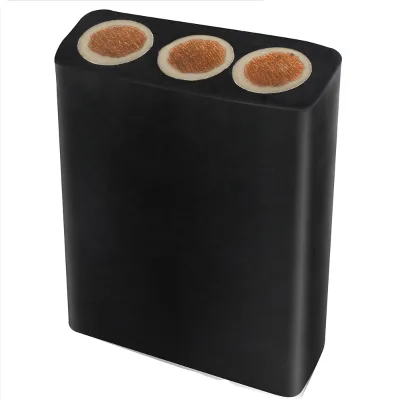
The foundation of a robust Festoon Cable lies in its conductor architecture and insulation properties. Market observations indicate a clear divergence between stranded and flat wire configurations, each serving distinct mechanical needs. Stranded conductors, typically made of copper, offer superior flexibility, making them ideal for applications involving frequent bending or high-speed movement. In contrast, flat wire shapes are often utilized in specific track systems where space constraints or specific routing geometries are paramount.
Voltage ratings are a critical differentiator that must be matched precisely to the application environment. Data suggests that cables with a cross-section of 1.5mm or less generally carry a rated voltage of 300/500V, while those exceeding 1.5mm are rated for 450/750V. This distinction is vital for preventing dielectric breakdown under load. Furthermore, the test voltage requirements vary accordingly; units under 1.5mm must withstand 2500V, whereas larger conductors require a 3000V test voltage. These figures represent the baseline for quality assurance and must be verified against the specific model numbers observed in the market, such as YFFB or RVV series.
Temperature tolerance is another non-negotiable parameter. Standard operating ranges observed in the supply chain span from -15℃ to +80℃ for general applications, while heavy-duty variants may extend to -40℃ to +125℃. Buyers must ensure that the selected cable's temperature range aligns with the ambient conditions of the facility, particularly in environments with extreme cold or heat sources. The insulation material, frequently identified as PVC or Nylon, plays a significant role in determining these thermal limits and resistance to chemical degradation.
Compliance, Certification, and Standards Verification
In the B2B procurement of industrial cabling, compliance is not merely a formality but a risk mitigation strategy. The supply chain presents a mix of certifications, including ISO 9001:2008, CE, and SGS. While the presence of these marks indicates a commitment to quality management and safety standards, buyers must verify the validity of these certificates for the specific batch of goods being purchased. The ISOConductor material designation suggests a specific adherence to conductor manufacturing standards, but this should be cross-referenced with the physical product documentation.
Standards for the physical dimensions and performance of the cable are equally important. Observed product models adhere to specific track size standards, such as C32, C40, and C63, with dimensions like 32mm30mm1.5mm being common for the C32 series. The standard length for these components is typically 4m or 6m, though custom lengths may be available through customization options. It is crucial to note that the "small" standard designation appears in some contexts, which may refer to specific niche applications or internal supplier coding rather than a universal industry standard.
When evaluating suppliers, the presence of CE certification is a strong indicator of compliance with European safety directives, which often influences global market acceptance. However, the absence of a specific standard number in the provided data means buyers should not assume universal compliance without requesting the full technical dossier. The verification process should include a request for the specific test reports that confirm the test voltage and temperature range claims, ensuring that the product meets the rigorous demands of the intended application.
Cost Drivers and Pricing Dynamics
The pricing of Festoon Cable systems is influenced by a multitude of factors, ranging from raw material costs to packaging and logistics. The observed price range in the market spans from $0.1 to $500, a broad spectrum that reflects the diversity of product types, from simple wire assemblies to complex, multi-core cable systems with specialized insulation. The minimum order quantity (MOQ) also varies significantly, ranging from 1 to 1000 units, which allows for flexibility in procurement strategies for both small-scale projects and large industrial deployments.
Material composition is a primary driver of cost. Copper is the standard conductor material, but the choice between galvanized steel and 304# stainless steel for the track or supporting components can drastically alter the price. Stainless steel offers superior corrosion resistance, which is essential for harsh environments, but comes at a premium. Similarly, the optional nylon coating for heavy corrosion environments adds to the unit cost but provides extended service life. Buyers must weigh the initial investment against the total cost of ownership, considering factors like maintenance frequency and replacement costs.
Packaging methods also impact the final cost and logistics efficiency. Options include cartons, wooden cases, iron frame boxes, and bundles. The choice of packaging depends on the fragility of the product and the shipping distance. For instance, wooden cases and iron frame boxes are typically used for larger, heavier components like C-track systems, while drums are preferred for long lengths of flexible cable. These packaging choices influence the shipping weight and volume, which are critical variables in the total landed cost calculation.
Typical Applications and Operational Environments
Festoon cables are ubiquitous in industrial settings where linear motion is required. The primary applications identified include overhead systems and heating applications. In overhead configurations, the cable must support its own weight while maintaining electrical integrity during movement. The observed data highlights specific models like the RVV 42.5mm and Yffb 46mm, which are designed for multi-core applications, often featuring four cores with specific cross-sectional areas. These configurations are suitable for powering motors, sensors, and control systems simultaneously.
The operational environment dictates the specific requirements for the cable. For instance, the C-track series is designed for travel speeds up to 160m/Min, with some models limited to 120m/Min. The ability to curve the track, with a radius of R ≥ 1.0m, is a feature specific to the C32 model, allowing for more flexible installation layouts. In contrast, other models may be restricted to straight runs. The application of these cables in heating systems requires careful attention to the temperature range, ensuring that the insulation does not degrade under thermal stress.
Furthermore, the choice of wheels, such as ball bearings, is critical for smooth operation and minimizing friction. The selection of the appropriate track size, whether C30, C32, C40, or C63, depends on the load capacity and the speed of the moving equipment. Buyers must match the cable and track system to the specific mechanical demands of their machinery to ensure longevity and safety.
Supplier Evaluation and Quality Control Protocols
Evaluating suppliers for Festoon Cable systems requires a rigorous approach to quality control. The origin of the products is predominantly China, which offers a wide range of options but necessitates careful vetting of manufacturing capabilities. Buyers should verify the supplier's adherence to the observed certifications, such as ISO 9001:2008, and ensure that the quality management system is actively maintained. The availability of customization is a positive indicator of a supplier's flexibility, but it should not come at the expense of standard quality benchmarks.
Quality control protocols should include a thorough review of the product specifications against the buyer's requirements. This involves checking the conductor material, insulation type, and voltage ratings. For example, verifying that the conductor is indeed copper and that the insulation material matches the specified PVC or Nylon is essential. Additionally, the test voltage and temperature range must be confirmed through independent testing or certified test reports. The presence of a "small" standard or specific model numbers like C32 should be validated to ensure they meet the buyer's dimensional and performance needs.
Suppliers should also be assessed on their ability to provide consistent packaging and delivery. The variety of packaging options, from drums to wooden cases, suggests that suppliers have the capacity to handle different logistical requirements. However, buyers must ensure that the packaging protects the product during transit, especially for delicate components like insulated cables. The lead time and ability to meet the MOQ are also critical factors in the supplier evaluation process, as delays can disrupt production schedules.
Long-Term Procurement Considerations and Lifecycle Management
Sourcing festoon cables is not a one-time transaction but part of a long-term procurement strategy. The durability of the cable system is influenced by the operating conditions, including speed, temperature, and environmental factors. The optional nylon coating for heavy corrosion environments is a prime example of a feature that can extend the lifecycle of the system, reducing the frequency of replacements. Buyers should consider the total cost of ownership, including maintenance, replacement, and downtime costs, when selecting a supplier.
The availability of spare parts and the ease of replacement are also important considerations. The modular nature of the C-track system, with its various sizes and standard lengths, suggests that replacement parts are readily available. However, buyers should verify the compatibility of replacement components with existing systems to avoid integration issues. The ability to customize the product, such as selecting specific track sizes or insulation materials, allows for future-proofing the procurement strategy against changing operational needs.
Finally, the relationship with the supplier should be built on transparency and trust. Clear communication regarding specifications, certifications, and quality control measures is essential for a successful partnership. Buyers should maintain open channels with suppliers to address any issues that arise during the lifecycle of the product. By focusing on long-term value rather than just initial cost, buyers can ensure the reliability and efficiency of their Festoon Cable systems over the long term.
Comparative Analysis of Product Models
To facilitate informed decision-making, the following table summarizes the key attributes of the observed product models, highlighting their distinct characteristics and suitable applications.
| Product Model | Conductor Material | Insulation Material | Rated Voltage | Temperature Range | Key Application |
|---|---|---|---|---|---|
| YFFB | Copper | Nylon / PVC | 300/500V (≤1.5mm) | -15℃ to +80℃ | Overhead, Heating |
| RVV | Copper | PVC | 300/500V (≤1.5mm) | -20℃ to +80℃ | Overhead |
| C32 Track | Galvanized Steel | N/A (Track) | N/A | -40 to +125 | High Speed (160m/Min) |
| C-Track | Galvanized Steel | N/A (Track) | N/A | -40 to +125 | General Industrial |
This comparison underscores the importance of matching the specific model to the operational requirements. While the YFFB and RVV models are suited for electrical transmission with specific voltage and temperature constraints, the C32 and C-Track models are designed for mechanical support and movement, offering different speed and environmental capabilities. Buyers must carefully analyze these attributes to select the optimal solution for their specific industrial context.
FAQs
What certifications do festoon cables typically have?
Products often carry ISO 9001:2008, CE, and SGS certifications. These marks indicate adherence to quality management and safety standards, though buyers must verify validity for specific batches before purchase.
Which conductor materials are used in these cables?
Copper is the standard conductor material for stranded and flat wire configurations. Some track systems also utilize galvanized steel or 304# stainless steel for structural support in heavy corrosion environments.
How does voltage rating depend on cable size?
Cables with a cross-section of 1.5mm or less generally carry a rated voltage of 300/500V. Larger conductors exceeding 1.5mm are rated for 450/750V to prevent dielectric breakdown under load.
Can the cable be customized for specific needs?
Customization is available for various product attributes and specifications. Buyers can request specific lengths, insulation types, or track sizes to align with unique mechanical demands and facility requirements.
What is the maximum travel speed for C-track systems?
The maximum travel speed can reach 160m/Min for specific models like the C-track series. Other variants may be limited to speeds under 120m/Min depending on the wheel and track configuration.
What temperature range do these cables operate in?
Standard operating ranges span from -15℃ to +80℃ for general applications. Heavy-duty variants may extend to -40℃ to +125℃ to withstand extreme ambient conditions in industrial facilities.