Source Fertilizer Rotary Screen for Mining, Sand, and Chemical
Compare 30 Fertilizer Rotary Screen options for mining, sand screening, and chemical processing. Buyers can review specifications like motor power, voltage, and capacity to find suitable vibrating screen solutions for ore and fertilizer applications.
Key considerations
Products List

Large Capacity Rotary Screen / Rotary Drum Screen for Fertilizer Classification
$1000.00 - $70000.00
MOQ: 1 Pieces


Rotary Screen Trommel Screen for Sand Stone, Fertilizer Classification
$1000.00 - $70000.00
MOQ: 1 Pieces


Large Capacity Rotary Drum Screen for NPK Fertilizer Line
$1400.00 - $3500.00
MOQ: 1 Pieces
Henan Tongda Heavy Industry Science And Technology Co., Ltd.


Customized Rotary Drum Screen Equipment for Fertilizer Factory
$1400.00 - $3500.00
MOQ: 1 Pieces
Henan Tongda Heavy Industry Science And Technology Co., Ltd.


Fertilizer Rotex Vibrating Screening Equipment for Chemical Industry (PXZS)
$20000.00 - $50000.00
MOQ: 1 Sets


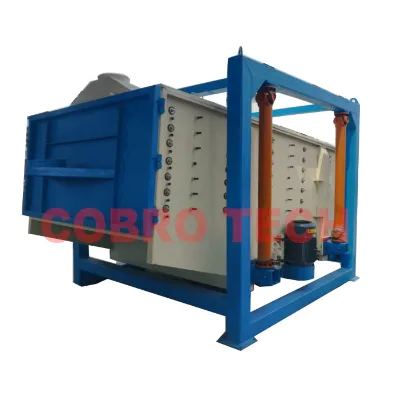

Sewage Treatment Plant Rotary Drum Screen
$2800.00 - $3000.00
MOQ: 1 Pieces
Yangzhou Pujiang Environmental Protection Technology Co., Ltd.
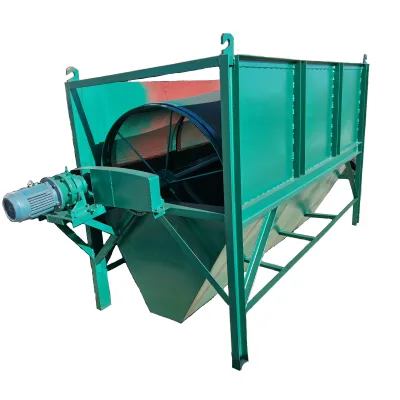

Trommel Screen, Rotary Drum Screen for Powder Fertilizer Classification Use
$3500.00 - $56000.00
MOQ: 1 Set


Comprehensive Sourcing Guide
Strategic Sourcing Guide for Fertilizer Rotary Screen Equipment
Understanding the Core Technology and Operational Scope
The Fertilizer Rotary Screen, frequently identified in industry catalogs by keywords such as "Trommel," "Drum Screen," and "Rotary Screen," represents a critical piece of machinery in the mineral processing and agricultural input supply chain. This equipment is fundamentally designed for the separation and classification of bulk materials based on particle size. In the context of fertilizer production, the primary objective is to ensure uniform granulation, removing oversized agglomerates and fine dust to achieve a consistent product quality that meets agricultural standards. The operational mechanism typically relies on a rotating cylindrical drum equipped with screening media, which allows material to tumble and pass through apertures of specific dimensions while retaining larger particles for further processing or rejection.
The functional versatility of these units is evident in their diverse application profiles. While the core keyword focuses on fertilizer sieving, the observed product attributes indicate a broader utility in mining, ore dressing, and building material processing. The machinery is engineered to handle various feedstocks, including riversand, seasand, and general ore materials. The running track of the equipment is a defining characteristic, with observed configurations ranging from "Rotary Sieving" and "Circular Vibrating Screen" to "Rotary Drum Screen." This variation suggests that the specific motion profile—whether driven by eccentric vibration, self-centering mechanisms, or vibrating screen structures—must be selected to match the material's flow characteristics and the desired separation efficiency. Buyers must recognize that a unit optimized for heavy ore shaker applications may differ significantly in design from one tailored for lightweight fine shaker tasks or experimental shaker requirements.
Technical Specifications and Configuration Variability
When evaluating a Fertilizer Rotary Screen, the technical specifications are not monolithic; they vary significantly based on the model and intended application. The product data indicates a wide spectrum of capabilities, particularly regarding capacity and motor power. Capacity ranges observed in the market span from 10-50 tons per hour (T/H) up to 1-500 T/H. This disparity highlights the necessity for buyers to accurately assess their throughput requirements before engaging with suppliers. A facility producing small-batch specialty fertilizers may require a compact unit with a capacity of 10-50 T/H, whereas a large-scale industrial operation will necessitate a high-capacity model capable of handling 500 T/H.
The power requirements are equally variable. Motor power specifications are listed as "According to Model" in some instances, while others provide a specific range of 4-37 Kw. This variation implies that the motor selection is directly correlated with the drum size, the material density, and the screening intensity. Furthermore, the electrical supply requirements must be verified against local infrastructure. The observed voltage options include 220V, 380V, 415V, and 450V. A procurement team must ensure that the selected unit's voltage rating matches the available power grid at the installation site to avoid costly retrofits or operational failures.
The structural design of the rotary screen also presents multiple configurations. The shaft number is a critical mechanical attribute, with options available for both "Single" and "Double" shaft arrangements. The supporting devices vary between "Coil Spring" and "Support Leg" configurations, which influence the stability and vibration damping characteristics of the machine. Additionally, the transmission structure can be classified as a "Vibrating Screen," "Eccentric Vibrating Screen," or "Self-centering Shaker." Each transmission type offers distinct advantages regarding maintenance, energy efficiency, and screening accuracy. For instance, a self-centering shaker may offer superior balance for high-speed operations, while an eccentric vibrating screen might be preferred for heavy-duty applications. Buyers should request detailed engineering drawings to confirm the specific transmission and shaft configuration before finalizing a purchase.
Compliance, Certification, and Quality Standards
In the international trade of industrial machinery, compliance with international standards is a non-negotiable aspect of the procurement process. The supplied product facts explicitly mention that certain models adhere to ISO and CE standards. These certifications are vital indicators of a manufacturer's commitment to quality management systems and safety compliance. The ISO certification typically relates to the quality management system (such as ISO 9001), ensuring that the manufacturing process is consistent and controlled. The CE marking indicates conformity with health, safety, and environmental protection standards for products sold within the European Economic Area, which often serves as a benchmark for global quality.
However, it is crucial to note that the product standard is listed as "according to the model." This phrasing suggests that not every unit in the catalog may automatically carry these certifications. Therefore, buyers must verify the specific certification status of the exact model they intend to purchase. Relying on general claims without model-specific verification can lead to compliance gaps, especially when importing into regions with strict regulatory requirements. The warranty period is another indicator of manufacturer confidence, with observed terms ranging from 1 Year to 2 Years. A longer warranty period often correlates with higher build quality and better after-sales support, but this must be clearly defined in the contract.
Cost Drivers and Pricing Dynamics
The pricing structure for fertilizer rotary screens is highly dynamic and influenced by several key factors. The observed price range in the market is extensive, spanning from $13.6 to $70,000 USD. This vast range reflects the diversity in equipment size, capacity, and complexity. A small, laboratory-scale unit will naturally fall at the lower end of this spectrum, while a large-scale, high-capacity industrial drum screen with advanced transmission structures will command a premium price.
Crucially, the listed price is often described as "Negotiate." This indicates that the base price is not fixed and is subject to market conditions, order volume, and specific customization requirements. The Minimum Order Quantity (MOQ) also plays a significant role in cost determination, with observed ranges from 1 to 100 units. For buyers seeking a single unit for a pilot project, the unit cost may be higher due to the lack of economies of scale. Conversely, bulk orders may benefit from volume discounts.
Other cost drivers include the packing method and shipping logistics. The products are typically packed in "Standard Container," "Bulks," or "Wooden Cases," with small parts often shipped in wooden boxes. The choice of packing affects the shipping cost and the risk of damage during transit. Additionally, the "Engineer Guide" for installation is a value-added service that can influence the total cost of ownership. Buyers should factor in these ancillary costs when budgeting for the project, as the initial purchase price is only one component of the total expenditure.
Supplier Evaluation and Procurement Considerations
Selecting the right supplier is as important as selecting the right equipment. The product facts indicate that the origin of these machines is China, a major global hub for industrial machinery manufacturing. When evaluating suppliers from this region, buyers should prioritize those who offer "Factory Visit" opportunities, as the documentation notes that such visits are "Welcome Warmly." A factory visit allows the procurement team to inspect the manufacturing capabilities, quality control processes, and the actual condition of the machinery firsthand. This due diligence is essential to verify that the supplier can deliver the promised specifications and standards.
The customization options available are another critical factor in supplier selection. The data shows that both "Customized" and "Non-Customized" options are available. If a buyer has unique requirements regarding the drum size, screening media, or transmission structure, they must ensure the supplier has the engineering capacity to deliver a tailored solution. The availability of "Drawing Supply" is a positive indicator of a supplier's technical transparency and willingness to collaborate on the design phase.
Furthermore, the maintenance profile of the equipment should be considered. The product attributes describe the maintenance as "Easy," which is a desirable trait for minimizing downtime. However, buyers should verify the availability of spare parts and the clarity of the maintenance instructions. The condition of the equipment is listed as "New," but buyers should confirm the manufacturing date and ensure that the machine has not been stored for extended periods, which could affect the integrity of rubber components or lubricants.
Quality Control and Long-Term Operational Viability
Ensuring the long-term viability of the Fertilizer Rotary Screen requires a robust quality control strategy. The "Condition" is listed as "New," but this should be verified upon delivery. Quality control should extend beyond the initial inspection to include performance testing under load. Buyers should request test results or performance data specific to the model they are purchasing, particularly regarding the screening efficiency and the durability of the supporting devices like coil springs or support legs.
The warranty terms, ranging from 1 to 2 years, provide a safety net for early-life failures. However, the scope of the warranty must be clearly understood. Does it cover the entire machine, or only specific components like the motor or the drum? The "Installation" support, typically provided via "Engineer Guide," is a critical component of the quality assurance process. Proper installation is often the difference between a machine that operates efficiently and one that suffers from premature wear or vibration issues.
Finally, the application scope of the equipment should be matched to the buyer's long-term needs. While the primary focus is on fertilizer sieving, the machine's ability to handle other materials like sand, gravel, or ore suggests a degree of versatility. However, buyers should not assume that a machine optimized for one material will perform equally well in another without specific adjustments. The "Function" attributes, such as "High Frequency Vibrating Screen" or "Sand, Gravel, Screening," indicate that the machine's design is specialized. Procurement teams must ensure that the selected unit aligns with their specific production goals to maximize the return on investment and ensure sustainable operations over the machine's lifecycle.
FAQs
What certifications do fertilizer rotary screens have?
Some models carry ISO and CE certifications, but standards vary by model. Buyers must verify the specific certification status of the exact unit before purchase to ensure compliance with local regulations.
Can I customize the shaft number for my needs?
Both single and double shaft configurations are available depending on the model selected. Buyers should request engineering drawings to confirm the specific transmission and shaft arrangement matches their operational requirements.
How is the motor power determined for these screens?
Motor power ranges from 4 to 37 Kw or is listed as according to the model. The selection depends on drum size, material density, and screening intensity, so buyers must match power to their throughput needs.
What is the warranty period for this equipment?
Warranty terms range from 1 to 2 years depending on the specific product listing. A longer warranty often indicates higher build quality, but the scope must be clearly defined in the purchase contract.
How is the equipment packed for shipping?
Products are typically packed in standard containers, bulk, or wooden cases with small parts in wooden boxes. The packing method affects shipping costs and damage risk, so buyers should factor this into their logistics budget.
Which voltage options are supported by these machines?
Voltage options include 220V, 380V, 415V, and 450V depending on the model. Buyers must verify that the selected unit's voltage rating matches the available power grid at their installation site to avoid failures.