Source Fertilizer Turner Machine for Corn, Rice, and Fruit
Find 30 verified Fertilizer Turner Machine listings from Shandong, China. Compare specifications like working width, rotor diameter, and tractor matching power to select the right equipment for large-scale organic fertilizer production; compare the available evidence and request quotations based on your requirements.
Key considerations
Products List

Fertilizer Production Machinery Compost Turner Organic Fertilizer Turner
$3600.00 - $3800.00
MOQ: 1 Sets

Factory Supply Composting Turner Machine Organic Fertilizer Turner Machine
$3700.00 - $9000.00
MOQ: 1 Sets


Fertilizer Production Machinery Composting Turner Tractor Compost Turner
$6700.00 - $9000.00
MOQ: 1 Sets

Agricultural Machinery Compost Turner Machine Organic Fertilizer Compost Machine
$3700.00 - $9000.00
MOQ: 1 Sets


Lane Tractor Mounted Compost Turner Organic Fertilizer Compost Turner Machine
$5200.00 - $8000.00
MOQ: 1 Pieces


Lane Organic Fertilizer Compost Machine Organic Food Waste Compost Turner Machine
$4300.00 - $6600.00
MOQ: 1 Pieces

Lane Button Mushroom Compost Turner Machine Fertilizer Compost Turner
$3600.00 - $5200.00
MOQ: 1 Pieces


CE Approved Compost Turner Machine for Fertilizer Production Line Equipment
$20500.00 - $21600.00
MOQ: 1 Pieces
Henan Tongda Heavy Industry Science And Technology Co., Ltd.


Automatic Quantitative Sheep Dung Fertilizer Compost Turner Machine for Sale
$20500.00 - $21600.00
MOQ: 1 Pieces
Henan Tongda Heavy Industry Science And Technology Co., Ltd.
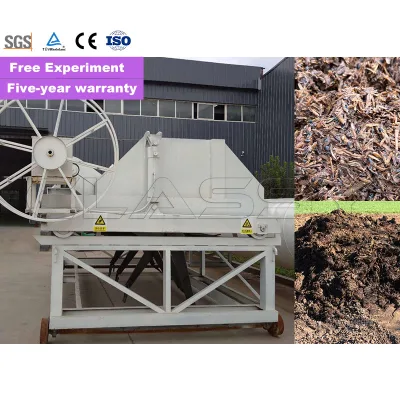


Wheel Compost Turner Compost Making Machines Organic Fertilizer Plant
$6200.00 - $137500.00
MOQ: 1 Pieces

High Capacity Organic Fertilizer Turner Machine 2.8m Width for Thailand Fertilizer Factory
$6200.00 - $137500.00
MOQ: 1 Pieces


Agriculture Machine Compost Turner in Organic Fertilizer Machine Groove Type Compost Turner
$35000.00 - $100000.00
MOQ: 1 Pieces

Motorized Compost Turner Machine for High Productivity Agricultural Equipment
$23500.00 - $65800.00
MOQ: 1 Pieces

Comprehensive Sourcing Guide
Fertilizer Turner Machine Sourcing Guide
Procurement professionals must first distinguish between active turning units and passive mixing equipment when searching for fertilizer turner machines. The observed market data indicates a significant overlap in listings for fertilizer mixers and active turners, with specific models like the ZFQ series appearing under both categories. Buyers should verify whether the listed unit is designed for windrow turning or static mixing, as the operational mechanics and power requirements differ substantially between these functions.
The observed product attributes reveal a mix of tractor-mounted and manual options, creating confusion in the initial search phase. While some listings specify a tractor power source with matching horsepower ranges of 60-200HP, others describe manual labor power sources for smaller scale operations. This variance necessitates a clear definition of the intended application scale before engaging with suppliers, ensuring the selected machinery aligns with the specific operational capacity and power availability of the facility.
Product Scope and Observed Listing Signals
Buyers should scrutinize the working width and rotor dimensions to ensure the machine fits the physical constraints of their production site. The observed specifications list working widths ranging from 2 to 3.5 meters and rotor lengths of 2.0 to 3.5 meters, which directly impacts the volume of material processed per pass. Selecting a unit with a width that exceeds the available windrow space can lead to material spillage, while a unit that is too narrow may reduce overall throughput efficiency.
The observed listing signals also highlight significant variations in machine color and packing methods, which serve as indicators of customization capabilities. While standard colors like red, yellow, and blue are common, the availability of customized colors suggests a supplier willing to adapt to specific branding or safety requirements. Additionally, the choice between steel frame packing and direct container loading affects shipping costs and protection during transit, requiring a cost-benefit analysis based on the destination port and handling infrastructure.
Technical Specifications to Verify
Verification of the drive type and traction mechanism is critical for ensuring reliable performance in varying soil conditions. The data indicates a preference for gear drive systems and traction-based operation, which are essential for maintaining consistent speed and torque during the turning process. Buyers must confirm that the gear drive is robust enough to handle the resistance of dense organic matter, as a failure in this component can halt production and incur significant downtime costs.
The working height and maximum windrow dimensions are equally vital parameters that dictate the machine's compatibility with existing windrow management practices. Observed working heights range from 1.1 to 1.8 meters, with maximum windrow heights reaching 1.7 meters and widths up to 3.5 meters. Procurement teams must measure their current windrow profiles to ensure the selected machine can effectively turn the material without causing compaction or spillage, as mismatched dimensions can compromise the aeration process essential for quality fertilizer production.
Compliance and Safety Documentation
Certification status serves as a primary indicator of regulatory compliance and safety standards for machinery entering international markets. The observed listings frequently cite CE, EU, and ECE certifications, which are essential for selling or operating equipment within European jurisdictions. Buyers should request valid certification documents for the specific model being purchased, as these documents verify that the machine meets the necessary safety and electromagnetic compatibility requirements for the target region.
Beyond certifications, the availability of machinery test reports provides an objective measure of the equipment's performance and durability. The presence of provided test reports in the observed data suggests that some suppliers are willing to share empirical data regarding the machine's operational capabilities. Procurement teams should insist on reviewing these reports to validate claims about working speed and power consumption, ensuring that the machine performs as advertised before finalizing the purchase agreement.
Cost Drivers and Commercial Terms
The observed price range of 13.6 to 1111111 USD indicates a vast disparity in product value, driven largely by the complexity of the machinery and the scale of production. Lower-priced units often correspond to manual or smaller-scale models, while higher-priced listings likely represent heavy-duty, tractor-mounted units with advanced features. Buyers must correlate the price point with the specific technical specifications, such as rotor diameter and power source, to avoid overpaying for unnecessary features or underestimating the cost of a robust industrial unit.
Minimum Order Quantity (MOQ) and customization options significantly influence the total cost of ownership and procurement strategy. The observed MOQ range of 1 to 100 units allows for flexibility, enabling buyers to start with a single unit for pilot testing or order larger batches for immediate deployment. However, customization requests, such as specific colors or modified dimensions, may increase the unit price and extend lead times, requiring a detailed discussion with the supplier to understand the financial and temporal implications of these modifications.
Supplier Qualification and Quality Control
Supplier origin and production standards are key factors in assessing the reliability and consistency of the fertilizer turner machines. The observed data points to Shandong, China, as a primary manufacturing hub, a region known for its concentration of agricultural machinery producers. Buyers should verify the specific factory location and production capacity to ensure the supplier can meet delivery schedules and maintain consistent quality control across all units in the order.
The condition of the machinery, typically listed as new, must be confirmed through detailed inspection protocols before shipment. While the listings indicate new condition, buyers should request video evidence of the machine in operation or a third-party inspection report to verify the absence of defects. Additionally, the availability of a machinery test report and the supplier's adherence to specific model standards provide further assurance of the product's integrity and readiness for immediate deployment in the field.
Long-Term Procurement Checks
Establishing a clear maintenance and support framework is essential for the longevity of the Fertilizer Turner Machine investment. Buyers should inquire about the availability of spare parts, particularly for high-wear components like gears and rotors, to minimize downtime during the machine's operational life. A supplier with a robust after-sales support network can provide timely assistance for repairs and technical guidance, ensuring the machine remains productive throughout its intended service period.
Future scalability and compatibility with evolving farming policies should also be considered when selecting a long-term supplier. The observed data mentions dry cultivating machinery and various planting machine types, suggesting a supplier with a broad product range that can adapt to changing agricultural needs. Procurement teams should evaluate the supplier's ability to provide upgrades or additional units as the operation expands, ensuring a seamless transition from initial purchase to long-term growth without the need to switch vendors.
FAQs
What certifications do fertilizer turner machines have?
Most fertilizer turner machines carry CE certification to ensure compliance with European safety standards. Some models also include EU and ECE certifications for broader international acceptance. These credentials verify that the machinery meets essential regulatory requirements for operation in various global markets, providing buyers with confidence in product safety and quality assurance during agricultural use.
Can fertilizer turner machines be customized for specific needs?
Yes, customization is available for many fertilizer turner machines to suit unique operational requirements. Buyers can often select specific working widths, rotor dimensions, or machine colors like red, yellow, or blue. This flexibility allows agricultural enterprises to tailor equipment to their facility layout and branding preferences while maintaining high performance in organic fertilizer production processes.
What is the typical working width of these machines?
The working width typically ranges from 2 to 3.5 meters depending on the specific model selected. This dimension determines the volume of material processed in a single pass, directly impacting production efficiency. Larger widths are suitable for large-scale organic fertilizer production lines, while narrower options may fit smaller facilities or specific crop residue handling requirements.
How much power do fertilizer turner machines require?
These machines generally require a matching power of 60 to 200 HP from a tractor. Specific models may align with 100 to 120 HP tractors for optimal performance. The gear drive system ensures reliable power transmission, allowing the machine to handle heavy loads effectively during soil preparation and fertilizer turning operations in agricultural settings.
Where are fertilizer turner machines manufactured?
These machines are primarily manufactured in Shandong, China, a major hub for agricultural machinery production. Factories in this region offer various models like ZFQ200 and FJC3000, catering to different scales of operation. Buyers can source directly from these locations, often benefiting from competitive pricing and established supply chains for agricultural equipment.
What packaging options are available for shipment?
Packaging options include steel frames, nude packing, iron crate packing, or direct container loading. Some smaller units may use carton packaging. These methods ensure safe transit and protection against damage during international shipping. Buyers should specify their preferred packaging based on container space constraints and the fragility of specific machine components during transport.