Source Fire Proof Fiber Cement Board for Walls, Floors, Cladding
Explore 30 listings of Fire Proof Fiber Cement Board available for wall partitions, exterior cladding, and flooring applications. Buyers can compare specifications like thickness, density, and fire ratings across multiple suppliers from China.
Key considerations
Products List


Fiber Cladding Boards Wall Panel China Fireproof Cement Fiber Board
$1.65 - $1.86
MOQ: 1500 Square Meters


Fiber Cement Board Fireproof Wall Board/ Fiber Cement Board for Building
$2.00 - $3.00
MOQ: 2619 Square Meters

Fiber Cement Board Fireprooof Building Material Fiber Cement Panel
$9.50 - $10.50
MOQ: 1750 Square Meters

Fiber Cement Board Fireproof Board--Calcium Silicate Board (Anti-Detonation)
$40.00 - $50.00
MOQ: 1750 Square Meters

Fiber Cement Board Non-Asbestos Fiber Cement Fireproof Panel for Wall
$9.50 - $10.50
MOQ: 1750 Square Meters


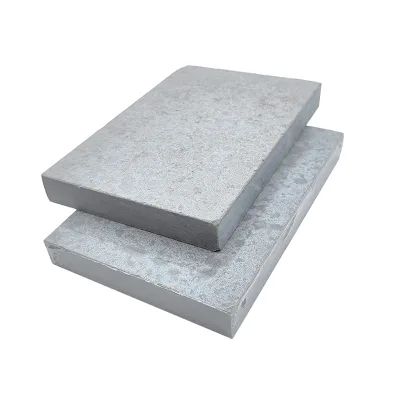

Waterproof Non-Asbestos Fiber Cement Fireproof Durable Decorative Cement Board
$0.80 - $1.20
MOQ: 1 Square Meters

Waterproof Non-Asbestos Fiber Cement Fireproof High-Quality Decorative Cement Board
$0.80 - $1.20
MOQ: 1 Square Meters

Waterproof Non-Asbestos Fiber Cement Fireproof Sleek and Durable Wall Cladding
$0.84 - $0.88
MOQ: 1 Square Meters


Building Material High Density Thermal Insulation Fiber Cement Board Fireproof Panel Fireproof Board
$30.00 - $50.00
MOQ: 100 Square Meters
Comprehensive Sourcing Guide
Strategic Sourcing Guide for Fire Proof Fiber Cement Board
Procuring fire-proof fiber cement board requires a disciplined approach that balances technical performance with supply chain reliability. Buyers entering this market must navigate a complex landscape of material compositions, varying thicknesses, and diverse certification standards. The following guide outlines the essential parameters for sourcing these boards, ensuring that procurement decisions are grounded in verified product attributes and industry best practices rather than unverified marketing claims.
Understanding Material Composition and Technical Specifications
The foundation of any successful procurement strategy lies in a precise understanding of the material composition. Fiber cement board is distinct from traditional gypsum or wood-based panels due to its inorganic matrix. Based on observed product data, the primary raw materials typically include cellulose fiber, cement, quartz powder, and wood pulp. This specific combination creates a dense, durable panel that offers superior resistance to fire, moisture, and pests compared to organic alternatives.
A critical technical attribute is the absence of asbestos. Modern sourcing must prioritize products explicitly labeled as 100% non-asbestos. This is not merely a regulatory preference but a fundamental safety requirement for both installation and long-term building occupancy. The material density is another vital specification, with observed ranges falling between 1.2 and 1.6 g/cm³. This density directly correlates with the board's structural integrity and its ability to withstand impact and fire exposure.
Thickness varies significantly across the market, influencing both application suitability and cost. Available specifications include discrete measurements such as 4.5mm, 5mm, 6mm, 10mm, 12mm, and 15mm, as well as broader ranges extending from 4.5mm up to 30mm. The most common standard dimensions observed are 1220mm by 2440mm, though variations like 1200mm by 2400mm also exist. Buyers must match the thickness to the specific load-bearing and fire-rating requirements of the project. For instance, exterior cladding often demands thicker panels (10mm-15mm) for durability, while interior partitions may utilize thinner gauges (4.5mm-6mm).
Compliance and Certification Verification
In the global construction market, compliance is non-negotiable. When sourcing fire-proof fiber cement board, buyers must verify that the product meets recognized international and regional standards. Observed product listings frequently cite certifications such as CE, ISO, ASTM, SGS, and specific national standards like the NZ Standard. These certifications indicate that the manufacturer has undergone third-party testing for quality and safety.
The fire rating is a paramount consideration for this specific keyword. Products are often described with fire ratings ranging from Class A to specific temperature tolerances, with some data points indicating refractory temperatures between 1770°C and 2000°C. However, buyers should exercise caution and request specific test reports (such as ASTM E84 or EN 1365-1) rather than relying solely on general claims. The term "Class A" generally implies the highest level of fire resistance, but the exact testing methodology must be confirmed.
Furthermore, the manufacturing process must adhere to quality management systems. ISO 9001 certification is a common indicator of a supplier's commitment to consistent quality control. Buyers should verify that the specific batch of boards being purchased is covered under these certifications, as standards can vary between production lines or factories. It is also essential to check for local building code compliance in the destination country, as standards like the NZ Standard or specific ASTM grades may be mandatory for legal occupancy.
Cost Drivers and Economic Factors
The pricing of fiber cement board is influenced by several dynamic factors, primarily raw material costs, thickness, and volume. The observed price range in the market spans from $0.50 to $50.00 USD per unit, though this wide variance is heavily dependent on the thickness and specific grade of the board. Thinner boards (4.5mm-6mm) generally occupy the lower end of the price spectrum, while thicker, high-density panels (15mm-30mm) command higher prices due to increased material usage and energy consumption during curing.
Minimum Order Quantity (MOQ) is another significant economic driver. Data indicates MOQs ranging from as low as 1 unit to over 2,600 units. For small-scale projects or sample procurement, buyers may find suppliers with low MOQs, but these often come with a higher unit cost. Conversely, large-scale construction projects can leverage high-volume orders to negotiate better pricing, provided the supplier has the capacity to meet the demand.
Logistics and packaging also impact the final landed cost. Standard packaging typically involves wooden pallets, often reinforced with plastic covers and corner armers to prevent damage during transit. Some suppliers offer "with pallet" or "standard wooden pallet" options, while others may include custom packaging. The origin of the product, frequently cited as China (specifically Linyi), influences shipping costs and lead times. Buyers must factor in freight charges, which can be substantial for heavy materials like fiber cement, especially when ordering large quantities of thick boards.
Typical Applications and Design Versatility
Fiber cement board is a versatile material suitable for a wide array of applications, driven by its fire-resistant and weather-resistant properties. The primary applications identified include wall partitions, exterior wall cladding, and flooring. In exterior applications, the board's resistance to moisture (with water content typically below 10%) and its ability to withstand extreme temperatures make it ideal for cladding systems that require long-term durability without rotting or warping.
For interior use, the board serves as an excellent fire barrier in wall partitions and ceiling systems. Its non-combustible nature makes it a preferred choice for commercial buildings, industrial facilities, and residential structures where fire safety is a priority. The board is available in various finishes, including glossy surfaces, and comes in colors such as white, black, and gray. This color variety allows for design flexibility, enabling architects to achieve both traditional and modern design styles without the need for additional painting or finishing in some cases.
The shape of the board is typically rectangular with square edges, facilitating easy installation and seamless joints. However, customizations are available, allowing for specific edge profiles or sizes to meet unique architectural requirements. The ability to customize the product ensures that it can be integrated into complex building designs while maintaining structural and fire safety standards.
Supplier Evaluation and Quality Control
Selecting the right supplier is as critical as selecting the right product. Buyers should evaluate potential suppliers based on their production capacity, quality control processes, and track record. A reliable supplier will provide transparent information regarding their raw material sources, such as the use of cellulose fiber, cement, and quartz powder. They should also be able to demonstrate their adherence to the stated standards, such as CE, ISO, and ASTM.
Quality control should be a continuous process, not just a final inspection. Buyers should inquire about the supplier's internal testing protocols for density, fire resistance, and moisture content. The presence of a 100% non-asbestos guarantee must be backed by laboratory test results. Additionally, the supplier's packaging standards are indicative of their attention to detail; robust packaging with wooden pallets and corner armers suggests a commitment to delivering products in pristine condition.
When evaluating suppliers, buyers should also consider the lead time and production flexibility. The ability to accommodate custom orders, such as specific thicknesses or sizes, is a valuable asset. Suppliers who offer a wide range of thicknesses (from 4.5mm to 30mm) and sizes (1220x2440mm or 1200x2400mm) are better positioned to handle diverse project needs. It is also advisable to request samples before placing large orders to verify the physical attributes, such as surface finish, color consistency, and edge quality.
Long-Term Procurement Considerations
Sourcing fire-proof fiber cement board is not a one-time transaction but part of a long-term supply chain strategy. Buyers must consider the lifecycle costs of the product, including installation ease, maintenance requirements, and durability. The high density and non-combustible nature of the board contribute to a long service life, reducing the need for frequent replacements. However, the initial investment in high-quality boards with proper certifications can yield significant savings over time by minimizing fire risk and maintenance costs.
Sustainability is another growing consideration in procurement. Fiber cement boards are often made from natural materials like cement and cellulose, and the production process can be optimized for energy efficiency. Buyers should look for suppliers who prioritize sustainable practices and can provide data on the environmental impact of their products. The ability to recycle or dispose of the boards safely at the end of their life cycle is also a factor to consider.
Finally, buyers should maintain a strong relationship with their suppliers to ensure consistent supply and support. This includes establishing clear communication channels for technical queries, handling of defects, and updates on standard changes. A reliable supplier partnership can provide valuable insights into new product developments, such as improved fire ratings or more sustainable raw material blends, keeping the buyer ahead of market trends.
Conclusion
Procuring fire-proof fiber cement board requires a meticulous approach that integrates technical knowledge, compliance verification, and strategic supplier evaluation. By focusing on the core attributes of material composition, thickness, and certification, buyers can ensure they are sourcing products that meet the highest safety and performance standards. The wide range of applications, from exterior cladding to interior partitions, underscores the versatility of this material, making it a cornerstone of modern construction. As the market continues to evolve, maintaining a focus on quality, sustainability, and long-term value will be essential for successful procurement outcomes.
FAQs
What materials are used to make Fire Proof Fiber Cement Board?
The board is made from cement, cellulose fiber, quartz powder, and wood pulp. This inorganic matrix ensures the product is 100% non-asbestos and provides high density between 1.2 and 1.6 g/cm3 for structural integrity.
Which certifications should I look for in Fire Proof Fiber Cement Board?
Look for products certified with CE, ISO, ASTM, and SGS standards. Some listings also include the NZ Standard or ISO9001 for quality management, ensuring the boards meet international safety and performance requirements.
How thick are the available Fire Proof Fiber Cement Board options?
Available thicknesses range from 4.5mm up to 30mm, with common discrete sizes like 5mm, 6mm, 10mm, 12mm, and 15mm. Buyers should select the specific gauge based on whether the application requires interior partitioning or exterior cladding.
Can I customize the size and edge profile of the fiber cement board?
Yes, customization is available for specific project needs. Standard sizes include 1220x2440mm and 1200x2400mm, while edge profiles can be square or customized to fit unique architectural designs and installation requirements.
What is the fire resistance rating of these fiber cement boards?
The boards offer a Class A fire rating and can withstand refractory temperatures between 1770 and 2000 degrees Celsius. This high thermal resistance makes them suitable for wall partitions, exterior cladding, and flooring applications.
How are the fire proof fiber cement boards packaged for shipping?
Products are typically shipped on standard wooden pallets, often with plastic covers and corner armers for protection. Some suppliers also offer custom packaging options to ensure the panels arrive in pristine condition during transit.
Where are these fire proof fiber cement boards manufactured?
The primary manufacturing origin is China, with specific production hubs noted in Linyi. Buyers should verify the specific factory location to understand shipping logistics and potential lead times for international delivery.