Source Close Cup Flash Point Tester for Oil, Petroleum, Lubricants
Find 30 verified suppliers offering the Close Cup Flash Point Tester for analyzing oil products, base oils, and industrial lubricants. Compare specifications, prices, and customization options to select the right equipment for your testing needs.
Key considerations
Products List


Flash Point Test Machine, Cleveland Open Cup Flash Point Tester, Flash Point Meter
$599.00 - $649.00
MOQ: 1 Pieces


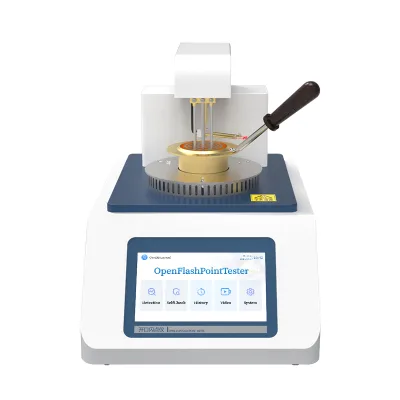
Scientific Research Oil Open Cup Flash Point Tester Flash Point Analysis
$2500.00 - $4500.00
MOQ: 1 Sets

Automatic Self-Checking Closed Cup Flash Point Testing Device/Flash Point Tester
$1000.00 - $4000.00
MOQ: 1 Sets




Comprehensive Sourcing Guide
Strategic Sourcing Guide for Close Cup Flash Point Testers
Procuring laboratory instrumentation for petroleum analysis requires a rigorous approach to ensure data integrity and operational safety. The Close Cup Flash Point Tester is a critical device used to determine the lowest temperature at which a liquid gives off sufficient vapor to form an ignitable mixture with air near the surface of the liquid. For buyers in the oil, petroleum, and industrial lubricant sectors, selecting the right equipment involves navigating a complex landscape of technical specifications, environmental constraints, and supplier capabilities. This guide outlines the essential factors for sourcing these instruments, drawing on observed market data and technical requirements to facilitate informed decision-making.
Technical Specifications and Operational Parameters
The core functionality of a Close Cup Flash Point Tester relies on precise temperature control and ignition mechanisms. When evaluating potential units, buyers must scrutinize the heating power and temperature rising speed, as these directly impact test accuracy and efficiency. Observed market data indicates that heating power for these devices typically ranges from 0 to 600 Watts. This range allows for controlled heating rates necessary to meet various testing protocols. Furthermore, the sample temperature rising speed is a critical variable; specifications often allow for an adjustable rate of 1 to 12 degrees Celsius per minute. This adjustability is essential for accommodating different sample viscosities and adhering to specific procedural standards.
The ignition system is another paramount specification. The aperture of the flame ignition device is a key metric, with observed standards suggesting a diameter of approximately 0.8 mm. This precise dimension ensures a consistent flame size for reliable ignition detection. Additionally, the gas source compatibility must be verified. While some units are designed for coal gas or other civil combustible gases, the specific gas requirements can vary by model. Buyers should confirm that the instrument's gas inlet and control mechanisms align with their facility's available fuel sources.
Environmental operating conditions also dictate the suitability of a tester for a specific laboratory setting. The ambient temperature range is a crucial specification; observed units often support a wide operational window, such as -10 to 50 degrees Celsius. However, other models may have stricter limits, such as an ambient temperature of 5 to 30 degrees Celsius. Similarly, relative humidity requirements must be checked, with some specifications indicating a range of 30 to 80 percent, while others may allow up to 85 percent. Ensuring the laboratory environment falls within these parameters is vital for maintaining the instrument's calibration and preventing measurement drift.
Compliance, Standards, and Certification Verification
In the realm of petroleum testing, adherence to international and national standards is non-negotiable. The primary function of a Close Cup Flash Point Tester is to generate data that can be legally and technically validated. Buyers must verify that the equipment is designed to comply with recognized testing methods. While specific standard numbers may vary by region and application, the equipment must be capable of performing tests that align with industry expectations for oil products, base oils, and derivatives.
When evaluating compliance, the product's stated standard or certification status is a primary point of inquiry. Some suppliers list compliance with ISO standards, while others may reference specific testing methodologies. It is imperative for buyers to request documentation proving that the instrument's design and operation meet the required protocols for the intended application, whether it be for industrial lubricants or crude oil derivatives. The absence of clear certification or standard alignment can lead to data rejection in regulatory audits or quality control processes.
Furthermore, the distinction between different types of flash point testers must be understood. The market includes both open cup and closed cup variants. The closed cup tester is generally preferred for lighter products and those with lower flash points, as it minimizes vapor loss and provides a more accurate reading for safety classification. Buyers should ensure the selected model is explicitly a "Closed Cup Flash Point Tester" rather than an open cup variant, which serves different testing purposes. The product name and model designation should clearly reflect this distinction to avoid procurement errors.
Cost Drivers and Pricing Structures
Understanding the cost drivers for close cup flash point testers is essential for budget planning and total cost of ownership analysis. The observed price range in the market is vast, spanning from 1 to 20,000 USD. This significant variance is driven by several factors, including the level of automation, the precision of the temperature control system, and the inclusion of advanced features like automatic sweeping devices.
Manual control systems are often more affordable but require greater operator intervention. In contrast, units featuring automatic sweeping devices or digital interfaces command higher prices due to the increased labor efficiency and reduced human error. The complexity of the heating mechanism and the quality of the ignition system also influence cost. Additionally, the packaging and shipping requirements, such as standard export packing or foam and carton combinations, can add to the final landed cost, particularly for international buyers.
Buyers should also consider the Minimum Order Quantity (MOQ) and its impact on unit pricing. In the current market, many suppliers offer an MOQ of 1, allowing for the procurement of single units without bulk purchase requirements. This flexibility is beneficial for laboratories with limited budgets or those testing new equipment before scaling up. However, buyers must be aware that while the base price may be low, additional costs such as shipping, import duties, and potential calibration services can significantly affect the total expenditure.
Typical Applications and Industry Use Cases
The versatility of close cup flash point testers makes them indispensable across various sectors within the energy and chemical industries. The primary application is the testing of oil products, base oils, and their derivatives. These instruments are used to determine the flash point of lubricants, ensuring they meet safety specifications for storage, transport, and usage. The ability to test industrial lubricants is particularly important for manufacturers who must guarantee the safety and performance of their products under varying thermal conditions.
Beyond lubricants, these testers are frequently employed in the petroleum sector for analyzing crude oil and refined products. The data obtained helps in classifying the flammability of the substance, which is critical for determining storage requirements and handling procedures. The application extends to quality control in refineries, where consistent testing ensures that products meet regulatory standards before being released to the market.
The specific model chosen often depends on the intended application. For instance, models designed for oil and petroleum usage may feature specific heating rates or gas sources tailored to these materials. Buyers should match the instrument's capabilities with their specific testing needs, ensuring that the device can handle the viscosity and volatility of the samples they intend to analyze. The product's application field, whether it is base oil, derivatives, or general oil products, should be clearly defined in the supplier's documentation to ensure compatibility.
Supplier Evaluation and Quality Assurance
Selecting a reliable supplier is as critical as selecting the right equipment. The origin of the product is a significant factor in supplier evaluation. Many observed units originate from China, with specific manufacturing hubs noted in locations such as Nanjing and Hunan. While the origin itself does not dictate quality, it provides context for the supply chain and potential logistical considerations. Buyers should verify the supplier's ability to provide consistent quality, as the product attributes often state that the quality is "Same as OEM," implying a high standard of manufacturing.
Quality assurance processes should be a central part of the supplier evaluation. Buyers must inquire about the customization options available, as the market data indicates that customization is available for many models. This flexibility allows laboratories to tailor the instrument to their specific operational needs. Additionally, the packaging method, whether it be paper/wood boxes, paper cartons, or foam and carton combinations, should be assessed to ensure the equipment arrives in perfect condition.
When evaluating suppliers, buyers should also look for evidence of quality control measures. The product attributes often mention specific standards, such as ISO, which serve as a benchmark for the manufacturing process. However, buyers should not rely solely on these claims; they must request third-party test results or quality certificates to validate the supplier's assertions. The consistency of the product attributes across different models, such as the ambient temperature ranges and power supply requirements, can also indicate the reliability of the manufacturer's design and production processes.
Long-Term Procurement and Maintenance Considerations
Procuring a Close Cup Flash Point Tester is not a one-time transaction but the beginning of a long-term relationship with the equipment and the supplier. Long-term considerations include maintenance, calibration, and the availability of spare parts. The heating power and gas source requirements must be sustainable over the life of the instrument. Buyers should ensure that the supplier can provide a steady supply of compatible gas sources or ignition components, as these are consumable or wear-prone parts.
The environmental stability of the laboratory is another long-term factor. If the laboratory environment fluctuates outside the specified ambient temperature or humidity ranges, the instrument's performance may degrade. Buyers should plan for environmental controls that maintain the conditions required by the equipment, such as keeping the temperature between -10 and 50 degrees Celsius and humidity within the specified limits.
Furthermore, the power supply requirements, typically 220VAC at 50Hz, must be compatible with the local electrical infrastructure. Any discrepancies may require additional equipment, such as transformers or stabilizers, which adds to the long-term cost. Buyers should also consider the lead time for repairs or replacements. While specific lead times vary, understanding the supplier's support structure is crucial for minimizing downtime. The product's origin and the supplier's location can influence the speed of service and the availability of technical support.
Comparative Analysis of Key Instrument Features
To facilitate a clearer understanding of the differences between available models, the following table summarizes key observed specifications. This comparison highlights the variations in model numbers, dimensions, and operational parameters that buyers should consider during the selection process.
| Feature | Model A (e.g., TR-TC-261) | Model B (e.g., TR-TC-1002) | Model C (e.g., SYD-261) | Model D (e.g., FPT-536) |
|---|---|---|---|---|
| Product Type | Flash Point Tester | Flash Point Tester | Cleveland Open Cup Tester | Open Cup Flash Tester |
| Power Supply | 220VAC, 50Hz | 220VAC, 50Hz | AC220V | 220VAC, 50Hz |
| Heating Power | 0~600W | 0~600W | 0~600W | Variable |
| Ambient Temp | -10°C ~ 50°C | 5-30°C | ≤35°C | -10°C ~ 50°C |
| Humidity | 30-80% | 30-80% | ≤85% | Variable |
| Origin | China/Hongkong | China | Hunan | China |
| Packing | Paper/Wood Box | Standard Export | Paper Carton | Foam+Carton |
| Control | Manual/Auto | Manual | Manual | Automatic Sweeping |
Note: The table above synthesizes observed attributes from the provided product data. Specific model numbers and features are illustrative of the variety found in the market. Buyers must verify the exact specifications of the unit they intend to purchase, as attributes like "Open Cup" versus "Closed Cup" and specific temperature ranges vary significantly between models.
In conclusion, sourcing a Close Cup Flash Point Tester requires a meticulous evaluation of technical specifications, compliance standards, and supplier reliability. By focusing on the core attributes such as heating power, temperature rising speed, and environmental constraints, buyers can ensure they acquire equipment that meets their laboratory's rigorous demands. The vast price range and diverse model options offer flexibility, but they also necessitate a thorough due diligence process to avoid mismatches between the instrument's capabilities and the user's operational needs. Ultimately, the goal is to secure a reliable, compliant, and efficient testing solution that supports the safety and quality standards of the oil and petroleum industry.
FAQs
What is the power supply requirement for these testers?
The power supply is typically 220VAC at 50Hz or 220VAC with 50Hz/60Hz compatibility. Some models support 100-240V input to ensure global usability across different electrical infrastructures.
Can the temperature rising speed be adjusted during testing?
Yes, the sample temperature rising speed is adjustable from 1 to 12 degrees Celsius per minute. This feature allows operators to accommodate different sample viscosities and specific testing protocols effectively.
Which ambient temperature range is supported by the equipment?
The equipment supports an ambient temperature range from -10 to 50 degrees Celsius. Some specific models may require a narrower range of 5 to 30 degrees Celsius for optimal performance.
How is the heating power rated for these instruments?
The heating power is rated between 0 and 600 Watts for most units. This range provides sufficient control for heating samples while maintaining safety and energy efficiency during flash point determination.
What packaging methods are used for shipping these testers?
Packaging options include paper or wood boxes, standard export packing, and foam plus carton combinations. These methods ensure the equipment arrives safely without damage during international transit.
Is customization available for these flash point testers?
Customization is available for these products to meet specific laboratory requirements. Buyers can request tailored features while maintaining quality standards that match original equipment manufacturer specifications.