Find Fire Retardant Aluminum Exhibition Tent for Events, Parties, and Relief
Source 30 listings for Fire Retardant Aluminum Exhibition Tent options featuring customizable sizes, CE and ISO certifications, and windproof designs. Buyers can compare specifications including snow load capacity, waterproof ratings, and frame materials like aluminum alloy T6061/T6.
Key considerations
Products List

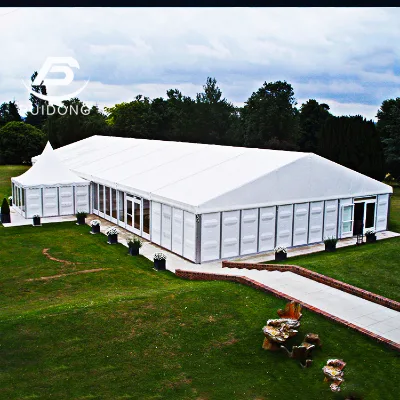


Customized Aluminum ABS Wall Exhibition Tent for Trade Show Event
$40.00 - $45.00
MOQ: 500 Square Meters

Professional Exhibition Event Tent for Trade Fairs and Product Shows
$35.00 - $45.00
MOQ: 500 Square Meters


Sale of Large Aluminum Alloy Exhibition Tents for Events and Exhibitions
$16.00 - $20.00
MOQ: 1 Square Meters


Waterproof and Fireproof Aluminum Wall Exhibition Tent for Warehouse (ML204)
$25.00 - $70.00
MOQ: 150 Square Meters


Comprehensive Sourcing Guide
Strategic Sourcing Guide for Fire Retardant Aluminum Exhibition Tents
Technical Specifications and Structural Integrity
When sourcing a Fire Retardant Aluminum Exhibition Tent, the primary focus must be on the structural framework and the material composition that ensures both stability and safety. The core of a reliable exhibition tent lies in its frame material. High-quality units typically utilize aluminum alloy, specifically grades such as T6061/T6, which offer an optimal balance of strength-to-weight ratio and corrosion resistance. This material choice is critical for structures that must withstand dynamic loads while remaining portable. The frame design often features a straight bracing or extended type structure, allowing for large, column-free interior spaces essential for exhibitions and events.
The fabric covering the frame is equally significant. Buyers should verify that the material is a high-density PVC (Polyvinyl Chloride) or polyester blend, designed to be waterproof and UV resistant. In the context of fire safety, the fabric must inherently possess fire-retardant properties. Specific product data indicates that these tents often carry features such as "Windproof, Water Proof, UV Resistance, and fire retardant" capabilities. The waterproof index for the outside tent is a crucial metric, with observed ranges falling between 1500-2000 mm and 2000-3000 mm, ensuring protection against heavy precipitation during outdoor events.
Load-bearing capacity is another technical parameter that requires careful attention. The structural design must account for environmental stressors, including wind and snow. Typical specifications for these units suggest a wind load resistance capability ranging from 100 to 120 km/h. For snow load, the frame is engineered to support approximately 80 to 100 kg per square meter. These figures are not universal guarantees but rather observed specifications that buyers must confirm against their specific local weather conditions and site requirements. The carrying power of the structure is generally determined according to the specific design, meaning that for large-scale events, a custom engineering calculation is often necessary to ensure safety margins are met.
Compliance and Certification Verification
In the B2B procurement of exhibition tents, particularly those marketed as fire retardant, verifying compliance with international safety standards is non-negotiable. The term "fire retardant" is a regulatory claim that requires substantiation through recognized testing and certification. Buyers must demand documentation that aligns with standards such as DIN 4102, which is a German standard for the classification of building materials regarding their reaction to fire. While some product listings mention this standard, it is imperative to request the actual test reports or certificates from the supplier to confirm that the specific batch of fabric and frame coatings meets the required classification.
Beyond fire safety, general product certifications play a vital role in establishing the reliability of the manufacturer. Common certifications observed in the market include ISO (International Organization for Standardization) and CE (Conformité Européenne). The presence of a CE mark indicates that the product meets EU safety, health, and environmental protection requirements. Additionally, third-party certifications from bodies like TUV are often cited, providing an extra layer of assurance regarding the product's quality and safety. When evaluating a supplier, procurement teams should look for a "Certificate" listing that explicitly includes CE, TUV, and ISO. It is crucial to understand that the absence of a specific certification in a marketing description does not automatically disqualify a product, but the absence of verifiable documentation is a significant red flag.
Buyers should also be aware of the distinction between the frame material and the fabric regarding certifications. While the aluminum frame may not require fire certification, the PVC or polyester fabric is the primary component subject to fire safety regulations. The "Feature" attribute often lists "fire retardant (din4102)," but this should be treated as a claim that requires validation. The inspection process for these tents typically involves Material Test Reports (MTR), Document Test Reports (DTR), and Non-Destructive Testing (NDT) to ensure that the welding and material integrity meet the specified standards.
Cost Drivers and Pricing Factors
Understanding the cost structure of fire retardant aluminum exhibition tents is essential for budgeting and negotiating effectively. The price of these units is not uniform and can vary significantly based on several key drivers. The primary cost factor is the customization level. While standard models may be available, the market shows a wide price range, observed between 1 USD and 570 USD, though this broad spectrum often includes small accessories alongside full tent systems. For a complete, large-scale exhibition tent, the price is heavily influenced by the dimensions, which are often OEM (Original Equipment Manufacturer) customized to fit specific venue requirements.
The complexity of the structure also impacts cost. A "Double Skin" structure or a "One whole tent" design with integrated side walls (made of tempered glass or PVC) will command a higher price than a basic single-skin canopy. The inclusion of additional features such as specific color options (White, Red, Blue, Camouflage, Transparent, Green, Pink) or custom branding can add to the unit cost. Furthermore, the packaging requirements, such as a "Wooden Package After Mandatory Treatment," contribute to the overall logistics cost. This treatment is necessary for international shipping to prevent pest infestation and is a standard requirement for export from regions like Ningbo or Guangdong in China.
The Minimum Order Quantity (MOQ) is another critical cost driver. While some suppliers offer an MOQ of just 1 set, making it accessible for small events, larger orders often benefit from economies of scale. However, the observed MOQ range in the market extends up to 500 units, suggesting that pricing tiers may shift significantly based on volume. Buyers should also consider the "Single volume" and "Single gross weight" when calculating shipping costs, as these dimensions directly affect freight charges. A tent with a "Single volume" of 0 cm³ or a weight of 0.0 kg in a listing is likely a data error or refers to a specific component, and buyers must clarify the actual shipping volume to avoid unexpected logistics expenses.
Typical Applications and Usage Scenarios
Fire retardant aluminum exhibition tents are versatile structures designed for a wide array of applications, ranging from commercial events to emergency relief. The "Usage" attribute highlights several key scenarios: Traditional events, Parties, Relief operations, and Advertising. In the context of exhibitions, these tents serve as temporary pavilions, trade show booths, or outdoor event shelters. The "Four-season Tent" designation indicates that these structures are engineered to provide comfort and protection year-round, making them suitable for winter exhibitions as well as summer festivals.
The capacity of these tents varies, with models designed to accommodate between 200-500 persons or 800-1000 persons. This scalability makes them ideal for large-scale corporate gatherings, music festivals, or community relief efforts. The "Top Style" is often a Ridge Tent, which provides excellent water runoff and structural stability. The "Tent Style" may also be described as Straight Bracing Type or Extended Type, offering flexibility in layout and expansion. For advertising purposes, the "Color" options allow for branding integration, with choices including white, red, blue, and camouflage patterns.
In relief scenarios, the durability and rapid deployment capabilities of these tents are paramount. The "Life span of frame" is noted to be more than 20 years, while the "Life span of cover" is typically around 5-8 years. This disparity suggests that while the frame is a long-term asset, the fabric may require periodic replacement, a factor that should be considered in the total cost of ownership. The "Building Type" is described as "Construction Based on Need," implying that the setup can be adapted to various ground conditions and site constraints. Whether for a temporary party or a long-term relief camp, the structural integrity and fire safety features make these tents a reliable choice for protecting people and assets.
Supplier Evaluation and Sourcing Channels
Evaluating suppliers for fire retardant aluminum exhibition tents requires a rigorous approach to verifying their capabilities and reliability. The "Place of Origin" is a significant indicator, with major manufacturing hubs located in Ningbo and Guangdong, China. These regions have established supply chains for aluminum processing and fabric manufacturing. However, the origin alone does not guarantee quality. Buyers must assess the supplier's ability to provide the necessary documentation, including MTR, DTR, and NDT reports, as well as the specific certifications like CE, TUV, and ISO.
The "Brand Name" and "Tent Brand" are also factors to consider, though the market contains both established brands like "Ruidong" and "Lp Outdoors" and generic OEM manufacturers. When evaluating a supplier, buyers should inquire about their "Customization" capabilities. The "Customized" attribute indicates that suppliers can tailor dimensions, colors, and features to specific client needs. However, this flexibility must be balanced with the supplier's quality control processes. A supplier that offers extensive customization but lacks rigorous inspection protocols poses a higher risk.
Buyers should also examine the "Product Packing" and logistics capabilities. The requirement for "Wooden Package After Mandatory Treatment" suggests that the supplier must have experience with international export standards. The "Selling Units" being listed as "Single item" indicates that the supplier is willing to handle small orders, which is beneficial for testing the quality before committing to a larger volume. However, the "MOQ" of 1 set should be verified against the actual production lead time, as small orders may not always be prioritized in the production schedule.
Quality Control and Long-Term Procurement Considerations
Quality control is the final and perhaps most critical step in the procurement process. The "Inspection" attributes listed, such as MTR (Material Test Report), DTR (Document Test Report), and NDT (Non-Destructive Testing), are standard industry practices that buyers should insist upon. These reports verify that the aluminum alloy meets the T6061/T6 specifications and that the welding techniques, specifically Argon Arc Welding, are performed correctly to ensure structural integrity. The "Surface Treatment" is also a key quality indicator, as it protects the aluminum from corrosion and enhances the aesthetic finish.
For long-term procurement, buyers must consider the maintenance and lifecycle of the tent. The "Life span of frame" exceeding 20 years suggests that the aluminum structure is a durable investment. However, the "Life span of cover" of about 5-8 years indicates that the fabric will need replacement or repair over time. Buyers should inquire about the availability of spare parts and the cost of fabric replacement. The "Feature" of being "Windproof, Water Proof, and UV Resistance" implies that the tent is designed for longevity, but regular inspections are necessary to ensure these features remain effective.
The "Dimensions" being listed as "OEM" means that the size is customized, which requires precise planning and coordination with the supplier. Buyers should ensure that the "Size" is accurately defined in the contract to avoid discrepancies during installation. The "Structure" being a "One whole tent" or "Double Skin" affects the ease of assembly and disassembly, which is a key consideration for event planners who need to set up and take down the tent quickly. Finally, the "Single gross weight" and "Single volume" must be accurately calculated to ensure that the logistics and handling equipment are appropriate for the specific unit. By focusing on these quality control measures and long-term considerations, buyers can secure a reliable and safe Fire Retardant Aluminum Exhibition Tent that meets their specific needs.
FAQs
What certifications do fire retardant aluminum exhibition tents typically have?
These tents typically hold ISO, CE, and TUV certifications to ensure safety and quality compliance. Buyers must verify that the specific batch includes valid test reports for fire retardant properties like DIN 4102. The frame and fabric are inspected using MTR, DTR, and NDT methods to confirm material integrity before shipment.
Can I customize the dimensions and colors of these exhibition tents?
Yes, customization is available for dimensions, colors, and structural designs to meet specific event needs. Buyers can choose from options like white, red, blue, or camouflage, with sizes often tailored as OEM. The frame material is usually aluminum alloy T6061/T6, and side walls can be tempered glass or PVC.
How much wind and snow load can these aluminum tents withstand?
These structures are engineered to withstand wind loads ranging from 100 to 120 km/h and snow loads of 80 to 100 kg per square meter. The carrying power is determined according to the specific design requirements of the event. Buyers should confirm these figures against local weather conditions for safety.
What is the expected lifespan of the frame and the fabric cover?
The aluminum frame has a lifespan of more than 20 years, while the PVC or polyester cover lasts about 5 to 8 years. This difference means the fabric may require periodic replacement depending on usage intensity. The frame is designed for long-term durability with corrosion resistance.
Where are these fire retardant tents manufactured and what is the origin?
These tents are primarily manufactured in Ningbo and Guangdong, China, which are major hubs for aluminum and fabric processing. The products are shipped in wooden packages after mandatory treatment to meet international export standards. Buyers should verify the specific place of origin for each order.
What is the minimum order quantity for purchasing these exhibition tents?
The minimum order quantity can be as low as 1 set, making it accessible for small events or testing purposes. However, market observations show an MOQ range extending up to 500 units for larger commercial orders. Buyers should clarify the specific MOQ with the supplier before finalizing the purchase.
How are these tents packaged for international shipping and transport?
Tents are packed in wooden packages that undergo mandatory treatment to prevent pest infestation during transit. Some suppliers also offer other packaging options depending on the client's requirements. The single volume and gross weight vary by model, so buyers must confirm actual shipping dimensions to calculate freight costs accurately.