Source Fireproof High Density Celuka Sheets for Building, Furniture, and Printing
Find Fireproof High Density Celuka Sheets suitable for building, furniture, and printing applications. Compare 30 available options with varying thicknesses, colors, and certifications from verified Chinese manufacturers.
Key considerations
Products List


Comprehensive Sourcing Guide
Sourcing Guide for Fireproof High Density Celuka Sheets
Understanding Material Composition and Physical Properties
When sourcing fireproof high-density celuka sheets, buyers must first distinguish between standard PVC foam boards and the specific celuka variant, which offers a closed-cell structure essential for high-density applications. The core material for these products is Polyvinyl Chloride (PVC), specifically formulated as PVC Celuka Foam. This material type is engineered to provide a balance of rigidity and lightweight characteristics, making it a preferred alternative to wood, metal, or acrylic in various industrial and commercial sectors. The density of these sheets is a critical variable, with observed ranges typically falling between 0.38 and 1.0 g/cm³. For high-density requirements, buyers should specifically target the upper end of this spectrum, as higher density correlates directly with improved structural integrity and impact resistance.
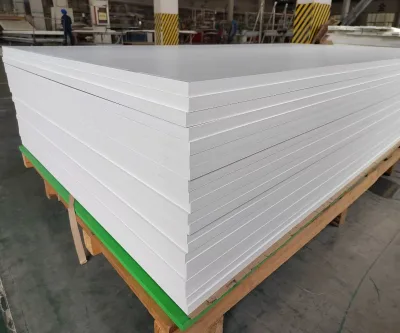
The physical dimensions of the sheets are standardized to facilitate manufacturing and installation, though customization is frequently available. Common factory sizes include 1220x2440mm, 1560x3050mm, 2050x3050mm, and 915x1830mm, with a maximum width capability of 2050mm. The thickness range is substantial, spanning from 1mm to 30mm, with a specific focus on the 3mm to 30mm range for structural applications. The appearance of the final product is typically a panel with a glossy surface finish, and the shape is consistently rectangular. A notable feature of the celuka process is the non-sealed edge, which distinguishes it from other foam board types that may have sealed or laminated edges. The color options are diverse, including white, black, blue, green, red, yellow, and gray, though white is the most commonly observed standard color.
Technical Specifications and Performance Metrics
The performance of fireproof high-density celuka sheets is defined by a set of rigorous technical specifications that ensure suitability for demanding environments. One of the most critical metrics is the fire resistance capability. These sheets are rated as fire-retardant, adhering to the UL-94 Class A standard, which indicates a high level of resistance to ignition and flame spread. This classification is essential for applications in building construction, advertising displays, and furniture where fire safety compliance is mandatory. The material also exhibits excellent weatherproofing and waterproofing characteristics, with a water absorption rate of less than 0.01%. This near-zero absorption ensures that the sheets do not degrade, rot, or swell when exposed to moisture, making them ideal for both indoor and outdoor use.
Mechanical strength is another pillar of the material's specification. The sheets possess good flexural strength and are rated as standard to highly impact-resistant, with a tensile strength observed at 3.6MPa. This mechanical robustness allows the material to withstand physical stress without cracking or breaking. Furthermore, the material is dimensionally stable, with a contraction percentage ranging from 0.4% to 1.4%, ensuring that the sheets maintain their shape and size under varying temperature conditions. The material is also non-toxic and lead-free, addressing environmental and health concerns. It is fully recyclable, aligning with modern sustainability goals. The surface finish is glossy, which not only enhances aesthetic appeal but also facilitates digital direct printing, a key advantage for advertising and signage applications.
Compliance, Certification, and Regulatory Standards
Navigating the regulatory landscape is a fundamental step in the procurement of fireproof high-density celuka sheets. Buyers must verify that the products meet specific international and regional standards to ensure legal compliance and market acceptance. The supplied data indicates that products often carry the HS Code 3921129000, which classifies them under plastics and articles thereof. In terms of quality management, suppliers frequently reference ISO 9000 standards, which verify that the manufacturing process adheres to consistent quality control protocols. Additionally, the presence of SGS and 3C certifications suggests that the products have undergone third-party testing for safety and quality, although buyers should request current certificates to confirm active status.
Fire safety compliance is paramount for this specific product category. The UL-94 Class A rating is a critical benchmark that buyers must validate through official test reports. While some background information mentions standards like EN 13501 or ISO 9001:2015, these should be treated as potential attributes rather than guaranteed facts for every listed product. Buyers should explicitly request documentation proving that the specific batch of sheets meets the fire-retardant requirements of their target market. Environmental compliance is also significant; the material is described as lead-free and non-toxic, but verification against standards such as RoHS or REACH is advisable for export markets with strict chemical regulations. The origin of the products is primarily from Zibo, Shandong, and Guangzhou, Guangdong in China, which are established manufacturing hubs, but the specific factory location should be confirmed to ensure supply chain transparency.
Cost Drivers and Procurement Economics
The pricing of fireproof high-density celuka sheets is influenced by several dynamic factors, with the observed market range spanning from $0.5 to $1500 USD. This wide variance is not indicative of quality differences alone but reflects the impact of thickness, density, surface finishing, and order volume. The Minimum Order Quantity (MOQ) is a significant cost driver, with observed ranges from 1 unit to 20,000 units. For high-density sheets, a typical MOQ is often cited as 2 tons, which can significantly affect the unit price for smaller buyers. Bulk purchasing generally yields lower per-unit costs, but the initial capital outlay increases.
Logistics and packaging also contribute to the total cost of ownership. The loading port is typically Qingdao, China, which is a major maritime hub, but shipping costs will vary based on the destination and current freight rates. Packaging options include plastic bags, carton bags, protective film, and pallets, with standard export packaging being the norm. Custom packaging is available but may incur additional fees. The production lead time is not explicitly defined in the provided facts, but buyers should anticipate variability based on the complexity of the order and the supplier's current capacity. When evaluating cost, buyers should look beyond the sticker price and consider the total landed cost, including freight, insurance, and potential duties. The 30-year warranty offered by some suppliers suggests a long-term value proposition, potentially offsetting higher initial costs through reduced maintenance and replacement needs.
Typical Applications and Use Cases
The versatility of fireproof high-density celuka sheets makes them suitable for a broad spectrum of applications across multiple industries. In the advertising sector, the material is extensively used for signage, display stands, and backpanels due to its excellent digital direct printing capabilities and smooth, glossy surface. The material's resistance to weather and moisture ensures that outdoor advertisements remain vibrant and intact for extended periods. In the construction and building industry, these sheets serve as decorative panels, wall cladding, and interior partitioning. Their fire-retardant properties make them a safe choice for public buildings, commercial spaces, and residential projects where fire codes are strict.
Furniture manufacturing is another key application area. The material's lightweight nature combined with high impact resistance allows for the creation of durable and modern furniture pieces. The ability to be cut and shaped into various forms without compromising structural integrity makes it ideal for custom furniture designs. Additionally, the material is used in the printing industry for high-quality prints that require a rigid substrate. The non-sealed edge and rectangular shape facilitate easy installation and integration into existing structures. Whether used for indoor decoration or outdoor building facades, the material's ability to resist termites, corrosion, and leakage adds significant value to its application profile. The 30-year warranty further underscores its suitability for long-term installations where reliability is paramount.
Supplier Evaluation and Quality Assurance Protocols
Selecting the right supplier requires a rigorous evaluation process that goes beyond basic product specifications. Buyers should prioritize suppliers who can provide transparent documentation regarding their manufacturing processes and quality control measures. The presence of ISO 9000 certification is a positive indicator, but it should be verified as current and applicable to the specific product line. Suppliers should be able to demonstrate their capability to produce sheets with the specified density range (0.38~1.0 g/cm³) and thickness (3-30mm) consistently. The origin of the product, whether from Zibo or Guangzhou, should be confirmed to ensure that the supply chain is stable and reliable.
Quality assurance should include a review of the material's physical properties, such as water absorption, tensile strength, and fire rating. Buyers should request sample testing reports to verify the UL-94 Class A fire rating and the 3.6MPa tensile strength. The surface finish should be inspected for glossiness and uniformity, and the edges should be checked for the non-sealed characteristic. Packaging quality is also crucial; the use of protective film and pallets helps prevent damage during transit. Suppliers offering customization options for size, color, and packaging demonstrate flexibility and a customer-centric approach. It is essential to avoid suppliers who make unverifiable claims about certifications or performance metrics. Instead, focus on those who provide concrete evidence of their capabilities through test data and third-party certifications.
Long-Term Procurement Considerations and Sustainability
Long-term procurement strategies for fireproof high-density celuka sheets should focus on sustainability, lifecycle management, and supply chain resilience. The material's 100% recyclability is a significant advantage, aligning with global trends toward circular economy practices. Buyers should inquire about the supplier's recycling programs and the end-of-life disposal options for the sheets. The 30-year warranty is a strong indicator of the material's durability and the supplier's confidence in their product. This long lifespan reduces the frequency of replacement, lowering the total cost of ownership and minimizing waste.
Supply chain resilience is another critical consideration. Given that the products are manufactured in China, buyers should assess the supplier's ability to maintain consistent production levels despite potential logistical disruptions. Diversifying suppliers or establishing long-term contracts can mitigate risks associated with single-source dependency. The availability of customization options allows buyers to adapt to changing market demands without compromising on quality. Finally, buyers should stay informed about evolving regulatory standards and fire safety codes to ensure that their procurement decisions remain compliant over the long term. By prioritizing quality, sustainability, and reliability, buyers can secure a steady supply of high-performance fireproof high-density celuka sheets that meet their operational needs for years to come.
FAQs
What is the fire rating for Fireproof High Density Celuka Sheets?
These sheets are rated fire-retardant UL-94 Class A. This classification ensures high resistance to ignition and flame spread, making them suitable for building construction and advertising displays where fire safety compliance is mandatory.
How thick can Fireproof High Density Celuka Sheets be?
The thickness range spans from 1mm to 30mm, with structural applications often focusing on 3mm to 30mm. Customization is available to meet specific project requirements beyond these standard dimensions.
Can Fireproof High Density Celuka Sheets be used outdoors?
Yes, the material is suitable for both indoor and outdoor applications. It is waterproof, weatherproof, and never rots, ensuring durability in external environments without degradation from moisture exposure.
What is the density range for these PVC foam sheets?
The density range falls between 0.38 and 1.0 g/cm³. For high-density requirements, buyers should target the upper end of this spectrum to achieve improved structural integrity and impact resistance.
Which certifications do Fireproof High Density Celuka Sheets typically hold?
Products often carry ISO 9000, SGS, and 3C certifications. Buyers should verify current certificates to confirm active status and ensure the specific batch meets required safety and quality standards.
What is the minimum order quantity for these sheets?
The minimum order quantity ranges from 1 unit to 20,000 units, with a typical MOQ of 2 tons for high-density sheets. Bulk purchasing generally yields lower per-unit costs but increases initial capital outlay.
How is fireproof high density celuka sheet packaging handled?
Standard packaging includes plastic bags, carton bags, protective film, and pallets. Custom packaging is available, though it may incur additional fees depending on the specific requirements of the order.