Source Fixed Land Use Diesel Generator for Farms, Garages, and Basements
Explore 30 options for Fixed Land Use Diesel Generator units suitable for farms, garages, and basements. Buyers can compare specifications including output types, cooling methods, and installation features to find the right power solution.
Key considerations
Products List

$198.00 - $999.00
MOQ: 1 Pieces
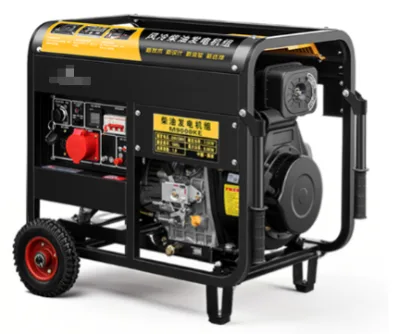


$28000.00 - $32000.00
MOQ: 1 Pieces


Comprehensive Sourcing Guide
Strategic Sourcing Guide for Fixed Land Use Diesel Generators
Procuring a Fixed Land Use Diesel Generator requires a disciplined approach that balances technical performance with supply chain reliability. The market for these units is characterized by significant variation in specifications, from basic open-frame models to sophisticated silent automation systems. Buyers must navigate a landscape where attributes such as stroke count, cooling methods, and excitation modes vary between listings. This guide provides a structured framework for evaluating suppliers and products, ensuring that the final selection aligns with specific operational needs while mitigating procurement risks.
Technical Specification Analysis and Configuration
The foundation of a successful procurement lies in a rigorous analysis of technical specifications. The product data indicates a diverse range of configurations available in the current market. A primary distinction exists between "Four Stroke" and "Eight Stroke" engine cycles. While four-stroke engines are standard for most modern applications, the presence of eight-stroke listings suggests specialized or legacy configurations that require careful verification against actual operational requirements. Buyers must explicitly confirm the stroke type in the final contract, as this directly impacts fuel efficiency, maintenance intervals, and emissions compliance.
Cooling methods present another critical variable. The observed data lists both "Water Cooling" and "Air Cooled" options. Water-cooled units typically offer higher power density and are better suited for continuous heavy-duty operation, whereas air-cooled units are often preferred for smaller capacities or environments where water supply is limited. The selection must align with the specific thermal load of the intended application. Furthermore, the excitation mode is listed as either "AC Rotating Exciter" or "Static Exciter." The choice between these affects the generator's response to load changes and voltage stability. For fixed installations requiring high reliability, the static exciter is often preferred for its robustness, though the rotating exciter remains a viable option for specific legacy systems.
Output type and phase configuration are equally vital. The market offers "AC Three Phase," "AC Single Phase," and "DC" outputs. Most industrial and commercial fixed land use applications require AC three-phase power to support heavy machinery and HVAC systems. However, some smaller units or specific backup scenarios may utilize single-phase outputs. The rated voltage also varies, with listings showing 220V, 230V, 240V, 440V, and 460V. Procurement teams must ensure the generator's voltage rating matches the facility's electrical infrastructure to avoid the need for expensive transformers or re-wiring.
Compliance, Certification, and Regulatory Standards
Navigating the regulatory landscape is essential for fixed land use generators, particularly when importing from international markets. The observed product data references several standards, including "ISO CE SONCAP" and mentions of "CE" certification. These designations indicate compliance with specific regional safety and quality requirements. The "SONCAP" standard, for instance, is a Nigerian certification scheme, suggesting that suppliers may be targeting multiple export markets with varying regulatory frameworks. Buyers must verify that the specific unit they purchase carries the necessary certifications for their local jurisdiction.
While the data mentions "UL 2200" and "UL 142" in the background context, these should be treated as potential references rather than guaranteed attributes of every listed product. Similarly, "ISO 8528" is a recognized standard for generator sets, but its presence in the background notes does not confirm its application to every item. Procurement teams should request specific test reports and certification documents from the supplier to confirm that the unit meets the relevant local codes. Relying on general claims without verified documentation can lead to significant compliance issues during installation and inspection.
Cost Drivers and Pricing Dynamics
The pricing for fixed land use diesel generators in the observed market ranges significantly, from $146 to $100,000. This wide disparity is driven by multiple factors, including power capacity, which spans from 8KW to 1500KW according to the model specifications. Larger units naturally command higher prices due to the increased material costs and engineering complexity. Additionally, the "Optional Type" of the unit, whether "Open or Silent," significantly impacts cost. Silent or sound-attenuated enclosures require additional materials and manufacturing processes, leading to a premium over open-frame models.
Other cost drivers include the brand of the alternator, with listings mentioning "Stanford/Marathon" as options. High-quality alternators from reputable manufacturers often increase the overall unit cost but provide better long-term reliability. The customization level is another variable; the data indicates that "Customization" is available, and attributes like color, shape, and design style can be tailored. Custom orders typically incur higher costs and longer lead times compared to standard off-the-shelf models. Buyers should also consider the "After-sale Service" package, which includes options like "Onsite Installation," "Onsite Training," and "Free Spare Parts." Comprehensive service packages add value but increase the initial purchase price.
Typical Applications and Usage Scenarios
Fixed land use diesel generators are designed for a broad spectrum of applications, ranging from residential to industrial settings. The product data lists usage categories such as "Common Units," "Standby Unit," and "Emergency Crew." Standby units are critical for facilities that cannot afford power interruptions, such as hospitals, data centers, and manufacturing plants. Emergency crew units are often deployed for temporary power needs during disaster relief or large-scale events.
The application list is extensive, covering "Laundry," "Gym," "Garage and Shed," "Basement," "Home Bar," "Hall," "Entry," "Wine Cellar," "Exterior," "Storage and Closet," "Outdoor," "Babies and Kids," "Dining," "Bedroom," "Living Room," "Home Office," "Bathroom," "Kitchen," "Courtyard," "Farmhouse," "Park," and "Other." This diversity highlights the versatility of these units. However, the "Landuse Type" is specified as "Automation Type," "Low Noise," or "Ordinary." For applications in residential areas or noise-sensitive environments like "Home Office" or "Bedroom," a low-noise automation type is essential. Conversely, industrial settings like "Garage and Shed" or "Farmhouse" may prioritize durability and power output over noise reduction.
Supplier Evaluation and Verification
Evaluating suppliers requires a focus on their ability to deliver consistent quality and support. The product data indicates that the "Place of Origin" is "Shandong, China," a major manufacturing hub. While this provides access to a robust supply chain, buyers must conduct due diligence to ensure the supplier has the capacity to meet their specific needs. The "After-sale Service" options, including "Online Technical Support," "Onsite Installation," "Onsite Training," and "Onsite Inspection," are strong indicators of a supplier's commitment to customer satisfaction.
Buyers should verify the "Project Solution Capability" of the supplier. The data lists capabilities such as "graphic design," "3D model design," "total solution for projects," and "Cross Categories Consolidation." These services suggest that the supplier can offer more than just a product; they can provide integrated solutions that fit the buyer's specific project requirements. Additionally, the "Warranty" period is listed as "1 Year," which is a standard baseline. Buyers should negotiate for extended warranty terms or service level agreements that provide greater protection against defects and downtime.
Quality Control and Material Integrity
Quality control is paramount when sourcing fixed land use generators, as these units are often critical infrastructure. The "Material" list includes a wide array of metals and alloys, such as "Brass," "Plastic," "Carbon Steel," "Aluminum," "Aluminum Alloy," "Galvanized Steel," "Color Steel," "Copper," "Galvanized Sheet," "Iron," "Magnesium Aluminum Alloy," "Stainless Steel," "Steel," "Zinc Alloy," and "Other." The specific materials used in the engine block, alternator, and enclosure directly influence the unit's durability and resistance to environmental factors.
The "Feature" list highlights attributes like "Water Resistant," "Durable," "Anti-Corrosion," and "Fire Resistant." These features are essential for fixed installations that may be exposed to the elements. Buyers should request material certificates and test reports to verify that the components meet these claims. The "prod_packing" is listed as a "wooden case," which is standard for heavy machinery to prevent damage during transit. However, buyers should inspect the packaging upon delivery to ensure the unit has not sustained any transit-related damage.
Long-Term Procurement Considerations
Long-term procurement considerations extend beyond the initial purchase price. The "Installation Method" is listed as "Fixed" or "Portable," and for fixed land use applications, the installation process is a critical factor. The "Landuse Type of Unit" includes "Automation Type" and "Low Noise Automation Type," which implies a need for sophisticated control systems. Buyers should ensure that the supplier provides comprehensive documentation for the automation system, including programming guides and troubleshooting manuals.
The "Selling Units" are listed as "Single item," but the "Small Orders" attribute indicates that suppliers are open to smaller quantities. This flexibility can be beneficial for buyers with multiple smaller sites or those testing the market. However, buyers should be aware that "MOQ" (Minimum Order Quantity) ranges from 1 to 10, and negotiating better terms for larger volumes may yield cost savings. The "Lead Time" is not explicitly stated in the data, but customization and the complexity of the unit can affect delivery schedules. Buyers should establish clear timelines in the contract to avoid delays.
Finally, the "Warranty" of "1 Year" should be viewed as a starting point. Buyers should explore options for extended warranties or maintenance contracts to ensure long-term operational reliability. The "After-sale Service" options, such as "Return and Replacement" and "Free Spare Parts," are valuable assets that should be leveraged to minimize downtime. By carefully evaluating these long-term factors, buyers can secure a reliable power solution that meets their needs for years to come.
Comparative Overview of Key Attributes
To assist in decision-making, the following table summarizes the key attributes observed in the market for fixed land use diesel generators. This comparison highlights the variability in specifications and the importance of verifying specific requirements.
| Attribute Category | Observed Options | Critical Verification Point |
|---|---|---|
| Engine Cycle | Four Stroke, Eight Stroke | Confirm stroke count matches efficiency needs. |
| Cooling Method | Water Cooling, Air Cooled | Select based on ambient temperature and load. |
| Output Type | AC Three Phase, AC Single Phase, DC | Match to facility electrical infrastructure. |
| Rated Voltage | 220V, 230V, 240V, 440V, 460V | Ensure compatibility with local grid standards. |
| Excitation Mode | AC Rotating Exciter, Static Exciter | Verify voltage stability requirements. |
| Installation | Fixed, Portable | Confirm "Fixed" for permanent land use. |
| Noise Level | Low Noise, Ordinary, Silent Type | Select based on location sensitivity. |
| Certification | ISO, CE, SONCAP (varies) | Verify specific certification for target region. |
| Warranty | 1 Year (Standard) | Negotiate extended terms if possible. |
| Origin | Shandong, China | Verify supplier capacity and logistics. |
In conclusion, sourcing a Fixed Land Use Diesel Generator requires a meticulous approach that addresses technical specifications, regulatory compliance, cost drivers, and long-term support. By leveraging the observed data and applying rigorous verification processes, buyers can identify suppliers that deliver high-quality, reliable power solutions tailored to their specific operational requirements.
FAQs
What stroke types are available for fixed land use diesel generators?
Both four-stroke and eight-stroke engine cycles are available in the current market. Buyers must explicitly confirm the stroke type in the contract as it impacts fuel efficiency and maintenance intervals.
Which cooling methods are offered for these generator units?
The market offers both water-cooled and air-cooled options for these units. Water cooling suits continuous heavy-duty operation, while air cooling is often preferred for smaller capacities or limited water supply environments.
Can buyers find generators with specific certification standards like CE?
Yes, some listings reference ISO CE SONCAP standards and CE certification. Buyers must verify that the specific unit carries necessary certifications for their local jurisdiction before purchase.
How does the price range vary for fixed land use diesel generators?
Prices range significantly from 146 to 100000 USD based on power capacity and features. Larger units and silent enclosures command higher prices due to increased material costs and engineering complexity.
What warranty periods are typically provided for these diesel generators?
The standard warranty period listed for these units is one year. Buyers should negotiate for extended warranty terms or service level agreements to protect against defects and downtime.
Which installation methods are available for these generator sets?
Both fixed and portable installation methods are available for these units. Fixed installations require sophisticated control systems, while portable units offer flexibility for temporary power needs.