Source Fixed Installation 3t Floor Scale for warehouses, factories, and stockrooms
Compare 30 listings for a Fixed Installation 3t Floor Scale designed for industrial weighing. Buyers can evaluate options with capacities from 1 to 10 tons, varying platform sizes, and different sensor types to find the right solution for their facility.
Key considerations
Products List


Floor Scale for Weighig Heavy Duty Floor Scales 5ton Industrial Weighing Scale
$340.00 - $380.00
MOQ: 2 Pieces


3t Industry Floor Platform Weighing Scale Industrial Floor Scale with Printer
$250.00 - $450.00
MOQ: 1 Pieces


Electronic Digital Floor Scale for Industrial Use 3t 5t Platform Scale
$250.00 - $450.00
MOQ: 1 Pieces


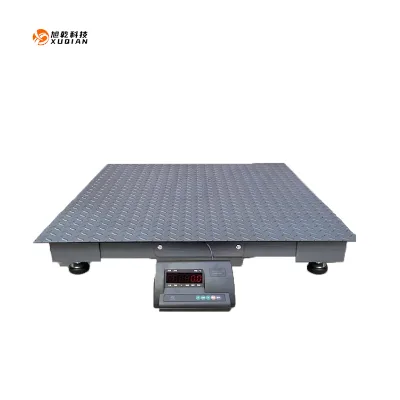


1.2m*1.2m 1t 2t 3t Electronic Floor Platform Scale for Automatic Weighing
$100.00 - $499.00
MOQ: 1 Sets

3tons Small Scale Digital Platform Floor Scale for Convenience Weighing
$75.00 - $4500.00
MOQ: 1 Pieces

3tons 1X1m Weighing Scale Digital Floor Scale Platform Scale for Weighing Solution
$198.00 - $235.00
MOQ: 1 Pieces


Comprehensive Sourcing Guide
Strategic Sourcing Guide for Fixed Installation 3-Ton Floor Scales
Procuring a fixed installation 3-ton floor scale requires a rigorous approach that balances technical precision with operational durability. In the industrial sector, the selection of a weighing system is not merely a purchase of hardware but an investment in process integrity. The core keyword, "Fixed Installation 3t Floor Scale," points to a specific category of industrial weighing equipment designed for permanent placement, typically on concrete foundations, to handle loads ranging up to 3,000 kilograms. This guide synthesizes available product attributes and industry standards to provide a structured framework for buyers evaluating suppliers and specifications.
Technical Specifications and Structural Integrity
The foundation of any reliable floor scale lies in its structural composition and sensor technology. Based on observed market data, the primary material for these units is often Carbon Steel, specifically High Quality Q235B Steel, which offers a robust balance between strength and cost-effectiveness for heavy-duty applications. For environments requiring higher corrosion resistance, Stainless Steel variants are also available. The structural design frequently utilizes a U-Type Steel configuration, providing the necessary rigidity to support dynamic and static loads without deformation.
The platform dimensions are a critical variable. While the general category supports platform sizes ranging from 0.80.8m to 23m, specific models like the GS-BS or KD-FS may adhere to standardized dimensions such as 1.2m x 1.2m or specific lengths of 800mm and 1200mm. Buyers must verify that the platform size aligns with the physical footprint of the items being weighed. A 3-ton capacity scale must accommodate the largest item in the workflow while maintaining stability.
Sensor technology varies significantly between models. The market presents both Analogue Scale sensors and Digital Scale sensors. Digital sensors often provide superior signal transmission and resistance to environmental interference, which is vital for fixed installations where cabling runs can be long. The display type is another key specification; while some units feature LED displays, others utilize LCD screens. The choice between these depends on lighting conditions in the operating environment. For a 3-ton capacity, the accuracy class is typically rated as Class III, with specific accuracy metrics reaching down to 1g or 0.1kg depending on the model configuration.
Compliance, Certification, and Safety Standards
Ensuring compliance with safety and quality standards is paramount for industrial procurement. The supplied data indicates that certain models adhere to ISO 9000 standards, which governs quality management systems. Buyers should explicitly request documentation verifying that the specific unit being purchased meets these standards. Additionally, the operating environment dictates specific safety requirements. While some units are designed as Non Explosion Proof Loadometers, others are certified as Explosion-proof Loadometers. This distinction is critical for facilities handling flammable materials or gases.
Lightning protection is another essential safety feature for outdoor or semi-outdoor fixed installations. Many industrial scales come equipped with lightning protection systems to safeguard the sensitive electronic components from voltage spikes. Buyers must confirm the presence of this feature if the scale is installed in an area prone to electrical storms. While CE certification is mentioned in background data, it should be treated as a general market attribute rather than a guaranteed status for every listed product. Procurement teams must verify the specific certification status of the supplier's batch before finalizing the order.
Cost Drivers and Pricing Dynamics
The pricing for fixed installation 3-ton floor scales exhibits a wide variance, with observed ranges spanning from 1 USD to 4,500 USD. This broad spectrum reflects differences in material quality, sensor technology, platform size, and the inclusion of value-added features like lightning protection or specific packing methods. The Minimum Order Quantity (MOQ) also influences the final cost, with observed ranges between 1 and 50 units.
Several factors drive the cost of these scales. The choice of material is a primary driver; Stainless Steel units generally command a higher price point than Carbon Steel counterparts due to raw material costs and manufacturing complexity. The sensor type is another significant cost factor; digital sensors often incur a premium over analogue systems due to their enhanced performance and durability. Furthermore, the installation method plays a role. Scales designed for "Platform Scale" installation or "Weighbridge" integration may require additional civil works or specialized mounting hardware, which can affect the overall project cost.
Packing methods also contribute to logistics costs. Units packed in wooden cases or bags may require different handling and shipping arrangements compared to those in standard cartons. Buyers should evaluate the total cost of ownership, including shipping, installation, and maintenance, rather than focusing solely on the unit price.
Typical Applications and Operational Environments
Fixed installation 3-ton floor scales are versatile tools designed for a variety of industrial applications. The primary function is clearly defined as a Weighing Scale, suitable for industrial weighing tasks. Specific applications include stock management, logistics, and manufacturing processes where precise weight data is required for inventory control or quality assurance. The "Stock" application category highlights the utility of these scales in warehouse environments for receiving and dispatching goods.
The operating environment is a crucial consideration for selection. The scales are designed for industrial settings, but the specific conditions vary. Some units are rated for non-explosion-proof environments, making them suitable for general manufacturing or warehousing. Others are engineered for explosion-proof environments, which is a mandatory requirement for chemical plants or facilities handling volatile substances. The measurement method is typically automatic, supporting dynamic weighing or static weighing depending on the model. The "Dynamic Weighbridge" attribute suggests that certain models can handle moving loads, which is useful for conveyor belt integration or vehicle weighing scenarios.
Supplier Evaluation and Product Origin
When evaluating suppliers, the origin of the product is a significant data point. The supplied facts indicate that these scales are predominantly manufactured in China, with specific origins noted in locations such as Quan Zhou, Fujian. Buyers should verify the specific manufacturing location to understand the supply chain logistics and potential lead times. The product model codes, such as GS, GS-BS, and SCS, serve as identifiers for specific configurations.
Supplier reliability can be assessed through their adherence to standard specifications. The availability of customization is a positive indicator of a supplier's flexibility. Buyers should inquire about the ability to tailor platform sizes, sensor types, or display options to meet unique operational needs. The standard packing methods, such as "Packing with Wood" or "Packing by Bags or Wooden Case," also reflect the supplier's attention to product protection during transit.
Quality Control and Long-Term Procurement Considerations
Quality control extends beyond the initial purchase. Buyers must consider the long-term maintenance and calibration requirements of the scale. The accuracy class of III and specific accuracy metrics like 1g or 0.1kg must be maintained over time. Regular calibration is essential to ensure that the scale continues to meet legal and operational standards. The power supply options, which may include internal batteries or AC power, offer flexibility for different installation scenarios but also introduce maintenance considerations regarding battery replacement or power stability.
The installation method, whether it is a "Platform Scale" setup or a "Weighbridge" integration, dictates the long-term structural integrity of the system. Proper foundation work is critical to prevent settlement or misalignment, which can affect weighing accuracy. The shape of the scale, typically square, and the material, such as Q235B Steel, contribute to durability but require regular inspection for signs of wear or corrosion.
Comparative Analysis of Scale Configurations
To assist in decision-making, the following table summarizes key attributes observed across different models and configurations available in the market. This comparison highlights the variations in specifications that buyers should consider when selecting a 3-ton floor scale.
| Attribute | Configuration A (General) | Configuration B (High Spec) | Configuration C (Specialized) |
|---|---|---|---|
| Material | Carbon Steel | High Quality Q235B Steel | Stainless Steel |
| Sensor Type | Analogue Scale | Digital Scale | Digital Scale |
| Display Type | LED | LCD | LCD |
| Platform Size | 0.80.8m ~ 23m | 1.2m x 1.2m | 800mm / 1200mm |
| Capacity | 1~10 Ton | 3 Ton | 1-10t |
| Accuracy Class | III | III | III |
| Operating Env | Non Explosion Proof | Explosion-proof | Non Explosion Proof |
| Packing | Carton | Packing with Wood | Packing by Bags/Wooden Case |
| Origin | China | Quan Zhou, Fujian, China | China |
| Standard | ISO 9000 | 1.2mx1.2m | 0.80.8m~23m |
This table illustrates that while the core capacity remains consistent at 3 tons, the surrounding specifications vary widely. Buyers must align these attributes with their specific operational requirements. For instance, a facility requiring explosion-proof safety must select Configuration B, while a general warehouse might find Configuration A sufficient.
Final Procurement Recommendations
Selecting a fixed installation 3-ton floor scale is a complex decision that requires careful analysis of technical specifications, safety standards, and supplier capabilities. Buyers should prioritize verifying the material quality, sensor technology, and compliance with relevant standards like ISO 9000. The operating environment dictates the choice between explosion-proof and non-explosion-proof models, which is a critical safety consideration.
Cost should be evaluated in the context of the total value provided, including durability, accuracy, and after-sales support. The wide price range observed in the market underscores the importance of defining clear requirements before engaging with suppliers. By focusing on verified attributes such as platform size, accuracy class, and material composition, buyers can make informed decisions that ensure the longevity and reliability of their weighing systems.
Ultimately, the success of the procurement lies in the alignment of the scale's capabilities with the specific needs of the industrial application. Whether for stock management, logistics, or manufacturing, the right 3-ton floor scale will provide the precision and stability required for efficient operations. Buyers are advised to conduct thorough due diligence, requesting detailed specifications and certification documents to ensure the selected product meets all necessary criteria for their specific use case.
FAQs
What materials are used for fixed installation 3t floor scales?
These scales typically use Carbon Steel or High Quality Q235B Steel for robust structural integrity. Stainless Steel variants are also available for environments requiring higher corrosion resistance during industrial operations.
Which sensor types are available for these industrial weighing systems?
Both Analogue Scale and Digital Scale sensors are available depending on the specific model configuration. Digital sensors often provide superior signal transmission and resistance to environmental interference for fixed installations.
Can these scales operate in explosion-proof environments?
Yes, models exist that are certified as Explosion-proof Loadometers for hazardous areas. Other units are designed as Non Explosion Proof Loadometers suitable for general industrial or warehouse settings.
What are the standard platform sizes for a 3-ton capacity scale?
Platform sizes generally range from 0.8*0.8m to 2*3m to accommodate various load dimensions. Specific models may adhere to standardized dimensions like 1.2m x 1.2m or lengths of 800mm and 1200mm.
How is the accuracy class defined for these industrial scales?
The accuracy class is typically rated as Class III for industrial applications. Specific accuracy metrics can reach down to 1g or 0.1kg depending on the specific model configuration and sensor technology used.
What origin locations are common for these weighing products?
These products are predominantly manufactured in China, with specific origins noted in locations such as Quan Zhou, Fujian. Buyers should verify the specific manufacturing location to understand supply chain logistics.