Source Flame Retardant Sisal Rope for Agriculture, Packaging, Outdoor
Compare 30 listings of Flame Retardant Sisal Rope from verified Chinese manufacturers. Buyers can evaluate specifications like diameter, length, and material composition for agriculture, packaging, and outdoor gear applications.
Key considerations
Products List
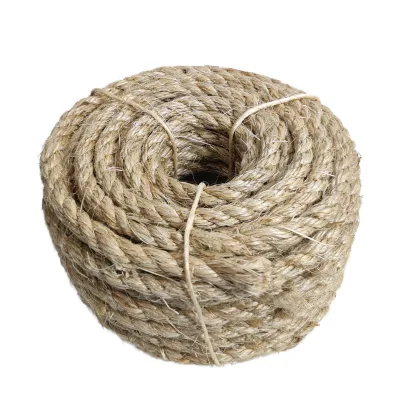


$0.95 - $1.00
MOQ: 100 Meters


Comprehensive Sourcing Guide
Strategic Sourcing Guide for Flame Retardant Sisal Rope
Understanding Material Composition and Performance Claims
When sourcing Flame Retardant Sisal Rope, the primary challenge lies in reconciling the natural properties of the raw fiber with the specific performance requirements of the buyer. The supplied product data indicates a diverse range of material compositions available in the market. While the core keyword specifies "sisal," the observed inventory includes products listed as "100% aramid 60/40 Cotton/Modacrylic" alongside pure "Sisal Fiber" and generic "Fiber" options. This discrepancy highlights a critical verification step for procurement professionals: confirming whether the "flame retardant" attribute is an inherent property of the natural sisal or a result of chemical treatment or blending with synthetic fibers like modacrylic.
Natural sisal is a cellulose-based fiber derived from the Agave plant. In its raw state, it is combustible and will burn when exposed to an open flame. Therefore, a product marketed as "flame retardant" must undergo a specific treatment process or be a composite blend. Buyers must scrutinize the "Material" field in supplier specifications. If the listing states "Sisal Fiber" without mentioning a chemical treatment or a blend with flame-retardant synthetics, the flame retardant claim may be inaccurate or refer only to a specific, treated batch. Conversely, the presence of "Modacrylic" in a blend (as seen in the 60/40 Cotton/Modacrylic data point) is a strong indicator of inherent flame resistance, as modacrylic is a synthetic fiber known for its self-extinguishing properties.
The observed product attributes also list "Natural" and "Natural Color" alongside "customized" and "dyed color" options. The dyeing process can sometimes interfere with flame retardant treatments or alter the fiber's structural integrity. Procurement teams should verify if the flame retardant coating is applied before or after the dyeing process, as this affects the durability of the treatment. Furthermore, the "Feature" attribute in the data is listed as "Durable," which is a general claim. For flame retardant applications, durability specifically refers to the longevity of the fire-resistant coating under environmental stress, such as UV exposure, moisture, and abrasion. Buyers should request technical data sheets that explicitly define the flame retardant mechanism, whether it is a surface treatment, an impregnation, or a fiber blend, to ensure the product meets safety standards for the intended application.
Technical Specifications and Dimensional Variability
The technical specifications for sisal rope vary significantly across different suppliers, necessitating a rigorous review of dimensional data before placing an order. The supplied product facts reveal a wide spectrum of diameters, ranging from "1/4"" (approximately 6.35mm) to "76mm," with specific models listed as "8-12mm" and "3/16", 1/4", 3/8", 5/8"." This variability suggests that the market offers ropes for both light-duty decorative purposes and heavy-duty industrial applications. For flame retardant applications, the diameter is not merely a size preference but a critical safety parameter. Thicker ropes generally offer more mass to resist ignition, but the density of the flame retardant treatment per unit of surface area is equally important.
Length specifications also show considerable diversity. Some listings indicate a fixed length of "15m," while others offer a broad range from "30m to 1000m." The "prod_model" field further complicates this, with entries like "1/4"X1200'" and "fine, heavy duty." When sourcing for specific projects, buyers must ensure that the selected length aligns with their operational needs to minimize waste and connection points, which can be potential failure points in a fire scenario. The "Single gross weight" is listed as "0.0 kg" in some entries, which is likely a data entry error or a placeholder, whereas another entry lists a "net weight" of "637g." This inconsistency underscores the need for buyers to request actual weight certificates for the specific batch being ordered, as weight correlates directly with fiber density and the amount of chemical treatment applied.
The "Type" of rope is another vital specification. The data identifies products as "Twist Rope," "Hand Tools," and "Gardening Natural Sisal Rope." The construction method, such as the twist pattern, affects the rope's strength and its ability to hold the flame retardant treatment. A tight twist may prevent the treatment from penetrating the core, leaving the inner fibers vulnerable to ignition. Buyers should verify the construction method against the intended load and safety requirements. Additionally, the "Application" field lists "Outdoor," "Agriculture," "Packaging," "Decoration," "Security," and "Shipping." Each application imposes different environmental stresses. For instance, a rope used for "Outdoor Gear" or "Security" requires a flame retardant treatment that is resistant to weathering, whereas a rope for "Decoration" may prioritize aesthetic consistency over long-term chemical stability.
Compliance, Certification, and Safety Standards
Navigating the certification landscape for Flame Retardant Sisal Rope requires careful attention to the specific standards cited in supplier documentation. The provided data lists several certifications, including "ISO9001," "BSCI," "ISO," "CCS," "ABS," "GL," "DNV," "LR," "GS," and "CE." It is crucial to distinguish between quality management certifications and product-specific safety certifications. "ISO9001" and "BSCI" are primarily related to management systems and social compliance, respectively, and do not guarantee that the rope itself is flame retardant. In contrast, "CCS" (China Classification Society), "ABS" (American Bureau of Shipping), "GL" (Germanischer Lloyd), "DNV" (Det Norske Veritas), and "LR" (Lloyd's Register) are maritime and industrial classification societies that often set strict standards for fire safety in marine and heavy industrial environments.
The "prod_standard" field in the data contains entries like "1/4"X1200'" and "8-12mm," which appear to be dimensional specifications rather than safety standards. However, the presence of "CE" and "GS" (Geprüfte Sicherheit) suggests that some products may comply with European safety directives or German safety standards, which often include flammability requirements. Buyers must verify if the "Type:Twist Rope" certification mentioned in the data is a generic label or a specific compliance mark for fire safety. The "Certificate" field also lists "BSCI,ISO," which again points to management systems rather than product performance.
For flame retardant claims to be credible, suppliers should provide test reports from recognized third-party laboratories. These reports should reference specific international standards such as UL 94, NFPA 701, or EN 13501-1, which define the burning behavior of textiles and ropes. The absence of these specific test standard references in the provided data indicates that buyers cannot assume compliance based on the listed certifications alone. Procurement teams should explicitly request a copy of the flame retardancy test report, ensuring it covers the specific diameter and treatment method of the ordered product. Without this documentation, the "flame retardant" label remains an unverified marketing claim.
Cost Drivers and Economic Factors in Procurement
The cost of Flame Retardant Sisal Rope is influenced by a complex interplay of material composition, treatment complexity, and order volume. The observed price range in the market spans from $0.20 to $199.99, a vast disparity that reflects differences in quality, length, diameter, and the sophistication of the flame retardant treatment. The "MOQ" (Minimum Order Quantity) ranges from 10 to 3000 units, indicating that smaller buyers may face higher per-unit costs due to the setup costs of specialized treatments.
Material composition is a primary cost driver. As noted earlier, pure sisal is a natural fiber, but achieving flame retardancy often requires blending with synthetic fibers like modacrylic or applying chemical treatments. The "100% aramid 60/40 Cotton/Modacrylic" listing suggests a high-performance, high-cost option compared to pure sisal. Aramid fibers, such as Kevlar, are inherently flame resistant and significantly more expensive than natural fibers. Buyers must balance the budget against the required safety level; a decorative application may not require the same level of protection as a marine or industrial application.
The "Packing" method also affects the final cost. The data lists various packing options including "Carton," "Coils," "Reel," "Hank," "Holder," "Poly Bag," and "Tube." Specialized packing, such as vacuum-sealed tubes or heavy-duty reels, adds to the unit cost but may be necessary to protect the flame retardant treatment during shipping and storage. Furthermore, the "Customization" availability and "OEM Service" options can increase costs. If a buyer requires a specific diameter, length, or color (e.g., "Natural" vs. "dyed color") that deviates from standard stock, the supplier may charge a premium for the custom run.
Payment terms, listed as "T/T" (Telegraphic Transfer), are standard but can impact cash flow. Suppliers with high MOQs (up to 3000) may require larger upfront payments, while those with lower MOQs (10) might offer more flexible terms. Buyers should also consider the "Place Of Origin," with listings from "Zhejiang, China" and "Shandong, China." While both are major manufacturing hubs, regional differences in labor costs and regulatory enforcement can subtly influence pricing. However, the primary cost determinant remains the technical specification of the flame retardant treatment and the resulting performance capabilities.
Supplier Evaluation and Quality Assurance Protocols
Evaluating suppliers for Flame Retardant Sisal Rope requires a multi-faceted approach that goes beyond standard due diligence. The "Brand Name" "Giahand" is observed in the data, but relying on a single brand is risky. Instead, buyers should assess the supplier's capability to provide consistent quality across batches. The "Single package size" is listed as "XX cm" in some entries, a clear placeholder that indicates a lack of attention to detail or incomplete data. This is a red flag for procurement teams, suggesting that the supplier may not have rigorous quality control processes in place.
Quality assurance should begin with a review of the supplier's "Certification" and "Certificate" documentation. As discussed, buyers must verify that the certifications are relevant to fire safety and not just general management systems. A supplier that can provide detailed test reports for specific flame retardancy standards demonstrates a higher level of commitment to product safety. Additionally, the "Usage" field lists applications like "Security," "Shipping," and "Outdoor Gear," which are high-risk environments. Suppliers serving these sectors should have a proven track record and robust quality control measures.
The "Feature" of being "Durable" is a general claim that needs substantiation. Buyers should request samples for independent testing, focusing on the retention of flame retardant properties after exposure to water, UV light, and abrasion. The "Color" options, including "Natural" and "dyed color," should be tested to ensure that the dyeing process does not compromise the flame retardant treatment. Furthermore, the "Customization" and "OEM Service" capabilities should be evaluated based on the supplier's ability to maintain quality during the customization process. A supplier that offers extensive customization but lacks clear quality control protocols for those custom orders poses a significant risk.
Long-Term Procurement and Application Suitability
Long-term procurement of Flame Retardant Sisal Rope involves considering the lifecycle of the product and its suitability for specific applications. The "Season" attribute is listed as "All Seasons," which implies that the rope is designed to withstand various weather conditions. However, the durability of the flame retardant treatment over time is a critical factor. In outdoor applications, such as "Outdoor Gear" or "Gardening," the rope is exposed to rain, sun, and temperature fluctuations. These environmental factors can degrade the chemical treatment, reducing the rope's flame resistance over time.
Buyers should establish a replacement schedule based on the expected degradation rate of the treatment. For critical applications like "Security" or "Shipping," regular inspections and testing are essential to ensure the rope remains compliant with safety standards. The "Application" list includes "Packaging" and "Agriculture," which may have lower safety requirements but still benefit from flame retardant properties to prevent fire spread. Understanding the specific environmental stresses of the intended application allows buyers to select the appropriate product grade and treatment level.
The "Model Number" variations, such as "MS-001" and "1/4"X1200'," indicate that different models may have different performance characteristics. Buyers should maintain a clear inventory of the specific models used in their operations to ensure consistency in replacement and maintenance. The "Single gross weight" and "net weight" discrepancies in the data highlight the importance of accurate record-keeping. Inconsistent weight data can lead to errors in inventory management and cost calculations.
Finally, the "Payment" terms and "OEM Service" availability should be factored into long-term contracts. A supplier that offers flexible payment terms and reliable OEM services can be a valuable partner for long-term procurement. However, buyers must ensure that the supplier maintains the same quality standards over time, even as order volumes increase or market conditions change. Regular audits and performance reviews are essential to maintain the integrity of the supply chain and ensure that the Flame Retardant Sisal Rope continues to meet safety requirements throughout its lifecycle.
FAQs
What material composition ensures flame retardancy in sisal rope?
Flame retardancy is often achieved by blending sisal with modacrylic or treating it chemically, as pure sisal is combustible. Some listings show blends like 60/40 Cotton/Modacrylic which offer inherent resistance, while pure sisal requires specific chemical treatments to meet fire safety standards.
Which certifications verify fire safety for sisal rope products?
Look for specific safety marks like CE or GS, though many listed certifications like ISO9001 and BSCI relate to management systems rather than fire performance. Buyers should request third-party test reports referencing standards like UL 94 or NFPA 701 to confirm actual flame retardant capabilities.
How does rope diameter affect flame resistance performance?
Thicker ropes generally offer more mass to resist ignition, but treatment density per surface area is equally critical. Specifications range from 1/4 inch to 76mm, so select a diameter that matches the specific load and safety requirements of your outdoor or industrial application.
Can I customize the color and length of flame retardant rope?
Yes, customization is available for colors like natural, dyed, or specific shades, and lengths can range from 15m to 1000m. However, verify if the dyeing process occurs before or after the flame retardant treatment to ensure the chemical coating remains durable and effective.
What is the typical minimum order quantity for these ropes?
Minimum order quantities vary significantly, ranging from 10 pieces to 3000 pieces depending on the supplier and customization level. Smaller orders may incur higher per-unit costs due to setup fees for specialized flame retardant treatments, while larger volumes often reduce the price per unit.
Which applications are suitable for treated sisal rope?
These ropes are suitable for outdoor gear, agriculture, packaging, security, and shipping, provided the treatment withstands environmental stress. Ensure the specific application, such as heavy-duty security or marine use, aligns with the rope's durability and the longevity of its fire-resistant coating.