Source Flat Cargo Truck for Construction, Logistics, and Mining
Compare 30 Flat Cargo Truck options with varying horsepower, drive types, and load capacities from Chinese manufacturers. Buyers can evaluate specifications like engine brand, transmission type, and tire design to find the right vehicle for heavy-duty transport needs.
Key considerations
Products List

Light Flat Bed Cargo Truck Diesel Cargo Truck Flatbed Truck for Sale Africa
$5000.00 - $7000.00
MOQ: 1 Pieces


4*2 Flat Plate Truck Platform Truck with Urban Logistics Delivery Low Fuel
$9600.00 - $20900.00
MOQ: 1 Pieces


Cheap Price Customized Heavy Duty 12 Wheels Flatbed Transport Truck
$21000.00 - $48000.00
MOQ: 1 Pieces


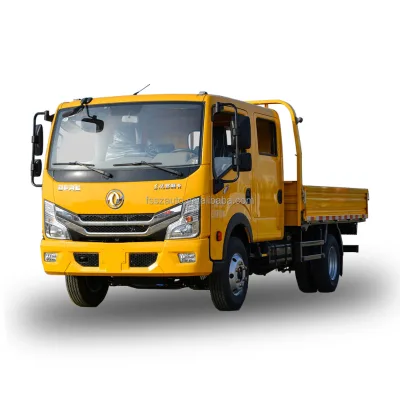


Cargo Truck Mini Van Cargo Truck Used Transport Delivery Lorry Electric
$25000.00 - $30000.00
MOQ: 1 Pieces

$20999.00 - $68000.00
MOQ: 1 Pieces

20t Container Transport Semi Trailer Flatbed Truck Trailer Container Flatbed Trailer Truck
$10800.00 - $22000.00
MOQ: 1 Pieces

8X4 Heavy Duty Delivery Truck 8X4 Cargo Truck Cargo Van Closed Lorry Truck
$22000.00 - $29000.00
MOQ: 1 Pieces


4X2 Flatbed Truck Manufacturer 180HP Flatbed Transport Truck for Sale
$22000.00 - $29800.00
MOQ: 1 Pieces


Flatbed Transport Truck for Sale, Construction Machinery Transport Truck
$22000.00 - $29800.00
MOQ: 1 Pieces

Container Flatbed Trailer 2axles 3axles Flatbed Trailer Truck for Sudan
$8000.00 - $14000.00
MOQ: 1 Pieces


Truck Semitrailer Durable Cargo Delivery Standard Configuration Options
$8000.00 - $14000.00
MOQ: 1 Unit
Comprehensive Sourcing Guide
Strategic Sourcing Guide for Flat Cargo Trucks
Understanding Technical Specifications and Configuration
When sourcing flat cargo trucks, buyers must first establish a clear understanding of the technical parameters that define vehicle capability and suitability for specific logistics operations. The market offers a diverse range of configurations, primarily distinguished by drive type, engine capacity, and load-bearing architecture. Observed data indicates that available models frequently feature drive types ranging from 4×2 to 8×4 configurations, allowing procurement teams to select units based on road conditions and payload requirements. For heavy-duty applications, 6×2 and 8×4 setups provide enhanced traction and stability, while 4×2 models are often optimized for urban or highway transport where agility is prioritized.
The powertrain is a critical determinant of performance. Suppliers typically offer engines with horsepower ratings spanning from under 150hp up to 250hp. Specific listings highlight diesel engines with capacities between 4 and 6 liters, paired with either automatic or manual transmission types. The choice between transmission systems often depends on the operator's preference for fuel efficiency versus ease of operation in stop-and-go environments. Furthermore, the engine brand is a variable that buyers should verify, as options may include Weichai, Yuchai, or Cummins, each offering distinct reliability profiles and maintenance ecosystems.
Structural integrity is equally vital. The flatbed material is consistently described as high-strength steel, ensuring durability under heavy loads. The curb weight of observed units can reach approximately 4320 kg, which directly impacts the net payload capacity. Load capacity figures in the market vary significantly, with some units rated for 1 to 10 tons, while specific models list a bearing capacity of 4 tons or a towing tonnage of 30 tons. Dimensions also play a role in logistics planning; standard specifications may include lengths around 6520 mm, widths near 2290 mm, and heights of 2540 mm. Buyers must cross-reference these dimensions with their cargo requirements and bridge weight limits.
Compliance, Certification, and Emission Standards
Navigating the regulatory landscape is a non-negotiable aspect of international procurement. Compliance ensures that the vehicle can be legally operated in the destination market and meets safety expectations. A primary area of verification is the emission standard. Available data points to Euro standards, specifically Euro compliance, which is a common requirement for markets in Europe and increasingly for developing nations seeking to reduce environmental impact. Buyers must confirm that the specific unit's engine certification aligns with local regulations, as non-compliant vehicles may face import bans or operational restrictions.
Certification marks provide a third-party validation of quality and safety. The market data references several key certifications, including ISO, ISO9001:2000, and ISOCCC. These standards indicate that the manufacturing process adheres to international quality management systems and specific safety protocols. Additionally, tire certifications such as GCC (Gulf Cooperation Council) and ISO are noted, which are essential for vehicles intended for export to specific regions. The absence of a specific certification on a listing does not imply non-compliance, but rather that the buyer must request proof of certification for the specific batch being purchased.
Safety features are also standardized in many configurations. The brake system is typically an air brake system, which is standard for heavy-duty trucks to ensure reliable stopping power. Anti-lock braking systems (ABS) are listed as optional, meaning buyers must explicitly request this feature if it is required for their operational safety standards. Steering configurations are available in both Left Hand Drive (LHD) and Right Hand Drive (RHD), necessitating a clear decision based on the traffic laws of the destination country. Cab types, ranging from single to double cab, also influence the number of personnel that can be transported, which is a compliance factor for labor regulations in certain jurisdictions.
Cost Drivers and Pricing Variables
The pricing structure for flat cargo trucks is highly variable, influenced by a complex matrix of specifications, customization, and market dynamics. Observed price ranges in the market span from $1 to $68,000, a vast disparity that reflects differences in brand, engine power, load capacity, and included features. A unit priced at the lower end of this spectrum likely represents a basic configuration with lower horsepower, manual transmission, and minimal customization. Conversely, higher-priced units typically feature advanced safety systems, higher load capacities, premium engine brands, and specialized configurations like 8×4 drive trains.
Customization is a significant cost driver. The availability of customization options allows buyers to tailor the truck to specific needs, such as adding specialized flatbed extensions, altering the cab type, or selecting specific engine brands. However, each customization adds to the base cost and may impact the lead time. The minimum order quantity (MOQ) also affects the unit price; observed MOQs range from 1 to 120 units. Buyers purchasing single units may face higher per-unit costs compared to those placing bulk orders, although the flexibility of low MOQs is valuable for small fleet expansions.
Packing and logistics costs are often separate from the vehicle price. The observed data mentions "Container Packing," "Naked Packaging," and "Container" as standard options. Container packing ensures protection during transit but adds to the overall shipping cost, whereas naked packaging may reduce freight expenses but requires careful handling. Buyers must factor in the total landed cost, which includes the vehicle price, shipping, insurance, and any duties or taxes applicable in the destination country. Understanding these variables is essential for accurate budgeting and avoiding unexpected financial burdens during the procurement process.
Typical Applications and Operational Scenarios
Flat cargo trucks are versatile assets designed for a wide array of logistical applications. Their primary function is the transport of heavy, non-containerized goods that require a flat, open surface for loading. The high-strength steel flatbed and anti-slip flooring make these vehicles ideal for moving construction materials, machinery, steel coils, and large equipment. The towing tonnage capability of up to 30 tons in some models suggests suitability for heavy haulage operations where trailers are not required or where the truck itself must carry the load.
The choice of drive type and load capacity dictates the specific application. For instance, a 4×2 configuration with a 1-10 ton capacity is well-suited for urban delivery, construction site logistics, and regional distribution where road networks are well-maintained. In contrast, 6×2 or 8×4 models with higher load capacities are better adapted for off-road construction sites, mining operations, or long-haul transport on varied terrain. The suspension system, typically a leaf spring suspension, provides the necessary durability for rough roads, making these trucks reliable for industrial and infrastructure projects.
The cab configuration also influences operational use. Single cab models are often preferred for operations where the driver is the sole occupant, maximizing cargo space. Double cab models are advantageous for teams that require on-board personnel, such as maintenance crews or security teams accompanying high-value cargo. The steering configuration (LHD or RHD) must align with the operational region to ensure legal compliance and driver comfort. Understanding these applications helps buyers select the right configuration to maximize return on investment and operational efficiency.
Supplier Evaluation and Quality Assurance
Evaluating suppliers requires a rigorous approach to ensure reliability and product quality. Buyers should prioritize suppliers who provide transparent documentation regarding their manufacturing standards and certifications. The presence of ISO9001:2000 and ISO certifications is a positive indicator of a supplier's commitment to quality management systems. However, buyers must verify that these certifications are current and applicable to the specific model being purchased.
Origin and location are critical factors in supplier evaluation. The observed data indicates that many suppliers are located in China, with specific mentions of Shandong and Hubei provinces. These regions are known for their automotive manufacturing capabilities, but buyers should still conduct due diligence on the specific factory's reputation and capacity. Supplier evaluation should include a review of their production history, their ability to meet lead times, and their track record for after-sales support.
Quality control measures should be integrated into the procurement process. Buyers must verify the condition of the vehicles, with "New" being the standard status for most listings. Inspection of the vehicle's physical attributes, such as the tire design (tubeless), wheel base (7000-8000mm), and material grade (Heavy Duty), is essential. Buyers should request detailed inspection reports or arrange for third-party inspections before finalizing the purchase. This ensures that the vehicle meets the specified technical requirements and is free from manufacturing defects.
Long-Term Procurement and Maintenance Considerations
Sourcing a Flat Cargo Truck is a long-term investment that extends beyond the initial purchase. Buyers must consider the availability of spare parts, the ease of maintenance, and the overall lifecycle cost of the vehicle. The engine brand, whether Weichai, Yuchai, or Cummins, plays a significant role in parts availability and maintenance costs. Established brands often have a wider network of service centers and a more reliable supply chain for spare parts, which reduces downtime and operational costs.
The transmission type, whether automatic or manual, also impacts long-term maintenance. Manual transmissions are generally simpler to repair and may have lower maintenance costs, while automatic transmissions offer convenience but may require specialized service. The brake system, typically an air brake system, requires regular inspection and maintenance to ensure safety. Buyers should inquire about the maintenance schedule and the availability of service manuals for the specific model.
Customization options can also affect long-term ownership. While customization allows for tailored solutions, it may complicate repairs if non-standard parts are used. Buyers should ensure that any customizations are compatible with standard maintenance procedures and that the supplier can provide support for these modifications. Finally, the warranty terms and after-sales support offered by the supplier are crucial for mitigating risks and ensuring the vehicle remains operational throughout its intended lifespan. By considering these factors, buyers can make informed decisions that support sustainable and efficient fleet operations.
FAQs
What customization options are available for flat cargo trucks?
Customization is available for these trucks to meet specific buyer needs. Buyers can select engine brands like Weichai or Cummins, choose between single or double cabs, and opt for automatic or manual transmissions based on operational requirements.
Which drive types are offered for flat cargo trucks?
Available drive types include 4×2, 6×2, and 8×4 configurations. These options allow buyers to select units optimized for urban transport or heavy-duty off-road applications depending on the specific load and road conditions.
Can I find flat cargo trucks with ISO certifications?
Yes, ISO certifications are available for these vehicles. Listings indicate compliance with ISO, ISO9001:2000, and ISOCCC standards, ensuring the manufacturing process adheres to international quality and safety protocols for export.
What is the load capacity range for these trucks?
Load capacities vary from 1 to 10 tons, with some specific models rated for 4 tons or towing up to 30 tons. Buyers must verify the exact bearing capacity against their cargo requirements before purchasing.
How are these trucks packed for shipping?
Packing options include container packing, naked packaging, or standard container methods. The choice affects logistics costs and protection during transit, with container packing ensuring better safety for the vehicle.
What emission standards do these trucks meet?
The trucks generally meet Euro emission standards. This compliance is essential for legal operation in various international markets and helps reduce environmental impact during the vehicle's lifecycle.
Which engine brands are available for these trucks?
Buyers can choose from Weichai, Yuchai, or Cummins engine brands. These options provide distinct reliability profiles and maintenance ecosystems, allowing selection based on local service availability and performance needs.