Source Flat Type Artificial Grass for Sport Landscaping Recreation
Compare 30 Flat Type Artificial Grass options from verified Chinese suppliers. Buyers can evaluate specifications like yarn height, density, and backing materials for sport, landscaping, and recreation applications.
Key considerations
Products List


Low Maintenance Artificial Grass - Custom Width 2m/4m Artificial Turf
$1.18 - $6.48
MOQ: 300 Square Meters


Flat Shape 40mm Garden Landscape Synthetic Grass Turf Artificial Grass
$2.50 - $10.00
MOQ: 500 Square Meters


Durable Artificial Grass for Sports Fields and Recreational Areas
$4.20 - $5.50
MOQ: 500 Square Meters


Grass Backyard Artificial Grass Plastic Grass Lawn Backyard Lawn Turf
$1.50 - $3.00
MOQ: 1 Square Feet




Comprehensive Sourcing Guide
Strategic Sourcing Guide for Flat Type Artificial Grass
Understanding Flat Type Artificial Grass Specifications
The core keyword "Flat Type Artificial Grass" refers to a specific category of synthetic turf where the cross-profile of the individual filaments is designed to lie flat rather than curl or stand upright in a rigid manner. This structural characteristic is distinct from other profiles such as "Olive Type," which may offer different aesthetic or performance traits. In the context of procurement, the flat profile is often selected for its ability to provide a uniform surface texture, which is critical for specific recreational and landscaping applications.
When evaluating products with a flat cross-profile, buyers must examine the yarn form closely. The supplied data indicates that flat type variations are available in "Straight Cut," "Curving," and "Curl" forms, though the flat profile specifically implies a straight cut or a specific treatment that maintains a planar surface. The height of these filaments is a primary determinant of the turf's feel and durability. Observed specifications list heights of 25mm and 30mm, which are standard ranges for this category. A 25mm height is often associated with lighter usage, while 30mm may be preferred for more robust landscaping or sport applications.
The density of the turf is another critical technical parameter. High-performance flat type grasses are observed to have a density of 16,800 tufts per square meter (tufs/sqm). This high tuft density ensures that the grass blades are closely packed, reducing the visibility of the backing material and providing a lush appearance. The yarn length is typically categorized as "Long" for these high-density variants, contributing to the natural look and feel. The material composition is predominantly Polypropylene (PP) and Polyethylene (PE), which offer a balance of durability, UV resistance, and cost-effectiveness. The color is frequently observed as "Multicolor" or "Emerald Green," designed to mimic natural grass variations and prevent the flat appearance from looking monotonous.
Compliance, Certification, and Quality Standards
For B2B procurement, verifying that the artificial grass meets international and regional safety and quality standards is non-negotiable. The supplied facts highlight a robust set of certifications that buyers should look for when sourcing Flat Type Artificial Grass. These include CE, SGS, and TUV certifications, which validate the product's compliance with European and international safety regulations. Furthermore, specific performance tests such as Anti-Fire, Anti-UV, and Chromium Test results are essential. The Anti-UV certification ensures the turf retains its color and structural integrity under prolonged sun exposure, a vital factor for outdoor installations in regions like Europe, Russia, Latin America, Africa, and Asia.
The grade of the material is another compliance indicator. Products are classified as "National Class" or "International Class." When sourcing for export markets, "International Class" is the preferred standard, as it implies adherence to stricter quality controls and material purity requirements. The backing system also plays a role in compliance; the data specifies a PP/SBR Latex backing, which provides stability and drainage capabilities. The bottom layer is often described as "Black/Green Secondary," which can be relevant for light reflection and aesthetic blending with the ground.
Buyers must also verify the product standards regarding dimensions. The standard roll sizes observed include 2m x 25m, 4m x 25m, 2m x 50m, and 4m x 50m. While these are common configurations, the "Length" is often customizable, allowing for large-scale projects to minimize seams. The ground cloth is described as "Grid" or "Complex," which refers to the backing structure designed to prevent stretching and ensure dimensional stability. It is crucial to request test reports for the Anti-Fire and Chromium levels, as these are often mandated for public sports facilities and commercial landscaping projects.
Cost Drivers and Pricing Dynamics
The pricing of Flat Type Artificial Grass is influenced by a complex interplay of material costs, manufacturing complexity, and order volume. The observed price range for these products in the market spans from $0.99 to $20 per unit, though this wide variance reflects differences in density, height, and certification levels. A product with a density of 16,800 tufs/sqm and a height of 30mm will naturally command a higher price point than a lower-density variant. The material composition is a primary cost driver; while PP and PE are standard, the ratio and quality of these polymers affect the final price.
Minimum Order Quantity (MOQ) is a significant factor in the total cost of procurement. The observed MOQ range is broad, extending from 1 to 2,000 units, with a specific data point indicating an MOQ of 500 square meters for certain high-grade products. For buyers with smaller project requirements, the ability to source lower MOQs is essential, though it may come with a higher unit cost. Conversely, large-scale projects can leverage the lower end of the price spectrum by meeting higher volume thresholds.
Additional cost drivers include the customization options available. The data confirms that customization is "Yes," and OEM/ODM services are available. Customizing the color, height, or backing type will incur additional costs compared to standard stock items. The origin of the product also influences pricing; products originating from specific regions in China, such as Shandong Binzhou or Jiangsu, may have different logistics and tariff implications depending on the buyer's location. The warranty period, observed as ranging from 3 years to 5-8 years, is another indicator of value. A longer warranty often correlates with higher initial costs but provides better long-term risk mitigation.
Typical Applications and Occasion Suitability
Flat Type Artificial Grass is versatile and suitable for a wide array of applications, primarily driven by its specific cross-profile and material properties. The observed occasions for this product category include Sport, Recreation, and Landscaping. The flat profile is particularly advantageous for landscaping where a uniform, manicured appearance is desired, such as in residential gardens, commercial plazas, and rooftop terraces. The "Multicolor" and "Emerald Green" options allow for aesthetic customization to match specific design themes.
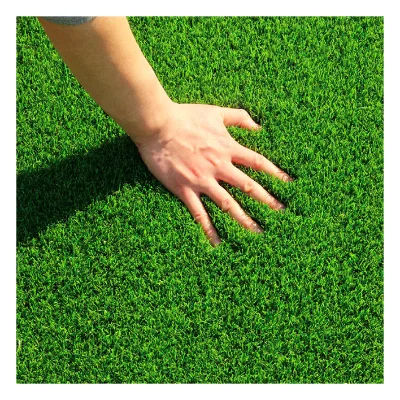
In the realm of sports, the flat type grass is utilized for recreational fields where high-impact athletic performance is not the sole priority, but rather a safe and consistent playing surface. The "Without Sand" type mentioned in the specifications suggests that some flat type variants are designed for low-maintenance environments or specific recreational uses where infill is not required. However, for more demanding sports applications, the density of 16,800 tufs/sqm provides the necessary cushioning and durability. The "Touch Feeling of Artificial Grass" is described as "Natural and Comfortable," which is a key selling point for areas where users will be in direct contact with the surface, such as children's play areas or pet zones.
The main market data indicates strong demand in Europe, Russia, Latin America, Africa, and Asia. This global distribution suggests that the product is adaptable to various climates. The Anti-UV certification is particularly relevant for applications in high-sunlight regions, ensuring the grass does not fade quickly. The "Main Grass" classification includes Landscape Grass, Sport Grass, and Artificial Grass, reinforcing its dual-purpose nature. Buyers should match the specific occasion to the product grade; for instance, a high-traffic sports field may require the "International Class" with a 5-8 year warranty, while a decorative landscaping project might suffice with a "National Class" product.
Supplier Evaluation and Sourcing Channels
When evaluating suppliers for Flat Type Artificial Grass, buyers should focus on the supplier's ability to meet the specific technical and logistical requirements outlined in the product data. The origin of the product is a key indicator of supply chain stability. The data points to specific manufacturing hubs in China, including Shandong Binzhou and Jiangsu. These regions are known for their established synthetic turf industries, offering a concentration of manufacturers with the necessary infrastructure for large-scale production.
Suppliers should be vetted based on their certification portfolio. A reputable supplier will readily provide documentation for CE, SGS, TUV, Anti-Fire, Anti-UV, and Chromium Test certifications. The presence of these certifications is not merely a formality but a guarantee of the product's safety and quality. Additionally, the availability of OEM/ODM services indicates a supplier's flexibility and willingness to tailor products to specific buyer needs. Buyers should verify the supplier's capacity to handle the observed MOQ ranges, from small orders of 1 unit to large industrial orders of 2,000 units.
The packing method is another evaluation criterion. The standard packing is described as "Roll Package" or "in Roll," which is efficient for shipping and storage. Buyers should confirm that the packaging is robust enough to prevent damage during transit, especially for long-distance shipments to Europe or Latin America. The warranty terms, ranging from 3 years to 5-8 years, should be clearly defined in the contract. A supplier offering a longer warranty demonstrates confidence in the product's longevity and durability. Finally, buyers should assess the supplier's responsiveness to customization requests, as the data confirms that length and other specifications are customizable.
Quality Control and Long-Term Procurement Considerations
Ensuring consistent quality in Flat Type Artificial Grass requires a rigorous quality control (QC) process that extends beyond the initial purchase. Buyers should implement a verification protocol that checks the physical attributes against the supplied specifications. This includes measuring the height (25mm or 30mm), verifying the density (16,800 tufs/sqm), and inspecting the cross-profile to ensure it matches the "Flat Type" description. The yarn form, whether "Straight Cut," "Curving," or "Curl," must be consistent across the roll to prevent visual defects.
Long-term procurement considerations involve the maintenance and lifecycle of the turf. The "Without Sand" type may require different maintenance routines compared to infill-based systems. Buyers should plan for the expected lifespan of the product, which is supported by the warranty periods of 3 to 8 years. The Anti-UV properties are critical for maintaining the "Multicolor" or "Emerald Green" appearance over time, especially in high-exposure environments. The backing material, PP/SBR Latex, should be checked for delamination or degradation, which can compromise the structural integrity of the turf.
For large-scale projects, the standard roll sizes of 2m or 4m width must be considered in the installation planning to minimize waste and seams. The "Grid" or "Complex" ground cloth should be inspected for proper adhesion to the backing. Buyers should also consider the environmental impact and recyclability of the PP and PE materials, as sustainability is becoming an increasingly important factor in B2B procurement. Finally, maintaining a relationship with a supplier who offers consistent quality and reliable after-sales support is essential for the long-term success of any artificial grass installation project.
FAQs
What certifications does Flat Type Artificial Grass typically have?
Products typically hold CE, SGS, TUV, Anti-Fire, Anti-UV, and Chromium Test certifications. These validate compliance with international safety standards and ensure durability against fire hazards and UV degradation for outdoor use.
How is the density of Flat Type Artificial Grass measured?
High-performance variants often feature a density of 16,800 tufts per square meter. This high tuft count ensures a lush appearance and reduces visibility of the backing material for a uniform surface texture.
Which material composition is standard for this artificial grass?
The material is predominantly Polypropylene (PP) and Polyethylene (PE). This combination offers a balance of durability, UV resistance, and cost-effectiveness suitable for both sports and landscaping applications.
Can the length of the artificial grass roll be customized?
Yes, the length is customizable to suit specific project requirements. Standard roll sizes include 2m x 25m or 4m x 25m, but manufacturers can adjust dimensions to minimize seams during installation.
What is the typical warranty period for Flat Type Artificial Grass?
Warranty periods range from 3 years to 5-8 years depending on the product grade. Longer warranties often correlate with higher initial costs but provide better long-term risk mitigation for the buyer.
Where are the main manufacturing origins for this product?
Products originate primarily from China, with specific hubs in Shandong Binzhou and Jiangsu. These regions offer established infrastructure for large-scale production and export to global markets.
What is the minimum order quantity for purchasing this grass?
The MOQ range extends from 1 to 2,000 units, with some high-grade products requiring 500 square meters. Smaller orders may incur higher unit costs compared to large-scale industrial purchases.
How does the cross-profile affect the surface feel?
Flat type grass features a cross-profile designed to lie flat rather than curl rigidly. This structural characteristic provides a uniform surface texture that feels natural and comfortable for direct contact.