Source Floor Standing Ultrasonic Humidifier with Remote Controller for Home, Office, and Industry
Find and compare 30 Floor Standing Ultrasonic Humidifier with Remote Controller options from verified manufacturers. Evaluate key specifications including mist output, tank capacity, and power consumption to select the ideal unit for residential, commercial, or industrial environments.
Key considerations
Products List

8L Remote Control Floor- Standing Ultrasonic Humidifier with Cool Warm Mist
$55.00 - $80.00
MOQ: 100 Pieces


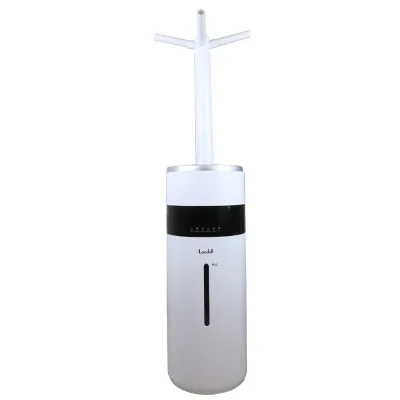


Ultrasonic Humidifier Air Purifier Aroma Diffuser Remote Control Aroma Diffuser
$120.00 - $125.00
MOQ: 100 Pieces


Comprehensive Sourcing Guide
Floor Standing Ultrasonic Humidifier with Remote Controller Sourcing Guide
Procuring a floor standing ultrasonic humidifier with a remote controller requires a precise understanding of the operational differences between cool mist and warm mist technologies, as the supply chain offers distinct configurations for each. The observed market data indicates that units with a rated power of 25W typically utilize cool mist technology, while models rated at 130W are designed for warm mist output, a critical distinction for buyers targeting specific climate control needs. Selecting the correct power rating ensures the device aligns with the intended environment, whether it is a residential living space requiring gentle humidity or an industrial setting demanding higher output capacity.
The integration of remote control functionality significantly enhances user convenience, allowing for adjustments to mist output and timing without physical interaction with the unit. While some models in the current supply pool feature mechanical controls alongside remote options, others rely exclusively on remote interfaces, necessitating a clear verification of the control type before finalizing the order. Buyers must confirm that the remote control is included in the standard packaging and compatible with the specific voltage requirements of the destination market, as the observed listings include units with EU plugs and 220-240V specifications.
Product Scope and Observed Listing Signals
The product scope for floor standing ultrasonic humidifiers spans a wide range of tank capacities, from compact 3-liter units to large 9-liter reservoirs, directly influencing the frequency of refilling required for continuous operation. The observed listings reveal a capacity range that supports both small home offices and larger industrial areas, with specific models offering capacities of 4L, 5L, and 8L to match varying room sizes. Procurement teams should align the tank capacity with the expected runtime requirements, noting that larger tanks generally support longer operation periods but may require more substantial floor space for the unit's footprint.
Mist output rates observed in the market vary between 280ml/H and 300ml/H, which serves as a primary indicator of the humidifier's efficiency in raising ambient humidity levels. The distinction between "Mist Output" and "Max Mist Output" in product specifications is vital, as the maximum rating often represents peak performance under ideal conditions rather than sustained average output. Buyers should evaluate these figures against the square footage of the target area to ensure the selected unit can maintain the desired humidity levels without overworking the ultrasonic transducer or depleting the water tank prematurely.
Technical Specifications to Verify
Verifying the timing function is a critical step, as the supply pool contains models with both automatic timing capabilities ranging from 1 to 12 hours and units without any timing function. The presence of a timing function allows for automated shut-off, which is essential for energy conservation and preventing over-humidification in unattended spaces. Procurement specifications must explicitly state whether the unit includes a timer and, if so, the specific range of hours available, as this feature directly impacts the operational safety and convenience of the device for end-users.
The physical dimensions and style of the humidifier must be cross-referenced with the intended installation location to ensure a proper fit. The observed product standards list dimensions ranging from approximately 160mm in width to 725mm in height, with styles predominantly categorized as floor-standing units. Buyers should confirm the exact width, depth, and height of the selected model to ensure it fits within the designated floor space and does not obstruct walkways or furniture, particularly since the larger capacity units often have a more substantial physical profile.
Compliance and Safety Documentation
Safety documentation must confirm the presence of water shortage power-off protection, a feature observed in the current product listings that prevents the device from operating when the water tank is empty. This protection mechanism is non-negotiable for floor-standing units, as it safeguards the ultrasonic transducer from damage and reduces the risk of electrical hazards associated with dry running. Procurement contracts should explicitly require this safety feature, ensuring that every unit delivered includes the necessary sensors and logic to automatically cut power when the water level drops below the safe threshold.
Certification verification is equally critical, with the observed market data indicating that compliant units typically carry CE and RoHS certifications, and some models also include ISO certification. These certifications validate that the product meets European safety standards and restricts the use of hazardous substances, which is a prerequisite for selling in many international markets. Buyers must request valid certification documents for each batch ordered, ensuring that the specific model number matches the certified version and that the certifications are current and recognized by the regulatory bodies in the destination country.
Cost Drivers and Commercial Terms
The cost of these humidifiers is heavily influenced by the power rating and the resulting technology, with warm mist models rated at 130W commanding a different price point than the 25W cool mist variants. The inclusion of advanced features such as remote control, automatic humidity control, and specific timing functions also contributes to the final unit cost, creating a tiered pricing structure based on functionality. Procurement teams should analyze the total cost of ownership, considering that higher-powered units may consume more electricity over time, which could offset initial savings on the purchase price.
Commercial terms regarding the Minimum Order Quantity (MOQ) and packaging standards must be clearly defined to manage inventory and logistics effectively. The observed MOQ range spans from 1 to 500 units, offering flexibility for small buyers while accommodating larger bulk orders, and the packaging typically consists of an inner gift box within an outer master carton box. Buyers should negotiate packaging specifications to ensure the outer cartons are robust enough to protect the units during transit, especially given the varying dimensions and fragility of the electronic components inside.
Supplier Qualification and Quality Control
Supplier qualification should focus on the manufacturer's ability to consistently produce units that meet the specified technical attributes, such as the 220-240V voltage requirement and the specific plug types like the EU standard. Since the observed products originate from China, buyers must verify the supplier's export experience and their ability to handle the specific regulatory requirements of the target market, including voltage compatibility and plug configuration. A qualified supplier will provide detailed product data sheets that match the observed specifications, ensuring there are no discrepancies between the ordered model and the delivered goods.
Quality control protocols must include testing for noise levels, as the observed data indicates a noise level of 25dB(a) for certain models, which is a key selling point for residential applications. Buyers should require pre-shipment inspections that verify the actual noise output and mist consistency, ensuring the units perform within the advertised parameters. Additionally, the quality control process should check the durability of the remote control and the responsiveness of the automatic humidity control sensors to prevent field failures and maintain customer satisfaction.
Long-Term Procurement Checks
Long-term procurement strategies should include regular audits of the supply chain to ensure that the product specifications, such as the 8L or 4L tank capacities, remain consistent across different production batches. Variations in component sourcing can lead to changes in performance, so buyers must maintain open communication with suppliers to monitor any potential shifts in the manufacturing process that could affect the mist output or power consumption. Establishing a baseline for performance metrics allows for the early detection of quality drift and ensures that the humidifiers continue to meet the original design intent.
Sustainability and after-sales support are also critical factors for long-term success, particularly regarding the availability of replacement parts and the durability of the ultrasonic transducers. Buyers should assess the supplier's warranty policies and their ability to provide technical support for troubleshooting issues related to the timing function or remote control connectivity. A robust after-sales framework ensures that any operational issues can be resolved quickly, minimizing downtime and protecting the reputation of the brand associated with the procurement.
FAQs
What is the mist output capacity of this humidifier?
The mist output capacity is 300ml/H for the larger model and 280ml/H for the smaller variants. This output supports effective humidification for both home and industrial usage scenarios. The device utilizes ultrasonic technology to discharge fine mist efficiently. Users can rely on this consistent output rate to maintain desired humidity levels in their environment without excessive water consumption.
Does the unit include a remote controller for operation?
Yes, several models in this series include a remote controller for convenient operation. This feature allows users to adjust settings from a distance without needing to interact directly with the device. The remote control functionality complements the mechanical or digital control types available. It enhances user experience by providing easy access to timing and humidity adjustments.
What certifications are required for these humidifiers?
The humidifiers typically hold CE and RoHS certifications, ensuring compliance with European safety and environmental standards. Some models may also feature ISO certification for quality management. These certifications verify that the products meet specific regulatory requirements for electrical safety and material restrictions. Buyers can trust these credentials when sourcing for markets with strict compliance mandates.
Can the humidifier be customized for specific needs?
Customization is available for this product line, allowing buyers to tailor features to their requirements. Options may include specific capacities, packaging, or design adjustments. This flexibility supports both home and industrial applications. Buyers should consult suppliers directly to discuss the extent of customization possible for their specific order volume and technical specifications.
What is the rated power consumption of the device?
The rated power varies by model, with options including 25W, 28W, and 130W for warm mist variants. The 25W and 28W models are suitable for cool mist operation. This power range ensures energy-efficient operation for continuous use. Buyers can select the appropriate power rating based on their specific humidification needs and electrical supply constraints.
Is there automatic humidity control in this humidifier?
Automatic humidity control is available in certain models, allowing the device to maintain a set humidity level. Other models offer manual control for user-directed operation. The automatic feature helps prevent over-humidification by adjusting mist output based on ambient conditions. This functionality is particularly useful for maintaining consistent comfort levels in residential or office environments.