Find Floor Standing Server Rack for surveillance, monitoring, and network systems
Source 30 verified options for the Floor Standing Server Rack designed for video surveillance, remote monitoring, and network integration. Buyers can compare specifications like capacity, door types, and certifications directly from suppliers in China.
Key considerations
Products List


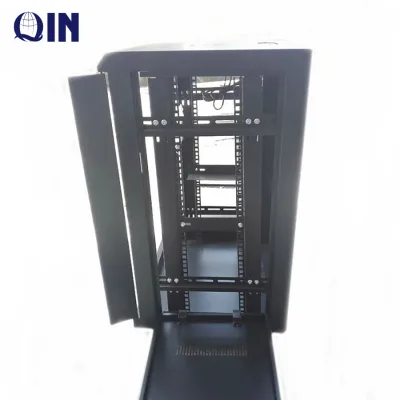
42u Floor Standing Server Rack with Adjustable Shelves for Data Center
$88.00 - $165.36
MOQ: 10 Pieces


42u Floor Standing Server Rack with Removable Side Panels for Easy Access
$88.00 - $165.36
MOQ: 10 Pieces

Comprehensive Sourcing Guide
Strategic Sourcing Guide for Floor Standing Server Racks
Navigating the global market for floor-standing server racks requires a disciplined approach that balances technical specifications with supply chain reliability. Buyers in the network integration, video surveillance, and remote monitoring sectors must carefully evaluate product attributes against their specific operational needs. The available data indicates a diverse range of options, from standard 19-inch units to customized solutions, originating primarily from manufacturing hubs in Zhejiang, China. This guide outlines the critical factors for procurement, ensuring that decisions are grounded in verifiable facts rather than unverified marketing claims.
Technical Specifications and Structural Integrity
The foundation of any effective server rack procurement strategy lies in a precise understanding of technical specifications. The market data reveals that floor-standing units are frequently categorized by their capacity, ranging from 20U to 40U. This variation in unit height directly impacts the volume of equipment that can be housed, necessitating a clear assessment of current and future hardware requirements. For instance, a 20U-30U capacity model may suffice for compact network integration systems, while larger wireless monitoring or closed-circuit systems might demand the 30U-40U range.
Structural dimensions and material thickness are equally critical. Observed specifications indicate sheet thicknesses ranging from 1.0mm to 2.0mm. Thicker gauge steel generally offers superior load-bearing capabilities and resistance to deformation under heavy server loads. The loading capacity for certain models is explicitly noted at 1500kg, a figure that serves as a benchmark for heavy-duty applications. However, buyers must verify that the specific model selected matches this capacity, as attributes can vary between product lines such as the TUL-RACK, STANDRACK, and LNA series.
The physical configuration of the cabinet also dictates its suitability for specific environments. While many units are designed for vertical installation, the data notes the existence of wall-mounted cabinets as well. For floor-standing applications, the distinction is vital. The standard size is consistently listed as 19 inches, which is the industry norm for mounting servers and networking gear. However, customization is available, allowing for non-standard dimensions to fit unique facility layouts. The surface finish process, involving degreasing, pickling, phosphating, and powder coating, is a standard procedure to ensure corrosion resistance and a durable aesthetic.
Compliance and Certification Verification
In the B2B procurement of industrial equipment, compliance with international standards is non-negotiable. The provided product data highlights several key certifications that buyers should prioritize during the supplier evaluation phase. The most frequently observed certifications include RoHS and CE, which indicate compliance with Restriction of Hazardous Substances directives and European conformity standards, respectively. Some listings also reference ISO certification, suggesting adherence to broader quality management systems.
When evaluating potential suppliers, buyers must request documentation to verify these claims. The presence of CE/ISO certificates on a product page is a strong indicator, but it should be cross-referenced with the actual product documentation. It is important to note that while some models list "Certificates: CE/ISO," others may only list "RoHS, CE." This inconsistency underscores the need for buyers to confirm the specific certification status of the exact model they intend to purchase.
Safety class ratings are another critical compliance metric. The data mentions a Safety Class of IP20 for certain units. This rating implies protection against solid objects larger than 12.5mm but offers no protection against water. For floor-standing racks installed in standard server rooms, IP20 is often sufficient. However, if the deployment environment involves potential moisture or dust exposure, buyers must verify if a higher IP rating is available or if additional environmental controls are necessary. Do not assume that all listed products meet the same safety standards; verification is required for each specific SKU.
Cost Drivers and Pricing Dynamics
Understanding the cost structure of floor-standing server racks is essential for budgeting and negotiation. The observed price range in the market spans from $14.8 to $1100 USD. This wide disparity is not indicative of a single product line but rather reflects the vast differences in capacity, material thickness, customization level, and packaging requirements. A unit priced at the lower end of the spectrum likely represents a basic, non-customized model with standard thickness and minimal accessories. Conversely, the higher price points correspond to heavy-duty units with thicker steel, advanced cooling systems, and complex customization features.
Several specific factors drive these costs. First, the customization options significantly impact the final price. The data confirms that customization is available, which can include custom sizes, colors (such as Black/White or White/Black), and specific door configurations. Second, the packaging method plays a role; options range from flat packing to assembled delivery. Assembled units generally command a higher price due to the labor and logistics involved in pre-assembly and the increased risk of transit damage. Third, the inclusion of active cooling components, such as fans, affects the cost. Listings indicate units with two or four fans, and the inclusion of these components adds to the manufacturing and material expenses.
Buyers should also consider the Minimum Order Quantity (MOQ) as a cost driver. The observed MOQ range is 1 to 100 units. Purchasing a single unit for a pilot project will incur a higher per-unit cost compared to a bulk order of 100 units, which may benefit from economies of scale. However, the flexibility to order single units allows for smaller procurement cycles, which can be advantageous for startups or specific departmental upgrades.
Typical Applications and Usage Scenarios
The versatility of floor-standing server racks is evident in the diverse range of applications supported by the available models. The data explicitly lists usage scenarios including Network Integration Systems, Video Surveillance Systems, Remote Monitoring Systems, Closed-Circuit Monitoring Systems, Electronic Monitoring Systems, and Wireless Monitoring Systems. This breadth of application suggests that these racks are designed to accommodate a wide array of electronic equipment, from standard servers to specialized surveillance recording devices.
For network integration systems, the stability and ventilation provided by floor-standing cabinets are paramount. The presence of double mesh iron doors on the back of certain models facilitates airflow, which is crucial for preventing overheating in high-density network environments. Similarly, for video surveillance and remote monitoring systems, the racks provide a secure, organized housing for recording servers and switching equipment. The single glass front door option allows for easy visual inspection of status indicators without opening the cabinet, a feature particularly useful in monitoring centers where constant visual checks are required.
The choice of rack should align with the specific operational demands of the application. For instance, a system requiring high security might benefit from the single mesh iron door front, while a system prioritizing aesthetics and visibility might prefer the single glass door. The capacity of the rack must also match the equipment density; a 30U-40U unit is better suited for large-scale wireless monitoring deployments, whereas a 20U-30U unit may be more appropriate for compact electronic monitoring setups.
Supplier Evaluation and Product Attributes
When selecting a supplier, buyers must scrutinize the product attributes to ensure they match the operational requirements. The data indicates that products are generally new and originate from Zhejiang, China. While the origin provides insight into the manufacturing region, it does not guarantee quality; therefore, supplier reputation and production capabilities must be assessed independently.
Key attributes to verify include the door configuration and shelf availability. The market offers options with single glass doors, single mesh iron doors, double mesh iron doors, and single back doors. Additionally, the shelf is listed as optional, meaning buyers must explicitly confirm if shelves are included in the quote. The installation type is primarily vertical, but wall-mounted options exist, so confirming the floor-standing nature is essential to avoid receiving the wrong product type.
Packaging is another critical evaluation point. The data lists "Carton," "Cartoon," and "Carton Packing" as packaging methods, with some units available in flat or assembled states. Buyers should clarify the exact packaging to ensure safe transport. Furthermore, the OEM (Original Equipment Manufacturer) acceptance is noted, indicating that suppliers are willing to customize branding or specifications. This is a valuable feature for companies seeking to integrate the racks into their existing infrastructure with specific branding.
Quality Control and Long-Term Procurement Considerations
Ensuring long-term reliability requires a robust quality control strategy. The surface finish process, which includes degreasing, pickling, phosphating, and powder coating, is a standard indicator of a quality manufacturing process. These steps prevent rust and ensure the longevity of the cabinet in various environmental conditions. However, buyers should request samples or detailed photos of the finish to verify the quality of the powder coating and the uniformity of the color, which is typically available in Black or White.
Long-term procurement considerations also involve the scalability of the solution. Since customization is available, buyers should plan for future expansions. A supplier that accepts OEM requests and offers customization can adapt to changing needs, such as increasing the capacity from 20U to 40U or adding specific cooling fans. The standard of the product is often listed as "OEM" or "customzation," suggesting a flexible manufacturing approach.
Finally, buyers must be vigilant about the discrepancy in product attributes. For example, while some models list a single glass front door, others list a single mesh iron door. This variation implies that different models serve different purposes. Procurement teams should maintain a clear specification sheet that details the exact requirements for each deployment site to avoid confusion. By focusing on verified facts such as capacity, thickness, and certification, buyers can mitigate risks and ensure that the floor-standing server racks they procure will perform reliably in their specific network and monitoring environments.
FAQs
What certifications do floor standing server racks typically have?
Most units carry RoHS and CE certifications to ensure safety and environmental compliance. Some models also include ISO certification for quality management. Buyers must verify the specific certificate for the exact model, as listings vary between RoHS only and full CE/ISO sets.
Which capacity ranges are available for floor standing server racks?
Available capacities generally range from 20U to 40U to suit different equipment densities. Smaller 20U to 30U units fit compact network systems, while 30U to 40U models support larger wireless monitoring deployments. Select the height based on your current hardware and future expansion needs.
Can I customize the size and door configuration of the rack?
Yes, customization is available for size, color, and door types like glass or mesh iron. Buyers can specify single glass doors for visibility or double mesh doors for ventilation. Customization options allow the rack to fit unique facility layouts and specific security requirements.
What is the loading capacity for heavy-duty floor standing server racks?
Certain models support a loading capacity of up to 1500kg for heavy server loads. This capacity depends on the sheet thickness, which ranges from 1.0mm to 2.0mm. Verify the specific model's rating before purchasing to ensure it meets your equipment weight requirements.
How are these server racks packaged for shipping?
Racks are shipped in cartons and can be delivered either flat-packed or fully assembled. Flat packing reduces shipping volume, while assembled units save on installation time but cost more. Buyers should confirm the packaging state to ensure safe transport and easy setup.
What is the typical price range for floor standing server racks?
The observed price range spans from 14.8 to 1100 USD depending on specifications. Lower prices usually reflect basic models with standard thickness, while higher costs cover customization and thicker steel. Pricing varies significantly based on capacity, fan inclusion, and packaging requirements.
Where are these server racks manufactured and what is the origin?
These units are primarily manufactured in Zhejiang, China, with some listings simply stating China as the origin. The manufacturing hub in Zhejiang is known for producing industrial racks. Buyers should confirm the specific origin on the product page for accurate logistics planning.