Source Foldable Portable Air Camping Bed for Beach, Park, Garden
Find and compare 30 Foldable Portable Air Camping Bed options from verified Chinese manufacturers. Buyers can evaluate specs like load capacity, dimensions, and material types for uses including beach, park, and garden settings.
Key considerations
Products List


Outdoor Portable Camping Bed Ultralight Foldable Adjustable Folding Camping Beds
$22.00 - $26.00
MOQ: 100 Pieces
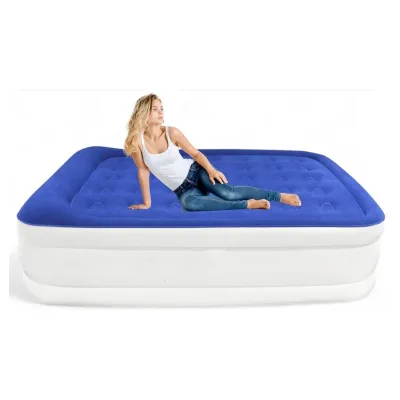
Portable Folding Camping Air Bed Comfortable Bed Air for Outdoor Adventures
$18.48 - $40.50
MOQ: 500 Minimum


Outdoor Aluminum Easy Removable Portable Folding Bracket Bed Camping Bed
$35.21 - $39.80
MOQ: 100 Pieces


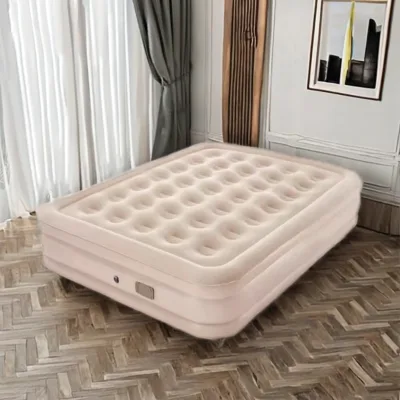
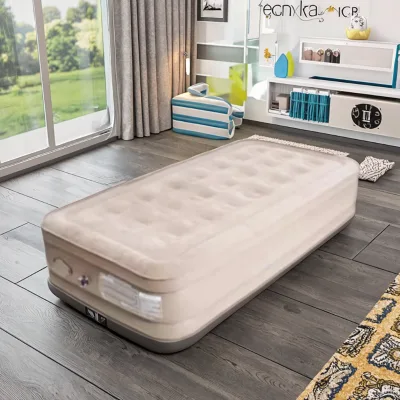
Inflatable Outdoor Camping Bed Portable Air Couch Custom Fit Camping Bed
$7.20 - $7.40
MOQ: 135 Pieces




Comprehensive Sourcing Guide
Strategic Sourcing Guide for Foldable Portable Air Camping Beds
Understanding Product Variants and Core Specifications
The market for foldable portable air camping beds presents a diverse landscape where terminology often overlaps between medical-grade transport beds, recreational camping cots, and inflatable air mattresses. A buyer researching the core keyword "Foldable Portable Air Camping Bed" must first distinguish between these categories, as the technical specifications and intended use cases vary significantly. The observed product data reveals three distinct clusters: single-foldable beds designed for medical or limited-space applications, rugged camping cots with fabric and iron frames, and inflatable air mattresses with built-in pumps.
The first cluster, often identified by models such as YZ02, features a folded size of 1004x800x184mm and an open size of 2020x800x420mm. These units are characterized by a static load capacity of 300kg and a dynamic load of 180kg, constructed with iron frames and fabric surfaces. They are typically packed in travel cases or cartons and are marketed for household, nursing home, and hospital use where space is limited. In contrast, the second cluster, represented by models like YZ11 and VDCBD6008, focuses on outdoor utility. These units boast a folding size of 550x335x370mm and an unfolded size of 190x63x43cm. They utilize nylon fabric and iron frames, with applications extending to beaches, parks, gardens, and patios. The third cluster comprises air mattresses, such as the LiQi brand models, which feature PVC flocking materials and air inflatable mattress types. These units come in various dimensions, including 190x100x25cm and 200x180x40cm, and are designed for both outdoor and living room applications.
Buyers must verify the specific model number and dimensions before proceeding, as a product labeled as a "camping bed" may technically be a medical transport bed or a simple air mattress depending on the manufacturer's classification. The presence of optional features such as side rails, IV poles, or built-in pumps further complicates the specification matrix. A comprehensive sourcing strategy requires mapping the intended application—whether it is for a nursing facility, a beach excursion, or a home living room—to the correct product architecture. The observed data indicates that while some units are designed for "Outdoor Entertainment," others are strictly for "Household" or "Nursing Home" use, and mixing these categories can lead to procurement errors regarding durability and safety.
Technical Specifications and Material Integrity
When evaluating the technical specifications of foldable portable air camping beds, the material composition is the primary determinant of longevity and performance. The supplied facts highlight a clear divergence in frame materials, with iron being the standard for structural support in both the medical-style and camping cot variants. The fabric materials also vary, with options ranging from general fabric to specific nylon and PVC flocking. For buyers seeking durability in rugged outdoor environments, the nylon fabric combined with an iron frame, as seen in the YZ11 and VDCBD6008 models, offers a robust solution. Conversely, the PVC flocking material found in air mattress models like the LQ1 is optimized for comfort and portability but may require different care regarding puncture resistance and inflation integrity.
Load capacity is another critical technical parameter that must be scrutinized. The data indicates a static load of 300kg and a dynamic load of 180kg for specific single-foldable models. These figures suggest a high-strength construction capable of supporting significant weight, which is essential for medical or heavy-duty residential applications. However, for inflatable air mattresses, the load-bearing capacity is often dependent on the air pressure and the structural design of the internal beams or baffles, which are not explicitly detailed in the provided facts. Buyers should request specific load test results for inflatable models to ensure they meet the intended usage requirements.
The folding mechanism and dimensions are equally vital for logistics and storage. The observed folding sizes range from compact 550x335x370mm units to larger 1004x800x184mm configurations. The "Open Size" standard of 2020x800x420mm for certain models indicates a full-size sleeping surface, while the 190x63x43cm standard for others suggests a more compact, travel-oriented design. Buyers must verify that the folded dimensions align with their storage constraints and transportation logistics. Additionally, the weight of the unit, noted as 30kg for some models, impacts portability. For applications requiring frequent movement, such as beach or mountain usage, a lighter unit with a similar load capacity would be preferable, necessitating a comparison of the weight-to-strength ratio across different suppliers.
Compliance, Certification, and Safety Standards
In the procurement of foldable portable air camping beds, compliance with safety standards and certifications is a non-negotiable aspect of the sourcing process. While the supplied product facts do not list specific certification bodies or standard numbers beyond general size and material descriptions, buyers must assume that no product is compliant until verified. The intended application heavily influences the required compliance framework. For instance, beds designated for "Nursing Home" or "Hospital" use, such as the YZ02 model, are likely subject to stricter medical device regulations or healthcare facility safety standards than those intended for "Beach" or "Park" usage.
Buyers should verify that the iron frame materials meet relevant structural integrity standards to prevent collapse under dynamic loads. For inflatable products, the PVC and Nylon materials must be free from harmful substances, particularly if the product is intended for children or prolonged skin contact. The presence of a "Mattress type: Air Inflatable" suggests that the product may fall under general consumer product safety regulations regarding flammability and chemical content. It is imperative to request test reports from the supplier that confirm the product meets the safety standards of the destination market, such as EN standards in Europe or ASTM standards in the United States.
Furthermore, the "Condition: New" and "Customized" attributes imply that the products are manufactured to specific orders. This customization process must adhere to the same quality and safety protocols as mass-produced items. Buyers should ensure that any customizations, such as specific colors like "Green" or "Blue," or added features like "IV Pole" or "Siderail," do not compromise the structural integrity or safety of the base unit. The origin of the product, noted as "China" or specifically "Shanghai" and "Guangdong," should be cross-referenced with the supplier's track record in exporting to the buyer's region to ensure familiarity with local compliance requirements.
Cost Drivers and Pricing Dynamics
The pricing of foldable portable air camping beds is influenced by a complex interplay of material costs, manufacturing complexity, and order volume. The observed price range of 6.27 to 190 USD reflects the vast difference between a simple inflatable air mattress and a heavy-duty, foldable medical-style bed with an iron frame. The lower end of the price spectrum likely corresponds to the PVC air mattresses with built-in pumps, which are mass-produced and utilize cost-effective materials. The higher end of the range is associated with the single-foldable beds featuring iron frames, high load capacities, and specialized packaging like travel cases.
Order volume is a significant cost driver, as evidenced by the observed MOQ range of 1 to 1000 units. Suppliers offering an MOQ of 500 pieces, as seen in the data for certain camping bed models, may offer lower per-unit costs due to economies of scale. Conversely, suppliers allowing an MOQ of 1 unit cater to buyers seeking samples or small-batch procurement, but at a premium price point. The customization options, such as specific colors, styles (e.g., "Simple" or "European"), and added features, also contribute to cost variations. Customized orders typically require separate production runs, which can increase the unit price and lead time.
Packaging is another factor affecting the final cost. The data mentions "Packed in Travel Case" and "Carton" as packaging options. Travel cases, while offering superior protection and portability, are more expensive to manufacture and ship than standard cartons. Buyers must weigh the value of the packaging against the intended use; a product destined for a permanent nursing home installation may not require a travel case, whereas a product for beach or mountain use would benefit significantly from robust, portable packaging. Additionally, the weight of the product, such as the 30kg noted for certain models, impacts shipping costs, which can be a substantial portion of the total landed cost for international buyers.
Typical Applications and Usage Scenarios
The versatility of foldable portable air camping beds allows them to serve a wide array of applications, from medical facilities to recreational outdoor activities. The supplied facts highlight distinct usage scenarios that dictate the choice of product. The "Household, Nursing Home, Limited Space in Hospital" application points to the need for reliable, space-saving solutions that can support patients or visitors in constrained environments. These units, with their high static and dynamic load capacities, are designed for frequent use and easy cleaning, making them suitable for healthcare settings.
In the recreational sector, the "Beach, Mountain, Park" and "Camping, Garden, Patio, Cottage, Courtyard" applications demand products that are lightweight, durable, and resistant to the elements. The iron frame and nylon fabric construction of models like YZ11 and VDCBD6008 makes them ideal for these environments, providing a stable sleeping surface that is elevated off the ground. The "Outdoor Entertainment" and "Camping Activity" functions further emphasize the need for portability and ease of setup, which are key selling points for these units.
For home use, the "Living Room" application suggests a dual-purpose product that can serve as a guest bed or a temporary sleeping solution. The "Air mattress with built-in pump" models are particularly suited for this scenario, offering comfort and convenience without the bulk of a traditional bed. The "Modern" and "European" design styles indicate that these products are also marketed as furniture pieces that blend with interior decor, rather than purely utilitarian items. Buyers should align their procurement with the specific environment where the bed will be used, ensuring that the product's features match the demands of that setting.
Supplier Evaluation and Quality Control Protocols
Evaluating suppliers for foldable portable air camping beds requires a rigorous assessment of their manufacturing capabilities, quality control systems, and track record. The observed data indicates that products originate from specific regions in China, such as Shanghai and Guangdong, which are known manufacturing hubs. Buyers should verify the supplier's location and capacity to ensure they can meet demand and maintain consistent quality. The "Customization: Available" attribute suggests that suppliers are capable of tailoring products to specific requirements, but this capability must be backed by a robust quality management system.
Quality control should be a central component of the sourcing strategy. Buyers must request detailed quality control reports that cover material inspection, assembly checks, and final product testing. For iron frame products, this includes verifying the weld quality and load-bearing tests. For inflatable products, it involves checking for leaks and the integrity of the built-in pumps. The "Condition: New" attribute implies that the products are manufactured to a high standard, but buyers should not rely solely on this claim. Instead, they should implement a pre-shipment inspection process to ensure that the products meet the agreed-upon specifications.
The "MOQ: 500 Pcs" requirement for some models indicates that suppliers may have minimum production runs, which can affect flexibility. Buyers should negotiate terms that allow for smaller initial orders or sample batches to test the product before committing to larger volumes. Additionally, the "Mail packing: Y" note suggests that the supplier has specific packaging protocols, which should be reviewed to ensure they meet the buyer's shipping and storage requirements. A supplier with a proven track record in exporting to the buyer's region and a transparent communication channel is essential for a successful procurement relationship.
Long-Term Procurement and Lifecycle Management
Long-term procurement of foldable portable air camping beds involves considerations beyond the initial purchase, including maintenance, replacement cycles, and supply chain stability. The "Eco-Environmentl" feature noted in the product data suggests that some manufacturers are focusing on sustainable materials and processes, which can be a strategic advantage for buyers with environmental goals. However, the longevity of the product depends on the quality of materials and the frequency of use. Iron frame beds with high load capacities are likely to have a longer lifespan than inflatable air mattresses, which may require periodic replacement due to wear and tear.
Buyers should establish a maintenance schedule for their fleet of beds, including regular inspections for frame rust, fabric tears, and air leaks. For inflatable models, the "Built-in pump" feature simplifies maintenance, but the pump itself may require replacement over time. The "Packed in Travel Case" or "Carton" packaging should be preserved to facilitate easy transport and storage, extending the product's useful life. Additionally, buyers should monitor the market for new models and technologies that may offer improved performance or cost efficiency.
Supply chain stability is another critical factor. The "Place of Origin: Guangdong, China" and "Shanghai" locations indicate that the supply chain is concentrated in specific regions. Buyers should assess the risk of supply disruptions due to geopolitical factors, natural disasters, or logistical issues. Establishing relationships with multiple suppliers or maintaining a safety stock can mitigate these risks. Finally, the "Customized" nature of the products means that buyers should plan for potential changes in design or specifications over time, ensuring that the supplier can adapt to evolving needs without significant delays or cost increases.
FAQs
What are the load capacities for these beds?
Specific single-foldable models support a static load of 300kg and a dynamic load of 180kg. These capacities apply to units with iron frames and fabric surfaces designed for household or nursing home use.
Can I customize the color and style of the bed?
Customization is available for color and style options such as green, blue, simple, or European designs. Buyers can request specific modifications while ensuring the product remains in new condition.
How does the folding size affect portability?
Folding sizes vary significantly, ranging from compact 550x335x370mm units to larger 1004x800x184mm configurations. Smaller folded dimensions enhance portability for beach or mountain applications compared to hospital-grade models.
Which materials are used for the frame and surface?
Frames are constructed from iron for structural integrity, while surfaces use fabric, nylon, or PVC flocking. The specific material depends on the model, with nylon and iron used for outdoor cots and PVC for air mattresses.
What is the minimum order quantity for these products?
The minimum order quantity ranges from 1 to 1000 units depending on the supplier and product type. Some camping bed models require a minimum of 500 pieces, while others allow single unit purchases.
Where are these beds manufactured and shipped from?
Products originate from China, with specific manufacturing locations in Shanghai and Guangdong. Buyers should verify the place of origin to ensure compliance with local import regulations and shipping logistics.
What optional features are available for medical models?
Optional features include mattresses, siderails, and IV poles for models intended for nursing homes or hospitals. These additions enhance functionality for limited space applications while maintaining the single-foldable design.