Source Foldable Stretch Fabric Display Table for Stores, Shows, and Markets
Explore 30 options for the Foldable Stretch Fabric Display Table suitable for supermarkets, exhibition shows, and specialty stores. Buyers can compare customized sizes, materials like steel frames, and packing methods to find the right solution for indoor retail environments.
Key considerations
Products List




8FT 10FT 20FT Straight Exhibition Booth Stretch Tension Fabric Display Backdrop
$50.00 - $350.00
MOQ: 1 Pieces


Rectangle Pop up Counter Foldable Trade Show Counter Desk Pop up Booth Table Counter
$50.00 - $350.00
MOQ: 1 Pieces

8FT 10FT 20FT Curved Exhibition Backdrop Stretch Tension Fabric Display for Advertising
$50.00 - $350.00
MOQ: 1 Pieces


Tradeshow Backdrop Display Stretch Fabric Pop Up Stand With Printing Banner
$50.00 - $110.00
MOQ: 1 Pieces


Comprehensive Sourcing Guide
Strategic Sourcing Guide for Foldable Stretch Fabric Display Tables
Understanding the Product Category and Core Specifications
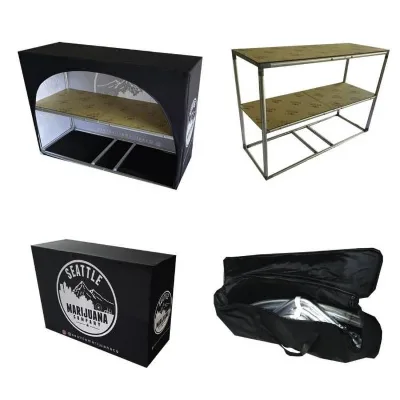
The Foldable Stretch Fabric Display Table represents a specialized segment within the broader exhibition and retail display hardware market. These units are engineered to provide a temporary yet professional presentation surface that combines structural stability with the portability required for dynamic trade environments. Based on observed market data, the construction of these tables typically involves a hybrid material approach, utilizing a steel frame for the primary structural integrity while incorporating plastic components for joints, connectors, and surface treatments. The steel frame is often treated through processes such as chroming, powder coating, or galvanization to ensure resistance against corrosion and wear during frequent assembly and disassembly cycles.
The defining characteristic of this product category is its foldable nature. The units are designed to be collapsed into a compact form for transport, often utilizing a knock-down package structure or being wrapped in bubble film and placed within sturdy cartons. Some variations are specifically packed in Oxford bags to enhance portability, making them ideal for logistics that require frequent movement between venues. The physical dimensions of these tables are highly customizable, with standard observed configurations ranging from approximately 60cm to 90cm in width and depths varying between 40cm and 45cm. Height specifications generally align with standard counter heights, often around 96.5cm, though custom sizes are frequently requested to meet specific ergonomic or branding requirements.
The surface of the table is designed to support stretch fabric, which is a key feature for branding. The fabric itself is often treated to be waterproof, ensuring durability against spills or outdoor conditions if the display is used in semi-exposed environments. The structural design often includes adjustable plugs or one-piece styles to facilitate rapid setup. The front, side, and top sizes are critical for the fit of the fabric; for instance, specific models may feature a front size of 68.5cm by 78.5cm, a side size of 33cm by 78.5cm, and a top size of 20cm by 70cm, though these dimensions vary by manufacturer. The poles supporting the fabric structure are typically constructed from fiberglass or aluminum, balancing weight with tensile strength.
Technical Compliance and Certification Verification
When sourcing foldable stretch fabric display tables, verifying compliance with international standards is essential for ensuring product safety and market acceptance. The supply chain for these items, particularly those originating from major manufacturing hubs in China, often references specific certification frameworks. Buyers should explicitly verify if the products carry CE, ROHS, and TUV certifications, as these are frequently cited standards for display hardware. The CE mark indicates conformity with health, safety, and environmental protection standards for products sold within the European Economic Area, while ROHS compliance ensures the absence of specific hazardous materials. TUV certification provides an additional layer of third-party verification regarding product safety and quality.
It is crucial to note that while some suppliers list these certifications, the status must be validated for each specific order. The standard for the product itself may also be defined by its physical dimensions rather than a regulatory code; for example, a "standard" might be listed as 60cm40cm96.5cm or 80cm40cm96.5cm. Buyers must distinguish between regulatory certifications and dimensional specifications. Furthermore, the material composition, specifically the steel frame and plastic components, should be checked against local safety regulations in the destination market. If the display is intended for use in food service areas within supermarkets or specialty stores, additional food-grade certifications for the materials in contact with the environment may be necessary, though this is not universally listed in standard product attributes.
Cost Drivers and Pricing Dynamics
The pricing structure for foldable stretch fabric display tables is influenced by a complex interplay of customization, material quality, and order volume. The observed market price range is extensive, spanning from approximately $7.40 to $4,900 USD. This wide variance is primarily driven by the level of customization required. A standard, off-the-shelf unit with a fixed size and basic color will sit at the lower end of the spectrum. Conversely, a fully customized unit featuring specific dimensions, unique color matching, custom logos, and specialized surface treatments like chrome plating or powder coating will command a significantly higher price.
Material costs are another primary driver. The use of high-grade aluminum or fiberglass poles, compared to standard steel or plastic alternatives, will increase the unit cost. The surface treatment processes also add to the expense; galvanization and powder coating are more labor-intensive and costly than basic finishing. Additionally, the packaging method affects the final price. Units requiring specialized packing, such as individual bubble film wrapping within reinforced cartons or custom Oxford bags, incur higher packaging and logistics costs.
The Minimum Order Quantity (MOQ) plays a critical role in the unit price. The observed MOQ range spans from 1 unit to 500 units. Buyers purchasing small quantities, such as single units or low-volume orders, will face a higher per-unit cost due to the fixed setup costs for customization and production runs. As the order volume increases towards the 500-unit threshold, economies of scale typically reduce the per-unit price. Buyers must balance their immediate budget constraints with the long-term value of bulk purchasing, especially if the display is intended for a multi-location rollout or a long-term marketing campaign.
Typical Applications and Usage Scenarios
Foldable stretch fabric display tables are versatile tools designed for a wide array of commercial and promotional applications. The primary usage scenarios identified include supermarkets, specialty stores, and exhibition shows. In a supermarket setting, these tables serve as promotion counters, providing a branded surface to highlight specific products or seasonal offers. The portable nature of the units allows retailers to reconfigure their store layout frequently to maximize customer engagement. The "Indoor" display classification suggests that while they are robust, they are primarily optimized for controlled environments, though the waterproof feature of the fabric extends their utility to semi-outdoor or high-traffic areas where spills are common.
In the context of exhibition shows, these tables function as high-impact branding stations. The ability to customize the color and logo allows companies to create a cohesive visual identity that stands out in a crowded trade show floor. The foldable design is particularly advantageous here, as exhibitors often need to transport their equipment between venues or store it in limited warehouse space. The "Knock Down Package" and "Carton" or "Oxford Bag" packing options facilitate this mobility. The "Desktop" style and "Adjustable Plug in/One Pieces Style" features make them suitable for various display heights and configurations, catering to both standing and seated interactions with customers.
The product is also suitable for "Speciality Stores," where the unique design can be tailored to match the store's aesthetic. The "Customized" size and color attributes allow for a perfect fit within specific retail environments. Whether used for a temporary promotion or a permanent fixture, the "New" condition of the product ensures a professional appearance. The "Not Antitheft" attribute indicates that these units are not designed with integrated security mechanisms, so buyers must consider additional security measures if the displays are to be left unattended in public spaces.
Supplier Evaluation and Origin Considerations
When evaluating suppliers for foldable stretch fabric display tables, buyers should prioritize transparency regarding the product origin and manufacturing capabilities. The majority of the observed products originate from Jiangsu and Shanghai, China, which are established manufacturing hubs for display hardware. The brand "Highbright" is noted in the market data, serving as an example of a recognized manufacturer in this space, though buyers should not limit their search to a single name. Instead, the focus should be on the supplier's ability to meet the specific customization requirements.
Key evaluation criteria include the supplier's adherence to the listed standards (CE, ROHS, TUV) and their capacity for customization. Buyers must verify if the supplier can produce the specific "Customized" sizes and colors required for their project. The "Custom" logo capability is a standard feature, but the quality of the printing and the durability of the logo on the fabric should be assessed. The "Surface Treatment" options, such as chroming or powder coating, should be inspected for quality control to ensure the finish is consistent and durable.
Logistics and lead times are also critical factors. While specific lead times are not universally listed in the product data, the "Knock Down Package" and "Carton" packing suggest that the supplier must have efficient logistics partners to handle the shipping of bulky items. Buyers should inquire about the supplier's experience with international shipping and their ability to provide accurate lead time estimates based on the order volume and customization level. The "MOQ" range of 1 to 500 indicates that suppliers cater to both small and large buyers, but the lead time for a 500-unit custom order will naturally be longer than for a single unit.
Quality Control and Long-Term Procurement Strategy
Implementing a robust quality control (QC) strategy is essential for ensuring the longevity and performance of foldable stretch fabric display tables. Given the "Folded" nature of the product, the structural integrity of the joints and the tension of the fabric are critical failure points. Buyers should request samples to test the durability of the "Steel Frame" and the "Fiberglass/Aluminum" poles under repeated folding and unfolding cycles. The "Surface Treatment" should be checked for resistance to chipping, peeling, or corrosion, especially if the display will be used in humid environments or transported frequently.
For long-term procurement, buyers should establish a clear specification sheet that details the required dimensions, materials, and surface treatments. This document should reference the specific "prod_model" numbers, such as HBE-DS or Vevum, to ensure consistency across orders. The "prod_packing" method should be standardized to prevent damage during transit; for example, ensuring that the "Bubble Film" and "Carton" packaging are sufficient to protect the delicate fabric and frame components.
Buyers should also consider the "Condition" of the product upon delivery. The expectation is always "New," but the packaging must be inspected to ensure no damage has occurred during shipping. For large orders, conducting a pre-shipment inspection is highly recommended to verify that the "Customized" colors and logos match the approved samples. Additionally, buyers should plan for the replacement of consumable parts, such as the stretch fabric, which may degrade over time due to frequent use. Establishing a relationship with a supplier who can provide replacement parts or fabric rolls is a strategic move for maintaining a consistent brand presence over the long term.
Final Procurement Considerations and Risk Mitigation
The final stage of the procurement process involves mitigating risks associated with customization and logistics. The "Custom" nature of the product means that once an order is placed, changes are difficult and costly. Therefore, buyers must finalize all design specifications, including the "Front Size," "Side Size," and "Top Size," before production begins. The "Standard" dimensions listed, such as 7090cm or 85200, should be used as a reference, but the final order must explicitly state the exact requirements to avoid discrepancies.
Risk mitigation also extends to the supplier's reliability. Buyers should verify the supplier's ability to meet the "MOQ" requirements and their capacity to handle the "Lead Time" for custom orders. The "Portability" of the product is a key selling point, but it must be balanced with the durability of the "Oxford Bag" or "Carton" packaging. If the display is intended for international use, buyers must ensure that the product complies with the import regulations of the destination country, particularly regarding the materials used in the "Steel Frame" and "Plastic" components.
In conclusion, sourcing foldable stretch fabric display tables requires a meticulous approach to specification, quality control, and supplier evaluation. By focusing on the technical attributes, compliance standards, and customization capabilities outlined in this guide, buyers can secure high-quality display solutions that meet their specific branding and operational needs. The wide range of observed prices and MOQs offers flexibility, but success depends on clear communication and rigorous verification of all product attributes.
FAQs
Can I get a custom logo printed on the display table?
Yes, a custom logo is available for this product. The supplier offers customization options for the logo, allowing you to brand the table with your specific company identity or marketing message.
What certifications do these display tables typically hold?
Many units carry CE, ROHS, and TUV certifications. These standards ensure the product meets international safety and environmental requirements, though you must verify the specific status for each order.
How are these tables packed for shipping?
They are shipped in knock-down packages, often wrapped in bubble film and placed in cartons. Some variations use Oxford bags for enhanced portability, ensuring the structure remains protected during transit.
Which material is used for the frame of these tables?
The frame is constructed from steel, often treated with chrome, powder coating, or galvanization. This combination provides structural integrity while resisting corrosion during frequent assembly and disassembly cycles.
What is the minimum order quantity for these tables?
The minimum order quantity ranges from one unit to 500 units depending on the supplier. Smaller orders may have a higher per-unit cost, while bulk purchases benefit from economies of scale.
Where are these display tables manufactured?
The products originate from manufacturing hubs in Jiangsu and Shanghai, China. These locations are established centers for producing display hardware with the required customization and quality standards.
Can the size of the table be customized?
Yes, the size is fully customizable to meet specific project needs. Standard dimensions vary, but buyers can request specific measurements for the front, side, and top sizes to fit their display requirements.