Find Foldable Steel Tube School Bench with Armrest for Offices, Schools, Training Centers
Source 30 verified options for a Foldable Steel Tube School Bench with Armrest designed for commercial and educational environments. Compare models featuring modern styles, various dimensions, and customization options from manufacturers in China.
Key considerations
Products List


College Kids School Vintage School Folding Study Teacher School Classroom Bench
$10.00 - $200.00
MOQ: 100 Pieces


Vintage School College Kids School Student Study Teacher Classroom School Bench
$10.00 - $200.00
MOQ: 100 Pieces


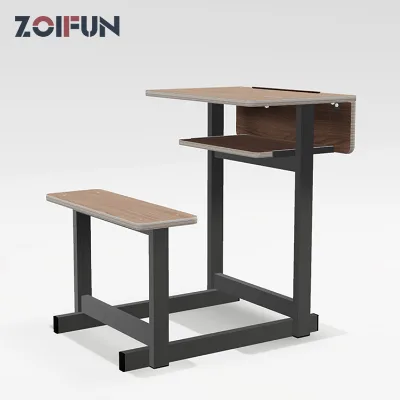
Furniture Classroom Student Table and Chair Double Seats School Bench for Student
$19.80 - $23.50
MOQ: 500 Pieces


Comprehensive Sourcing Guide
Strategic Sourcing Guide for Foldable Steel Tube School Benches with Armrests
The global market for educational furniture has seen a sustained shift toward modular, space-efficient solutions that prioritize durability and student safety. Among the most critical components of modern classroom infrastructure are foldable steel tube school benches with armrests. These units are designed to maximize seating capacity while allowing for rapid reconfiguration of learning spaces. For procurement professionals, sourcing these items requires a disciplined approach that balances technical specifications with supply chain reliability. This guide provides a comprehensive framework for evaluating potential suppliers and products, grounded in observed market data and industry standards.
Technical Specifications and Structural Integrity
When evaluating a foldable steel tube school bench, the primary focus must be on the material composition and structural design. The core frame is typically constructed from steel tubes, which offer superior tensile strength compared to wood or plastic alternatives. In the current market, specific tube diameters are a key indicator of quality. Data indicates that robust models often utilize steel tubes with a diameter of 32mm. This dimension provides a necessary balance between weight and load-bearing capacity, ensuring the bench can withstand the dynamic forces of a busy school environment.
The configuration of the bench is equally critical. The "foldable" attribute suggests a mechanism that allows the unit to be collapsed for storage or transport, significantly reducing logistics costs. However, the market presents a dichotomy in folding mechanisms. Some units are designed to be folded, while others are marketed as fixed or unfolded structures that prioritize permanent stability over portability. Procurement teams must verify whether the specific model selected offers the intended functionality. For instance, a product labeled as "Folded" in its specifications may refer to its storage state, whereas a "Fixed" label indicates a non-folding design.
Armrests are a standard feature in many of these units, serving both as a comfort feature and a space-management tool. The presence of armrests allows for tighter row spacing without compromising student comfort, as it defines individual seating zones. The material of the armrests often complements the frame; while the frame is steel, the armrests may be made of metal or plastic. Buyers should confirm the material consistency to ensure the entire unit meets the required durability standards. Additionally, the seat board height and tabletop height are critical dimensions. Standard configurations often cite a seat board height from the floor of approximately 440mm and a tabletop height of 750mm, though these figures must be verified against the specific needs of the student demographic, particularly for primary versus secondary education.
Design Styles and Functional Versatility
The aesthetic and functional design of school furniture has evolved to meet contemporary educational philosophies. The "Modern" and "Contemporary" design styles are prevalent in the market, characterized by clean lines and minimalistic profiles. These styles are not merely cosmetic; they often reflect a focus on ergonomics and ease of cleaning. The shape of the bench is another variable. While some models feature a square shape, others may be rectangular or custom-shaped to fit specific room layouts.
The application of these benches extends beyond traditional classrooms. They are frequently utilized in training institutions, office buildings, and other commercial settings. This versatility is a significant advantage for institutions that need to repurpose spaces for different activities. For example, a lecture hall might require a fixed arrangement for a presentation, while a seminar room might need a flexible layout for group work. The ability to disassemble the unit is a crucial functional attribute. Some models are designed for easy disassembly, allowing for flat-pack shipping and simplified assembly on-site. Conversely, "Undisassembly" models offer a more permanent solution that may be preferred for high-traffic areas where frequent movement is not required.
Color customization is another important consideration. While standard finishes like black or brown are common, many suppliers offer frame colors such as blue or custom options to align with institutional branding. The "Customized" attribute is a high-confidence fact in the current market, indicating that buyers can request specific modifications to meet unique requirements. This flexibility extends to the tabletop, which can be designed as a "Big Table Top" to accommodate multiple students or specialized equipment.
Compliance, Certification, and Safety Standards
Ensuring that school furniture meets safety and quality standards is paramount. While specific certification names can vary by region, the presence of recognized standards is a non-negotiable requirement. In the observed market, certifications such as ISO are frequently cited, indicating that the manufacturer adheres to international quality management systems. However, buyers must verify the specific scope of these certifications to ensure they cover the relevant safety aspects of school furniture, such as structural stability and material toxicity.
Dimensions and standards play a vital role in compliance. Standard dimensions for these benches often include a footprint of approximately 655577cm or 54.56082cm, depending on the model. These measurements are not arbitrary; they are designed to align with ergonomic guidelines for student seating. Buyers should verify that the selected model meets the specific dimensional requirements of their facility. For instance, the recommended row spacing is often cited as 900mm, a figure that ensures adequate legroom and fire safety egress.
Material safety is another critical compliance area. The use of metal and wood in construction requires that these materials be treated to prevent corrosion and splintering. The "Wood Style" of paneling, if present, should be inspected for finish quality and durability. Furthermore, the "Condition" of the product is typically listed as "New," but buyers should ensure that the manufacturing process guarantees this status without any prior use or damage.
Cost Drivers and Procurement Economics
The pricing of foldable steel tube school benches is influenced by several factors, including material costs, manufacturing complexity, and logistics. The observed price range in the market spans from $10 to $200 USD, reflecting a wide variety of quality tiers and feature sets. Lower-priced units may utilize thinner steel tubes or simpler folding mechanisms, while higher-priced models often feature reinforced frames, advanced ergonomic designs, and custom finishes.
Minimum Order Quantity (MOQ) is another significant cost driver. The market shows an MOQ range of 3 to 500 units. For smaller institutions or pilot projects, suppliers with lower MOQs are essential. However, larger orders often benefit from economies of scale, reducing the per-unit cost. Buyers must balance the need for quantity discounts with the risk of overstocking. Additionally, the "Mail Packing" and "Box" or "Carton" packaging options affect shipping costs. Units packed by sea or air may incur different freight charges depending on the volume and weight of the shipment.
Customization is a major cost variable. While the "Customized" attribute is available, it often comes with a premium. Buyers should carefully evaluate whether custom colors, dimensions, or features are necessary for their specific application. In many cases, standard models may suffice, offering a more cost-effective solution. The "Function" of the bench, such as height adjustability, also impacts the price. Models with adjustable features, like the "Height Adjustable" attribute, typically command a higher price due to the added mechanical complexity.
Supplier Evaluation and Supply Chain Reliability
Selecting the right supplier is as important as selecting the right product. The market data indicates that suppliers are primarily located in China, with specific hubs in Guangdong and Foshan. These regions are known for their manufacturing expertise in furniture, but buyers must conduct thorough due diligence. The "prod_origin" field is a key indicator of the manufacturing base, and buyers should verify the specific location to assess the supplier's proximity to ports and logistics networks.
Supplier evaluation should include a review of their production capacity and lead times. While specific lead times are not provided in the general data, buyers should request this information during the negotiation phase. The ability to meet deadlines is crucial for school projects that often have strict timelines. Additionally, the "Disassembly" and "Folded" attributes should be verified through product samples or detailed technical drawings to ensure the supplier can deliver the promised functionality.
Quality control is another critical aspect of supplier evaluation. Buyers should inquire about the supplier's internal quality assurance processes, including material testing and final product inspection. The "Certification" status should be verified with the issuing body to ensure authenticity. Furthermore, the "prod_packing" method should be discussed to ensure that the packaging is robust enough to protect the units during transit, especially for international shipments.
Quality Control and Long-Term Procurement Considerations
Implementing a robust quality control (QC) protocol is essential for ensuring the longevity and safety of the purchased furniture. Buyers should consider conducting pre-shipment inspections to verify that the products meet the specified standards. This includes checking the dimensions, material thickness, and finish quality. For steel tube benches, checking for weld quality and paint adhesion is particularly important to prevent rust and structural failure.
Long-term procurement considerations involve planning for maintenance and replacement. The "Condition" of the furniture should be monitored over time, and suppliers should be evaluated on their ability to provide replacement parts or repairs. The "Storage Space" features, such as drawer shelves and bag hooks, should be tested for durability, as these components are prone to wear and tear. Additionally, the "Frame Color" and "Color" options should be selected with an eye toward longevity, as fading or chipping can detract from the aesthetic appeal of the classroom.
In conclusion, sourcing foldable steel tube school benches with armrests requires a meticulous approach that balances technical specifications, compliance, cost, and supplier reliability. By focusing on the key attributes identified in this guide, procurement professionals can make informed decisions that meet the needs of their institutions while ensuring the safety and comfort of students. The market offers a wide range of options, from standard models to highly customized solutions, and buyers must carefully evaluate each option against their specific requirements. With the right strategy, schools can secure high-quality furniture that supports their educational mission for years to come.
FAQs
Can I customize the frame color for these school benches?
Yes, customization is available for the frame color, offering options like blue or other custom finishes. This allows institutions to align the furniture with their specific branding requirements while maintaining the standard steel tube construction.
What are the standard dimensions for the school bench models?
Standard dimensions vary by model, with common sizes including 65*55*77cm and 54.5*60*82cm. Specific models like ZY-740 may have customized dimensions, so verifying the exact prod_standard is necessary before purchase.
Which certification ensures the safety of these school furniture units?
ISO certification is available for these products, indicating adherence to international quality management systems. Buyers should verify that the specific certification scope covers structural stability and material safety for school environments.
How does the folding mechanism affect storage and transport?
Some models are designed to be folded for easier storage and reduced logistics costs, while others are fixed or unfolded for permanent stability. The specific attribute must be checked to ensure the unit meets the intended portability needs.
What is the minimum order quantity for these steel tube benches?
The minimum order quantity ranges from 3 to 500 units depending on the supplier and customization level. Lower MOQs are suitable for pilot projects, while larger orders may benefit from economies of scale on pricing.
Are these benches suitable for use in training institutions?
Yes, the product is explicitly designed for use in schools and training institutions. The modern design and durable materials make them versatile for various commercial furniture applications including office buildings and educational settings.