Source Foldable Travel Makeup Bag for Household, Professional, Camping
Compare 30 listings for the Foldable Travel Makeup Bag suitable for household, professional, and camping uses. Buyers can evaluate customization options, materials, and lead times across multiple suppliers offering portable storage solutions; compare the available evidence and request quotations based on your requirements.
Key considerations
Products List


Hanging Travel Toiletry Bags Foldable Traveling Makeup Bag Waterproof Bag
$5.50 - $7.90
MOQ: 300 Pieces

Fold Open Makeup Bag Travel Zipper Waterproof Portable Pouch Toiletry Bag
$5.50 - $7.90
MOQ: 300 Pieces


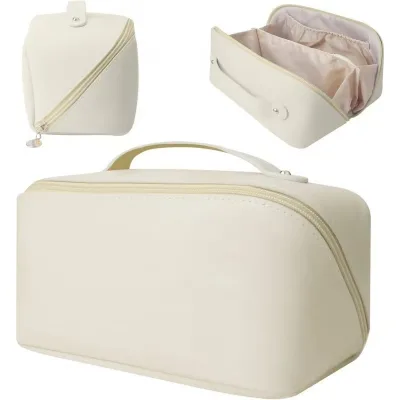


Travel Portable Makeup Cosmetic Storage Case Custom Luggage Organizer Bag
$6.00 - $10.00
MOQ: 200 Pieces

Multifunctional Travel Cosmetic Toiletry Bag Makeup Bag with 4 Inner Removable Pouches
$5.89 - $7.86
MOQ: 500 Pieces
Comprehensive Sourcing Guide
Foldable Travel Makeup Bag Sourcing Guide
Sourcing foldable travel makeup bags requires a nuanced understanding of material flexibility, structural integrity, and the specific logistical constraints of the beauty accessory market. Buyers must distinguish between rigid cosmetic cases and truly collapsible designs that prioritize space efficiency for both consumer travel and professional makeup artist kits. The decision to source this specific item often hinges on the balance between portability and durability, ensuring the bag can withstand repeated folding without compromising the safety of its contents.
Procurement teams should evaluate the product’s intended use cases, which typically span household organization, professional studio environments, and camping or travel scenarios. The versatility of these bags allows them to serve as primary storage for cosmetics or as secondary organizers within larger luggage. Understanding these diverse applications helps buyers select suppliers who offer appropriate customization options, such as adjustable compartments or waterproof linings, to meet the varied demands of different end-users and retail channels.
Product Scope and Observed Listing Signals
Market listings for foldable travel makeup bags reveal a wide spectrum of product models, ranging from simple pouches to complex double-shoulder designs with adjustable straps. Observed data indicates that manufacturers offer significant customization, including custom printing and tailored material selections, to align with brand identities. The presence of models like KQ-MB-036 and KQ-MB-087 suggests a standardized yet adaptable production framework, allowing buyers to choose from various configurations based on their specific functional requirements and aesthetic preferences.
The observed minimum order quantities (MOQ) vary considerably, with some suppliers requiring as few as one piece for high-quality genuine leather options, while others mandate bulk orders of 500 or 1000 pieces for polyester or custom fabric variants. This disparity highlights the importance of aligning order volume with supplier capabilities. Buyers should note that express shipping options like FedEx or UPS are available for smaller, high-value orders, whereas bulk shipments typically rely on carton packing, influencing the overall logistics strategy and cost structure for the procurement project.
Technical Specifications to Verify
When evaluating technical specifications, buyers must prioritize the material composition, which can range from genuine leather to polyester and nylon linings. The internal structure is a critical factor, with many designs featuring a main bag compartment that must be both spacious and secure. Verification of the outside material’s durability is essential, especially for products marketed as waterproof or suitable for camping and travel, as these conditions demand higher resistance to moisture and abrasion than standard household use.
Dimensions and shape are equally important, with observed standards including specific measurements such as 27818cm for certain models and 38*28cm for others. Buyers should confirm whether the bag features a horizontal square design or a double-shoulder configuration, as these structural elements impact usability and storage efficiency. Additionally, the hardness of the material, described as soft in some listings, affects the bag’s foldability and how well it conforms to irregular spaces in luggage, making it a key performance indicator for travel-oriented products.
Compliance and Safety Documentation
Compliance and safety documentation for cosmetic bags primarily focus on material safety and chemical regulations, particularly when the bags are intended to hold products that may leak or come into contact with skin. Buyers should verify that the materials used, such as nylon or polyester, meet relevant international standards for textile safety and do not contain harmful substances like azo dyes or heavy metals. Although specific certification statuses are not universally listed, requesting test reports for material composition ensures that the bags are safe for both consumers and professionals in close contact with cosmetics.
For products marketed as waterproof or suitable for professional use, buyers should inquire about any specific testing protocols that validate these claims. While general standards like "custom" are noted, it is crucial to understand what specific industry benchmarks the supplier adheres to, such as ISO standards for quality management or specific textile testing protocols. Ensuring that the supplier can provide documentation for material safety and durability helps mitigate risks associated with product liability and ensures that the bags meet the regulatory requirements of the target market.
Cost Drivers and Commercial Terms
Cost drivers for foldable travel makeup bags include the choice of material, the complexity of the design, and the level of customization required. Genuine leather options typically command higher prices and lower MOQs, reflecting their premium nature and artisanal production methods, while polyester and custom fabric bags are more cost-effective for large-scale orders. Buyers should also consider the impact of custom printing and stitching details, which can add to the unit cost but enhance brand visibility and product differentiation in competitive markets.
Commercial terms often involve a 30% deposit with the 70% balance payable before shipping, a standard practice that protects both parties during the production process. Lead times vary significantly, with sample times typically around 7 to 10 days and bulk production ranging from 15 to 45 days depending on the order size and complexity. Understanding these timelines is crucial for inventory planning, as delays in sample approval or production can impact launch dates, especially for seasonal travel products or limited-edition collections.
Supplier Qualification and Quality Control
Supplier qualification should begin with a thorough review of their production capabilities and quality control processes. Buyers should assess whether the supplier has experience in producing both high-volume, low-cost items and low-volume, high-quality products, as this versatility indicates a robust manufacturing infrastructure. Requesting references or case studies from previous clients can provide insights into the supplier’s reliability, consistency, and ability to meet specific customization requests, such as unique stitching patterns or specific color matches.
Quality control measures should include pre-production sample approvals and in-line inspections during the manufacturing process. Buyers should verify that the supplier conducts regular checks on material integrity, stitching quality, and functional aspects like zipper durability and waterproofing. Establishing clear acceptance criteria for defects and ensuring that the supplier has a process for addressing quality issues is essential to maintaining product standards and minimizing the risk of receiving subpar goods that could damage the buyer’s brand reputation.
Long-Term Procurement Checks
Long-term procurement checks involve monitoring supplier performance over multiple orders to ensure consistency in quality, delivery, and communication. Buyers should track key performance indicators such as on-time delivery rates, defect rates, and responsiveness to issues to identify any trends that may indicate underlying problems. Regular audits or periodic reviews of the supplier’s operations can help maintain high standards and ensure that the supplier continues to meet the evolving needs of the business.
Additionally, buyers should stay informed about changes in material costs, regulatory requirements, and market trends that may impact the sourcing strategy. Building a strong relationship with the supplier can facilitate better collaboration on product development and cost optimization, while maintaining a diversified supplier base can mitigate risks associated with supply chain disruptions. Continuous evaluation and adaptation of the sourcing strategy are essential for long-term success in the competitive beauty accessory market.
FAQs
Can I customize the cosmetic bag with my own logo?
Yes, custom printing is available for these bags. You can provide your design for branding on the exterior. The sample time is typically 7 days, while bulk production takes 15 to 25 days. A 30% deposit is required to start the order, with the balance paid before shipping.
What is the minimum order quantity for these bags?
The minimum order quantity varies by product model. Some items require 500 pieces, while others accept as few as 100 or even 1 piece. Please check the specific model details for the exact MOQ. This flexibility allows buyers to test the market with smaller initial orders if needed.
What materials are used for the bag construction?
Materials are customizable to meet specific needs. Options include polyester for the outside and nylon for the inside lining. Some models feature genuine leather construction. The material choice affects durability and style, allowing for versatile use in household, professional, or camping scenarios depending on the selected fabric.
How long does bulk production take?
Bulk production time ranges from 15 to 45 days depending on the specific model and order complexity. Standard cosmetic bags typically take 15 to 20 days, while other styles may require 20 to 25 days. Some specialized items can take up to 35 to 45 days for delivery.
Are these bags suitable for travel and camping?
Yes, these bags are designed for household, professional, and camping use. Many models are portable and waterproof, making them ideal for travel. Features like adjustable shoulders and main bag structures ensure functionality. The intended use covers various scenarios, ensuring durability and convenience for users on the go.
What payment terms are accepted for orders?
The standard payment term is a 30% deposit followed by a 70% balance payment before shipping. This structure ensures commitment from both parties. Express shipping options like FedEx or UPS are available for samples or urgent deliveries. Secure payment methods are used to protect buyer and seller interests throughout the transaction.