Source Food Cutter Machines for Commercial Kitchens
Find and compare 30 Food Cutter options from Chinese manufacturers. Evaluate specifications like 1500W power, stainless steel construction, and CE certification to select the right equipment for your business needs.
Key considerations
Products List
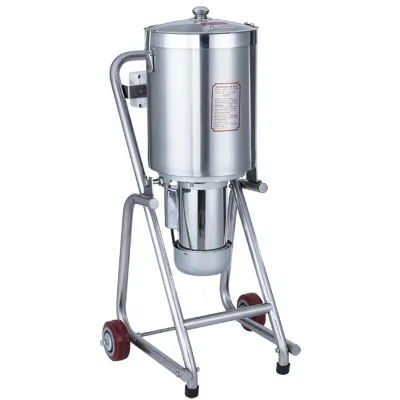
32L Vegetable Cutter,Meat Cutter,Food Cutter
$202.45 - $404.90
MOQ: 1 pieces
Guangzhou City Haizhu District Zhengqi Hotel Supplies Business Department


$3.00 - $60.00
MOQ: 1 Pieces


Multifunctional Slicer Roller Vegetable Chopper Round Slicer Vegetable Cutter
$2.33 - $2.66
MOQ: 500 Pieces


Comprehensive Sourcing Guide
Food Cutter Sourcing Guide
Selecting the right Food Cutter requires balancing operational throughput with strict hygiene and safety standards. Buyers must evaluate whether their needs align with high-volume industrial processing or smaller-scale commercial preparation. The market offers a wide spectrum of solutions, from manual or semi-automatic units for household use to fully automated systems capable of handling hundreds of kilograms per hour. Understanding these distinctions is the first step in defining a procurement strategy that minimizes downtime and maximizes return on investment.
This guide provides a structured approach to evaluating Food Cutter suppliers based on observed market data and technical realities. It focuses on verifying critical specifications, ensuring regulatory compliance, and managing commercial risks. By adhering to these evidence-based criteria, procurement teams can avoid common pitfalls such as underestimating power requirements, overlooking maintenance needs, or accepting non-compliant materials. The goal is to equip buyers with the knowledge to negotiate effectively and select equipment that meets their specific operational demands.
Product Scope and Observed Listing Signals
The current market for food cutters exhibits a broad range of capabilities, indicated by observed listing signals such as capacity and automation levels. Some units are designed for high-volume industrial applications, with capacities ranging from 800 to 1500 kg/h, suitable for large-scale processing facilities. In contrast, other listings describe smaller, multifunctional units with weights as low as 420g, intended for household or light commercial use. Buyers must clearly distinguish between these categories to ensure the selected machine matches their production volume and space constraints.
Material composition and construction quality are also significant differentiators in the observed listings. Stainless steel is a prevalent material for industrial-grade cutters, offering durability and ease of cleaning, which is critical for food safety. However, some listings indicate the use of plastic components, such as PP (polypropylene), often in conjunction with metal parts. This suggests a tiered market where budget-friendly or specialized units may incorporate mixed materials. Procurement teams should verify the specific grade of stainless steel and the food-grade status of any plastic components to ensure long-term reliability and safety.
Technical Specifications to Verify
Power consumption and motor performance are critical technical parameters that directly impact operational efficiency. Observed data indicates power ratings around 1500W for certain models, with speeds reaching 1400r/m. These specifications suggest robust performance for continuous operation, but buyers must verify if these ratings are consistent across all suppliers or if they vary significantly. It is essential to confirm the motor type and whether it is a core component, as this affects maintenance costs and replacement part availability. Inconsistent power specifications can lead to unexpected energy costs or insufficient cutting force for tougher materials.
Dimensional accuracy and physical footprint are equally important for facility planning. Listings provide specific dimensions, such as 6706201050mm for certain models, and packing sizes like 6606601080mm. Buyers must ensure that the machine’s operational dimensions fit within their available floor space, accounting for necessary clearance for maintenance and operator access. Additionally, weight specifications, ranging from 30kg to 35kg for some units, impact installation requirements and potential need for specialized handling equipment. Verifying these physical attributes prevents costly logistical errors and ensures smooth integration into existing workflows.
Compliance and Safety Documentation
Regulatory compliance is non-negotiable in food processing equipment procurement. Observed listings frequently mention certifications such as CE, FDA, and LFGB. These certifications indicate adherence to specific safety and hygiene standards in different markets. Buyers must verify the validity and scope of these certifications, ensuring they cover the specific model and configuration being purchased. For instance, FDA and LFGB certifications are crucial for products intended for the US and European markets, respectively, as they guarantee that materials in contact with food are safe and do not leach harmful substances.
Documentation should also include detailed technical manuals and safety guidelines. These documents provide essential information on proper operation, maintenance schedules, and troubleshooting procedures. Buyers should request these documents prior to finalizing the purchase to assess the clarity and comprehensiveness of the supplier’s support. Clear documentation reduces the risk of operator error and ensures that the equipment is used within its designed parameters, thereby extending its lifespan and maintaining food safety standards.
Cost Drivers and Commercial Terms
Pricing in the Food Cutter market varies widely, with observed ranges from $0.79 to $300,000. This vast disparity reflects differences in capacity, automation level, material quality, and brand reputation. Buyers must analyze the total cost of ownership, including energy consumption, maintenance, and potential downtime, rather than focusing solely on the initial purchase price. High-capacity industrial units may have a higher upfront cost but offer significant savings in labor and increased throughput, while smaller units may be more cost-effective for low-volume operations.
Minimum Order Quantities (MOQ) and lead times are key commercial terms that influence procurement planning. Observed MOQs range from 1 to 5000 units, indicating flexibility for both small businesses and large enterprises. Lead times, observed between 20 and 30 days, should be factored into production schedules to avoid delays. Buyers should negotiate clear terms regarding payment schedules, warranty periods, and after-sales service, including the provision of free spare parts. Understanding these commercial dynamics helps in budgeting accurately and managing supply chain risks effectively.
Supplier Qualification and Quality Control
Supplier qualification involves assessing their manufacturing capabilities, quality control processes, and reputation. Buyers should request evidence of their production capacity and quality assurance protocols, such as ISO certifications or internal testing procedures. Observing the supplier’s facility, either in person or through virtual tours, can provide insights into their operational standards and attention to detail. Suppliers with a proven track record in producing food processing equipment are more likely to deliver reliable and compliant products.
Quality control should extend to the pre-shipment inspection process. Buyers should consider engaging third-party inspection services to verify that the delivered goods match the agreed-upon specifications and quality standards. This includes checking for material defects, proper assembly, and functional performance. Establishing a clear quality control protocol with the supplier, including acceptance criteria and remedies for non-conformance, protects the buyer from receiving substandard equipment and ensures that the investment is protected.
Long-Term Procurement Checks
Long-term procurement success depends on the supplier’s ability to provide ongoing support and maintenance. Buyers should evaluate the availability of spare parts and the supplier’s responsiveness to service requests. Observed listings mention after-sales services such as free spare parts, which is a positive indicator of supplier commitment. However, buyers should verify the duration of this support and the cost of parts beyond the warranty period to avoid unexpected expenses.
Continuous monitoring of supplier performance is essential for maintaining a reliable supply chain. Buyers should establish key performance indicators (KPIs) related to delivery times, product quality, and customer service. Regular reviews of these metrics help identify potential issues early and foster a collaborative relationship with the supplier. By prioritizing long-term partnerships over short-term gains, buyers can ensure a steady supply of high-quality food cutters that meet their evolving operational needs.
FAQs
What is the power consumption of the automatic meat and vegetable chopper?
The automatic meat and vegetable chopper operates at 1500 watts. This power level supports a speed of 1400r/m for efficient processing. The unit weighs 30 kg net and 35 kg gross, indicating a robust stainless steel construction. It features core components like an engine and motor, ensuring reliable performance for household or light commercial tasks.
Can the Food Cutter be customized for specific branding needs?
Yes, customization is available for this Food Cutter. Buyers can request customized logos on the product. The machine supports various applications and offers multifunctional capabilities. This flexibility allows businesses to tailor the equipment to their specific operational requirements while maintaining the standard stainless steel material and eco-friendly features.
What certifications does the automatic chopper hold for safety?
The automatic chopper holds CE, LFGB, and FDA certifications. These credentials ensure compliance with international safety and quality standards. The product is designed for household applications and features a 1-year warranty. The certifications provide assurance regarding material safety and electrical compliance for buyers in regulated markets.
What is the typical lead time for ordering this chopper?
The typical delivery lead time is 30 days for standard orders. Some specific models may have a 20-day delivery window. Buyers should confirm the exact timeline based on the selected model number and customization requirements. The supplier provides free spare parts as part of the after-sales service to support long-term usage.
What are the dimensions and capacity of the chopper bowl?
The chopper features a 32L bowl size for substantial processing capacity. The product dimensions are 670*620*1050mm, while the packing size is 660*660*1080mm. This configuration allows for efficient handling of fruits and vegetables. The unit is classified as a cutter type with non-automatic automation settings for manual control.
Is the Food Cutter suitable for processing both meat and vegetables?
Yes, the Food Cutter is designed for processing both meat and vegetables. It handles cutting sizes ranging from 1 to 60mm. The machine supports a capacity of 800-1500kg/H for industrial applications. Constructed from stainless steel and plastic, it ensures durability and hygiene for diverse food preparation tasks in commercial settings.