Source Food Container Foil Loaf Pan for Baking, Storage, and Catering
Compare 30 listings for Food Container Foil Loaf Pan options from Chinese manufacturers. Buyers can evaluate custom sizes, food-grade aluminum materials, and OEM services for baking and storage applications.
Key considerations
Products List


Aluminum Foil Bread Loaf Rectangle Baking Pan, Food Carry out Tray Container
$0.03 - $0.05
MOQ: 20000 Pieces

Aluminium Foil Loaf Pan with Lid, Wrinkle Toast Tray, Cake Bread Container
$0.08 - $0.09
MOQ: 50000 Pieces


Food Grade Rectangular Aluminum Foil Bread Loaf Pan, Disposable Container
$0.03 - $0.05
MOQ: 20000 Pieces

Aluminum Foil Baking Cake, Pie Pan, Bread Loaf Container, Cooking Tray
$0.04 - $0.04
MOQ: 50000 Pieces


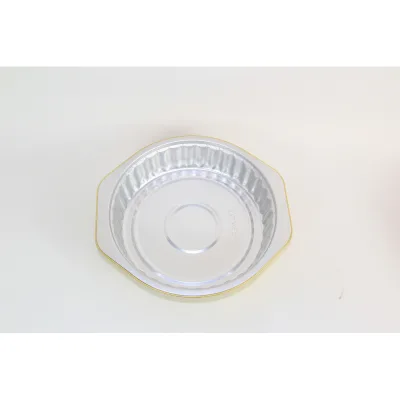
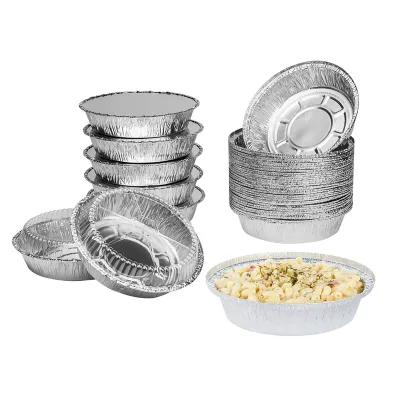
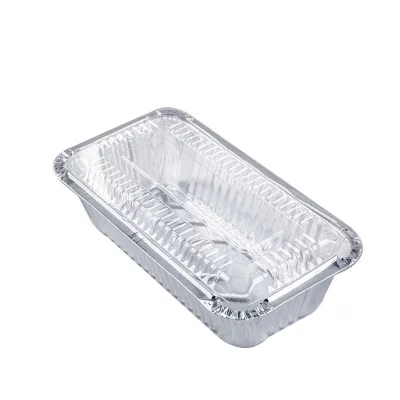

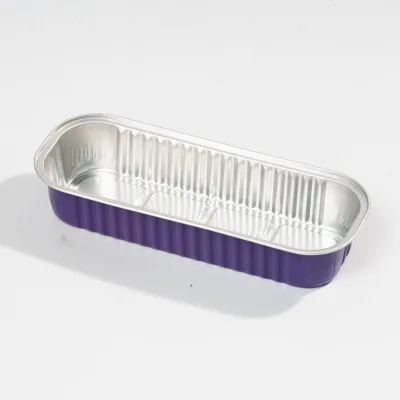

Hot Sell Size Fast Food Packaging Disposable Aluminum Foil Loaf Baking Pan
$0.02 - $0.04
MOQ: 30000 Pieces


Colorful Rectangle Aluminum Disposable Pan Aluminium Foil Containers Tray Loaf Pans
$0.06 - $0.08
MOQ: 10000 Pieces
Comprehensive Sourcing Guide
Strategic Sourcing Guide for Food Container Foil Loaf Pans
Understanding Product Specifications and Material Composition
When sourcing food container foil loaf pans, the primary focus must be on the material integrity and dimensional specifications that define the product's utility. Based on available market data, the core material for these containers is consistently identified as aluminum foil or aluminum metal. This material choice is critical because aluminum offers a unique balance of thermal conductivity, malleability, and barrier properties essential for baking and food storage. The supply chain frequently lists specific grades, with "Food Grade" being a mandatory attribute for any product intended for direct food contact. This ensures that the metal does not leach harmful substances into the food during heating or storage processes.
The physical dimensions and capacity of these pans vary significantly across different models, reflecting the diverse needs of commercial bakeries and industrial food processors. Observed product standards indicate capacities ranging from 200 ml to 490 ml, with specific model numbers such as CB-FC060-1, CB-FC007, and CB-C161-475 corresponding to distinct volume requirements. For instance, one standard is explicitly noted as 400 ml, while another is listed at 490 ml, and a third at 200 ml. Buyers must verify the exact milliliter capacity required for their specific baking recipes, as a deviation can alter baking times and final product volume. Furthermore, the shape is predominantly square, a design that maximizes oven space and facilitates uniform heat distribution. The thickness of the foil is another variable specification; while some listings describe the thickness as "Customized," this implies that buyers can request specific gauge thicknesses to meet durability requirements for heavy-duty baking or lighter applications.
The structural design also includes specific features such as the presence of a foil lid, which is essential for sealing the loaf pan to retain moisture and prevent contamination. The product type is generally categorized as a tray or pan, with some listings explicitly identifying the type as a "Baking Pan." The surface finish often appears as silver or unicolor, which is standard for aluminum products. Additionally, the folding state is noted as "Unfolded," indicating that these are rigid or semi-rigid containers ready for immediate use rather than flat sheets requiring assembly. Understanding these granular specifications is the first step in ensuring that the sourced product aligns with the operational needs of the food production line.
Compliance, Certification, and Safety Standards
In the food packaging sector, regulatory compliance is not merely a formality but a critical component of product safety and market access. When evaluating suppliers for aluminum foil loaf pans, buyers must prioritize products that adhere to recognized food safety standards. The supply data indicates that specific products carry certifications such as FDA (Food and Drug Administration) and LFGB (German Food, Feed and Consumer Goods Code). These certifications are vital for ensuring that the aluminum material and any associated coatings are safe for food contact. The FDA certification is particularly important for markets in North America, while LFGB is a stringent standard often required for European distribution.
Beyond material safety, the manufacturing process itself must be scrutinized. The data mentions a "Blister" process type, which suggests a specific method of forming or packaging the product. Buyers should verify that this process maintains hygiene standards and does not introduce contaminants. The "Food Grade" designation for the aluminum material is a prerequisite, but it must be backed by verifiable documentation from the supplier. It is essential to understand that while a supplier may claim compliance, the buyer is responsible for validating these claims through third-party testing or audit reports. The absence of plastic components, as noted in the attribute "plastic_type: no," is a positive indicator for purity, reducing the risk of chemical migration from polymers into the food.
Furthermore, the standardization of the product capacity, such as the 450ML/OEM specification, implies that manufacturers are capable of meeting specific volume requirements while maintaining safety standards. However, buyers should not assume that all listed models meet the same regulatory threshold. The presence of "OEM" (Original Equipment Manufacturer) and "ODM" (Original Design Manufacturer) capabilities suggests that suppliers can customize the product to meet specific regional regulatory requirements. This flexibility is advantageous for global procurement, but it requires clear communication regarding the target market's legal standards. Buyers must ensure that the supplier can provide certificates of analysis (CoA) or test reports confirming that the final product meets the FDA or LFGB requirements for the specific application, whether it is for baking, storage, or transport.
Cost Drivers and Pricing Dynamics
The pricing structure for food container foil loaf pans is influenced by a complex interplay of material costs, customization levels, and order volumes. The observed price range in the market spans from $0.01 to $45.20 USD, a wide variance that reflects differences in product complexity, capacity, and order quantity. The lower end of this spectrum likely corresponds to basic, high-volume orders of standard capacities, while the higher end may reflect specialized customizations, smaller batch sizes, or premium packaging options.
Material costs are a primary driver, given that aluminum prices fluctuate based on global commodity markets. The use of "Food Grade" aluminum adds a premium over non-food-grade alternatives, and the thickness of the foil directly impacts the amount of raw material required per unit. Thicker gauges, often requested for heavy-duty baking applications, will naturally increase the unit cost. Additionally, the customization of the product, such as specific dimensions or the inclusion of features like foil lids, can influence the final price. The data indicates that customization is available, which allows buyers to tailor the product to their needs but may introduce variable costs depending on the complexity of the request.
Order volume is another significant factor. The observed Minimum Order Quantity (MOQ) ranges from 1 to 1,000,000 units. High-volume orders typically benefit from economies of scale, reducing the per-unit cost significantly. Conversely, low-volume orders or samples, which may have an MOQ of just one unit, will carry a higher per-unit price to cover setup and handling costs. The sample time of 7 days suggests that while customization is possible, there is a lead time associated with producing non-standard items. Buyers should factor in the cost of samples when planning their procurement strategy, as these initial costs can be substantial relative to the unit price of the final bulk order.
Packaging also plays a role in cost dynamics. Options such as "Color Sleeve," "Shrink Wrap," "Poolybag," and "Carton Box" vary in material and labor costs. More elaborate packaging, such as clam shells or color sleeves, adds to the overall expense but may be necessary for retail presentation. Buyers must balance the need for attractive packaging with the budget constraints of the project. Finally, the origin of the product, primarily from China, influences logistics costs. While the manufacturing base offers competitive labor and material costs, shipping expenses, particularly for heavy aluminum products, can impact the total landed cost. Buyers should calculate the total cost of ownership, including freight, duties, and handling, rather than focusing solely on the ex-factory price.
Typical Applications and Functional Performance
Food container foil loaf pans are designed for a wide array of applications, primarily centered around baking, storage, and transportation of food products. The primary function of these pans is to serve as a vessel for baking dough, batters, and other food mixtures in ovens. The "Oven Safe" feature is a critical attribute, confirming that the aluminum construction can withstand high temperatures without deforming or releasing harmful fumes. This makes them ideal for commercial bakeries, catering services, and industrial food processing facilities where high-volume baking is routine.
The specific shape, often square, and the capacity range of 200 ml to 490 ml make these pans versatile for various product types. They are suitable for baking individual loaves, small cakes, or portion-controlled meals. The inclusion of a foil lid enhances their utility by allowing for the sealing of baked goods for storage or transport. This feature is particularly valuable for products that need to be kept fresh or protected from dust and contamination during transit. The "Dustproof" attribute further supports this application, ensuring that the food remains hygienic until it reaches the consumer.
In addition to baking, these pans can be used for storage and serving. The aluminum material provides excellent thermal retention, keeping food warm for extended periods. The "Eco-Friendly" feature suggests that these products may be recyclable, aligning with sustainability goals in the food industry. The "All" age range indicates that the product is suitable for a broad demographic, from children to adults, making it a versatile choice for family-oriented food products. The "Unfolded" state ensures that the pans are ready for immediate use, reducing preparation time in busy kitchen environments.
The "Baking Pan" and "Pan" classifications highlight their primary use in cooking, but the "Tray" designation suggests potential secondary uses in serving or presentation. The ability to customize the product, including the logo and color, allows for branding opportunities in retail settings. This versatility makes food container foil loaf pans a valuable asset for businesses looking to streamline their production and packaging processes. By selecting the right specifications, buyers can ensure that the product meets the specific functional requirements of their food line, whether it involves high-temperature baking, long-term storage, or direct consumer presentation.
Supplier Evaluation and Quality Control Protocols
Selecting the right supplier for food container foil loaf pans requires a rigorous evaluation process that goes beyond price comparisons. Buyers should assess the supplier's manufacturing capabilities, quality control systems, and ability to meet customization requests. The availability of OEM and ODM services indicates that suppliers are capable of adapting their production lines to meet specific buyer requirements, but this flexibility must be managed carefully to ensure consistency.
Quality control is paramount in the food packaging industry. Buyers should verify that the supplier has established protocols for inspecting raw materials, particularly the aluminum grade, to ensure it meets food safety standards. The "FDA / LFGB" certifications mentioned in the data are strong indicators of a supplier's commitment to safety, but buyers should request evidence of these certifications and check their validity. Regular third-party testing should be part of the quality assurance plan to confirm that the product remains compliant over time.
The production process, such as the "Blister" method, should be evaluated for its ability to maintain product integrity. Buyers should inquire about the supplier's defect rates and their procedures for handling non-conforming products. The "Sample Time" of 7 days suggests that the supplier has a structured approach to prototyping and sampling, which is essential for validating the product before full-scale production. Buyers should use this sample phase to test the product's performance in real-world conditions, checking for issues such as leakage, deformation, or inadequate sealing.
Logistics and packaging are also critical factors in supplier evaluation. The "Color Sleeve / Shrink Wrap" and "Poolybag / Carton" options indicate that suppliers offer various packaging solutions, but buyers should ensure that the packaging is robust enough to protect the product during transit. The "by Sea" shipping method suggests that the supplier is experienced in international logistics, but buyers should verify their ability to handle the specific shipping requirements of their destination. Finally, the "Place of Origin" in Henan, China, should be considered in the context of the supplier's reputation and track record in the region. Buyers should conduct due diligence to ensure that the supplier has a history of reliable performance and adherence to international standards.
Long-Term Procurement Considerations and Sustainability
Sourcing food container foil loaf pans is not just a one-time transaction but a long-term strategic decision that impacts the entire supply chain. Buyers should consider the sustainability of the product, as the "Eco-Friendly" attribute suggests that aluminum is a recyclable material. This aligns with growing consumer demand for environmentally responsible packaging. By choosing recyclable aluminum pans, buyers can enhance their brand image and contribute to circular economy initiatives.
The ability to customize the product, including the logo and dimensions, allows for long-term brand consistency. As the business grows, the supplier should be able to scale production to meet increasing demand without compromising quality. The wide MOQ range, from 1 to 1,000,000 units, provides flexibility for businesses at different stages of growth. However, buyers should plan for volume increases and negotiate favorable terms that allow for cost reductions as order quantities rise.
Supply chain resilience is another critical consideration. The "7 Days" sample time and the "China" origin highlight the importance of managing lead times and potential disruptions. Buyers should develop contingency plans to mitigate risks associated with shipping delays or raw material shortages. Establishing a strong relationship with the supplier can facilitate better communication and faster response times in the event of unforeseen challenges.
Finally, buyers should monitor market trends and regulatory changes that could affect the procurement of food packaging. Staying informed about new safety standards or sustainability initiatives will ensure that the product remains compliant and competitive in the long run. By focusing on these strategic factors, buyers can build a robust and sustainable supply chain for food container foil loaf pans that supports their business goals and meets the evolving needs of the market.
FAQs
What materials are used for food container foil loaf pans?
These pans are primarily made from aluminum foil or aluminum metal. The material is designated as food grade to ensure safety during baking and storage, with no plastic components included in the construction.
Can I customize the thickness and dimensions of these pans?
Yes, customization is available for thickness and other specifications. Buyers can request specific gauges to meet durability needs, though the standard thickness is often listed as customized based on the model.
Which certifications ensure the pans are safe for food contact?
Products often carry FDA and LFGB certifications to verify food safety compliance. These standards confirm that the aluminum material and manufacturing processes do not leach harmful substances into food during use.
How long does it take to receive a sample of the pan?
The sample time is typically 7 days for customized or standard orders. This lead time allows for the production of non-standard items before they are shipped to the buyer for evaluation.
What capacity options are available for these aluminum loaf pans?
Standard capacities range from 200 ml to 490 ml depending on the model. Specific models like CB-C161-475 offer 200 ml, while others provide 400 ml or 490 ml for different baking needs.
Are these pans suitable for use in a standard oven?
Yes, the pans are explicitly marked as oven safe for baking applications. The aluminum construction withstands high temperatures, making them ideal for commercial bakeries and industrial food processing environments.
What packaging options are provided for the aluminum foil pans?
Packaging varies by model and includes color sleeves, shrink wraps, and carton boxes. Some options feature clam shells or poly bags, ensuring the product is protected during transit and ready for retail display.