Source Food Grade HDPE Plastic Pail for Chemical, Paint, and Dye
Find 30 verified options for the Food Grade HDPE Plastic Pail suitable for storing chemicals, paint, and dye. Buyers can compare dimensions, thickness, and customization features to select the right packaging barrel for industrial needs.
Key considerations
Products List






Comprehensive Sourcing Guide
Strategic Sourcing Guide for Food Grade HDPE Plastic Pails
Understanding Product Classification and Core Specifications
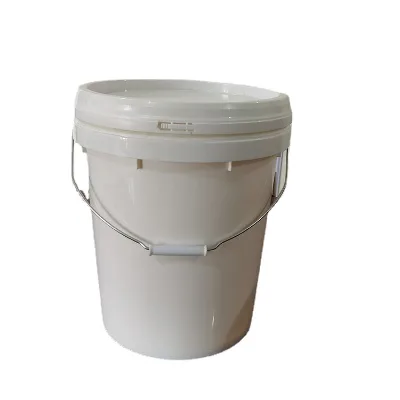
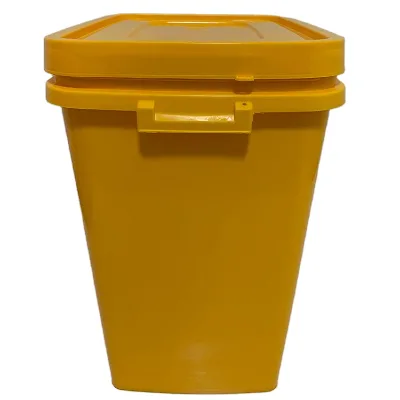
When sourcing food grade HDPE plastic pails, buyers must first distinguish between general industrial packaging and containers specifically designed for edible applications. The market offers a diverse range of classifications, from standard buckets to specialized dye and chemical packaging barrels. For food-grade requirements, the primary focus is on the material integrity and the specific dimensions that ensure product safety and compatibility. The observed product landscape includes models such as the "20 Liter Square Plastic Pail" and the "3.5 Gallon 13L Plastic Bucket," which serve as the baseline for standard sizing in the industry.
Technical specifications vary significantly between suppliers, and these variations directly impact the suitability of the container for specific food products. Dimensions are a critical differentiator; for instance, one observed standard model measures 300275360mm, while another variant is listed at 265235386mm. A third configuration measures 300265280mm. These dimensional differences affect stacking efficiency, storage volume, and the internal capacity of the pail. Buyers must verify that the internal volume aligns with their product's fill requirements, as a nominal "20L" label may correspond to slightly different physical dimensions depending on the manufacturer's design philosophy.
Wall thickness is another paramount specification that dictates durability and barrier properties. In the observed market data, thickness ranges from 1.4mm to 2.2mm, often presented as dual-layer specifications (e.g., 2.0/1.4mm or 2.2/1.7mm). Thicker walls generally provide better resistance to impact and puncture, which is essential for heavy food products or those requiring long-term storage. However, increased thickness also influences the unit weight, which can range from approximately 753.5g to 1164g per unit. Procurement teams must balance the need for robustness against the cost implications of heavier plastic usage.
The handle design is a functional specification that often goes unnoticed until the point of use. Options include plastic handles or composite plastic/metal handles. The choice here impacts user ergonomics and the structural integrity of the pail when carrying heavy loads. For food applications involving liquids like milk or beer, a secure handle is vital to prevent spills during transport. Additionally, the product origin, frequently cited as Suzhou or Jiangsu, China, provides context for the manufacturing ecosystem but requires verification against specific logistics needs.
Compliance and Certification Verification
Ensuring that a plastic pail is truly "food grade" requires rigorous verification of certifications and adherence to international standards. While the keyword implies a specific material grade, the actual compliance status must be validated through documentation. The market data indicates that some suppliers possess ISO9001 certification, which speaks to quality management systems, while others list a broader suite of certifications including ISO, CE, and CIQ. It is crucial for buyers to understand that ISO9001 certifies the management system, not necessarily the food safety of the specific container.
For food-grade applications, the absence of specific food safety certifications in the provided data underscores the need for buyers to request explicit documentation. Buyers should verify if the supplier can provide test reports confirming the absence of harmful substances such as heavy metals or BPA, which are critical for food contact materials. The term "Food Grade" is a regulatory claim that must be backed by compliance with local food safety laws, such as FDA regulations in the United States or EU Framework Regulations in Europe. Without explicit mention of these standards in the product listing, the buyer must treat the "food grade" designation as a claim requiring third-party validation.
The certification landscape also includes industry-specific marks like CIQ (China Inspection and Quarantine), which may be relevant for export markets. However, relying solely on these marks without cross-referencing them with the intended destination's regulations is risky. Buyers should request a Certificate of Analysis (CoA) or a Declaration of Compliance (DoC) that explicitly states the material's suitability for food contact. This documentation should detail the specific resin grade used, ensuring it meets the migration limits required for the intended food product, whether it is a liquid like milk or a semi-solid like paint or dye.
Cost Drivers and Pricing Dynamics
The pricing of HDPE plastic pails is influenced by a complex interplay of material costs, production volume, and customization requirements. The observed price range in the market spans from $0.07 to $47.50, a variance that reflects the difference between basic, unbranded units and highly specialized, customized solutions. The lower end of this spectrum typically corresponds to standard, non-customized pails with minimal features, while the higher end includes units with complex printing, specialized handles, or custom dimensions.
Volume is a primary driver of unit cost. The Minimum Order Quantity (MOQ) varies widely, ranging from as low as 1 unit for sample orders to 3000 units for bulk production. Specific models show MOQs of 500PCS or 1000PCS, indicating that suppliers have tiered pricing structures. Buyers purchasing near the MOQ threshold will face higher per-unit costs compared to those ordering in the thousands. Understanding these tiers is essential for budgeting, as the cost per unit can drop significantly once the order volume crosses specific thresholds.
Customization is another significant cost factor. While customization is available for logos, colors, and dimensions, each added feature increases the production complexity and cost. For instance, options for IML (In-Mold Labeling), silkscreen, and heat transfer printing allow for high-quality branding but require additional tooling and processing time. The color options, which can be customized or selected from a broader range of "Others," also impact pricing, as custom color matching often involves setup fees.
Lead times, observed to range from 1 to 30 days depending on quantity, also influence the total cost of ownership. Rush orders may incur premium charges, while standard lead times allow for more efficient production scheduling. Buyers should factor in the potential for price fluctuations due to raw material market volatility, as HDPE prices are tied to the petrochemical industry. Therefore, locking in prices with a firm order is advisable when market conditions are favorable.
Typical Applications and Functional Versatility
HDPE plastic pails are versatile containers used across a wide spectrum of industries, from food and beverage to chemicals and industrial manufacturing. The functional capabilities observed in the market include dye packaging, sealing, color printing, and the storage of peracetic acid, hydrogen peroxide, and lubricating oils. For food-grade specific applications, the pails are suitable for packaging beer, milk, paint, water, and various chemicals. This versatility makes them a popular choice for suppliers looking to serve multiple market segments with a single product line.
In the food and beverage sector, the pails are utilized for transporting and storing liquid and semi-liquid products. The material's resistance to moisture and its ability to maintain a seal make it ideal for milk and beer distribution. The "Eco-Friendly" feature noted in some product listings suggests that certain manufacturers are incorporating sustainable practices, which is increasingly important for food brands aiming to reduce their environmental footprint. However, buyers must verify if this eco-friendly claim applies to the specific food-grade pail they intend to purchase, as it may refer to the manufacturing process rather than the recyclability of the final product.
The chemical industry also relies heavily on these pails for the safe transport of hazardous substances. The ability to seal effectively prevents leakage and contamination, which is critical when handling chemicals like gasoline or paint. The "Sealing Packing Barrel" function highlights the importance of the lid and gasket system in maintaining product integrity. For edible packaging, the pails must ensure that the food remains uncontaminated during storage and transport, requiring a high standard of hygiene and material purity.
Supplier Evaluation and Selection Criteria
Selecting the right supplier for food grade HDPE plastic pails requires a comprehensive evaluation of their capabilities, reliability, and compliance record. Buyers should prioritize suppliers who demonstrate transparency in their production processes and are willing to share detailed specifications. The location of the supplier, often cited as Suzhou or Jiangsu, China, indicates a concentration of manufacturing expertise in the region, but buyers should verify the specific factory's capacity and history.
A critical aspect of supplier evaluation is the ability to provide samples. The market data indicates that free samples are available for existing models, which allows buyers to physically inspect the quality, weight, and dimensions before committing to a large order. This step is essential for verifying that the product meets the buyer's specific requirements for thickness, handle strength, and overall finish. Buyers should also assess the supplier's flexibility regarding customization, as the ability to adapt the pail design to specific branding or functional needs can be a significant competitive advantage.
Quality control systems are another key evaluation metric. Suppliers with ISO9001 certification have established quality management systems, but buyers should go further by requesting details on their in-house testing protocols. This includes checks for wall thickness consistency, seal integrity, and color accuracy. The supplier's track record in handling food-grade products is also vital; they should have experience in producing containers that meet the rigorous standards required for food contact.
Quality Control and Inspection Protocols
Implementing a robust quality control (QC) protocol is essential to ensure that the received pails meet the required standards for food safety and durability. Buyers should establish clear inspection criteria based on the technical specifications provided, such as dimensional accuracy, wall thickness, and weight. For example, if a pail is specified to weigh 924.5g, a significant deviation in the received batch could indicate a variation in material density or wall thickness, which may compromise the container's performance.
Visual inspection is a fundamental step in the QC process. Buyers should check for defects such as warping, uneven coloring, or surface imperfections that could affect the aesthetic appeal or structural integrity of the pail. The printing quality, whether it is IML, silkscreen, or heat transfer, should be examined for clarity and adhesion. Any smudging or peeling of the logo could indicate a failure in the printing process, which is particularly important for food products where branding and labeling are critical for consumer trust.
Functional testing is also necessary to verify the pail's performance. This includes testing the seal integrity to ensure that the lid fits securely and prevents leakage. The handle strength should be tested to ensure it can support the weight of the filled pail without breaking or deforming. For food-grade applications, it is crucial to verify that the pail does not impart any off-flavors or odors to the contents, which can be done through sensory testing or by requesting a specific migration test report from the supplier.
Long-Term Procurement and Supply Chain Considerations
Long-term procurement of food grade HDPE plastic pails requires a strategic approach that considers supply chain stability, scalability, and sustainability. Buyers should establish a partnership with suppliers who can guarantee consistent quality and reliable delivery over time. The observed lead times of 1 to 30 days suggest that production capacity varies, and buyers should ensure that the supplier has the flexibility to scale up production in response to demand fluctuations.
Sustainability is becoming an increasingly important factor in long-term procurement. The "Eco-Friendly" feature observed in some products indicates a trend towards more sustainable manufacturing practices. Buyers should explore options for using recycled HDPE or designing pails that are easily recyclable, which can help meet corporate sustainability goals and reduce environmental impact. Additionally, the availability of custom colors and logos allows for branding strategies that align with the company's identity and values.
Inventory management is another consideration for long-term procurement. Buyers should work with suppliers to establish a just-in-time (JIT) delivery schedule to minimize storage costs while ensuring that stock levels are sufficient to meet demand. The ability to order in varying quantities, from small sample runs to large bulk orders, provides flexibility in managing inventory. Finally, maintaining open communication with the supplier regarding any changes in regulations or standards is essential to ensure continued compliance and product safety.
FAQs
What certifications do food grade HDPE plastic pails have?
Some models carry ISO9001 certification for quality management, while others list ISO, CE, and CIQ marks. Buyers must verify specific food safety compliance documents like a Certificate of Analysis, as management system certifications do not automatically guarantee food contact safety for every listed product.
Which dimensions are available for 20-liter plastic pails?
Observed standard dimensions include 300*275*360mm, 265*235*386mm, and 300*265*280mm depending on the specific model. These variations affect stacking efficiency and internal capacity, so buyers should confirm the exact physical size matches their storage and fill requirements before ordering.
Can I get free samples of existing food grade pails?
Free samples are available for existing models to allow physical inspection of quality and dimensions. Buyers should use these samples to verify wall thickness, handle strength, and overall finish before committing to bulk orders that may have higher Minimum Order Quantities.
How long is the delivery time for bulk orders?
Delivery times range from 1 to 30 days depending on the quantity ordered. Larger orders typically require more production time, so buyers should factor this lead time into their supply chain planning and request specific timelines based on their target volume.
What is the Minimum Order Quantity for these plastic buckets?
MOQs vary by model, with observed values of 500 pieces or 1000 pieces for specific pail types. Some suppliers may accept lower quantities for samples, but bulk pricing tiers usually apply once the order volume exceeds these minimum thresholds.
Which customization options are available for logo printing?
Customization includes IML, silkscreen, and heat transfer printing for logos, along with custom color options. These features increase production complexity, so buyers should confirm tooling requirements and potential cost impacts when requesting specific branding or design modifications for their orders.
What materials are used for the handles on these pails?
Handles are constructed from plastic or a combination of plastic and metal to ensure structural integrity. The choice of material impacts ergonomics and load-bearing capacity, which is critical for transporting heavy liquids like milk or chemicals without risk of failure.
Can these pails be used for storing edible products like milk?
Yes, the products are listed for edible packaging including milk, beer, and water, provided they meet food grade standards. Buyers must request explicit documentation confirming the material is safe for food contact to ensure compliance with local food safety regulations.