Source Food Grade White Paraffin Wax for Candle, PVC, Food Packaging
Compare 30 listings of Food Grade White Paraffin Wax with melting points from 52-60°C and oil content up to 1.5%. Buyers can evaluate suppliers based on grade, refinement level, and packaging options for candle making, PVC manufacturing, and food packaging applications.
Key considerations
Products List

Food Grade White Paraffin Wax for Food Packaging with FDA Certification 52/54
$940.00 - $1050.00
MOQ: 5 Pieces

Food Grade Paraffin Wax CAS8002-74-2 White Solid Paraffin Wax for Daily Use
$750.00 - $1050.00
MOQ: 1 Tons




Comprehensive Sourcing Guide
Strategic Sourcing Guide for Food Grade White Paraffin Wax
Understanding Product Specifications and Technical Attributes
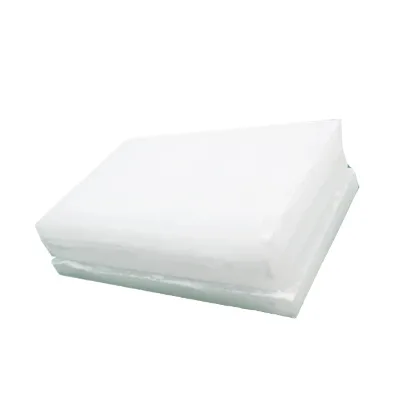
When sourcing white paraffin wax for food-grade applications, buyers must first establish a clear understanding of the technical specifications that define the material's suitability. The core product is identified as a paraffin wax, specifically classified under chemical products such as paraffin waxes and hydrocarbon waxes. In the context of the available market data, the product is often described by its appearance as white, solid, and available in forms ranging from granules to slabs or lumps. The chemical composition is noted as alcoholized synthetic esters in some listings, while others specify the raw material origin as Kunlun Oil, indicating a specific petrochemical source that influences the final purity and consistency.
A critical technical parameter for food-grade applications is the melting point. The market data indicates a range of melting points, specifically 52-54℃, 54-56℃, 56-58℃, and 58-60℃. For many food packaging and candle applications, the 58-60℃ range is frequently cited, with specific model numbers like "58/60" or "paraffin wax 58-60" appearing in product descriptions. However, buyers must verify that the specific batch selected meets the thermal requirements of their end-use process. Another vital specification is the oil content. The observed data lists oil content values of ≤0.8%, ≤1.5%, and a specific instance of 0.5%. For food-grade usage, lower oil content is generally preferred to ensure stability and prevent migration issues. The refinement level is also a key differentiator, with options including fully refined and semi-refined grades. The "Industrial Grade" classification appears frequently in the data, which requires careful interpretation; while the grade is labeled industrial, the application lists include food, suggesting that specific batches may meet food safety thresholds despite the general grade label. Buyers must explicitly confirm the food-grade status rather than assuming it based on the general "industrial" tag.
Compliance Verification and Certification Requirements
Ensuring compliance is the most critical step in sourcing food-grade paraffin wax. Unlike general industrial applications, food contact materials are subject to stringent regulatory frameworks. The observed product listings mention several certifications, including ISO, RoHS, CIQ (China Inspection and Quarantine), and CCIC. While ISO 9001 is a background standard often associated with quality management, it is not a product-specific food safety certification. Buyers must not assume that the presence of ISO or RoHS on a datasheet automatically validates the product for food contact. Instead, the primary verification must focus on CIQ and CCIC, which are specific to Chinese export and inspection protocols, and any equivalent food-grade certifications required by the destination country, such as FDA approval in the United States or EU regulations in Europe.
The distinction between "Industrial Grade" and "Food Grade" is a significant area of risk. The provided data explicitly lists "Industrial Grade" as a standard attribute. This does not preclude the existence of food-grade variants, but it necessitates a rigorous verification process. A buyer must request specific documentation proving that the specific batch of paraffin wax (e.g., CAS: 8002-74-2) complies with food safety regulations. The chemical product is identified as "Paraffin Sweated Wax" in some contexts, which refers to a refining process that removes impurities. For food applications, the refinement must be sufficient to eliminate aromatic hydrocarbons and other contaminants. Buyers should verify that the "Scale of Deoiling" is 100% for the specific batch if the application requires high purity. Relying solely on the general certification list without confirming the specific food-grade compliance for the intended use case can lead to regulatory violations and product recalls.
Cost Drivers and Pricing Dynamics
The pricing structure for paraffin wax is influenced by several factors, including the melting point, refinement level, and packaging requirements. The observed market data indicates a wide price range, from $0.85 to $1,250 USD. This vast disparity suggests that the lower end of the spectrum likely represents bulk raw material or lower-grade industrial products, while the higher end may include specialized food-grade variants, smaller packaging units, or premium refined grades. The minimum order quantity (MOQ) also plays a significant role in the unit cost, with observed ranges from 1 to 1000 units. Buyers seeking food-grade wax should anticipate that higher MOQs will yield better per-unit pricing, but the initial investment will be substantial.
Packaging is another significant cost driver. The data lists various packaging options, including 25kg cartons, 50kg woven bags, pallets, and bags. The choice of packaging affects both the logistics cost and the product integrity. For food-grade applications, the packaging must be food-safe and capable of preventing contamination during transit. The standard packaging mentioned is often 25kg or 50kg, but specialized food-grade packaging may incur additional costs. Additionally, the origin of the product, specifically Hebei, China, and Petrochina Fushun, influences the pricing due to transportation logistics and local production costs. Buyers should be aware that the "Industrial Grade" label might correlate with lower prices, but the cost of ensuring food compliance (testing, certification, specialized packaging) can add to the total landed cost. It is essential to request a detailed breakdown of costs, including the price per kilogram, packaging fees, and any potential surcharges for food-grade certification, to accurately budget for the procurement.
Typical Applications and Usage Scenarios
White paraffin wax is a versatile material with a broad spectrum of applications, ranging from consumer goods to industrial processes. The observed data highlights several key usage areas, including candle manufacturing, match production, crayon making, PVC processing, and food packaging. In the context of food applications, the wax is used for coating, sealing, and impregnation. Specific uses mentioned include poultry depilation, casting wax, impression wax, and modeling wax. The melting point range of 58-60℃ makes it particularly suitable for applications requiring a stable solid state at room temperature but a quick melt during processing.
The versatility of the wax is further demonstrated by its compatibility with various industries. In the cosmetics sector, it is used for its emollient properties and ability to create a barrier on the skin. In the rubber and adhesive industries, it serves as a processing aid or a component in the formulation. For food packaging, the wax provides a moisture barrier and extends the shelf life of products. However, the specific application dictates the required purity and oil content. For instance, a wax used for food packaging must have a lower oil content (e.g., 0.5% or ≤0.8%) compared to one used for general candle making. Buyers must align the technical specifications of the wax with the specific demands of their application. The "Granular & Slab" forms are particularly useful for melting and mixing in industrial processes, while the "Powder" form might be used for specific coating applications. Understanding these nuances ensures that the selected wax performs optimally in the intended end-use scenario.
Supplier Evaluation and Quality Control Protocols
Evaluating suppliers for food-grade paraffin wax requires a multi-faceted approach that goes beyond basic product listings. Buyers should prioritize suppliers who can provide transparent documentation regarding the refinement process and the source of the raw materials. The data mentions "Kunlun Oil" and "Petrochina Fushun" as potential raw material sources, which are reputable entities, but the specific supplier's ability to maintain quality control throughout the refining process is paramount. Suppliers should be able to demonstrate a consistent track record of meeting the specified melting points and oil content limits.
Quality control protocols should be a central part of the supplier evaluation. Buyers must verify that the supplier conducts regular testing for oil content, melting point, and color consistency. The observed data shows variations in oil content (0.5% to ≤1.5%), indicating that quality control is not uniform across all products. A robust supplier will have a documented quality assurance system that includes batch testing and traceability. Additionally, the supplier should be willing to provide samples for independent testing before committing to a large order. The availability of samples is noted in the data, which is a positive indicator for buyer due diligence. Buyers should also assess the supplier's storage and handling practices, as the product must be kept in a cool and dry place to maintain its quality. The supplier's ability to maintain these conditions during storage and shipping is crucial for preventing contamination or degradation of the wax.
Long-Term Procurement Considerations and Supply Chain Stability
Sourcing food-grade paraffin wax is not just a one-time transaction but a long-term partnership that requires careful planning. Buyers should consider the stability of the supply chain, including the supplier's ability to meet demand fluctuations and maintain consistent quality over time. The observed data indicates a lead time and production capacity that can vary, with some suppliers offering 1*20FCL (Full Container Load) as a standard shipping unit. Buyers should evaluate the supplier's capacity to handle large orders and their flexibility in adjusting production schedules.
Long-term procurement also involves managing the relationship with the supplier to ensure continuous compliance with food safety regulations. As regulations evolve, suppliers must be able to adapt their processes and documentation to meet new standards. Buyers should establish a clear communication channel with the supplier to stay informed about any changes in product specifications or regulatory requirements. Additionally, buyers should consider the environmental and sustainability aspects of the wax, as the industry is increasingly focused on reducing the carbon footprint of chemical production. While the data does not explicitly mention sustainability certifications, buyers should inquire about the supplier's efforts in this area. Finally, the buyer should develop a contingency plan for supply chain disruptions, such as having alternative suppliers or maintaining a safety stock of the wax to ensure business continuity. By focusing on these long-term considerations, buyers can build a resilient and reliable supply chain for their food-grade paraffin wax needs.
FAQs
What certifications are required for Food Grade White Paraffin Wax?
Buyers must verify CIQ and CCIC certifications specifically for food contact, as ISO and RoHS alone do not guarantee food safety. The product is often labeled Industrial Grade, so explicit documentation proving compliance with food regulations is essential before purchase.
Which melting points are available for white paraffin wax?
Available melting points include 52-54℃, 54-56℃, 56-58℃, and 58-60℃, with 58-60℃ being common for food packaging. Buyers should select the specific range that matches their processing temperature requirements and verify the batch meets the stated standard.
How is the oil content specified for this paraffin wax?
Oil content is typically listed as ≤0.8%, ≤1.5%, or as low as 0.5% depending on the refinement level. Lower oil content is preferred for food applications to ensure stability, so buyers must confirm the specific value for their intended use case.
Can I obtain samples of Food Grade White Paraffin Wax?
Samples are available for buyers to verify quality before placing a large order. This allows independent testing of critical parameters like melting point and oil content to ensure the product meets specific food safety and processing requirements.
What packaging options are available for industrial paraffin wax?
Standard packaging includes 25kg cartons, 50kg woven bags, and pallets, with some options in 25kg boxes. For food-grade applications, buyers should ensure the packaging prevents contamination and verify if specialized food-safe packaging is required for the shipment.
Where is the origin of this paraffin wax product?
The product originates from Hebei, China, with raw materials sourced from Petrochina Fushun. Buyers should consider these locations when evaluating logistics costs and supply chain stability for long-term procurement of the material.
What are the primary applications for this white paraffin wax?
Primary applications include candle making, food packaging, PVC manufacturing, and cosmetics. The specific grade and oil content must align with the application, as food packaging requires stricter purity standards than general industrial uses like crayon or match production.