Source Food Grade White Petrolatum for Cosmetics, Pharmaceuticals, and Food Packaging
Explore 30 listings for Food Grade White Petrolatum to compare specifications like purity, packaging, and applications. Buyers can evaluate options ranging from cosmetic bases to industrial lubricants with varying MOQs and certifications.
Key considerations
Products List


Food and Feed Grade High Quality Food Preservatives Calcium Propionate
$1200.00 - $1350.00
MOQ: 10 Tons


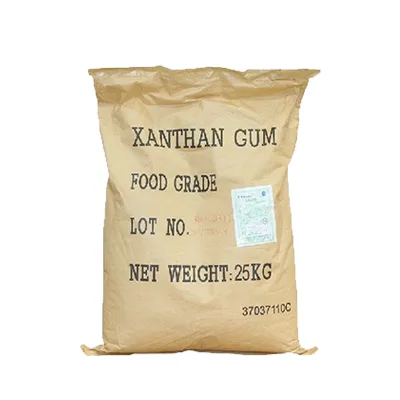


Comprehensive Sourcing Guide
Strategic Sourcing Guide for Food Grade White Petrolatum
Understanding Product Specifications and Variants
When sourcing Food Grade White Petrolatum, buyers must first distinguish between the specific chemical variants and physical states available in the global market. The supplied data indicates a complex landscape where "White Mineral Oil" and "White Oil" are listed with distinct specifications, including CAS numbers such as 8009-03-8 and 68514-74-9. While the core keyword focuses on petrolatum, the observed product attributes reveal that suppliers often list related hydrocarbon products, such as base oils and industrial lubricants, which share similar physical characteristics but differ in purity and intended application.
The physical appearance of these products varies significantly in the listings. Some entries describe the substance as a powder, while others list it as a liquid or specify a melting point range of 70-80°C. This discrepancy highlights the necessity for buyers to verify the exact state of the product before procurement. For instance, a product with a melting point of 70-80°C (ASTM D 127) suggests a semi-solid or solid state, which aligns more closely with traditional petrolatum than a liquid oil. Conversely, products with a refractive index of N20/D 1.45 and water insolubility are likely liquid hydrocarbons. Buyers must ensure that the "Food Grade" designation applies specifically to the physical form they require, as the data shows a mix of applications ranging from food and industry to water treatment, textile auxiliaries, and rubber additives.
The composition of these products is another critical differentiator. The supplied facts list "Calcium Propionate" and "Agar" alongside "Base Oil" and "Petroleum Jelly." This indicates that a single search term might yield results for preservatives, gelling agents, and hydrocarbon bases. A buyer seeking white petrolatum must specifically filter for products where the main active ingredient is identified as a hydrocarbon base or petroleum jelly, rather than inorganic chemical preservatives or polysaccharides like agar. The presence of "White Mineral Oil" in the listings further complicates the search, as this is a liquid fraction, whereas petrolatum is typically a semi-solid. Clear definition of the desired state—solid, semi-solid, or liquid—is the first step in narrowing the supplier pool to those offering the correct material.
Compliance, Certification, and Regulatory Alignment
Navigating the regulatory landscape for Food Grade White Petrolatum requires rigorous verification of certifications and standards. The supplied product data explicitly mentions "ISO" certification as a high-confidence fact for certain listings. However, the mere presence of an ISO label does not guarantee food safety compliance. Buyers must verify that the specific ISO standard cited (e.g., ISO 22000 or ISO 9001) covers food safety management systems rather than general quality management. Furthermore, the data lists "Food" as a grade for some products, but also lists "Industrial Lubricant" and "Water Treatment Chemicals" for others. This dichotomy underscores the risk of cross-contamination or mislabeling if a buyer does not demand explicit documentation for food-grade status.
The HS No. 2915299090 provided in the data is a specific classification code. While this code is associated with organic chemicals, buyers must confirm with their local customs authority whether this specific code applies to white petrolatum or if a different code is required for food-grade hydrocarbons in their jurisdiction. Misclassification can lead to delays, fines, or seizure of goods. Additionally, the data mentions a purity level of 99% for some products, while others list 90% or 98%. In the context of food additives, even small variations in purity can impact regulatory approval. Buyers should not assume that a 99% purity claim is sufficient without verifying the specific impurities allowed under their local food safety regulations, such as limits on polycyclic aromatic hydrocarbons (PAHs) or heavy metals.
The "Standard" field in the data shows values like "90%", "98%", and "99%", alongside packing standards like "25KG/Drum". These numerical values likely refer to purity or concentration rather than a recognized international food safety standard (such as USP, EP, or JP). Buyers must be cautious not to interpret these percentages as compliance with a specific pharmacopoeia. Instead, they should request a Certificate of Analysis (CoA) that references the specific food safety standard met by the product. The data also notes that the product origin is primarily "China" and "Shandong China". While this is a major manufacturing hub, buyers should verify that the specific facility holds the necessary local and international food safety certifications, as origin alone does not dictate compliance.
Cost Drivers and Pricing Dynamics
The pricing structure for white petrolatum is influenced by several factors visible in the supplied data, including raw material costs, packaging requirements, and order volume. The observed price range spans from $0.6 to $20,000, a vast disparity that reflects the difference between small sample quantities and bulk industrial shipments. The minimum order quantity (MOQ) varies from 1 unit to 1000 units, with a specific high-confidence fact noting an MOQ of 25 tons for certain food-grade listings. This suggests that the lowest price points are likely associated with small samples or non-food grade industrial variants, while the true food-grade bulk pricing will align with the higher tonnage requirements.
Packaging is a significant cost driver. The data lists multiple packaging types, including "25kg PP Bags," "Drums," and "Paper" packaging. The choice of packaging affects the unit cost; drums are generally more expensive per unit than bags but offer better protection for bulk transport. The "Load" specification of 25mt/20FCL indicates that a standard 20-foot container can hold 25 metric tons. Buyers must calculate the cost per metric ton based on the container load efficiency. If a supplier offers a lower price but requires a higher MOQ or specialized packaging, the effective cost per unit may increase. Additionally, the "Production" capacity of 6000 tons per year suggests that suppliers with this capacity can handle large orders, potentially offering more stable pricing than smaller manufacturers.
Currency fluctuations and logistics costs also play a role in the final price. Since the primary origin is China, shipping costs from ports in Shandong or other Chinese regions to the buyer's destination will impact the landed cost. The data mentions "Normal" storage methods, which implies standard shipping conditions, but buyers should verify if special handling is required for food-grade products to maintain their integrity during transit. The "Sample" availability noted in the data allows buyers to test the product before committing to a large order, which can mitigate the risk of price volatility. However, sample costs may be higher per unit than bulk pricing, and buyers should factor this into their initial budgeting.
Typical Applications and Usage Scenarios
The versatility of white petrolatum and related hydrocarbon products is evident in the diverse applications listed in the data. While the core keyword focuses on food grade, the supplied facts reveal a broad spectrum of uses, including "Drinks," "Raw Materials," "Fuel," "Candle," "Building Materials," and "Water Treatment Chemicals." This indicates that the same chemical base can be processed into different grades for different industries. For food applications, the product is likely used as a glazing agent, a release agent, or a component in confectionery and baking. The "Antiseptic" effect listed for Calcium Propionate suggests that some products in the search results may be preservatives rather than petrolatum, so buyers must ensure the application matches the intended use.
In the industrial sector, the data lists usage in "Textile Auxiliary Agents," "Surfactants," "Rubber Auxiliary Agents," "Plastic Auxiliary Agents," "Paper Chemicals," "Leather Auxiliary Agents," "Electronics Chemicals," "Coating Auxiliary Agents," and "Oil Drilling Auxiliary Agent." These applications often require different purity levels and specifications compared to food-grade products. For example, a product used in "Oil Drilling" may contain impurities that are unacceptable in food applications. Buyers must clearly communicate their intended application to suppliers to ensure they receive the correct grade. The "Food and Industry" usage note confirms that some products are dual-purpose, but the specific grade must be verified for food safety.
The "Main Active Ingredient" of "Agar" and "Calcium Propionate" in the data suggests that some search results may be for gelling agents or preservatives rather than white petrolatum. Buyers should be aware that the term "white petrolatum" might be used loosely in some listings to describe a range of white, semi-solid, or liquid hydrocarbons. To avoid confusion, buyers should specify the exact chemical composition required, such as "saturated hydrocarbons" or "petroleum jelly," and request a CoA that confirms the absence of non-food grade additives. The "Usage" field also mentions "Base Oil," which is a liquid form, distinct from the semi-solid nature of traditional petrolatum. Understanding these nuances is essential for selecting the right product for specific applications.
Supplier Evaluation and Verification
Evaluating suppliers for white petrolatum requires a multi-faceted approach, focusing on production capacity, customization capabilities, and logistical reliability. The data indicates a production capacity of 6000 tons per year for some suppliers, which is a strong indicator of their ability to handle large orders. However, buyers should verify if this capacity is dedicated to food-grade products or if it includes industrial grades. The "Customization: Available" attribute suggests that suppliers can tailor products to specific requirements, such as packaging size or purity levels. This is a valuable feature for buyers with unique needs, but it also requires clear communication of specifications to avoid errors.
The "Origin" of the products is listed as "China" and "Shandong China." While this region is a major chemical manufacturing hub, buyers should conduct due diligence on the specific suppliers. This includes verifying their business licenses, food safety certifications, and track record in exporting food-grade products. The "Sample: Yes" attribute is a positive sign, indicating that suppliers are willing to provide product samples for testing. Buyers should request samples to verify the physical properties, such as melting point and appearance, against their requirements. The "Storage Condition" of "Sealed in Dry, Room Temperature" is a standard requirement for many chemical products, and buyers should ensure that the supplier's logistics partners can maintain these conditions during transit.
Supplier reliability is also assessed through their response to inquiries and their ability to provide detailed documentation. The data shows a wide range of MOQs, from 1 to 1000 units, and a specific MOQ of 25 tons for food-grade products. Buyers should compare these requirements against their own volume needs to find a supplier that offers a reasonable balance between flexibility and volume discounts. The "Lead time" is not explicitly provided in the data, but buyers should ask for estimated delivery times and production schedules. Suppliers with a "Production" capacity of 6000 tons per year are likely to have more predictable lead times than smaller manufacturers. Additionally, buyers should check for any history of quality issues or regulatory violations in the supplier's region.
Quality Control and Long-Term Procurement
Maintaining consistent quality in white petrolatum procurement requires a robust quality control (QC) framework. The data lists various purity levels, such as 90%, 98%, and 99%, and specific physical properties like melting point and refractive index. Buyers should establish a QC protocol that includes regular testing of incoming shipments against these specifications. The "Standard" field in the data shows values like "90%" and "99%", which likely refer to purity. Buyers must define the acceptable tolerance for these values and ensure that the supplier's CoA aligns with these tolerances. The "Appearance" of the product, listed as "Powder" or "Liquid," should also be verified upon receipt to ensure it matches the ordered specification.
Long-term procurement considerations involve building a relationship with reliable suppliers who can consistently meet quality and delivery requirements. The "Shelf Life" of ">12 Months" is a critical factor for inventory management. Buyers should plan their ordering cycles to ensure that products are used within this timeframe to maintain quality. The "Storage Method" of "Normal" suggests that standard warehouse conditions are sufficient, but buyers should still monitor storage conditions to prevent degradation. The "Load" capacity of 25mt/20FCL allows for efficient shipping, but buyers should consider the impact of seasonal demand on availability and pricing.
To mitigate risks, buyers should implement a supplier diversification strategy. Relying on a single supplier for a critical raw material like white petrolatum can be risky if that supplier faces production issues or regulatory changes. The data shows multiple product models and specifications, indicating a diverse market. Buyers should identify at least two or three qualified suppliers to ensure continuity of supply. Regular audits and performance reviews should be conducted to assess supplier reliability. Additionally, buyers should stay informed about changes in food safety regulations and industry standards to ensure continued compliance. By focusing on these quality control and long-term strategies, buyers can secure a stable supply of high-quality white petrolatum for their operations.
FAQs
What certifications do Food Grade White Petrolatum suppliers hold?
Suppliers often hold ISO certification for quality management systems. Buyers must verify if the specific ISO standard covers food safety protocols like ISO 22000 rather than general quality standards to ensure regulatory compliance.
Which packaging options are available for bulk orders?
Common packaging includes 25kg PP bags, drums, and paper packaging. The choice affects unit cost and transport protection, with drums offering better bulk safety while bags may reduce initial packaging expenses.
Can suppliers customize the product specifications for my needs?
Yes, customization is available for specific purity levels and packaging requirements. Buyers should clearly communicate their desired grade, such as 99% purity, to ensure the final product meets their exact application standards.
What is the typical minimum order quantity for food grade products?
The minimum order quantity can be as high as 25 tons for certain food-grade listings. Smaller samples may be available for testing, but bulk pricing aligns with these higher tonnage requirements.
How does the product origin affect sourcing reliability?
Products primarily originate from China and Shandong China, a major manufacturing hub. Buyers should verify specific facility certifications and track records to ensure consistent quality and compliance with international food safety regulations.
What storage conditions are required for maintaining product integrity?
Products require storage sealed in dry conditions at room temperature. Buyers must ensure logistics partners can maintain these conditions during transit to prevent degradation or contamination of the food-grade material.
Which purity levels are available for industrial and food applications?
Available purity levels include 90%, 98%, and 99% depending on the specific listing. Buyers must confirm that the purity claim matches their local food safety regulations regarding impurities like heavy metals or PAHs.