Source Forged Aluminum Offroad Wheel Rims for trucks, SUVs, and Jeeps
Compare 30 listings of Forged Aluminum Offroad Wheel Rims with varying specifications including sizes from 16 to 20 inches and weights up to 23kg. Buyers can evaluate options featuring ISO, TUV, and DOT certifications alongside different drive wheel configurations.
Key considerations
Products List


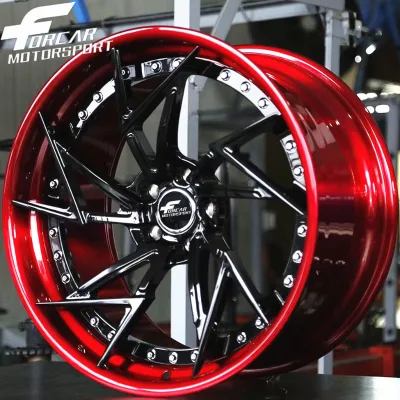
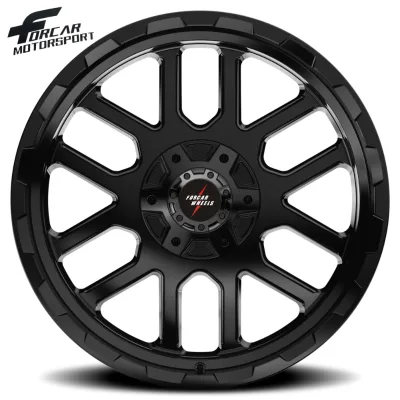
High Quality Customized Forged Aluminum Alloy Wheels Wheel Rims for off Road
$38.00 - $50.00
MOQ: 4 Pieces


Customizable Forged Aluminum Alloy Wheel Rims for off-Road Cars - Various Designs
$192.00 - $350.00
MOQ: 4 Pieces




Comprehensive Sourcing Guide
Strategic Sourcing Guide for Forged Aluminum Off-Road Wheel Rims
Procuring forged aluminum off-road wheel rims requires a rigorous approach that balances performance demands with supply chain reliability. The market for these components is characterized by a wide variance in specifications, certifications, and manufacturing origins. Buyers must navigate a landscape where "High Quality" is a common descriptor but requires verification through specific technical data points. This guide outlines the essential factors for sourcing these critical vehicle components, focusing on the intersection of material science, regulatory compliance, and supplier capability.
Technical Specifications and Material Composition
The foundation of a reliable off-road wheel lies in its material composition and dimensional accuracy. Forged aluminum wheels are distinct from cast alternatives due to their superior strength-to-weight ratio, a necessity for vehicles subjected to high-impact terrain. In the current market, the primary material observed is Aluminum, often specified as A6061 aluminum alloy in technical datasheets. This alloy is critical for its ability to withstand the torsional stresses encountered during off-road driving.
When evaluating product listings, buyers should scrutinize the specific alloy percentages and structural integrity claims. Data indicates that some listings reference specific composition ratios, such as Aluminum content at 45% or Wheel Rim content at 71%, though these figures often require context regarding the specific manufacturing process. The weight of the wheel is a significant performance metric; observed weights in the market range from 10kg to 23kg, depending on the diameter and load rating. A lighter wheel reduces unsprung mass, improving suspension response, but the trade-off must be balanced against the maximum load capacity.
Dimensional specifications are equally critical. The wheel hub diameter typically spans a range of 16 to 20 inches, covering the most common off-road vehicle sizes. Buyers must verify the Center Bore (CB) and Pitch Circle Diameter (PCD) to ensure compatibility with their vehicle's axle. Observed CB values vary significantly, ranging from 56.1mm to 73.1mm for standard applications, while heavy-duty variants may feature a CB of 110.2mm. Similarly, PCD values such as 5x112, 5x150, and 5x10⁸ are common, and selecting the wrong PCD will render the wheel unusable regardless of its quality. The offset (Et) is another vital parameter, with observed ranges from 20 to 60, influencing the wheel's stance and clearance within the wheel well.
Compliance and Certification Verification
In the B2B procurement of automotive components, certification is not merely a formality but a legal and safety requirement. The supply chain for forged aluminum wheels is heavily regulated, and buyers must demand proof of compliance with international standards. The most frequently cited certifications in the market include ISO, TUV, VIA, DOT, and CE. These acronyms represent distinct testing regimes: ISO ensures quality management systems are in place, TUV and VIA are rigorous third-party safety tests, DOT compliance is mandatory for the United States market, and CE indicates conformity with European health, safety, and environmental protection standards.
It is imperative to note that not every listed product possesses all certifications. A supplier may claim "High Quality" or "Strict Quality Management System," but without specific certification documentation, these claims remain unverified observations. Buyers should request valid certificates for each batch of wheels ordered. For instance, while some product models are listed with ISO and TUV certifications, others may only hold ISO and VIA. The absence of a specific certification, such as DOT, for a shipment destined for the North American market is a critical red flag. Furthermore, the "prod_standard" field in supplier data often references specific model numbers or alloy standards (e.g., 20× 9.5 A6061 aluminum), which serve as internal benchmarks but do not replace external regulatory certification.
Cost Drivers and Pricing Dynamics
The pricing of forged aluminum off-road wheels is influenced by a complex matrix of factors, including material costs, manufacturing complexity, and order volume. The observed price range in the market spans from $30 to $698 USD per unit. This wide disparity reflects differences in wheel size, load capacity, finish quality, and the depth of certification. A wheel priced at the lower end of the spectrum may be a smaller diameter (e.g., 16-inch) with a standard finish, while the upper end likely represents larger diameters (18-20 inches) with specialized coatings like Satin Black or Brushed Blue, and higher load ratings.
Minimum Order Quantity (MOQ) is another significant cost driver. The market shows an MOQ range of 1 to 100 units. Suppliers offering an MOQ of 1 are typically catering to sample procurement or small fleet replacements, often at a premium unit price. Conversely, buyers ordering at the higher end of the MOQ spectrum (e.g., 100 units) can negotiate better pricing and potentially secure more favorable shipping terms. The packaging method also impacts cost; "Carton Packing" or "Cartons" are standard, but the durability of the packaging affects the risk of damage during transit, which can indirectly influence the total cost of ownership if replacement costs are high.
Typical Applications and Performance Requirements
Forged aluminum wheels are engineered for specific high-stress applications. The primary use case is off-road driving, where wheels must endure potholes, rocks, and uneven surfaces without failing. The "Drive Wheel" specification is a key indicator of application; while some wheels are designed for Front-Wheel Drive (FWD) vehicles, others are rated for Four-Wheel Drive (4WD) systems, which place different stress loads on the wheel assembly.
Load capacity is the definitive metric for application suitability. Observed maximum load ratings in the market reach up to 1600kg, a figure that must be matched against the vehicle's Gross Vehicle Weight Rating (GVWR). A wheel with a 10kg weight and a lower load rating may be suitable for light utility vehicles, whereas a 23kg wheel with a 1600kg capacity is required for heavy-duty trucks or expedition vehicles. The "Spoke Type," often described as "Equal Diameter Spoke," is designed to distribute stress evenly across the wheel face, preventing fatigue failure in the spokes during high-impact events. Additionally, the "Center Lock" cap type is a specialized feature often found on heavy-duty or racing applications, requiring specific lug nut compatibility.
Supplier Evaluation and Origin Analysis
Evaluating a supplier for forged aluminum wheels requires a deep dive into their operational capabilities and geographic origin. The vast majority of the supply chain for these components originates in China, as indicated by "prod_origin" and "Made in China" data points. While this location offers competitive pricing and manufacturing scale, it necessitates rigorous due diligence regarding logistics and quality control.
Buyers should assess the supplier's ability to handle customization. The market data confirms that "Customization" is available, allowing buyers to request specific colors (e.g., Satin Black, Brushed Blue), finishes, or dimensional adjustments. However, customization often extends lead times and increases the risk of quality variance. The "Advantage" of a "Strict Quality Management System" is a common claim; buyers must verify this by asking for audit reports or process documentation. Furthermore, the "prod_model" identifiers (such as Luyang, 1790, BLK01, BT-OFR-1617) serve as unique identifiers for specific product lines. Buyers should ensure that the model number corresponds to the exact specifications required, as different models may have vastly different load ratings or material compositions despite similar appearances.
Quality Control and Inspection Protocols
Quality control (QC) is the final barrier between a defective product and a safe vehicle component. Given the critical nature of wheel failure, which can lead to catastrophic accidents, buyers must implement a robust QC protocol. The "High Quality" attribute listed in product descriptions is subjective and must be validated through objective testing.
Inspection should begin with a visual check for surface defects, ensuring that finishes like "Brushed Blue" or "Satin Black" are applied evenly without bubbles or peeling. Dimensional verification is essential; the PCD, CB, and Et values must be measured against the supplier's specifications using precision tools. For example, a claimed Et of 60 must be verified, as a deviation of even a few millimeters can affect vehicle handling. Load testing is also crucial; while suppliers may claim a 1600kg max load, independent third-party testing is recommended for large orders to confirm the wheel does not deform or crack under stress. The "Alloy" content, often cited as 35% or 45% in various listings, should be verified through material analysis to ensure the A6061 aluminum standard is met.
Long-Term Procurement Considerations
Sourcing forged aluminum wheels is not a one-time transaction but a long-term partnership that requires ongoing management. Buyers must consider the availability of spare parts, such as center caps and lug nuts, to ensure the longevity of the wheel assembly. The "prod_packing" method, whether "Carton Packing" or "Cartons," must be evaluated for its ability to protect the wheels during long-distance shipping from China to the destination market.
Sustainability and supply chain resilience are also becoming important factors. With the "prod_standard" often referencing specific alloy standards, buyers should inquire about the supplier's sourcing of raw aluminum to ensure it meets environmental and ethical standards. Additionally, the lead time for customized orders can vary significantly; while standard models may be readily available, custom colors or specific PCD configurations may require extended production windows. Buyers should plan their inventory accordingly to avoid stockouts, especially for specialized off-road vehicles where replacement parts are critical for operational continuity.
In conclusion, sourcing forged aluminum off-road wheel rims demands a meticulous approach that prioritizes verified specifications over marketing claims. By focusing on material composition, rigorous certification checks, and detailed supplier evaluation, buyers can secure high-performance wheels that meet the demanding requirements of off-road applications. The wide range of observed prices, sizes, and certifications underscores the need for a disciplined procurement strategy that aligns technical needs with supply chain realities.
FAQs
What certifications are available for these wheels?
Available certifications include ISO, TUV, VIA, DOT, and CE. Buyers must verify specific certificates for each batch, as not every listed product possesses all certifications, and some models may only hold ISO and TUV.
Which material composition is used for these rims?
The primary material is Aluminum, often specified as A6061 aluminum alloy. Some listings reference specific composition ratios like 45% aluminum content, though this requires context regarding the specific manufacturing process and alloy standards.
How does the weight affect performance for off-road use?
Observed weights range from 10kg to 23kg depending on diameter and load rating. A lighter wheel reduces unsprung mass to improve suspension response, but this must be balanced against the maximum load capacity required for the vehicle.
Can I customize the color and finish of the wheels?
Customization is available for specific colors like Satin Black or Brushed Blue. However, customization often extends lead times and increases the risk of quality variance, so buyers should verify the supplier's ability to handle these requests.
What is the price range for these forged aluminum rims?
The observed price range spans from 30 to 698 USD per unit. This disparity reflects differences in wheel size, load capacity, finish quality, and the depth of certification, with larger diameters typically costing more.
Which drive wheel types are supported by these rims?
The rims support both Front-Wheel Drive (FWD) and Four-Wheel Drive (4WD) systems. Buyers must select the correct drive wheel specification as it places different stress loads on the wheel assembly depending on the vehicle configuration.
What are the typical dimensions for these wheel rims?
The wheel hub diameter typically spans a range of 16 to 20 inches. Buyers must verify the Center Bore and Pitch Circle Diameter to ensure compatibility, as values like 5x112 or 5x150 are common and critical for fitment.