Source Forged Brass Hydraulic Hose Fitting for Pipe Lines Connect
Compare 30 listings for Forged Brass Hydraulic Hose Fitting suitable for pipe lines connect, metal processing machinery parts, and water pipe applications. Buyers can evaluate specifications like working pressure, thread types, and customization options from verified suppliers.
Key considerations
Products List


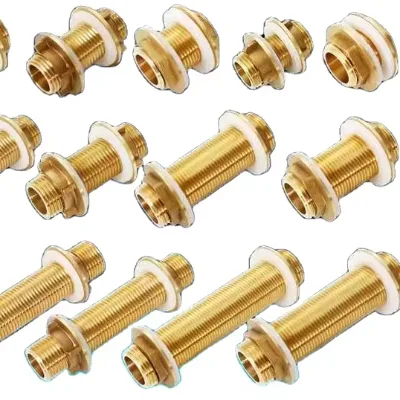


Washing Hose Fittings Hydraulic Rubber Hose Fitting for Washing Machine
$0.10 - $0.50
MOQ: 1000 Pieces


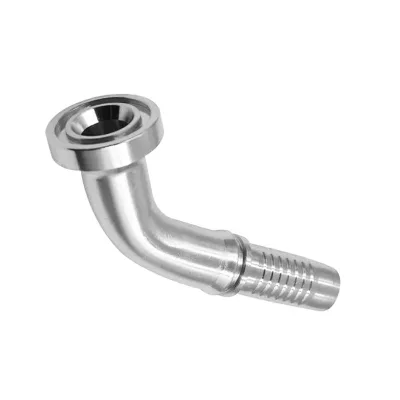

Cold Forged Hex Tube Connector Hydraulic Hose Fittings for Industrial Fluid Systems
$0.39 - $0.40
MOQ: 50000 Pieces

Comprehensive Sourcing Guide
Strategic Sourcing Guide for Forged Brass Hydraulic Hose Fittings
Understanding the Product Category and Technical Baseline
When initiating a procurement strategy for forged brass hydraulic hose fittings, buyers must first establish a clear understanding of the specific product attributes that define this category. The core keyword, "Forged Brass Hydraulic Hose Fitting," points to a component manufactured through a forging process, which generally imparts superior grain structure and mechanical strength compared to cast alternatives. The material composition is explicitly identified as brass, a copper-zinc alloy known for its corrosion resistance, machinability, and suitability for hydraulic environments.
The technical profile of these fittings varies significantly based on the specific application requirements. Observed data indicates that these components are often designed for metal processing machinery parts, water pipe systems, and general pipe line connections. The manufacturing process is a critical differentiator; while some listings specify "Forged" as the primary technic, others in the broader market may utilize "Casting." For high-pressure hydraulic applications, the forging method is generally preferred to ensure structural integrity under stress. The fittings are available in various connection types, including female, male, and flange connections, with thread types ranging from BSPT and NPT to ISO228 standards.
Dimensional specifications are equally diverse. Buyers should expect to find products with custom-made sizes, often ranging from DN15 to DN40, or specific thread sizes such as 1/8-1/4, 1/4-3/8, and up to 3/4-1 inch. The shape of the fitting is typically equal, and the angle is frequently 90 degrees, though custom angles may be available. The head code is commonly hexagon, facilitating installation with standard wrenches, while some variations may feature a round head type. Surface treatments, such as chrome plating, are applied to enhance durability and aesthetic finish, often resulting in a golden or corol appearance.
Compliance, Certification, and Standards Verification
Navigating the regulatory landscape is a pivotal step in sourcing hydraulic fittings. Compliance ensures that the components meet international safety and quality benchmarks, reducing the risk of system failure. The supplied data highlights several key certifications and standards that buyers should verify during the supplier evaluation process.
Certifications such as RoHS and CE are frequently cited, indicating compliance with restrictions on hazardous substances and conformity with European health, safety, and environmental protection standards. Some listings also reference ISORoHS and CE, suggesting a combined adherence to specific regional and material safety protocols. It is crucial for buyers to request valid, up-to-date certification documents rather than relying solely on marketing claims.
Regarding industry standards, the market data presents a mix of national and international specifications. Commonly observed standards include ASTM, GB, DIN, and ANSI. For instance, the ASTM standard is mentioned in the context of product warranties and general quality benchmarks, while GB (Guobiao) and DIN (Deutsches Institut für Normung) represent Chinese and German standards, respectively. Thread standards are equally critical, with BSPT, NPT, and ISO228 being the primary references. Buyers must ensure that the specific thread standard of the purchased fitting matches the existing hydraulic system to prevent leaks and cross-threading issues.
The following table summarizes the key compliance and standard attributes observed in the market data:
| Attribute Category | Observed Standards/Certifications | Verification Requirement |
|---|---|---|
| Safety & Environmental | RoHS, CE, ISORoHS | Request current certificate copies; verify scope of application. |
| Material & Quality | ASTM, GB, DIN, ANSI | Confirm specific ASTM grade for brass; check GB/DIN equivalence. |
| Thread Specifications | BSPT, NPT, ISO228 | Validate thread pitch and angle against system requirements. |
| Warranty & Testing | ASTM (referenced) | Clarify if warranty covers material defects or workmanship. |
Buyers should exercise caution when interpreting standard references. While "ASTM" is listed, specific sub-standards like ASTM B16 or EN 12164 are not explicitly confirmed in the provided data. Therefore, procurement teams must explicitly ask suppliers for the exact material grade and testing protocols rather than assuming a specific standard is met.
Cost Drivers and Pricing Dynamics
The pricing of forged brass hydraulic hose fittings is influenced by a complex interplay of material costs, manufacturing complexity, and order volume. The observed price range in the market spans from $0.10 to $15.00 USD per unit. This wide variance is not indicative of a single product but rather reflects differences in size, complexity, thread type, and order quantity.
Material costs constitute a significant portion of the final price. Brass is a commodity metal, and its price fluctuates based on global copper and zinc markets. Larger fittings, such as those in the 3/4-1 inch range, inherently require more raw material and thus command a higher unit price compared to smaller 1/8 inch components. Furthermore, the "Forged" manufacturing process is generally more expensive than casting due to the higher energy consumption and specialized tooling required.
Order Volume and Minimum Order Quantity (MOQ) are the primary levers for cost reduction. The observed MOQ range is extensive, spanning from 1 unit to 50,000 units. Buyers purchasing small quantities, such as for prototyping or maintenance, will likely face a higher per-unit cost. Conversely, large-scale procurement allows for economies of scale, potentially bringing the unit price closer to the lower end of the observed range. Customization is a major cost driver; while "Customization" and "Customized" options are available, they often incur additional tooling fees and higher unit costs compared to standard off-the-shelf items.
Lead times also impact the effective cost of procurement. The observed delivery time is approximately 30 days. Rush orders or expedited shipping will invariably increase the total landed cost. Additionally, packaging requirements, such as "Safe Export Package," "Carton and Pallet," or "According to Your Request," can influence logistics costs. Buyers should negotiate packaging specifications to balance protection needs with shipping efficiency.
Typical Applications and Operational Environments
Understanding the intended application is essential for selecting the correct fitting. The market data indicates that forged brass hydraulic hose fittings are versatile components used across several industrial sectors.
The primary application identified is "Metal Processing Machinery Parts." This includes equipment used in metal casting, straightening, cutting, and recycling. In these environments, fittings must withstand vibration, high pressure, and potential exposure to metal shavings or coolants. The working pressure range observed is 1.0-1.6 MPa (10-25 bar), which is suitable for many medium-pressure hydraulic systems but may be insufficient for heavy-duty industrial presses requiring higher pressure ratings.
Another significant application area is "Water Pipe" systems. Here, the corrosion resistance of brass is a critical asset. The fittings are used to connect pipes in plumbing and irrigation systems where water quality and leak prevention are paramount. The "Pipe Lines Connect" attribute further reinforces their role in fluid transfer systems.
The "Forged" nature of these fittings makes them particularly suitable for applications requiring high mechanical strength and reliability. The "Equal" shape and "90 Degree" angle are common configurations for routing hoses around corners in machinery. The "Spiral" thread distribution ensures a tight seal, which is vital for preventing fluid loss in both hydraulic and water applications. Buyers should verify that the specific pressure rating of the fitting matches the maximum operating pressure of their system, as exceeding the 1.6 MPa limit could lead to catastrophic failure.
Supplier Evaluation and Sourcing Criteria
Selecting the right supplier is as important as selecting the right product. Given the global nature of the market, with origins primarily in "Ningbo, China" and "Made in China," buyers must conduct thorough due diligence.
First, verify the supplier's capability for customization. The data confirms that "OEM/ODM" is acceptable and "Customization" is available. This suggests that suppliers can adapt product models, such as the ACE-S8021 or HH173, to meet specific client needs. Buyers should assess the supplier's engineering support to ensure they can handle custom dimensions, thread types, or surface treatments like chrome plating.
Second, evaluate the supplier's quality management systems. While specific ISO 9001:2015 certification is not explicitly confirmed in the provided facts, the presence of "ASTM" and "CE" certifications implies a commitment to quality. Buyers should request evidence of their quality control processes, including inspection reports for dimensions, tolerance, and pressure testing. The observed tolerance of +/-0.05mm is a precise specification that requires rigorous manufacturing control.
Third, consider the supplier's logistical capabilities. The "Safe Export Package" and "Carton and Pallet" options indicate an awareness of international shipping requirements. Buyers should confirm the supplier's experience with export markets, as the data notes "Global" as an export market. This suggests the supplier is accustomed to handling international documentation and shipping logistics.
Finally, assess the supplier's responsiveness and communication. The 30-day delivery time is a standard lead time, but flexibility in scheduling and communication regarding production status is crucial for supply chain stability.
Quality Control and Long-Term Procurement Considerations
Ensuring consistent quality over time requires a robust quality control strategy. Buyers should implement a multi-stage inspection process. The initial stage involves verifying the incoming materials, specifically the brass composition, to ensure it meets the required standards. Dimensional checks are critical, particularly for thread compatibility and tolerance levels. The observed tolerance of +/-0.05mm is a benchmark that should be validated through random sampling or third-party inspection.
Surface treatment quality is another key area. Chrome plating should be inspected for uniformity, adhesion, and absence of defects like pitting or peeling, which can lead to premature corrosion. The "Golden" or "Corol" appearance mentioned in the data should be consistent with the agreed-upon finish specifications.
For long-term procurement, buyers should establish a relationship based on performance rather than just price. The availability of a warranty, referenced as "ASTM" in the data, provides a safety net for material defects. However, the specific terms of this warranty should be clearly defined in the contract. Buyers should also consider the availability of spare parts and the supplier's ability to maintain production consistency over time.
Standardization is a key long-term strategy. By specifying a limited range of thread types (e.g., NPT or BSPT) and sizes, buyers can reduce inventory complexity and simplify maintenance. The "Custom Made" nature of some products allows for optimization, but over-customization can lead to supply chain fragility. Buyers should balance the need for specific customizations with the benefits of standardization.
In conclusion, sourcing forged brass hydraulic hose fittings requires a meticulous approach that balances technical specifications, compliance requirements, and cost factors. By leveraging the observed data on standards, certifications, and applications, buyers can make informed decisions that ensure the reliability and performance of their hydraulic systems. The focus should remain on verifying claims through documentation and maintaining clear communication with suppliers to mitigate risks associated with customization and global logistics.
FAQs
What certifications do forged brass hydraulic hose fittings have?
These fittings typically carry RoHS and CE certifications to ensure safety and environmental compliance. Some listings also reference ISORoHS standards. Buyers should verify current certificate copies to confirm the scope of application before procurement.
Which standards apply to the thread specifications of these fittings?
The fittings conform to BSPT, NPT, and ISO228 thread standards for secure connections. Additional material standards include ASTM, GB, DIN, and ANSI. It is critical to validate the specific thread pitch against your existing hydraulic system to prevent leaks.
Can buyers request custom sizes and specifications for these fittings?
Yes, customization is available for size, thread type, and surface treatment. Products often come in custom-made sizes ranging from DN15 to DN40. OEM and ODM services are acceptable, allowing for tailored dimensions like 1/8 to 1 inch threads.
What is the typical lead time for delivery of these fittings?
The standard delivery time is approximately 30 days from order confirmation. This timeline applies to standard production runs. Expedited shipping or rush orders may incur additional costs and require specific negotiation with the supplier regarding capacity.
How does the working pressure rating affect the selection of these fittings?
The observed working pressure range is 1.0 to 1.6 MPa, equivalent to 10 to 25 bar. This rating suits medium-pressure hydraulic systems but may be insufficient for heavy-duty presses. Buyers must ensure the fitting rating matches their system's maximum operating pressure.
What manufacturing techniques are used for these brass fittings?
The primary manufacturing technique is forging, which provides superior grain structure and mechanical strength. Some market variations may use casting, but forging is preferred for high-pressure applications. The fittings often feature chrome surface treatment for enhanced durability.
Where are these forged brass fittings typically manufactured?
The products originate from Ningbo, China, and other locations within China. Suppliers in this region have established export capabilities to global markets. Buyers should confirm the specific factory location to assess logistics and shipping requirements effectively.