Source FSN Flexstrip Jumper Cable for Industrial, Medical, and Home Appliance
Compare 30 listings for FSN Flexstrip Jumper Cable tailored for industrial, medical, and home appliance applications. Buyers can evaluate customization options, connector types, and delivery times from verified manufacturers in Shenzhen.
Key considerations
Products List


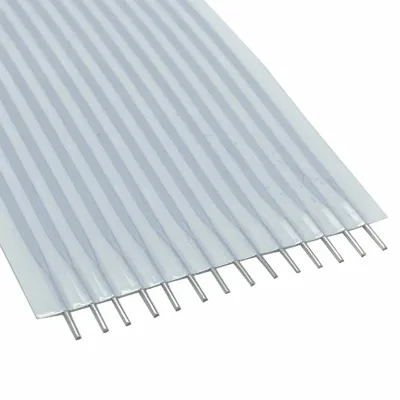


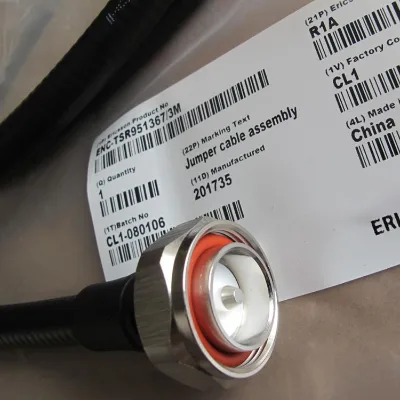
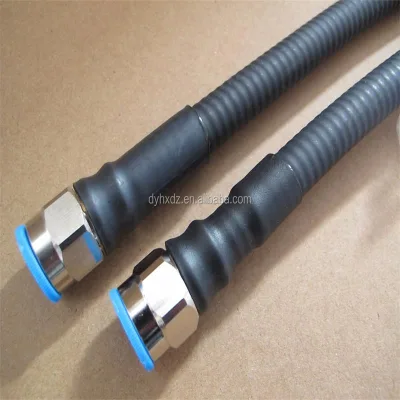
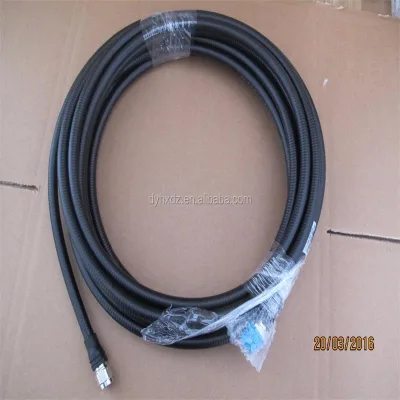


Comprehensive Sourcing Guide
Strategic Sourcing Guide for FSN Flexstrip Jumper Cable Procurement
Understanding the Product Category and Technical Specifications
When sourcing FSN flexstrip jumper cables, buyers must first distinguish between the broad category of wire harnesses and the specific attributes of flexstrip assemblies. The term "FSN" often implies a specific configuration or standard within the flexible cable market, characterized by flat, ribbon-like conductors that allow for compact routing in tight spaces. Based on available market data, these products frequently utilize copper as the primary conductor material, specifically bare copper wire, which ensures optimal electrical conductivity and signal integrity. The core construction often involves a rubber cover material, providing necessary insulation and flexibility while protecting the internal conductors from environmental stress.
In the context of jumper cables and flexstrips, the application scope is diverse, ranging from RF cables to local communication cables. For instance, specific product models in this category, such as the "N2 Cable Serie," operate within a frequency band of 0-3 MHz. These units are engineered to maintain a VSWR (Voltage Standing Wave Ratio) of less than 1.2 and a signal loss of less than 0.1 dB, indicating high efficiency in signal transmission. The impedance for such specialized cables is typically standardized at 50 Ohms, a critical parameter for matching with RF and high-frequency electronic systems.
The physical configuration of these cables varies significantly. Some models are designed as custom cable assemblies with specific connector types like N2 connectors, while others utilize standard connectors such as SMA, JST, Molex, Yazaki, Hirose, or TE. The wire color options generally include black, white, brown, and red, allowing for easy identification of polarity and circuit paths in complex assemblies. Furthermore, the packaging is often standardized, utilizing plastic bags within carton boxes, though some suppliers offer custom packaging according to specific customer requirements. Understanding these technical baselines is essential before proceeding to supplier selection, as the "flexstrip" designation may imply specific bending radii and durability requirements that differ from standard round wire harnesses.
Compliance, Certification, and Quality Standards
Navigating the regulatory landscape is a critical component of sourcing FSN flexstrip jumper cables. Buyers must verify that suppliers adhere to recognized international standards to ensure product safety and reliability. The market data indicates that high-quality products in this sector frequently carry certifications such as RoHS (Restriction of Hazardous Substances), ISO (International Organization for Standardization), and CE (Conformité Européenne). These certifications are not merely marketing terms but represent adherence to strict environmental and safety protocols.
Specific quality management systems are also prevalent among reputable manufacturers. Data suggests that suppliers often hold ISO9001 for quality management, ISO14001 for environmental management, and ISO13485 for medical device quality systems. In the automotive sector, IATF1694 is a crucial certification that demonstrates a supplier's capability to meet the rigorous demands of the automotive industry. Additionally, regional certifications like CCC (China Compulsory Certification) and VDE (Verband der Elektrotechnik) are common, particularly for products originating from or intended for the Chinese and European markets.
The standard for the product itself is often explicitly stated, such as "RoHS&ISO9001" or specific industry standards like "Dupont Jumper Wires cable." When evaluating a potential supplier, procurement teams should request valid certificates for these standards. It is important to note that while RoHS is a widely observed attribute, the presence of other certifications like CCC, VDE, or IATF1694 depends on the specific product line and the target market. Buyers should not assume that all listed products possess every certification; instead, they must verify the specific compliance status for the exact model number being procured. The "Main Product" description often highlights "Wire Harness and Custom Cable Assembly," suggesting that the certification scope may cover the entire assembly process, including crimping and molding.
Cost Drivers and Pricing Variables
The pricing structure for FSN flexstrip jumper cables is influenced by several dynamic factors, with the observed market range spanning from $0.01 to $100 USD. This wide variance reflects differences in complexity, material costs, and order volume. The primary cost driver is the customization level. While standard off-the-shelf cables may fall at the lower end of the price spectrum, custom cable assemblies with specific connector types, wire colors, and lengths command higher prices. The "Customization: Available" attribute indicates that buyers can tailor the product to their exact needs, but this flexibility often incurs a premium.
Material costs play a significant role in the final price. The use of high-purity copper and specialized rubber coverings contributes to the base cost. Additionally, the type of connectors used, such as JST, Molex, or TE, can significantly impact the unit price, as these components vary in manufacturing complexity and material value. The "Industry Type" classification, such as "Industrial Wire Harness" or "Medical Wire Harness," also influences pricing, as medical-grade harnesses require stricter quality controls and higher-grade materials.
Order volume is another critical variable. The Minimum Order Quantity (MOQ) ranges from 1 to 1000 units. Smaller orders, often necessary for prototyping or low-volume production, typically carry a higher per-unit cost due to setup and handling fees. Conversely, bulk orders of 1000 units or more can leverage economies of scale to reduce the unit price. Buyers should also consider the "Lead Time" as a cost factor; expedited delivery options, such as the "3-7 Days" window mentioned for some products, may incur additional charges compared to standard lead times of 10-20 days. Packaging requirements, whether standard plastic bags or custom solutions, can also add to the overall cost.
Typical Applications and Industry Use Cases
FSN flexstrip jumper cables serve a multitude of industries, each with unique requirements for signal transmission and mechanical durability. The "Application" field in product data highlights several key sectors, including RF communication, local communication, industrial electronics, automobiles, home appliances, and motorcycles. In the RF and communication sectors, cables with specific impedance (50 Ohms) and low loss characteristics are essential for maintaining signal integrity in antennas and transceivers. The "N2 Cable Serie" and "SMA-J-SFF-SMA" models are examples of products tailored for these high-frequency applications.
In the industrial and automotive sectors, the focus shifts to robustness and reliability. "Industrial Wire Harness" and "Automotive Wire Harness" applications require cables that can withstand vibration, temperature fluctuations, and exposure to chemicals. The "General Wiring Harness" often features crimping assembly classes and injection molding assembly, ensuring secure connections in harsh environments. Medical applications, denoted by "Medical Wire Harness," demand the highest level of precision and biocompatibility, often necessitating ISO13485 certification.
The versatility of these cables is further demonstrated by their use in "Home Appliance" and "Motorcycle" applications. Here, the "Wire Color" options (black, white, brown, red) help in organizing complex wiring systems within compact enclosures. The "Signal" type, often "Low Voltage Wiring Harness," is suitable for control circuits and data transmission within these devices. Whether for "Electronic," "Computer," or "Automobile" use, the ability to customize the harness type—ranging from waterproof connectors to custom cable assemblies—makes FSN flexstrip jumper cables a versatile solution for modern engineering challenges.
Supplier Evaluation and Selection Criteria
Selecting the right supplier for FSN flexstrip jumper cables requires a rigorous evaluation process that goes beyond price comparison. Buyers should prioritize suppliers who demonstrate a clear capability for customization, as indicated by the "Service: OEM and ODM, We Accept Customization" attribute. This capability ensures that the supplier can adapt their manufacturing processes to meet specific design requirements, such as unique connector types or specialized wire configurations.
The origin of the product is another important factor. Many products in this category originate from Shenzhen, China, a major hub for electronics manufacturing. Buyers should verify the "prod_origin" and ensure that the supplier has a proven track record in this region. The "Delivery Time" is also a critical metric; suppliers offering delivery within 3-7 days after payment receipt may provide a competitive advantage for urgent projects, while those with 10-20 day lead times may be more suitable for planned production runs.
Quality assurance capabilities are paramount. Buyers should look for suppliers who hold multiple certifications, such as ISO9001, ISO14001, and IATF1694, as these indicate a mature quality management system. The "General Wire Harness" capabilities, including crimping and injection molding assembly, should be verified through site audits or quality reports. Additionally, the "Packaging" method, whether standard or custom, should align with the buyer's logistics and storage requirements. A supplier's ability to provide detailed product specifications, such as the "prod_model" and "prod_standard," is a strong indicator of transparency and professionalism.
Quality Control and Long-Term Procurement Considerations
Ensuring the long-term reliability of FSN flexstrip jumper cables requires a robust quality control strategy. Buyers must verify that the manufacturing process includes rigorous testing for electrical performance, such as VSWR and loss measurements, to ensure they meet the specified standards (e.g., VSWR < 1.2, Loss < 0.1 dB). The "Bandaging Materials," such as corrugated pipe, should be inspected for durability and protection against physical damage. The "Shape" of the harness, typically round, must be consistent to ensure proper fit and function in the final assembly.
Long-term procurement considerations involve establishing a stable supply chain. Buyers should assess the supplier's capacity to handle volume fluctuations and their ability to maintain consistent quality over time. The "Main Product" focus on "Wire Harness and Custom Cable Assembly" suggests that the supplier has the infrastructure to support ongoing production needs. It is also advisable to review the "Lead Time" consistency; while some products offer 3-7 day delivery, others may require 10-20 days, and buyers should plan their inventory accordingly.
Finally, buyers should consider the "Service" aspect, including after-sales support and technical assistance. A supplier that offers OEM and ODM services is likely to be more responsive to design changes and quality issues. By focusing on these long-term factors, buyers can mitigate risks and ensure a sustainable supply of high-quality FSN flexstrip jumper cables for their operations.
Comparative Analysis of Product Attributes
To facilitate a clearer understanding of the diverse options available in the FSN Flexstrip Jumper Cable market, the following table summarizes key attributes observed across different product models. This comparison highlights the variations in specifications, certifications, and applications that buyers should consider during the sourcing process.
| Attribute Category | Product Model A (RF/Comms) | Product Model B (Industrial/Auto) | Product Model C (Medical/Custom) |
|---|---|---|---|
| Primary Application | RF Cable, Local Communication | Industrial, Electronic, Automobile | Medical, Home Appliance, Motorcycle |
| Conductor Material | Bare Copper Wire | Copper | Copper |
| Connector Type | N2 Connector Type | SMA, JST, Molex, TE | Custom (JST, Molex, etc.) |
| Impedance | 50 Ohms | Varies | Varies |
| Frequency Band | 0-3 MHz | N/A | N/A |
| VSWR | < 1.2 | N/A | N/A |
| Signal Loss | < 0.1 dB | N/A | N/A |
| Certifications | RoHS, ISO, CE | RoHS, CCC, VDE | ISO14001, ISO9001, ISO13485, IATF1694 |
| Lead Time | 3-7 Days | 10-20 Days | 10-20 Days |
| Packaging | Plastic Bags in Carton Box | Custom Requirements | Custom Requirements |
| Customization | Available | Available | Available |
This table illustrates that while the core material (copper) remains consistent, the specific applications and certifications vary significantly. Buyers must align their selection with their specific industry requirements, ensuring that the chosen product meets the necessary performance and compliance standards. By carefully evaluating these attributes, procurement teams can make informed decisions that balance cost, quality, and functionality.
FAQs
What certifications do these cables typically hold?
These cables typically hold RoHS, ISO, and CE certifications. Some models also carry CCC, VDE, ISO14001, ISO13485, and IATF1694 standards to ensure compliance with environmental and safety protocols for various industries.
Can I customize the wire harness assembly?
Yes, customization is available for wire harnesses and custom cable assemblies. Buyers can specify connector types like SMA or JST, wire colors, and packaging requirements to meet specific design needs.
How long is the delivery time for orders?
Delivery times vary between 3 to 20 days depending on the specific product and order status. Some items ship within 3-7 days after payment, while others may require 10-20 days for production.
What is the minimum order quantity for these cables?
The minimum order quantity ranges from 1 to 1000 units based on the supplier and product type. Lower MOQs allow for prototyping, while bulk orders of 1000 units often benefit from economies of scale.
Which connector types are supported for these cables?
Supported connector types include N2, SMA, JST, Molex, Yazaki, Hirose, and TE. Specific models like the N2 Cable Serie use N2 connectors, while others utilize standard industrial connectors for various applications.
What is the price range for these jumper cables?
The observed price range spans from 0.01 to 100 USD per unit. Costs depend on customization levels, material quality, connector types, and order volume, with standard items generally costing less than custom assemblies.