Source Full Automatic CMYKW DTF Printer for clothing, labels, and films
Find 21 listings for the Full Automatic CMYKW DTF Printer to compare models like VJ-60DTF-4H and Sk-A3. Buyers can evaluate specifications including printhead types, ink systems, and printing sizes for various industrial applications.
Key considerations
Products List


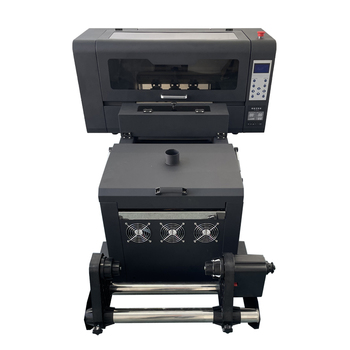
$8500.00 - $9600.00
MOQ: 1 sets


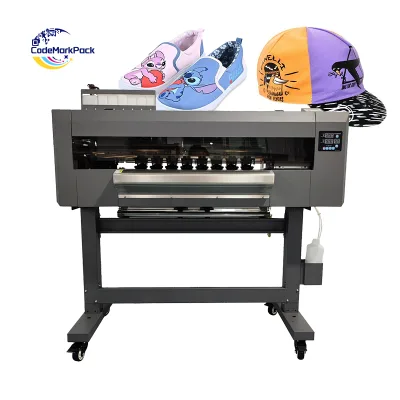
$2516.80 - $3000.80
MOQ: 1


Comprehensive Sourcing Guide
Strategic Sourcing Guide for Full Automatic CMYKW DTF Printers
The global demand for Direct-to-Film (DTF) printing technology has surged, driven by the need for versatile, high-quality textile decoration that bridges the gap between traditional screen printing and digital sublimation. For procurement professionals seeking a "Full Automatic CMYKW DTF Printer," the market presents a complex landscape of semi-automatic and fully automatic configurations, varying ink chemistries, and diverse printhead architectures. This guide synthesizes available product data and industry standards to provide a disciplined framework for evaluating suppliers, verifying technical claims, and mitigating procurement risks. The focus remains strictly on observable product attributes and verified specifications rather than unverified marketing assertions.
Technical Architecture and Printhead Selection
The core of any DTF printing system lies in its mechanical automation and the precision of its print engine. When sourcing a full automatic unit, buyers must distinguish between "Semi-Automatic" and "Automatic" grades, as these terms dictate the level of operator intervention required for film feeding, printing, powdering, and curing. Current market observations indicate a mix of both grades. Some units are classified as Semi-Automatic, requiring manual loading or specific operator oversight during the curing cycle, while others are explicitly rated as Automatic, promising a continuous workflow from film input to finished transfer.
Printhead selection is the second critical technical variable. The supplied data highlights specific models such as the Epson F1080-A1, the I1600, and the I3200 series. The I3200 series, often found in high-volume industrial units, offers a wider print width and higher throughput compared to the I1600. For buyers requiring high-resolution output, the presence of an Epson F1080-A1 printhead suggests a focus on fine detail, potentially suitable for smaller format applications or high-definition graphics. The data also references a "1*Epson F1080-A1" configuration with a print width of 330mm, indicating a compact, potentially desktop or benchtop automatic solution. In contrast, larger industrial models utilizing the I3200 often support a 600mm (60cm) print width, accommodating wider garments and bulk production runs.
The printing interface and software ecosystem are equally vital for integration. Most observed units utilize USB2 or USB3 interfaces, ensuring compatibility with standard industrial workstations. The operating system support is frequently listed as Windows XP 32-bit, a legacy requirement that buyers must verify against their current IT infrastructure. If a facility relies on modern 64-bit Windows environments, the compatibility of the RIP software becomes a potential bottleneck. The data mentions specific RIP software options including Maintop, Miantop, Riin 10.5, and Flexiprint. Maintop and Miantop appear as standard or optional configurations, while Riin 10.5 is noted as a standard feature in some models. Procurement teams must confirm that the specific software version included with the machine supports the latest operating systems or requires a dedicated legacy workstation.
Ink Chemistry and Color Configuration
The "CMYKW" designation in the core keyword refers to the specific ink set required for DTF processes: Cyan, Magenta, Yellow, Key (Black), and White. The white ink component is critical for printing on dark fabrics, as it acts as an underbase. The supplied facts confirm the availability of CMYKW and CMYK+White configurations, alongside mentions of "Cmkyw" and "Cmykwv" (the latter potentially indicating a variant with additional color channels or a specific vendor notation).
Ink type is a primary differentiator. The data explicitly lists "DTF Ink" and "UV Ink" as distinct categories. It is crucial for buyers to understand that UV ink and DTF ink are chemically distinct and generally not interchangeable. A machine specified for "UV Ink" may not be suitable for standard DTF powder applications unless it is a hybrid model. The observed data also references "Pigment Ink," which is the standard base for DTF inks, ensuring adhesion and wash fastness. Buyers must verify that the ink system is specifically formulated for DTF transfer films, such as the "Ab Film" mentioned in the consumables list. The use of "Pet Film" is also noted as a standard media type, which serves as the carrier for the ink and powder before being heat-pressed onto the textile.
The color profile is another area requiring verification. While the keyword specifies CMYKW, some listings show "Cmkyw" or "Cmykwv." The presence of a "Multi-Colour Printing Press" attribute suggests the machine's capability to handle complex color gradients and full-spectrum printing. However, the actual color gamut depends on the specific ink formulation and the calibration of the RIP software. Buyers should request a color profile test print to ensure the machine can reproduce the specific Pantone or CMYK values required for their brand identity.
Operational Specifications and Physical Constraints
Physical dimensions and automation levels directly impact factory floor planning. The supplied data provides specific standard dimensions for various models, such as 1830930560mm, 1840800780mm, and 1758669CM. These variations indicate that "full automatic" does not equate to a single standard footprint; rather, it ranges from compact benchtop units to large industrial floor-standing machines. The weight of these units also varies significantly, with observations ranging from 70 Kg to 165 Kg. A 165 Kg unit likely includes integrated curing ovens and heavy-duty platen structures, whereas a 70 Kg unit may be a lighter, more portable automatic model.
The printing speed is a key performance indicator. Data points include a speed of 1.2 Square Meter/Hour for specific models and a resolution of 8 Pass at 720*1440dpi. This resolution suggests a balance between speed and quality, suitable for most commercial applications. However, for high-speed production, buyers should verify if the machine offers a "draft" mode or higher pass counts for premium quality. The "Printing Speed: 6.7CPI" metric found in some listings may refer to a specific mechanical drive parameter or a legacy measurement standard, requiring clarification against the more intuitive "Square Meter/Hour" metric.
The structure of the machine is also relevant. The data mentions "Platen Press" structures, which are common for flat-bed printing where the film is held on a flat surface during the printing process. This contrasts with roll-to-roll systems, which are often preferred for continuous high-volume production. Buyers must determine if their workflow requires a platen system for specific garment types or a roll-to-roll system for efficiency. The "Automatic Grade" being listed as either "Semi-Automatic" or "Automatic" further influences the labor cost and throughput expectations.
Compliance, Certification, and Safety Standards
While the market is saturated with claims, the supplied facts provide limited but specific certification data. The only explicitly mentioned certifications are RoHS and REACH. These are critical for ensuring that the machine and its consumables (inks, films, powders) comply with environmental and safety regulations, particularly for export to the European Union and other regulated markets. RoHS compliance ensures the absence of hazardous substances like lead and mercury in the electronic components, while REACH compliance addresses the registration, evaluation, authorization, and restriction of chemicals.
Buyers must treat these certifications as verification points rather than automatic guarantees. The presence of a "New" condition status suggests the machines are not refurbished, which is generally preferable for warranty and safety reasons. However, the "Condition: New" attribute does not inherently confirm compliance. Procurement teams should request valid, third-party test reports for RoHS and REACH for the specific model and ink batch being purchased. The absence of other certifications in the data, such as CE or UL, means buyers cannot assume electrical safety compliance without explicit documentation. The voltage specification of 220V is standard for many regions, but buyers must verify if the machine supports their local grid frequency and voltage stability to prevent damage to the mainboard or printheads.
Cost Drivers and Total Cost of Ownership
The observed price range for these units spans from $926 to $32,571 USD. This wide disparity reflects differences in automation levels, printhead technology, build quality, and included accessories. The lower end of the spectrum likely corresponds to semi-automatic or compact automatic units with basic features, while the higher end represents industrial-grade machines with advanced automation, larger print widths, and premium printheads like the I3200.
The Minimum Order Quantity (MOQ) is observed as 1 for all listed items, indicating that these machines are available for single-unit procurement, which is favorable for small to medium enterprises. However, the "Customization: Available" attribute suggests that buyers can negotiate specific configurations, such as software versions or ink system adjustments, which may impact the final price.
Beyond the initial purchase price, the Total Cost of Ownership (TCO) is heavily influenced by consumables. The data mentions "Ab Film" and "Pet Film" as consumables, alongside the ink itself. Buyers should calculate the cost per square meter of print, including the ink consumption rate, powder usage, and film waste. The "Print Resolution: 8 Pass" and "1.2 Square Meter/H" metrics allow for an estimation of production costs. Additionally, the "Mainboard: Hanson" specification points to a specific component manufacturer, which may affect the availability and cost of spare parts. A machine with a proprietary or less common mainboard might incur higher maintenance costs compared to one with widely available components.
Supplier Evaluation and Quality Assurance
When evaluating suppliers for full automatic CMYKW DTF printers, buyers should focus on the consistency of the product attributes listed. The data shows a mix of models, including "30 dtf printer," "UV," "60cm uv dtf printer," and specific model numbers like "VJ-60DTF-4H" and "VJ-60DTF-5H." This variety suggests that suppliers may offer a portfolio of machines rather than a single specialized product. Buyers should verify if the supplier is the original manufacturer or a distributor, as this impacts warranty support and technical expertise.
Quality control should begin with the verification of the "Printing Interface" and "System Supported" attributes. Ensuring that the USB2/USB3 interface and Windows XP compatibility align with the buyer's IT environment is a prerequisite for successful deployment. The "Software: Maintop" or "Miantop" options should be tested for stability and ease of use before finalizing the order. Furthermore, the "Print Head" type must be confirmed to match the intended application; for instance, the "1390" printhead mentioned in the data may indicate a specific legacy or alternative model that requires different maintenance protocols.
The "Product Origin: China" is a common attribute for this category, reflecting the manufacturing hub for DTF equipment. Buyers should ensure that the supplier provides clear documentation regarding the origin, including the factory address and contact details, to facilitate after-sales support. The "Packing: Wooden Box" specification indicates robust shipping packaging, which is essential for protecting delicate components like printheads during transit.
Long-Term Procurement and Scalability
Long-term success with DTF printing relies on the scalability of the chosen equipment. The "Automatic Grade" and "Printing Speed" are key indicators of future capacity. A machine rated as "Automatic" with a speed of 1.2 Square Meter/Hour may suffice for current needs but could become a bottleneck as order volumes increase. Buyers should consider the "Customization: Available" option to upgrade the machine later, such as adding a second printhead or increasing the curing capacity.
The "Usage" attribute, listing "Cloths Printer," "Label Printer," and "Platen Press," highlights the versatility of these machines. However, buyers must ensure that the specific model they select is optimized for their primary use case. For example, a machine configured for "Label Printer" usage might have different film handling mechanisms than one designed for "Cloths Printer" applications. The "Media Type: Pet Film" and "Consumables: Ab Film" specifications should be checked for global availability to prevent supply chain disruptions.
In conclusion, sourcing a Full Automatic CMYKW DTF Printer requires a meticulous review of technical specifications, ink chemistry, and supplier credentials. By focusing on the verified attributes of printhead models, automation grades, and compliance certifications, buyers can make informed decisions that align with their production goals and budget constraints. The wide range of available models and price points offers flexibility, but the complexity of the technology demands a disciplined approach to evaluation and quality assurance.
FAQs
What automation grades are available for full automatic CMYKW DTF printers?
Available units include both Semi-Automatic and Automatic grades. Buyers must verify the specific automation level as it dictates operator intervention for film feeding and curing cycles.
Which printhead models are commonly used in these printing systems?
Common models include Epson F1080-A1, I1600, and I3200 series. The I3200 supports wider 600mm print widths for industrial runs, while F1080-A1 suits compact 330mm applications.
Can these printers operate on Windows XP 32-bit systems?
Yes, many units explicitly support Windows XP 32-bit via USB2 or USB3 interfaces. Buyers must confirm RIP software compatibility like Maintop or Riin 10.5 with their existing IT infrastructure.
What ink types are compatible with full automatic CMYKW DTF printers?
Compatible inks include DTF Ink, UV Ink, and Pigment Ink formulations. Buyers must ensure the machine matches the specific ink chemistry, as UV and DTF inks are generally not interchangeable.
What are the standard physical dimensions for industrial DTF printer models?
Standard dimensions vary by model, with examples like 1830x930x560mm or 1840x800x780mm. Weights range from 70 Kg to 165 Kg depending on integrated curing ovens and platen structures.
Are RoHS and REACH certifications available for these printing machines?
RoHS and REACH certifications are listed as available for some units. Buyers should request third-party test reports to verify compliance for electronic components and chemical consumables before purchase.