Source Galvanized Alloy Centralizer for Well Drilling Cementing
Find 30 Galvanized Alloy Centralizer options for well drilling cementing and casing applications. Buyers can compare specifications, materials, and customization features to select the right product for their needs.
Key considerations
Products List


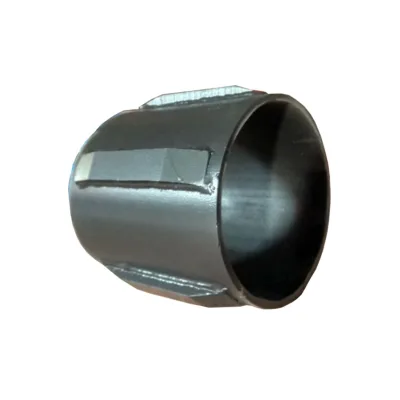


Comprehensive Sourcing Guide
Strategic Sourcing Guide for Galvanized Alloy Centralizers
The global oil and gas sector relies heavily on effective wellbore integrity solutions, with casing centralizers serving as a critical component in cementing operations. For procurement professionals targeting a Galvanized Alloy Centralizer, the sourcing landscape presents a complex array of material compositions, manufacturing standards, and customization options. This guide synthesizes observed market data and technical attributes to provide a disciplined framework for evaluating suppliers and ensuring product suitability for specific drilling and cementing applications. The focus remains on evidence-based verification of product claims, material integrity, and compliance with industry standards, ensuring that procurement decisions are grounded in verifiable facts rather than unconfirmed marketing assertions.
Material Composition and Structural Integrity
The foundational aspect of sourcing a high-performance centralizer lies in the verification of its material composition. Market observations indicate a diverse range of materials utilized in the production of these devices, ranging from specific alloy steels to carbon steel and cast aluminum. A primary observation for the core keyword involves the use of "Alloy" and "65mn Spring Steel," alongside general "Carbon Steel" and "Cast Steel" variants. The distinction between these materials is not merely semantic; it dictates the mechanical properties, specifically the tensile strength and elasticity required for the centralizer to withstand downhole pressures without permanent deformation.
Buyers must verify whether the specific unit is constructed from "65mn Spring Steel," which is often selected for its superior elastic recovery, or if it utilizes a generic "Alloy" designation that requires further clarification on the specific metallurgical grade. The "Rigid" and "Elastic" classifications observed in product attributes suggest that the centralizer's performance is heavily dependent on the material's ability to return to its original shape after being compressed against the casing wall. When sourcing a "galvanized" variant, the underlying substrate material is paramount. If the product is described as "Alloy," the buyer must confirm the specific alloy composition to ensure it meets the corrosion resistance and strength requirements of the intended well environment. The presence of "Carbon Steel/Nylon/Cast Aluminum" in some listings indicates a broader market segment, but for a Galvanized Alloy Centralizer, the focus must remain on the metallic substrate's compatibility with the galvanization process and the operational stress of the wellbore.
Manufacturing Processes and Surface Treatments
The manufacturing method employed significantly influences the final product's structural reliability and surface durability. Observed data highlights two primary manufacturing processes: "Casting" and "Forging." Forging is generally associated with higher strength and better grain structure alignment, making it a preferred method for high-stress applications, whereas casting may be utilized for specific geometries or cost-sensitive variants. The standard "Non-welded, pressed by punching, high strength" description further suggests alternative manufacturing techniques that prioritize structural continuity over weld integrity.
Surface treatment is equally critical, particularly for the "galvanized" requirement. The observed attribute "Galvanized" confirms the presence of a zinc coating intended to protect the steel substrate from corrosion in harsh downhole environments. However, buyers must also verify if additional treatments like "Spray-Paint" are applied, as some products list "Red," "Blue," or "Red/Blue" color options alongside the galvanization. The color is often a secondary identifier or a specific customer request ("as Requested"), but the primary protective layer should be the galvanization. The combination of a "Forging" process with a "Galvanized" finish typically indicates a robust product designed for demanding conditions, whereas a "Casting" process with a "Spray-Paint" finish might be suitable for less aggressive environments. Procurement teams must explicitly request the manufacturing process specification to ensure the centralizer's mechanical properties align with the well's depth and pressure profile.
Compliance, Certification, and Standard Verification
In the oil and gas industry, compliance with recognized standards is non-negotiable. The observed data frequently references "API" as both a certification and a standard. The "API" certification suggests adherence to American Petroleum Institute specifications, which is a baseline requirement for most international drilling operations. The "prod_standard" field also lists specific dimensions and configurations, such as "5-1/28-1/2," "68-1/2," and "13-3/8*17-1/2," alongside generic "ALL" or "Non-welded" descriptors.
Buyers must treat the "API" label as a verification target rather than an automatic guarantee. The presence of "API" in the product attributes indicates that the supplier claims compliance, but the procurement process must include a request for the specific API monogram or certificate documentation. Furthermore, the standard "5 1/2'', 7''" and specific model numbers like "D61.468/D44.958*H95.25mm" highlight the necessity of precise dimensional matching. The "Size" attribute is listed as "Various," "as Requested," or specific ranges like "4 1/2"-20"." This variability underscores the importance of confirming the exact casing and centralizer dimensions before placing an order. A mismatch in size can lead to poor cement placement or equipment failure. The "prod_model" field, containing values like "cc," "rc," "pc," and "Centralizer," serves as an internal classification that must be cross-referenced with the physical dimensions and intended usage to ensure the correct part is sourced.
Technical Specifications and Operational Parameters
Understanding the operational parameters of the centralizer is essential for selecting the right product for a specific well design. The "Usage" attribute clearly identifies the application as "for Casing" and "Well Drilling Cementing," confirming the device's role in maintaining the casing's central position within the wellbore to ensure a uniform cement sheath. The "Operation Pressure" is noted as "Atmospheric Pressure" in some listings, which may refer to the testing conditions or the surface handling environment, rather than the downhole pressure rating. Buyers must clarify the maximum operating pressure and temperature limits, as these are critical for deep-well applications.
The "Type" attribute distinguishes between "Rigid" and "Elastic" centralizers. An "Elastic" centralizer is designed to flex under pressure, making it suitable for deviated wells or situations where the casing may experience significant movement. In contrast, a "Rigid" centralizer provides a fixed geometry, which may be preferred for vertical wells or where precise spacing is required. The "prod_packing" options, ranging from "Plywood Cases" and "Wooden Case" to "Carton" and "Bulk," indicate that packaging is often customizable ("Depending on Customers" or "as Requested"). This flexibility is beneficial for logistics but requires clear communication to ensure the product arrives in a condition suitable for immediate deployment. The "Color" options, including "Red," "Blue," or "as Requested," are primarily for identification and inventory management but do not affect the functional performance of the device.
Cost Drivers and Procurement Economics
The pricing and procurement terms for galvanized alloy centralizers are influenced by several key factors. The observed price range of 5 to 180 USD reflects the diversity in product specifications, materials, and order volumes. The "MOQ" (Minimum Order Quantity) range of 1 to 500 units indicates that suppliers are willing to accommodate both small, specialized orders and large-scale procurement needs. The "Customization" attribute being "Available" suggests that buyers can request specific dimensions, materials, or packaging, which may impact the final cost.
Cost drivers include the complexity of the manufacturing process (forging vs. casting), the specific alloy composition, and the extent of customization required. Suppliers located in "Henan, China" and "Shenyang" represent the primary production hubs, with "China Mainland" being the general origin. The "Lead time" is not explicitly provided in the observed data, but the variability in MOQ and customization suggests that lead times may fluctuate based on order size and specific requirements. Buyers should anticipate that larger orders or highly customized specifications may require longer production cycles. The "prod_packing" method also plays a role in logistics costs; "Plywood Cases" or "Wooden Cases" offer superior protection for international shipping but add to the overall weight and volume, whereas "Bulk" packing is more economical but requires careful handling to prevent damage.
Supplier Evaluation and Quality Assurance
Evaluating suppliers for galvanized alloy centralizers requires a rigorous approach to quality assurance. The "Location" data points to specific regions in China, but buyers should not rely solely on geographic origin. Instead, the focus must be on the supplier's ability to provide verifiable documentation for the "API" certification and the specific manufacturing standards claimed. The "Standard" field lists various configurations, and the supplier must demonstrate the capability to produce to these exact specifications consistently.
Quality control measures should include verification of the "Surface Treatment" process to ensure the galvanization is uniform and meets thickness requirements. The "Manufacturing Process" must be confirmed as either "Forging" or "Casting" as per the purchase order, with appropriate testing to validate the mechanical properties of the "Alloy" or "Carbon Steel." The "Product Name" and "Centralizer Type" should be clearly defined to avoid confusion between "Rigid" and "Elastic" variants. Buyers should request sample testing results or third-party inspection reports to confirm that the product meets the "High strength" and "Non-welded" criteria where applicable. The "Usage" confirmation as "Well Drilling Cementing" ensures the product is fit for its intended purpose, and the "Size" verification prevents costly mismatches during installation.
Long-Term Procurement Considerations
Sourcing galvanized alloy centralizers is not a one-time transaction but part of a long-term supply chain strategy. The "Customization" availability allows for ongoing adaptation to changing well designs and operational requirements. However, maintaining consistency in material quality and manufacturing processes is crucial for operational safety. Buyers should establish a relationship with suppliers who can provide consistent "API" certified products and adhere to the specified "Standard" dimensions and configurations.
The "prod_packing" flexibility offers opportunities to optimize logistics and reduce costs over time, but it requires clear communication to ensure the packaging remains robust enough to protect the product during transit. The "Color" and "Model" variations should be standardized within the buyer's inventory system to streamline procurement and reduce errors. Long-term considerations also include monitoring the supplier's ability to meet "MOQ" requirements and manage lead times effectively. As the industry evolves, the demand for specific alloy compositions and advanced surface treatments may increase, requiring buyers to stay informed about technological advancements and supplier capabilities. By maintaining a disciplined approach to verification and quality control, procurement teams can ensure a reliable supply of high-performance centralizers that support safe and efficient drilling operations.
FAQs
What materials are used for galvanized alloy centralizers?
These centralizers are constructed from 65mn Spring Steel, Carbon Steel, or Alloy. Some variants also utilize Cast Steel, Nylon, or Cast Aluminum depending on the specific design requirements and application needs.
Can I request custom colors for the centralizers?
Yes, customization is available for colors including Red, Blue, or specific requests. The standard options often include Red or Blue, but buyers can specify unique color preferences to match their inventory or safety protocols.
Which certifications do these products typically hold?
Many products carry API certification and adhere to API standards. This ensures compliance with industry requirements for oil and gas applications, though specific documentation should be verified for each batch.
How are the centralizers manufactured and treated?
Manufacturing processes include Forging, Casting, or pressing by punching for high strength. Surface treatments typically involve Galvanization for corrosion resistance, with some options also offering Spray-Paint finishes.
What packaging options are available for shipping?
Packaging can be provided in Plywood Cases, Wooden Cases, Cartons, or Bulk. The specific method often depends on customer requests, ensuring protection during transport while accommodating logistics preferences.
What sizes are available for casing centralizers?
Sizes range from 4 1/2 inches to 20 inches and include various specific models. Dimensions are often listed as requested or come in standard configurations like 5-1/2*8-1/2 or 6*8-1/2 inches.
Where are these products manufactured?
Production originates from locations in Henan, Shenyang, and China Mainland. Buyers should verify the specific factory location to ensure alignment with supply chain logistics and regional sourcing strategies.
What is the minimum order quantity for these items?
The minimum order quantity ranges from 1 to 500 units depending on the supplier. This flexibility allows for both small specialized orders and large-scale procurement needs without strict volume barriers.