Source Galvanized L Shaped Anchor Bolts for Building Concrete Machinery
Compare 30 listings for Galvanized L Shaped Anchor Bolts from Hebei China suppliers. Buyers can review specifications like M6-M150 sizes, JIS/GB/DIN standards, and cold or hot forging processes for concrete and masonry applications.
Key considerations
Products List


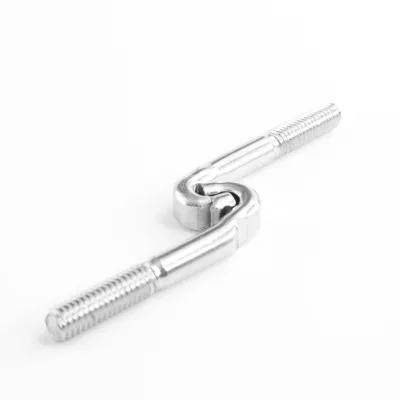
Galvanized Carbon Steel Stainless Steels Sleeve L Type Hanger Bolt Ceiling Anchors
$0.02 - $0.03
MOQ: 10000 Pieces



Comprehensive Sourcing Guide
Strategic Sourcing Guide for Galvanized L-Shaped Anchor Bolts
Navigating the global market for galvanized L-shaped anchor bolts requires a disciplined approach that balances technical precision with supply chain reliability. These fasteners serve as critical structural components, anchoring machinery, building frameworks, and chemical processing equipment to concrete and masonry substrates. The procurement process begins with a clear understanding of the material composition, dimensional tolerances, and the specific corrosion protection mechanisms required for the intended environment. Buyers must recognize that while the core function remains consistent, the variations in manufacturing standards, surface treatments, and order volumes significantly impact the final product's performance and cost structure.
Technical Specifications and Dimensional Standards
The fundamental technical profile of an L-shaped anchor bolt is defined by its geometry, material grade, and thread specifications. Based on observed market data, these components are predominantly manufactured from carbon steel, with specific grades such as Grade 8 being common for high-strength applications. The material selection is critical; while some listings specify low carbon steel for general utility, others require higher carbon content to achieve the necessary tensile strength for heavy machinery anchoring. The standard thread types available in the market include Metric, UNC, UNF, BSW, and JIS threads, allowing for compatibility with diverse international machinery and structural systems.
Dimensional consistency is paramount. The product models observed range widely, from small M5 and M6 units up to substantial M150 or M100 specifications. This variance indicates that a single supplier may not stock every size, necessitating a careful review of the specific model number against the project's engineering drawings. Common head styles include hexagonal heads, which facilitate torque application during installation, and the connection method is typically a common bolt configuration. The L-shape itself is a result of the forging process, which can be either cold forging or hot forging, depending on the required grain structure and strength of the final bolt. Buyers must verify that the specific model number provided by the supplier matches the exact length and leg dimensions required for the concrete embedment depth.
Compliance and Certification Verification
Ensuring compliance with international standards is a non-negotiable aspect of sourcing these structural fasteners. The market data indicates a strong adherence to multiple global standards, including JIS, GB, DIN, ANSI, GOST, and BSW. A robust procurement strategy requires verifying that the supplier's quality management system explicitly certifies compliance with the specific standard relevant to the project's location. For instance, a project in Europe will prioritize DIN standards, while a project in North America may require ANSI compliance. The presence of multiple standards in supplier listings suggests a capability for export, but the buyer must confirm which specific standard applies to the batch being purchased.
Quality assurance extends beyond the standard itself to the finish and material certification. The "First Class" quality attribute observed in the market implies a rigorous internal inspection process, yet this term is not a substitute for third-party testing. Buyers should request mill test certificates (MTC) that verify the chemical composition of the carbon steel and the mechanical properties of the Grade 8 or equivalent material. Furthermore, the galvanized finish, a key requirement for corrosion resistance, must be verified against specific thickness requirements, which are often dictated by the environmental exposure of the installation site. Without explicit documentation, the claim of a "galvanized" finish remains an observation rather than a verified performance guarantee.
Cost Drivers and Pricing Dynamics
The pricing of galvanized L-shaped anchor bolts is influenced by a complex interplay of material costs, manufacturing processes, and order volume. The observed price range in the market spans from $0 to $1,399, a wide disparity that reflects the difference between small sample units and bulk industrial orders. The primary cost driver is the raw material, specifically the price of carbon steel, which fluctuates based on global commodity markets. Additionally, the galvanization process adds a significant layer of cost, as it involves chemical treatment and zinc coating, which varies in thickness and durability.
Order volume plays a decisive role in the final unit price. The Minimum Order Quantity (MOQ) varies drastically, ranging from 1 piece for samples to 100,000 pieces for large-scale industrial contracts. Some suppliers set an MOQ of 1 ton per size, while others require 1,000 pieces. This variability means that small procurement teams may face higher per-unit costs due to the inability to meet bulk thresholds. The packaging method also influences cost; options such as 25kg cartons on pallets, wood boxes, or bulk bagging add to the logistics expense. Buyers should anticipate that "free samples" are often available to facilitate technical verification, but the shipping costs for these samples are typically borne by the buyer.
Typical Applications and Environmental Suitability
Galvanized L-shaped anchor bolts are engineered for specific high-load applications where structural integrity is critical. The observed application sectors include machinery installation, chemical industry facilities, environmental infrastructure, and general building construction. In the chemical industry, the galvanized coating is essential to resist corrosive fumes and moisture, ensuring the longevity of the anchor in aggressive environments. Similarly, in building and masonry applications, these bolts provide the necessary tensile strength to secure heavy equipment to concrete foundations.
The suitability of the bolt for a specific application depends heavily on the finish. While "Black" and "Plain" finishes are available, the "Galvanized" finish is the preferred choice for outdoor or corrosive environments. The choice between cold and hot forging also impacts the application; hot forging is generally preferred for larger diameters and higher strength requirements, such as those found in heavy machinery anchoring. Buyers must ensure that the selected bolt's thread type and head style match the installation tools and the specific requirements of the concrete or masonry substrate. The "Connecting" usage attribute highlights the primary function of these bolts in joining structural elements, making them indispensable in civil engineering and industrial plant construction.
Supplier Evaluation and Operational Capabilities
Evaluating a supplier for galvanized L-shaped anchor bolts requires a deep dive into their operational capabilities and logistical reliability. The geographic origin of these products is predominantly Hebei, China, with specific hubs like Hebei Handan known for fastener manufacturing. This concentration suggests a mature supply chain with access to raw materials and specialized forging equipment. However, buyers must verify the specific factory location to ensure it aligns with their risk management strategies regarding geopolitical stability and logistics.
Lead times are another critical evaluation metric. The market data indicates a delivery detail of "in 30 Days or Based on Qty Requirement," suggesting that production schedules are flexible but dependent on order volume. For large orders, the lead time may extend beyond the standard 30 days. Buyers should also assess the supplier's customization capabilities, as "Available" customization is a key differentiator. This includes the ability to produce non-standard lengths, thread types, or head styles. The ability to provide samples, which is a common attribute, allows buyers to physically inspect the product before committing to a large order. A supplier that accepts small orders demonstrates flexibility, which is beneficial for prototyping or small-scale projects.
Quality Control and Long-Term Procurement Considerations
Maintaining quality over the long term requires a proactive approach to quality control and supplier relationship management. The "First Class" quality claim should be validated through a rigorous inspection protocol that includes visual checks for coating uniformity, dimensional verification using calipers or gauges, and tensile strength testing. The packing methods, ranging from boxes to bulk bags, must be evaluated to ensure they protect the galvanized finish during transit. Damage to the zinc coating during shipping can compromise the corrosion resistance, leading to premature failure.
Long-term procurement considerations involve establishing a consistent supply chain that can adapt to fluctuating demand. The wide range of MOQs, from 1 piece to 100,000 pieces, offers flexibility but requires careful inventory planning. Buyers should consider the total cost of ownership, which includes not just the unit price but also the cost of potential downtime due to fastener failure. Establishing a relationship with a supplier who offers consistent quality, reliable lead times, and responsive customer service is essential. The ability to provide samples and accept small orders allows for a phased approach to procurement, reducing the risk associated with large initial investments. By focusing on verified standards, material certifications, and operational transparency, buyers can secure a reliable supply of galvanized L-shaped anchor bolts that meet the demanding requirements of modern industrial and construction projects.
Comparative Analysis of Product Attributes
To facilitate decision-making, the following table summarizes the key attributes observed in the market for galvanized L-shaped anchor bolts. This comparison highlights the variability in specifications that buyers must navigate.
| Attribute Category | Observed Options | Procurement Consideration |
|---|---|---|
| Material | Carbon Steel, Low Carbon Steel, Steel | Verify grade (e.g., Grade 8) for strength requirements. |
| Standards | JIS, GB, DIN, ANSI, GOST, BSW | Match standard to project location and regulatory body. |
| Dimensions | M5-M150, M6-M30, M20-M100 | Confirm exact model number and thread pitch. |
| Finish | Galvanized, Black, Grey, Silver, Plain | Galvanized is essential for corrosive environments. |
| MOQ | 1 piece, 1000 pieces, 1 Ton, 1000kg | Align order size with budget and storage capacity. |
| Origin | Hebei China, China, Hebei Handan | Assess logistics and supply chain stability. |
| Lead Time | 30 Days, Based on Qty | Plan production schedules accordingly. |
| Customization | Available | Essential for non-standard project requirements. |
This structured approach ensures that buyers can systematically evaluate potential suppliers and select the most appropriate product for their specific needs, minimizing risk and maximizing the performance of the installed anchoring system.
FAQs
What materials are used for Galvanized L Shaped Anchor Bolts?
These bolts are primarily made from carbon steel or low carbon steel. Some high-strength applications specifically utilize Grade 8 material to ensure durability and tensile strength for heavy machinery anchoring.
Which international standards do these anchor bolts comply with?
Products commonly comply with JIS, GB, DIN, ANSI, GOST, and BSW standards. Buyers must verify which specific standard applies to their project location to ensure regulatory compliance.
How long is the typical delivery time for these fasteners?
Delivery is generally available within 30 days or based on quantity requirements. Larger orders may extend this timeline, so buyers should confirm lead times based on their specific volume needs.
Can I get free samples before placing a large order?
Free samples are available for most suppliers to facilitate technical verification. While the sample itself is free, buyers typically need to cover shipping costs for these inspection units.
What is the minimum order quantity for these bolts?
MOQs vary significantly, ranging from 1 piece for samples to 1000 pieces or 1 ton per size. Buyers should check specific supplier requirements as some vendors set thresholds based on weight or count.
Where are these anchor bolts typically manufactured?
Most products originate from Hebei, China, with specific manufacturing hubs in Hebei Handan. This region is known for its mature fastener supply chain and access to specialized forging equipment.
What surface finishes are available for these bolts?
Available finishes include galvanized, black, grey, silver, and plain. The galvanized finish is essential for resisting corrosion in outdoor or chemical industry environments.