Source Galvanized Iron Fixed Caster Wheels for Forklifts, Racks, and Carts
Explore 30 listings of Galvanized Iron Fixed Caster Wheels with varying load capacities and bearing types. Buyers can compare specifications such as hardness, tread materials, and packaging options to find suitable industrial solutions.
Key considerations
Products List


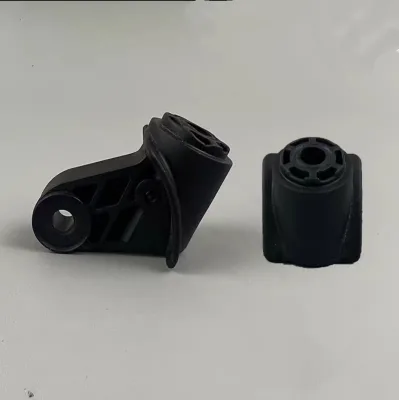
Customized Industrial Rotating Wheel Medium-Sized PU on Cast Iron Casters
$1.90 - $3.10
MOQ: 1000 Pieces



Comprehensive Sourcing Guide
Strategic Sourcing Guide for Galvanized Iron Fixed Caster Wheels
Procuring Galvanized Iron Fixed Caster Wheels requires a disciplined approach that balances mechanical durability with strict adherence to surface treatment standards. In the B2B industrial sector, these components are critical for material handling equipment, heavy-duty carts, and stationary machinery where load stability is paramount. The core keyword "Galvanized Iron Fixed Caster Wheels" implies a specific intersection of material science and protective coating technologies. Buyers must navigate a complex landscape of casting methods, surface roughness requirements, and certification standards to ensure the selected components meet operational demands without incurring premature failure costs. This guide outlines the essential factors for evaluating suppliers and specifications based on observed market data and established engineering principles.
Technical Specifications and Material Composition
The foundation of a reliable caster wheel lies in its material composition and manufacturing process. Based on available product data, the primary structural material for the wheel hub and tread support is often cast iron. This material choice offers high compressive strength, making it suitable for static loads where deformation is a critical concern. The casting process typically utilizes sand casting, a method that allows for complex geometries and robust structural integrity. The casting form material itself is sand, which is noted as a disposable medium in the production cycle, ensuring that the mold does not degrade the precision of the final metal component.
A critical technical differentiator is the surface treatment. The specific requirement for "galvanized" indicates a zinc coating applied to the iron substrate to prevent corrosion. This is distinct from other treatments like spray-painting, which may be observed in alternative product listings but does not offer the same electrochemical protection against rust. The surface roughness for these components is specified as Ra0, indicating a highly smooth finish which is essential for minimizing friction and ensuring a clean interface with the floor or mounting surface. Furthermore, the machining tolerance is a vital metric for fitment. Observed data suggests tolerances ranging from +/-0.10mm to +/-0.02mm, depending on the specific model and precision requirements. Buyers must verify which tolerance level applies to their specific application, as tighter tolerances generally command higher costs but ensure better alignment in precision machinery.
The tread material is another variable that influences performance. While the core structure is cast iron, the contact surface may vary. Data indicates options such as PU (Polyurethane) on cast iron or rubber on cast iron. The hardness of the tread is a key specification, with observed values around 93A, which suggests a balance between shock absorption and wear resistance. The bearing type is also a crucial specification; roller bearings are commonly cited for these applications, providing smooth rotation under load even in fixed caster configurations where swivel mechanisms are not required.
Compliance, Certification, and Standard Verification
Navigating the regulatory landscape is essential for international procurement. Suppliers often cite a variety of standards and certifications to validate their quality management systems and product safety. The observed data includes references to ISO 9001, specifically the 2000 version, as well as general ISO 9001 certifications. These standards indicate that the manufacturing facility adheres to established quality management principles, though buyers should verify the specific version and scope of the certificate. Additionally, product-specific certifications such as CE (Conformité Européenne) are frequently mentioned, signaling compliance with European health, safety, and environmental protection standards.
In terms of material and process standards, the data references ASTM and GB (Guobiao) standards. ASTM standards are widely recognized in the United States and globally for material testing, while GB standards are the national standards of China. The presence of both suggests a supplier capable of meeting diverse international requirements. However, buyers must be cautious; the mere mention of a standard does not guarantee that every unit produced meets that standard. It is imperative to request specific test reports or certificates of conformity that link the batch of goods to the cited standard.
Other certifications mentioned include Sodium silicate, which may relate to the chemical composition of the casting sand or a specific treatment process, though this is less common for the final metal product. The "Galvanized" attribute itself implies adherence to specific galvanization standards (such as ISO 1461 for hot-dip galvanizing), even if not explicitly listed in the provided text. Buyers should explicitly ask suppliers to confirm the thickness of the zinc coating and the adherence to relevant corrosion resistance standards, as this is the primary defense mechanism for the cast iron component.
Cost Drivers and Pricing Dynamics
The pricing for Galvanized Iron Fixed Caster Wheels is influenced by a complex matrix of factors, including material costs, surface treatment complexity, and order volume. The observed price range in the market spans from $0.10 to $80.00 USD. This wide variance is not indicative of a single product type but rather reflects differences in load capacity, wheel diameter, tread material, and customization levels. A basic, small-diameter fixed caster with a simple cast iron hub and minimal tread will sit at the lower end of this spectrum, while a heavy-duty unit with a large load capacity, precision machining, and specialized tread materials will command prices at the higher end.
Minimum Order Quantity (MOQ) is a significant cost driver. The observed MOQ range is extensive, from 1 unit to 10,000 units. Specific listings indicate MOQs of 100 PCS or 200 PCS. For buyers with lower volume requirements, the unit cost may be higher due to the fixed costs of setup and tooling. Conversely, buyers ordering in bulk can negotiate better pricing, but they must be prepared to commit to the supplier's MOQ threshold. Customization is a major factor; the availability of OEM services and custom tread colors or models can increase the unit price. The "Customized" attribute suggests that non-standard dimensions or specific load capacities will incur additional costs compared to off-the-shelf models like the SE-158 or 461 series.
Typical Applications and Load Capacity Analysis
Understanding the application environment is crucial for selecting the correct caster. The load capacity data reveals a significant range, with specific models supporting capacities from 140kg up to 9,805kg. This disparity highlights that "Galvanized Iron Fixed Caster Wheels" are not a monolithic product but a category serving diverse industries. Light-duty applications, such as office furniture or light assembly carts, may utilize wheels with a load capacity around 105kg to 150kg. These are often found in environments where aesthetics and ease of movement are prioritized over extreme durability.
In contrast, heavy industrial applications, such as steel mills, shipyards, or heavy machinery transport, require the high-load capacity units. The 9,805kg capacity indicates a component designed for massive static loads, likely found in the base of large industrial presses or storage racks. The fixed nature of these casters means they are designed to provide stability rather than maneuverability. They are typically used in corners or specific mounting points where the equipment needs to remain stationary or move only in a straight line. The choice between PU and rubber treads often depends on the floor type; PU is generally preferred for hard floors and high wear resistance, while rubber may be chosen for noise reduction and floor protection in sensitive environments.
Supplier Evaluation and Geographic Considerations
When evaluating potential suppliers, geographic origin plays a role in logistics and communication. The observed data points to several key manufacturing regions in China, including Shandong, Qingdao, and Zhongshan. These regions are known for their robust metalworking and casting industries. Qingdao, in particular, is noted as a loading port, which can streamline the shipping process for international buyers. The "Normal Export Carton Box + Wooden Case/Pallet" or "Paper Box or Wooden Box" packaging options suggest that suppliers are experienced in export logistics, but buyers should verify the specific packaging requirements to prevent damage during transit.
Supplier reliability is often gauged by their ability to provide consistent customization and adherence to standards. The "OEM Acceptable" and "Customization: Available" attributes indicate a willingness to work with buyers on specific design requirements. However, buyers should verify the supplier's capacity to handle these customizations without compromising quality. The "Disposable" nature of the sand casting form suggests a focus on single-use molds, which can be a sign of a flexible production line but requires careful quality control to ensure consistency across batches.
Quality Control and Long-Term Procurement Strategy
Quality control is the linchpin of a successful procurement strategy for cast iron components. The machining tolerance of +/-0.02mm to +/-0.10mm requires precise inspection protocols. Buyers should insist on first-article inspection reports that verify these tolerances before full production begins. The surface roughness of Ra0 and the galvanized coating must be verified through visual inspection and, where necessary, non-destructive testing to ensure there are no pinholes or uneven coating thicknesses that could lead to premature corrosion.
Long-term procurement considerations involve building a relationship with suppliers who can scale with demand. The wide MOQ range (1 to 10,000) suggests that suppliers are flexible, but buyers should plan for volume growth. Consistency in the "Cast Iron" material and the "Galvanized" surface treatment is vital for maintaining the integrity of the equipment over years of use. Buyers should also consider the "Semi-permanent" vs. "Disposable" casting form usage, as this can impact the consistency of the casting process. A supplier that uses semi-permanent forms for certain high-volume runs may offer better consistency, while disposable forms might be necessary for highly customized, low-volume runs.
Comparative Analysis of Product Attributes
To assist in decision-making, the following table summarizes key attributes observed in the market for Galvanized Iron Fixed Caster Wheels. This comparison highlights the variability in specifications that buyers must navigate.
| Attribute Category | Observed Specification A | Observed Specification B | Observation C |
|---|---|---|---|
| Casting Metal | Cast Iron | Cast Iron | Primary structural material |
| Surface Treatment | Galvanized | Spray-Paint | Galvanized preferred for corrosion resistance |
| Machining Tolerance | +/-0.10mm | +/-0.02mm | Tighter tolerance increases precision and cost |
| Load Capacity | 105kg - 150kg | 140kg - 9805kg | Varies significantly by model and application |
| Tread Material | PU on Cast Iron | Rb on Cast Iron | PU offers higher wear resistance; Rb for noise |
| Hardness | 93A | Not Specified | 93A indicates medium-hardness tread |
| Certification | ISO 9001, CE | GB, ASTM | Verify specific version and scope |
| MOQ | 100 PCS | 200 PCS | Check for flexibility in order volume |
| Origin | Shandong, China | Qingdao, China | Major manufacturing hubs in China |
| Packaging | Wooden Case/Pallet | Paper Box | Ensure adequate protection for export |
This table illustrates that while the core material (Cast Iron) and treatment (Galvanized) are consistent with the keyword, the surrounding specifications vary widely. Buyers must use this variability to their advantage by clearly defining their requirements in the Request for Quotation (RFQ) to avoid receiving non-compliant products.
Final Procurement Recommendations
In conclusion, sourcing Galvanized Iron Fixed Caster Wheels requires a meticulous review of technical specifications, certification validity, and supplier capabilities. The market offers a broad spectrum of options, from light-duty units with standard tolerances to heavy-duty, precision-engineered components. Buyers should prioritize suppliers who can demonstrate adherence to ASTM or GB standards, provide valid ISO 9001 and CE certifications, and offer clear documentation on load capacities and surface treatments. By focusing on the specific needs of their application—whether it is high-load stability or precise fitment—buyers can navigate the diverse product landscape effectively. The goal is to secure components that not only meet the immediate operational requirements but also ensure long-term reliability and safety in the field.
FAQs
What casting methods are used for Galvanized Iron Fixed Caster Wheels?
Sand casting is the primary method used for manufacturing these wheels. The process utilizes sand as the casting form material, which is typically disposable to ensure precision and structural integrity in the final cast iron product.
Which certifications are commonly available for these caster wheels?
Common certifications include ISO 9001, CE, and compliance with ASTM and GB standards. Some listings also reference sodium silicate certifications related to the casting process or specific chemical treatments used during production.
How does the surface treatment affect the durability of the wheels?
Galvanization provides a zinc coating that prevents corrosion on the cast iron substrate. This treatment is distinct from spray-painting and ensures a smooth surface roughness of Ra0, which minimizes friction and protects against rust.
What are the typical machining tolerances for these products?
Machining tolerances range from +/-0.10mm to +/-0.02mm depending on the specific model and precision requirements. Tighter tolerances ensure better alignment for precision machinery but may increase the unit cost of the caster wheel.
Can buyers customize the tread material and color of the wheels?
Yes, customization is available for tread materials like PU or rubber on cast iron and for tread colors. OEM services are accepted, allowing buyers to specify unique dimensions or load capacities beyond standard models like SE-158.
What is the minimum order quantity for purchasing these wheels?
Minimum order quantities vary from 100 PCS to 200 PCS based on the specific supplier and product model. Some suppliers may accept orders as low as 1 unit, while bulk buyers might face thresholds up to 10,000 units.
Where are the manufacturing origins and loading ports for these wheels?
Products originate from regions such as Shandong, Qingdao, and Zhongshan in China. Qingdao is frequently cited as a loading port, facilitating export logistics with packaging options like normal export carton boxes or wooden cases.