Source GMP Plastic Fermenter for Pharma, Food, and Beverage
Find 30 verified listings for the GMP Plastic Fermenter suitable for pharmaceutical, food safety, and beverage production. Buyers can compare specifications like capacity, material, and pressure levels to select the right equipment for their facility.
Key considerations
Products List


Flash Fermenter GMP-Compliant Pharmaceutical Facilities Fermentation Plastique
$30000.00 - $500000.00
MOQ: 1 set


Industry Scale Stainless Steel Fermenter with GMP Standard for Cell Culture Fermentation
$25000.00 - $300000.00
MOQ: 1 set


Production Equipment Primary to Secondary Fermenter with Stainless Fermenter System
$30000.00 - $500000.00
MOQ: 1 set


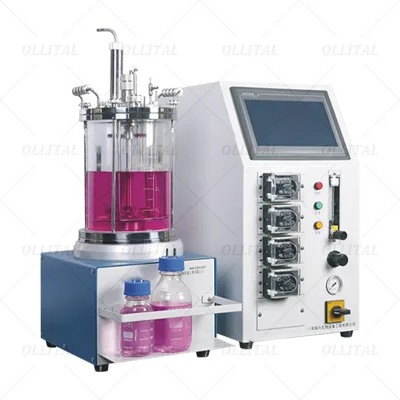
Gmp Approved Bioreactor Fermentor Fermentor Tank Integrated Design Standard Ins Bioreactor Machine
$9649.64 - $10665.39
MOQ: 1 Minimum


$30000.00 - $200000.00
MOQ: 1 Sets


Comprehensive Sourcing Guide
Strategic Sourcing Guide for GMP-Compliant Fermentation Systems
Understanding the Core Technology and Material Standards
When sourcing a GMP Plastic Fermenter, buyers must first navigate the distinction between material composition and functional application. While the search term specifies "plastic," the provided market data for high-grade fermentation vessels frequently highlights Stainless Steel (SUS304 or SUS316L) as the primary material for industrial-scale applications. This is because stainless steel offers superior durability, sterilization compatibility, and structural integrity required for pressure vessels. However, the term "plastic" in procurement contexts often refers to specific polymeric components used in internal piping, sensors, or disposable single-use bags integrated into the system, rather than the vessel body itself.
The technical specifications observed in the current market indicate a wide range of capacities, from 300L to over 15,000L, with some systems extending up to 300,000L. The material grade is critical; the data confirms the use of SUS304 and SUS316L, which are essential for meeting GMP standards due to their resistance to corrosion and ease of cleaning. Surface finishes are equally important, with "Mirror Polish" being a documented standard for internal surfaces to prevent microbial adhesion. For buyers specifically seeking plastic components, verification is required to ensure these materials are food-grade or pharmaceutical-grade polymers capable of withstanding the specific chemical and thermal stresses of the fermentation process.
Technical Specifications and Operational Parameters
The operational capabilities of a fermentation tank are defined by a complex set of parameters that must align with the intended production scale. The observed data reveals that voltage requirements can vary significantly, with systems operating at both 380V and 220V, necessitating careful verification of electrical compatibility with the buyer's facility infrastructure. Speed control is another critical technical aspect, with intelligent PID control systems capable of adjusting agitation speeds between 50 and 1000rpm. This range allows for precise control over oxygen transfer rates and mixing efficiency, which are vital for different stages of fermentation.
Pressure levels are another defining characteristic. The market data indicates that many systems operate within a low-pressure range of 0.1MPa to 1.6MPa, while others are designed for lower pressures between 0 and 0.3MPa or 0 to 0.6MPa. Buyers must match the pressure rating of the vessel to the specific process requirements, as over-pressurization can compromise safety, while under-pressurization may limit process efficiency. The feeding volume is typically optimized between 30% and 70% of the total capacity to allow for adequate headspace for gas exchange. Furthermore, ventilation rates are standardized around 1 to 2 vvm (volumes of gas per volume of liquid per minute), ensuring sufficient aeration for aerobic processes.
Compliance, Certification, and Regulatory Alignment
Achieving GMP (Good Manufacturing Practice) compliance is non-negotiable for pharmaceutical, food safety, and forensic applications. The provided facts confirm that leading suppliers in this sector offer products certified under ISO, GMP, and CE standards. Additionally, certifications such as SGS and ISO 9001 are frequently cited, indicating a commitment to quality management systems. For a buyer, the presence of these certifications is a baseline requirement, but it does not guarantee that every unit in a batch meets the specific GMP criteria for the buyer's intended use.
The certification status must be verified against the specific regulatory body of the target market. For instance, while CE certification is common, it primarily addresses safety standards for the European market. GMP certification, on the other hand, is process-oriented and ensures that the equipment supports a manufacturing environment that consistently produces products meeting quality standards. Buyers should request detailed documentation proving that the specific model, such as the BLBIO-SJA or WY-1000, has been validated for GMP compliance. It is crucial to understand that certifications like EN 10204, while mentioned in background contexts, should be treated as general industry references rather than specific product claims unless explicitly confirmed by the supplier.
Cost Drivers and Pricing Dynamics
The pricing for fermentation systems is highly variable, influenced by capacity, material grade, and the level of automation. The observed market data shows a price range spanning from $50 to over $28,573,000 USD. This vast disparity reflects the difference between small-scale laboratory units and massive industrial production vessels. The primary cost drivers include the material of construction, with SUS316L being more expensive than SUS304 due to its enhanced corrosion resistance. The complexity of the control system, such as the inclusion of intelligent PID controllers and computerized interfaces, also significantly impacts the final price.
Other factors influencing cost include the pressure rating, the extent of customization, and the inclusion of ancillary equipment like sterilization units. The data indicates that customization is widely available, allowing buyers to tailor the vessel for specific applications such as carbonated beverages, liquid dosage forms, or mixture processing. However, customization often extends lead times and increases costs. Buyers should be aware that the MOQ (Minimum Order Quantity) is generally low, ranging from 1 to 10 units, which suggests that even single-unit purchases are feasible, though the unit price will be higher for smaller quantities.
Typical Applications and Industry Segments
The versatility of fermentation tanks allows them to serve a diverse range of industries. The documented applications include the Pharmaceutical Industry, Forensic Science, Food Safety, Food Industry, and Chemical Industry. In the pharmaceutical sector, these vessels are used for the production of antibiotics, vaccines, and other biopharmaceuticals, where the "Liquid" finished dosage form is common. The food industry utilizes similar equipment for the production of fermented foods and beverages, including carbonated drinks.
The storage medium is typically nontoxic, and the vessels are designed to handle gas, liquid, and solid storage objects. This flexibility makes them suitable for complex processes involving multiple phases. For example, in forensic science, the precision and sterility of the equipment are paramount for sample analysis. In the chemical industry, the ability to withstand specific pressure levels and handle various reaction mixtures is critical. Buyers must ensure that the selected vessel's application scope matches their specific process requirements, as a unit designed for general food processing may not meet the stringent sterility requirements of pharmaceutical manufacturing.
Supplier Evaluation and Quality Assurance
Selecting a reliable supplier is as critical as selecting the equipment itself. The data indicates that suppliers are located in key manufacturing hubs such as Wenzhou and Shanghai in China. When evaluating potential suppliers, buyers should prioritize those who offer comprehensive after-sales services, including online instruction, commissioning, and spare parts availability. A warranty period of 1 year is a standard offering, but the terms and conditions of this warranty should be scrutinized to ensure it covers critical components and labor.
Quality control should be a continuous process, not just a final inspection. Buyers should verify that the supplier adheres to the documented standards, such as the use of SUS304 or SUS316L materials and the application of mirror polish finishes. The presence of certifications like ISO, GMP, and CE should be validated through official documentation. Additionally, the supplier's ability to provide detailed technical drawings, material certificates, and process validation reports is essential. Buyers should avoid suppliers who cannot provide clear evidence of their compliance with the specific standards required for their industry.
Long-Term Procurement and Lifecycle Management
Long-term procurement considerations extend beyond the initial purchase price to include maintenance, operational efficiency, and scalability. The "New" condition of the products is a standard baseline, but buyers should inquire about the availability of replacement parts and the supplier's track record for supporting older models. The intelligent control systems mentioned in the data suggest that future upgrades or software updates may be necessary, making the supplier's commitment to long-term support a key factor.
The modular nature of some systems, such as the "Reaction Pressure Vessel" type, allows for scalability. Buyers should consider whether the system can be expanded or modified as production needs grow. The feeding volume and ventilation rates are fixed parameters, but the ability to adjust speed and pressure offers some flexibility. Finally, the packaging, often described as "Wooden Box" or "Wooden Case," is designed to protect the equipment during transit, but buyers should verify that the packaging meets international shipping standards to prevent damage. By focusing on these long-term factors, buyers can ensure a sustainable and efficient procurement strategy that supports their operational goals for years to come.
FAQs
What material is used for GMP fermentation tanks?
Stainless steel, specifically SUS304 or SUS316L, is the primary material for industrial vessels. While plastic components may exist in piping, the main tank body requires metal for structural integrity and sterilization compatibility in GMP environments.
Which certifications ensure GMP compliance for these systems?
Leading systems typically hold ISO, GMP, and CE certifications. Additional verification may include SGS and ISO 9001, which confirm quality management systems and safety standards required for pharmaceutical and food industry applications.
Can the fermentation capacity be customized for specific needs?
Yes, customization is available for various production scales. Capacities range widely from 300 liters up to 15,000 liters or even 300,000 liters, allowing buyers to select units that match their specific volume requirements.
What voltage options are available for these fermentation tanks?
Voltage requirements vary, with systems operating at either 380V or 220V. Buyers must verify electrical compatibility with their facility infrastructure before purchasing to ensure safe and efficient operation of the intelligent control systems.
How is the internal surface finish treated for sterility?
Internal surfaces undergo mirror polishing to prevent microbial adhesion. This finish is essential for meeting GMP standards, ensuring that the vessel can be effectively cleaned and sterilized for sensitive pharmaceutical or food processing applications.
What is the typical pressure range for these vessels?
Most systems operate within a low-pressure range of 0.1MPa to 1.6MPa. Some specialized units may function at lower pressures between 0 and 0.3MPa, depending on the specific process requirements and safety protocols.
Where are these fermentation systems typically manufactured?
Manufacturing hubs are located in key Chinese cities such as Wenzhou and Shanghai. Buyers should verify the specific origin of the unit to ensure it meets logistical requirements and aligns with the supplier's after-sales service capabilities.