Source Block Shaved Ice Shaver Machine for Bars, Cafes, and Events
Explore 30 Block Shaved Ice Shaver Machine options with varying capacities, power ratings, and voltage configurations. Buyers can compare features like automatic cleaning, material types, and ice output speeds to find the right unit for commercial or household use.
Key considerations
Products List

Ice Shaver Commercial Ice Shaver Machine Block Shaved Ice Machine for Sale
$280.00 - $360.00
MOQ: 1 Pieces

Commercial Ice Shaver Crusher Shaved Ice Shaving Machine Shaved Ice Block
$280.00 - $360.00
MOQ: 1 Pieces


Intelligent Snow Ice Block Shaving Machine Shaved Ice Block Maker Machine
$600.00 - $690.00
MOQ: 1 Pieces

High Quality Best Selling Ice Shaver Machine Ice Slicer Shaved Ice Machine
$200.00 - $360.00
MOQ: 1 Pieces
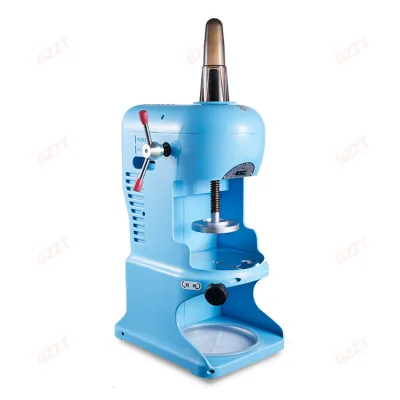


High Quality Crushed Ice Shaver Machine / Electric Large Ice Block Crusher Machine
$499.00 - $2999.00
MOQ: 1 Pieces


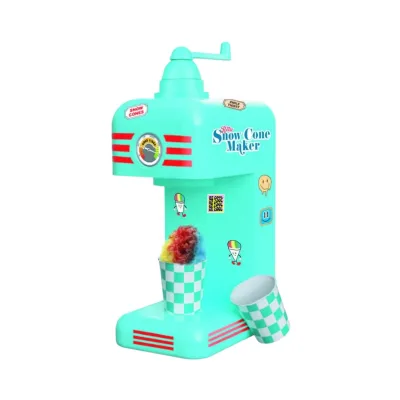
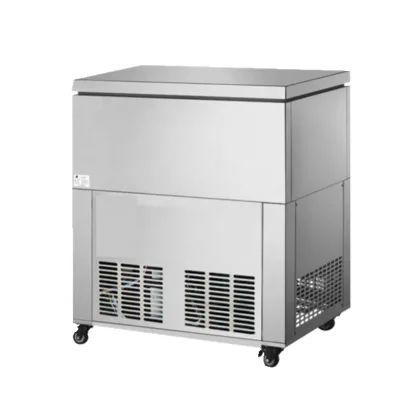
Comprehensive Sourcing Guide
Strategic Sourcing Guide for Block Shaved Ice Shaver Machines
The global demand for block shaved ice shaver machines has surged across commercial and household sectors, driven by the popularity of snow cone beverages, frozen desserts, and specialty food service operations. For procurement professionals, navigating the supply chain for these specific units requires a disciplined approach that distinguishes between high-volume commercial requirements and smaller operational needs. The market presents a diverse array of configurations, from compact electric units to heavy-duty industrial crushers. This guide synthesizes available product attributes and industry standards to provide a structured framework for evaluating potential suppliers and selecting the appropriate machinery.
Technical Specifications and Operational Capabilities
When evaluating block shaved ice shaver machines, the primary focus must be on the technical specifications that dictate throughput and operational efficiency. The core functionality revolves around the ice crushing mechanism, which typically utilizes a specific ice shape output. In the observed market data, the predominant ice shape produced is "Slice," a characteristic essential for creating the fluffy, snow-like texture required for premium shaved ice products. The structural integrity of these machines is often described as "Integral Type," suggesting a unified chassis design that minimizes assembly errors and enhances stability during high-speed operation.
Power consumption and motor speed are critical metrics for energy efficiency and throughput. The available data indicates a power range spanning from 185W to over 400W, with specific models operating at 200W-400W or 185W. This variance suggests that buyers must align their power requirements with their expected volume; lower wattage units may suffice for light commercial or household use, while higher wattage units are necessary for continuous high-volume production. The rotational speed is a key performance indicator, with observed data citing speeds around 1420r/Min. This speed is fundamental to achieving the desired ice texture without generating excessive heat that could melt the ice prematurely.
Refrigeration and voltage compatibility are equally vital for international procurement. The cooling systems often utilize refrigerants such as R22 or R404A, which are standard in commercial ice-making and crushing applications. Voltage requirements vary significantly, with options ranging from 110V/120V to 220V/240V, and some units offering dual voltage or customized options to accommodate 50Hz or 60Hz power grids. Buyers must verify the specific voltage and frequency requirements of their target market to ensure compatibility with local infrastructure. Additionally, the capacity of these machines varies, with observed rates ranging from 80kg/Hour to 90Kgs/h, providing a clear metric for production planning.
Material Composition and Structural Integrity
The durability and hygiene of block shaved ice shaver machines are heavily dependent on the materials used in their construction. The market data reveals a split in material composition, with some units featuring ABS Plastic components and others utilizing Stainless Steel. ABS Plastic is often found in the housing or specific internal components, offering a balance of cost-effectiveness and impact resistance. However, for commercial applications where hygiene and corrosion resistance are paramount, Stainless Steel is the preferred material for the crushing chamber and contact surfaces.
The structural design is typically an "Integral Type," which implies a robust, single-piece construction that reduces the risk of mechanical failure. The gross weight of these units provides insight into their build quality; observed weights range from 17kg to 20kg, with some heavier industrial models reaching 220kg. This weight variance often correlates with the inclusion of automatic cleaning devices or more substantial refrigeration systems. For instance, some models are equipped with an "Automatic Cleaning Device," a feature that significantly reduces maintenance downtime and ensures consistent hygiene standards. Conversely, other units are listed as "Without Automatic Cleaning Device," requiring manual cleaning protocols that may increase labor costs over time.
Customization, Packaging, and Logistics
Procurement of these machines involves careful consideration of customization options and logistics. The supply chain data confirms that "Customization" is available, allowing buyers to tailor specific features to their operational needs. This may include branding, voltage adjustments, or capacity modifications. The "OEM & ODM" services provided by suppliers further enable buyers to create private-label products, which is a common strategy for distributors entering the market.
Packaging standards are critical for protecting the machinery during transit. The observed packaging methods include "Honeycomb Box," "Wooden Frame," and "Wooden Box," which are designed to withstand the rigors of international shipping. The dimensions of the single package can vary significantly, with sizes ranging from 423191cm to larger configurations like 10085120cm. Buyers must account for these dimensions when calculating freight costs and warehouse storage requirements. The origin of these products is predominantly China, specifically from the Guangdong region, which is a major hub for manufacturing food processing equipment.
Cost Drivers and Pricing Dynamics
Understanding the cost drivers for block shaved ice shaver machines is essential for budgeting and negotiation. The price range observed in the market is extensive, spanning from $1 to $2999. This wide disparity is driven by several factors, including the material composition (ABS vs. Stainless Steel), the presence of advanced features like automatic cleaning devices, and the production capacity. Higher-priced units typically offer greater durability, higher throughput, and more advanced refrigeration systems.
The Minimum Order Quantity (MOQ) is another significant cost factor, with observed ranges from 1 to 10,000 units. Buyers seeking to test the market may find suppliers with low MOQs, while those planning large-scale deployments can negotiate better unit prices by committing to higher volumes. The selling units are often listed as "Single item," indicating that the machines are sold individually rather than in kits, though bulk purchasing is frequently available. Buyers should also consider the "Marketing Type," which is often listed as "Ordinary Product," suggesting that these are standard commercial goods rather than niche, high-markup items.
Supplier Evaluation and Quality Assurance
Evaluating suppliers requires a rigorous assessment of their capabilities and reputation. The brand names observed in the market, such as GZZT, serve as identifiers for specific manufacturers. However, buyers should not rely solely on brand recognition but must verify the supplier's ability to meet specific technical requirements. Key selling points highlighted by suppliers include "High Productivity" and "Easy to Operate," which are critical for operational efficiency.
Quality control should be a central component of the procurement process. Buyers must verify that the products meet the "New" condition standard and that the warranty terms are clearly defined, with a common offering of a 1-year warranty. The "Core Selling Points" such as ease of operation suggest that user-friendly interfaces are a priority, but this should be validated through product demonstrations or detailed user manuals. Furthermore, the presence of specific model numbers like BP-288, BP-180, IT-NHD001, YZSB, and BFICE-330 indicates a structured product line, allowing buyers to compare specific configurations and performance metrics.
Compliance, Standards, and Long-Term Procurement
Compliance with international standards is non-negotiable for commercial equipment. While specific certification statuses are not universally listed in the provided data, buyers must ensure that the machines comply with relevant safety and electrical standards for their target markets. The product standards, such as dimensions like 420340720mm or 360480520mm, provide a baseline for physical compatibility with existing kitchen layouts.
Long-term procurement considerations include the availability of spare parts and the reliability of the supply chain. The "Condition: New" status is standard, but buyers should inquire about the availability of replacement parts for motors, blades, and refrigeration components. The "Key Selling Points" of high productivity and easy operation are valuable, but the long-term cost of ownership, including energy consumption and maintenance, must be calculated. The "Marketing Type" being "Ordinary Product" suggests that these are widely available, which should facilitate easier access to support and parts.
Comparative Analysis of Machine Configurations
To assist in decision-making, the following table summarizes the key technical variations observed in the market data. This comparison highlights the differences in capacity, power, and features that buyers should consider based on their specific operational needs.
| Feature Category | Configuration A (Compact/Low Volume) | Configuration B (Mid-Range Commercial) | Configuration C (High-Volume Industrial) |
|---|---|---|---|
| Model Reference | BP-180, IT-NHD001 | BP-288, YZSB | BFICE-330, High-Capacity Units |
| Ice Capacity | ~80kg/Hour | ~90Kgs/h | Variable (High Output) |
| Power Consumption | 185W - 200W | 200W - 400W | >400W |
| Material | ABS Plastic / Mixed | Stainless Steel / ABS | Stainless Steel |
| Cleaning Feature | Without Automatic Cleaning | Without Automatic Cleaning | With Automatic Cleaning Device |
| Voltage | 110V/220V | 110-120v/220-240v | 220V/Customized |
| Weight | 17kg - 20kg | 20kg | 220kg (Gross) |
| Refrigerant | R22/R404A | R22/R404A | R22/R404A |
| Ice Shape | Slice | Slice | Slice |
Conclusion and Procurement Strategy
Sourcing block shaved ice shaver machines requires a balanced approach that weighs technical specifications against cost and operational requirements. The market offers a wide range of options, from compact units suitable for small businesses to heavy-duty machines designed for high-volume commercial use. Buyers must carefully evaluate the material composition, power requirements, and capacity to ensure the selected machine aligns with their specific needs.
The availability of customization, OEM/ODM services, and various packaging options provides flexibility for different procurement strategies. However, the wide price range and MOQ variations necessitate thorough due diligence to avoid overpaying for unnecessary features or underestimating the capacity required for peak operations. By focusing on verified technical data, such as power ratings, capacity, and material standards, buyers can make informed decisions that ensure long-term reliability and operational efficiency. Ultimately, the success of the procurement process depends on a clear understanding of the product attributes and a rigorous evaluation of supplier capabilities.
FAQs
What ice shape do these machines produce?
These machines produce a slice ice shape, which creates the fluffy texture required for premium shaved ice products. This output is consistent across models like BP-288 and IT-NHD001 to ensure quality for snow cone beverages.
Can I customize the voltage for my region?
Yes, customization is available for voltage requirements to match local power grids. Options include 110V, 220V, or customized settings to accommodate 50Hz or 60Hz frequencies for international compatibility.
What is the typical production capacity per hour?
Typical production capacity ranges from 80kg to 90kg per hour depending on the specific model selected. This throughput supports both light commercial use and higher volume operations for food service businesses.
Which materials are used in construction?
Construction materials vary between ABS Plastic for housing and Stainless Steel for contact surfaces. Stainless Steel is preferred for hygiene in commercial settings, while ABS offers cost-effective durability for lighter applications.
How much does the machine weigh?
The gross weight typically ranges from 17kg to 20kg for standard units, with some industrial models reaching 220kg. This weight variance reflects differences in structural integrity and included features like cleaning devices.
What is the warranty period for these units?
The standard warranty period is 1 year for new condition units. This coverage ensures reliability for buyers investing in commercial equipment for long-term food service operations.
Are automatic cleaning devices included?
Some models include an automatic cleaning device, while others require manual cleaning protocols. Buyers should verify this feature based on their maintenance preferences and operational efficiency needs.